The poem below is part of a collection of “Himalaya Poems” on the “Asymptote” website, where that magazine’s name is explained like this:
“Asymptote is the premier site for world literature in translation. We take our name from the dotted line on a graph that a mathematical function may tend toward, but never reach. Similarly, a translated text may never fully replicate the effect of the original; it is its own creative act.”
I originally read the poem on a blog that didn’t tell what century the poet was writing in, 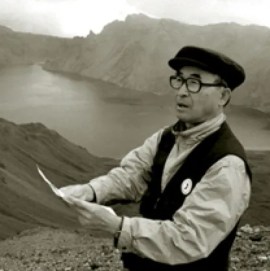 so I had to hunt around to find out that he is a contemporary Korean. On his own website he writes something that I can relate to: “I long not to finish my life as a poet. In other words, I wish I could be a poem at the end of the poet.”
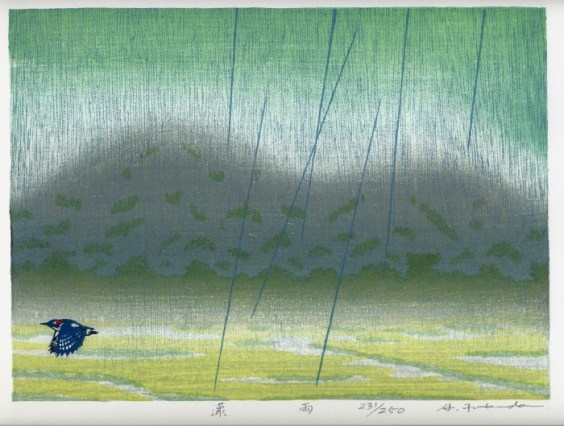
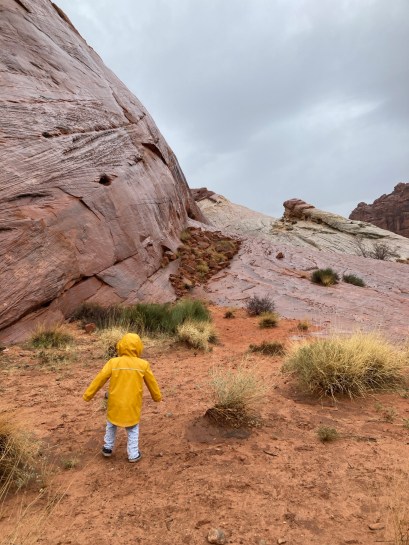
If Ko Un does manage to set off and “walk on and on until the sun sets,” and not just write about that kind of activity, then I think he stands a good chance of turning into a poem. Especially if he gets drenched! Lately I have done a lot of walking in the rain myself, and I have begun to look forward to those wet outings. I keep wondering why that is…
 One friend said something about “the ions,” and online I found numerous articles about the “health benefits” of walking in the rain. Every article counted a different number of benefits, ranging from four to nine, one number per article, and that coordinated numbering was the most interesting thing about them.
I try not to take an umbrella on my walks, because of the way an umbrella usually takes my attention from the wind and water assaulting me, and forces me to give my all to one more instance of wrestling with technology, especially if it’s the pop-up type. (However, umbrellas seem to add cheer to dark and rainy paintings.) If the day is very wet, I do merely a loop around a block or two, and change into dry clothes afterward. That’s not a pilgrimage, but it makes me feel that I am walking in a (short) poem.
YOUR PILGRIMAGE
A slower pace, a somewhat slower pace will do.
Of a sudden, should it start to rain,
let yourself get soaked.
An old friend, the rain.
One thing alone is beautiful: setting off.
The world’s too vast
to live in a single place,
or three or four.
Walk on and on
until the sun sets,
with your old accomplice,
shadow, late as ever.
If the day clouds over,
go on anyway
regardless.
-Ko Un






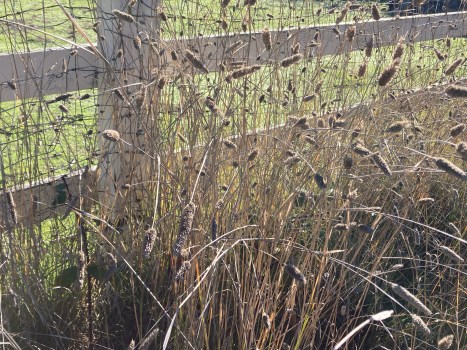
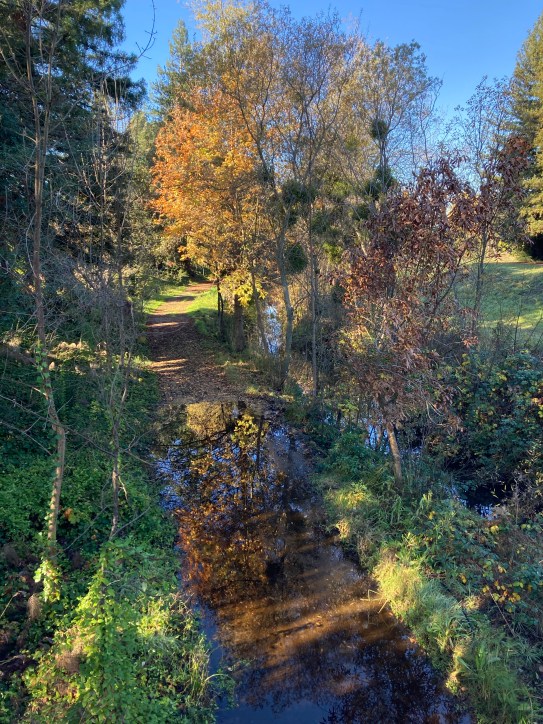

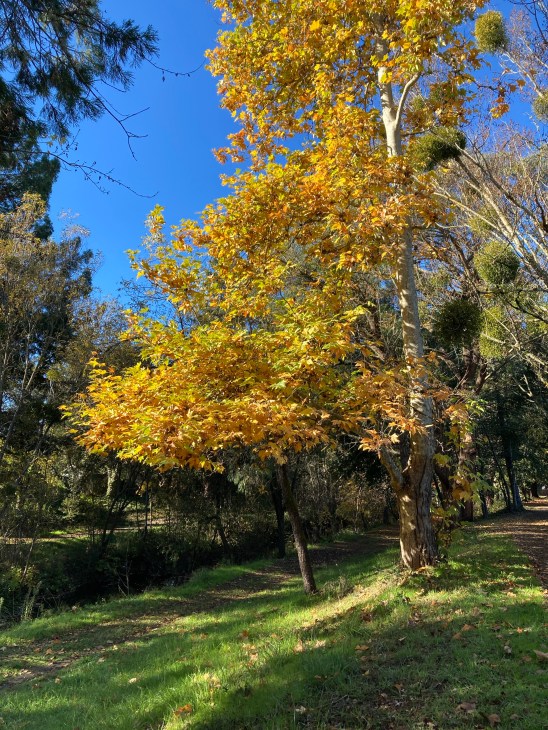
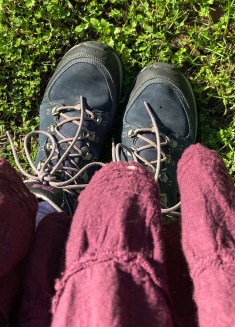 Autumn, after the rains, always tries to pull me out for an explore. But until today, I resisted. I had too much on my mind, on the calendar, and didn’t feel the freedom. It was a providential synchronicity that today, when I am transitioning into the remainder of Advent, the weather was perfect for it. As soon as I neared the creek the heady scents filled my head — of wet earth and leaves, infused with the sweetness of fennel seeds fermenting in the dampness.