
My beach visits are challenging my writing skills, no doubt about that! The seashore and its constant change, my being on The Edge of such a vast expanse of water and sky, caressed or buffeted by forces of wind and waves… it’s thrilling. I could write that sentence every time I go, but it would convey sameness, when there is nothing the same, ever.
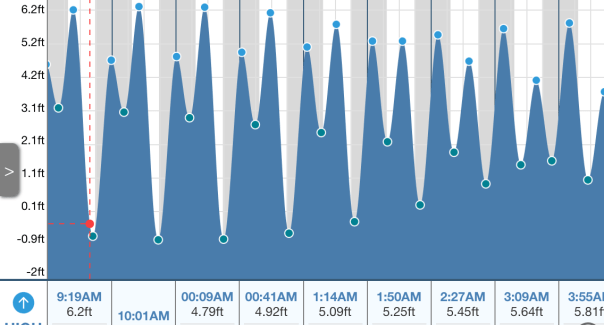
 I was excited yesterday to be going when it was a minus tide, a term I hadn’t even heard until a month ago. These events seem to happen mostly at night; I hope to learn more about why that is, when I get the books I ordered online and from the library, about waves, tides, beaches and seashores.
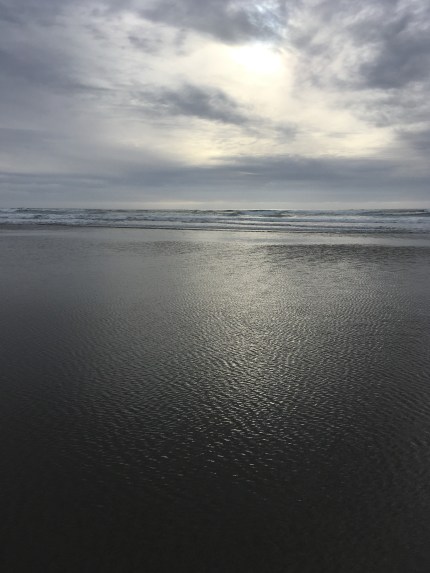
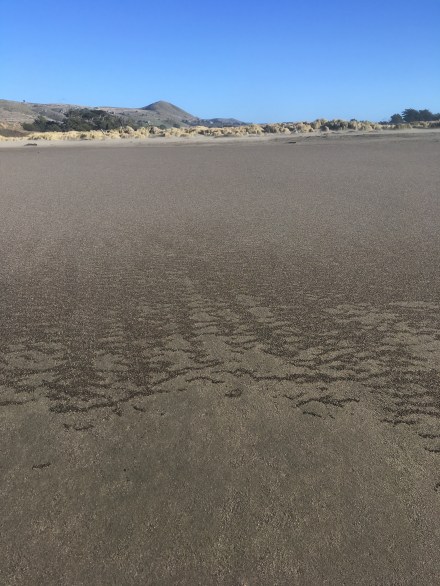
Yesterday’s minus tide was at about 3:00 p.m. I was surprised at all of the puddles and pools in various places on the beach, not just at the north end where the rocks hide creatures. The receded tide revealed a wide expanse of flat beach that shone like glass.
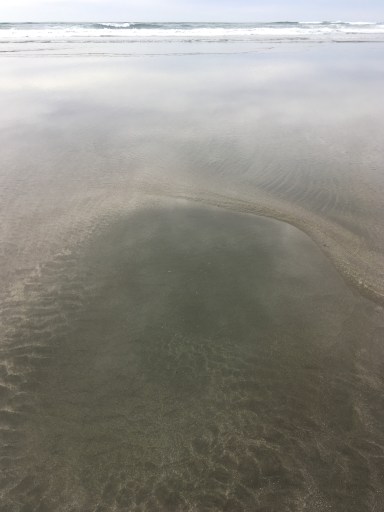
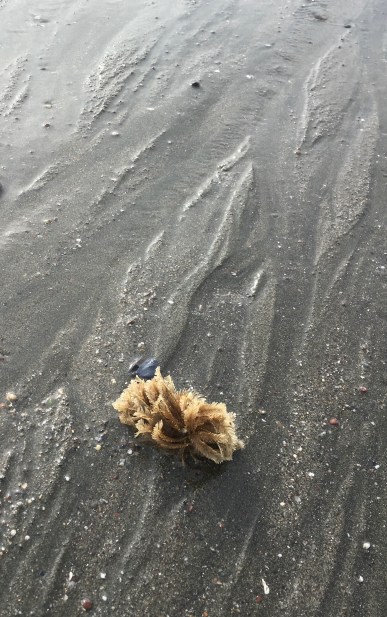
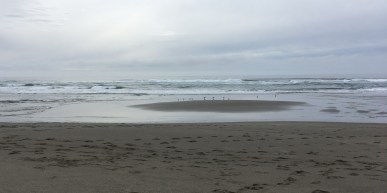
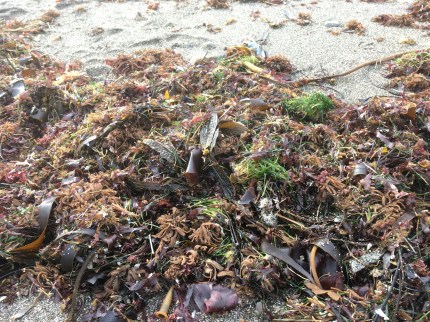
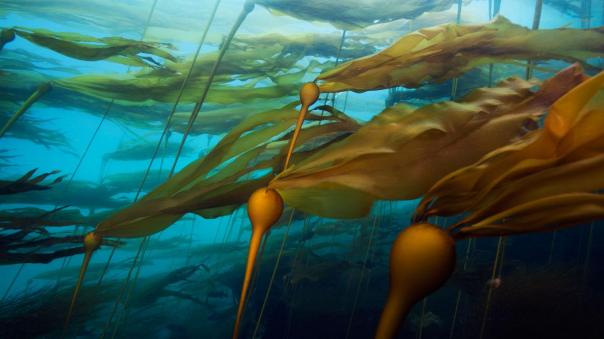
Great heaps of every kind of sea plant, vegetable, and kelp had been left in swaths on the shore. I wished I had someone with me who knew the names of everything! And if I had thought of it, I could have taken home enough to make a giant kettle of seaweed soup.

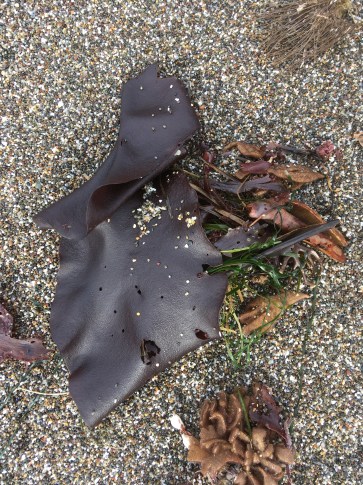
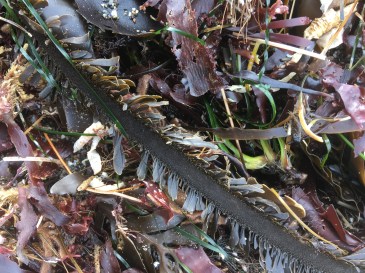

One specimen of Flustrellidra was floating in a tidepool. I found that name while searching last night for the name of a seaweed that I did eat when I got home.

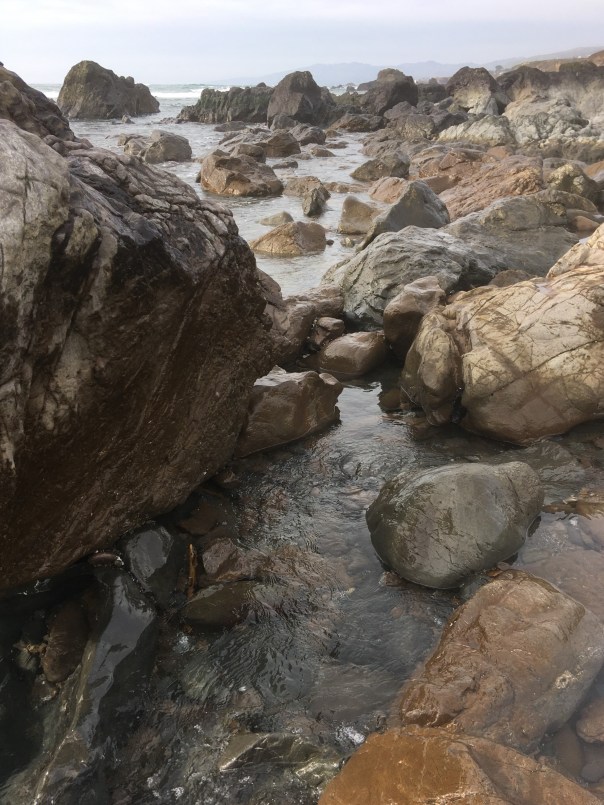
In those rocky pools I didn’t see any hermit crabs or sea stars; only a few mussels clinging under rocks. My foot slipped a bit when I was looking down into the water — I think that was when I was still wearing my sandals, because I thought I would be steadier with them on — and when I shifted my gaze to the surface of the rocks on which I stood, I realized that they were all green, that is, where they weren’t covered with black seaweed hanging down like greasy hair. So everything I might grasp with hand or foot was slimy. I soon left that area.

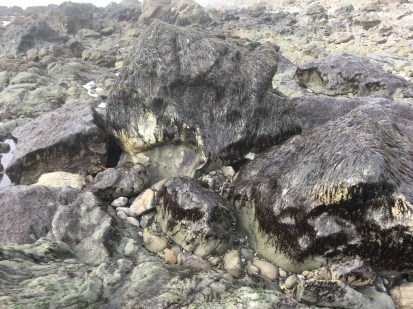
One thing always fun is the way the texture of the sand underfoot changes every few yards. Where it was gravelly I sank down mid-calf; a short distance beyond, the surface was firm. My feet standing on that hard and flat “patio” were red and seemingly shrunken from their chilly bath.

It was when I was walking back from the rocks that the happiness peaked. I thought of my late husband and wished we could be walking in the waves together. Maybe I thought of him because I had been listening to The Aviator on the drive out, thinking with Innokenty about his finally having lost the only one who had shared the era and experiences of his previous life, who also remembered the important things. And there was this:
“Now, as life is settling into a routine little by little, happiness shows through everything, through the most common everydayness, no matter what I do. Everydayness is essentially happiness… finally, to simply live.”
As I was splashing through the shallow water it occurred to me that my husband does actually share this happiness with me. There is one happiness that is a gift from God. It is the same reality that “shows through” whenever and wherever it happens, and reveals itself as being unbounded by time. A gift of spiritual sunshine that warms the soul in such a way that it’s obvious nothing is lacking. Mere existence is huge and blessed, the moment fills everything, and all the happinesses that have ever been are in that fullness.
I found several things on the beach. First, two big sand dollars. The first one was almost perfect. It had only a little chip on the edge, and I put it carefully in my bag. Later, just after passing a very young family with a preschooler, who were playing in the sand, I found another dollar, truly pristine, and I offered it to them. From the looks on their faces, they had never seen one before.
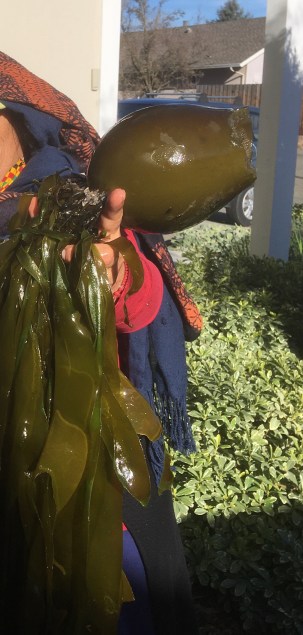
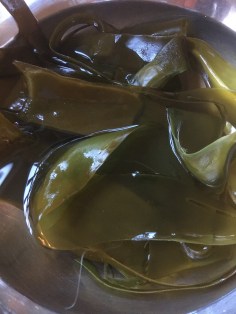
A beautiful, snack sized piece of seaweed fell out of a wave on to the sand, and I put it in my bag, too. You can see it further down.
And then — I found this dolly.

“She actually likes being tossed in the waves,” I thought, when I saw the expression on her face. She is some surfer girl! I dropped her in my bag, too, without the slightest doubt that it was the right thing to do. I would take her home and clean the sand out of her hair….
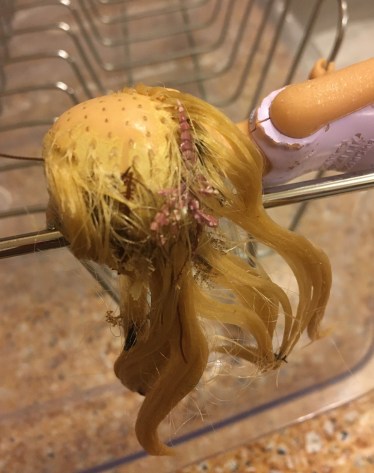
I haven’t managed to clean her hair thoroughly; I don’t know if the  plants are attached to her or just tangled in her tresses. After seeing how integrated with marine life she has become, I began to wonder if she belongs to the sea now. Is the missing half of her hair currently in suspension with the other microparticles of plastic that live there?
She seems a kindred spirit, and for the time being she sits on my computer table reminding me of our common love for the ocean waves. I need to give her a name. Any ideas?
 The piece of “lettuce” I collected, I washed very well at home, and thought I had identified it. I ate it raw in the evening — it was rubbery and fairly tasteless — and then searched in vain online for a name for it. I think it’s probably a red or brown algae. One article I found last week said that all the seaweeds are edible, and last night I read some people saying that you should be careful not to eat too much of any kind. Not too much danger of that in my case!
When I have published this post, I plan to add it to my new Page tabbed at the top of my site, titled Sea Log. I’m glad for the virtual companionship of any of you who would like to share in my seashore explorations. May they long continue, Please God.


 Another beach day! I took my friend Bella this time, as a co-breather of that medicinal air, a person I knew would ooh and ahh and thank God along with me. The sky was clear blue, and there was barely a breeze. The dry sand under our feet was warm.

 Did I tell you I have been reading The Aviator by Eugene Vodolazkin? I have the audio as well as the print format. The possibility of sinking into that book makes me look forward to any longer drive to anywhere. I can’t concentrate on a book, lecture, etc. while doing anything else at home; even while driving, I can only attend well while following a familiar route. I make frequent use of the rewind button (Is there another word for that now that there is no actual winding involved?), including at times when I have to concentrate more, as at an intersection, and briefly lose the thread of the story.
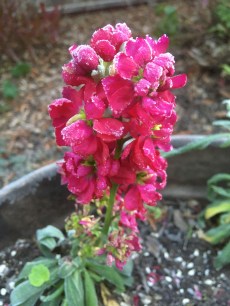 My garden suffered what may be the worst cold it will have to endure this winter, just two days ago. I know it was several degrees of frost — and this area has had a winter or two in the last decades without even one freeze; it rarely gets down to 20 degrees. By the time that morning’s weather test occurred, I had been doing my own trials of the new greenhouse equipment, necessitating a few emergency visits in my nightgown at 2:00 or 3:00 a.m., to adjust the thermostat. So everything was okay in there. And you know, collards get sweeter by suffering frost.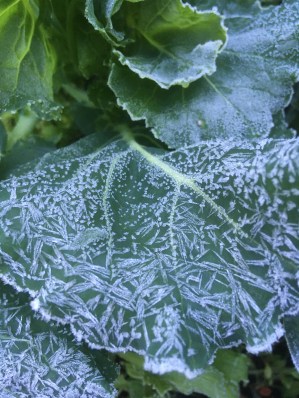

 Gladsome Lights