Category Archives: nature

Xerophytes

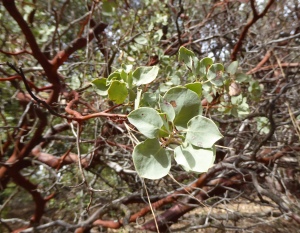
GL P1020377
manzanita


Xerophytes are plants that are xerophilous, which means they have special features that enable them to survive in very dry environments. One of my favorite xerophytes is the Bristlecone Pine, which I wrote about some years ago, calling them Gnarly Patriarchs.
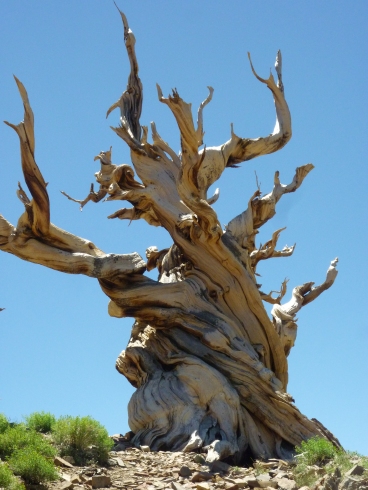
P1070019
gnarly patriarch

Some of the plants in my home landscape are considered to be xerophilous, though to maintain a xeriscape such as I have it is not necessary to have nothing but xerophytes. A xeriscape, in addition to featuring drought-tolerant plants, uses deep mulches and other means of conserving water besides those that are built into the plants themselves.

In a patch by my driveway, enclosed on all sides by concrete, Mexican Evening Primrose blooms and thrives all summer with a little water once a month or so. It thrives so well that such an enclosed space as it lives in here is usually the best spot for this plant, unless you are okay with it taking over the whole garden.
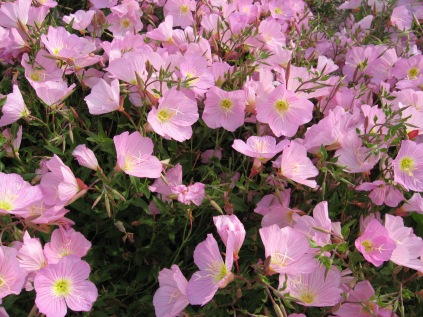
Mexican Evening Primrose
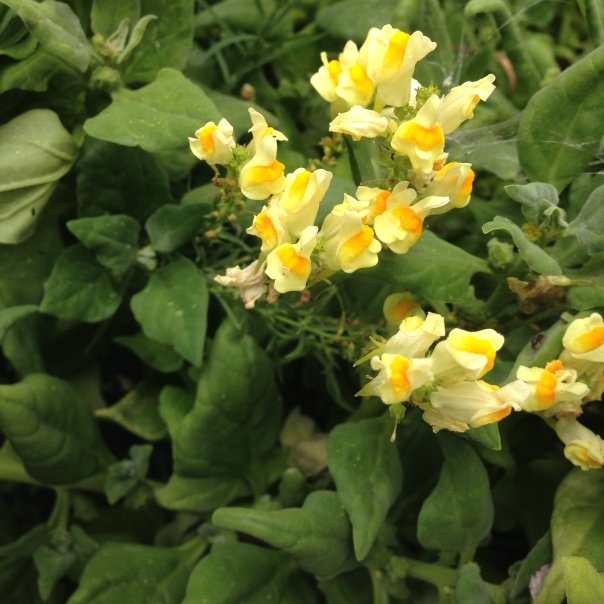
IMG_0280 toadflax w warrigal
toadflax – Linaria vulgaris, with warrigal

The picture at right is of warrigal or New Zealand Spinach, an edible green, growing alongside a yellow mystery flower [since discovered to be toadflax], both of which I consider quite xerophilous, as they lived in my back yard for months last summer with no water, and never so much as wilted.

That root xeros comes from the Greek, for dry. My current project is to incorporate more of these unthirsty friends into a plan for my front yard, and I hope to have them planted by the fall.


violets

gl P1040398crop2edThe Cape Violet or Nodding Violet Streptocarpella seems to have everything it needs now, in order to be happy. I have the larger, original one that Mrs. Bread gave me as a little start, and its daughter that I grew from a branch that I accidentally broke off.
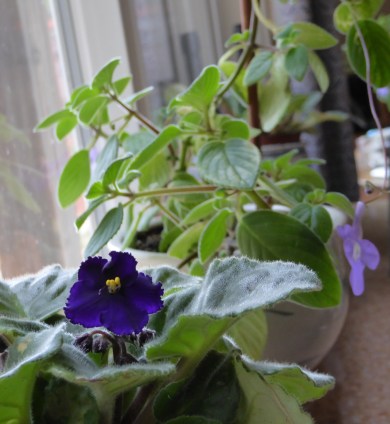
The larger one is on the dining table by the window, where daily it decorates the pysanky below by dropping its yet pristine flowers. Someone decorated the violet itself with a branch from Palm Sunday stuck into the dirt.

It’s hard to find the Streptocarpella online if I look for “Cape Violet.” They seem most often to be known by their botanical name. They are a subgenus of Streptocarpus which are called False African Violet.

The younger plant is on the windowsill near the (True?) African Violet that beautified one of my birthday party tables and is on its second round of blooming since then.

gl P1040401

Currently I am keeping five plants in the house, which is very unusual for me. I’m much more comfortable growing things outdoors where, unfortunately, you can’t grow all things beautiful and expect them to make it through the winter. You can’t expect these violets to make it through the summer in a sunny greenhouse, either, even if I do get a shade for part of the roof.

In the meantime, we get by with a fairly roomy windowsill. 🙂

Nyjer Magic

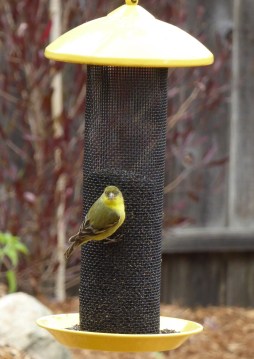
Chuck in Nevada told me how he keeps goldfinches coming to his back yard. “I go down to gl goldfinch look crp2the Tractor Supply and get 25 pounds of Nyjer seed, and I can hardly keep the feeder filled. The goldfinches are all over it!” I had heard about this phenomenon closer to home, too, so before I left town I stopped and bought my own 25-pound bag, as well as a feeder to put it in.
I waited for the heavy rains to stop before I hung it, and within a couple of days the finches arrived. First goldfinches, then house finches. The house finch couple made brief visits, too quick for my camera. After a snack, they would stop at the top of the fountain for a sip of water before flying up to the Dr. Seuss redwood tree behind my garden, where I spied on them with binoculars. I wondered if they were nesting there, but that was a week ago and I haven’t seen them since.nyjer bag

The pair of goldfinches are regular patrons. So far they haven’t brought hordes of family and friends, so my feeder hasn’t needed refilling yet. But I’m ready!

Nyjer or Niger seed originates in Ethiopia. A commenter on Dave’s Garden site wrote about it, “In Ethiopia, it is cultivated on water-logged soils where most crops and all other oil-seeds fail to grow, and contributes a great deal to soil conservation and land rehabilitation. Niger is cultivated primarily for valuable oil which is used in foods, paints, soaps, and as a illuminant. The seeds can be used for human consumption, fried, or as a condiment.”

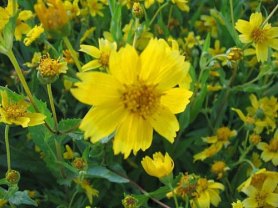
It doesn’t sound like something that would do well here in my yard, but if any seed did manage to sprout and flourish under my feeder, I would end up with a flower like this:nyjer flower

Guizotia abyssinica is not a thistle at all, though it’s often called “Nyjer thistle seed,” and it’s technically not a seed either, but a fruit, says Wikipedia. It is now grown commercially in the U.S.; when I was looking for a photo I found this etsy seller who sells it in packets.

I’m pretty pleased about my goldfinch friends who are enjoying the Nyjer. But the next letter of the alphabet will reveal even more exotic avian developments. I can hardly wait to show you!

gl goldfinch 2

A scheme for my springtime.

alphaomegaEarly on in our 21 years of homeschooling I found that my style of learning and teaching was suited to doing unit studies. Someone has explained the concept like this: “Unit studies are collections of learning activities tied to a theme. They are popular with many homeschooling families because they provide a hands-on approach to learning that incorporates subjects such as math, science, language arts, and the social sciences.”

I think the first such curriculum we used was Konos, which centered the lessons on character qualities, starting with the quality of Attentiveness. The reasoning was that in order to learn anything, we must pay attention. One part of the nature/science study for this unit was Birds, because to notice them requires associated powers of patience and concentration. Pathfinder built a bird feeder on a post outside the dining room window and ever aftegl P1030454r, as long as we lived in that house, while we ate our meals we could watch the house finches enjoying theirs at the same time.

I thought of the word attentiveness when I was developing my idea for a series of blog posts to write over the next month or so. I wish I had some simple unifying theme that would tie together the recent myriad events and thoughts that seem to demand my reflective documentation. Ah, but I do – because my theology is also suited to Life as a big unit study, with one theme: Everything is a gift from God.

That still doesn’t help me to separate my material into short blog posts, especially at this season when I have less time to sit around thinking and writing. So I am going to use a kind of easy-reader (easy-writer!) system of The Alphabet. Every day or two I will try to write, going through the 26 letters in sequence. This post is my first, using the letter A, which does stand for Attentiveness.

And also for the Alpha and Omega, which is one of the names of God. He is the Beginning and the End, as those Greek letters are the first and last of that alphabet. He and his creation comprise the totalitygl candle from DH of what there is to study and know. All the rest has no substance.

Just last week we remembered the one-year anniversary of my husband’s falling asleep in the Lord. A dear friend gave me this candle as a memorial present, with the letters Alpha and Omega pressed into it.

I’ve still been thinking about kairos a lot. It is described as that time when everything happens at once, or as eternal time, when God gathers all time together. It’s the kind of time we experience in Divine Liturgy, and I think it is the reason for the idea that “Nothing is ever lost.”

I think that is a good beginning to my springtime storytelling. And with all of that material available, who can tell what each day, or post, might bring?