Category Archives: philosophy

Gleanings – Logos and Intelligibility

Once or twice a week I go to the gym and walk on the treadmill for an hour or so, and I read, either The New Yorker or Touchstone magazine. Worlds apart in perspective and subject matter, those two periodicals, but both having some content of interest to me, treated in enough depth to keep my attention away from the tedious treading.

I always keep a ball-point pen next to my water bottle on the little shelf of the machine, so that even while I hang on with one hand as I hike, all out of breath, my other hand is free to stab at the page trying to make marks that will help me find my way back later. It’s always my intention to return when I am in a more contemplative mood, to the words or sentences that piqued my interest because they remind me of something else in my life and philosophy. I love how everything is connected to everything else, even when I don’t have time to figure out exactly how, or to articulate it in my own words.

In the last few years that sort of time and ability seem especially lacking, yet I keep on reading and underlining and thinking at only an introductory level about one article at a time. Then I stash that magazine in my basket by the computer and the next time I start in on a fresh one. This kind of behavior has been going on for a long time, so I have a great store of “material,” as we writers call it, with new resources constantly arriving.

I’m going to try to post more frequently and without much comment — without much real writing! —  snippets from my readings, so that I don’t completely lose the benefit of the riches I’m enjoying every week. Maybe one or another of my readers will find a topic of interest now and then, but even if you don’t, copying some excerpts will give me more satisfaction than the usual procrastinations.

touchstone cover 10-14One article I read this month was from the September/October 2014 Issue of Touchstone, an introduction to metaphysics by Graeme Hunter titled “The Light of Everyman.” Hunter starts out by writing, “The hardest things to talk about are simple ones. My topic is the simplest thing of all: reality.”

He proceeds to explain how metaphysics is important because it “sees only the realities to which all people and all cultures have equal access,” and he also explores the question of how we can know that reality is intelligible to us. Some philosophers have concluded that in fact it is not intelligible, which leads them to nihilism; and some don’t want to go all the way there, and they end up making the whole issue more complicated than it has to be, even nonsensical.

Hunter proposes a solution to the question, which is the part that I wanted to share, as he explores the line from scripture that we know in English as, “In the beginning was the Word”:

“‘En arche en ho Logos’ are the first five words of John. No translation can do them justice. The word Logos is one of the most polysemous words in the Greek dictionary. Its meanings include ‘word,’ ‘speech,’ ‘argument,’ ‘theory,’ ‘account,’ ‘blueprint,’ the laying out of things and gathering them up. But underlying its many meanings is the simple idea we have just been talking about: the idea of intelligibility.”

“The intelligibility of things cannot be proven, as we have seen [earlier in the article]. And we have also seen that the natural sciences give us no right to assume it. But what if, as John proclaims, the intelligibility of things has been revealed, not just in the form of a divine pronouncement written in a holy book, but in the form of God made man, and dwelling among us, full of grace and truth? God as Intelligibility. The Maker who knows the worldchrist extreme-humility; the Knower who makes it; making and knowing as one thing; Maker and Knower taking human form.”


The Icon of Extreme Humility seems a good one to contemplate as we are talking about the Son of God who “humbled himself, taking the form of a man…”
On the value of philosophy.

“Suppose that a great commotion arises in the street about something, let us say a lamp-post, which many influential persons desire to pull down. A grey-clad monk, who is the spirit of the Middle Ages, is approached upon the matter, and begins to say, in the arid manner of the Schoolmen, “Let us first of all consider, my brethren, the value of Light. If Light be in itself good –.” At this point he is somewhat excusably knocked down. All the people make a rush for the lamp-post, the lamp-post is down in ten minutes, and they go about congratulating each other on their unmediaeval practicality. But as things go on they do not work out so easily.

“Some people have pulled the lamp-post down because they wanted the electric light; some because they wanted old iron; some because they wanted darkness, because their deeds were evil. Some thought it not enough of a lamp-post, some too much; some acted because they wanted to smash municipal machinery; some because they wanted to smash something. And there is war in the streets, no man knowing whom he strikes.

“So, gradually and inevitably, to-day, to-morrow, or the next day, there comes back the conviction that the monk was right after all, and that all depends on what is the philosophy of Light. Only what we might have discussed under the gas-lamp, we now must discuss in the dark.”

— G.K. Chesterton in Heretics

Linking up to Weekends With Chesterton, hosted by Mary this week.

green and blue coastal views

As I mentioned in my last post, we took a short trip down to California’s Central Coast – which we were amused to hear referred to as The North Coast, by those evidently oriented not to the whole state, but to Los Angeles…?

While anticipating the getaway, which was all my dear husband’s idea, I started thinking about the edges of the oceans, and how they give us a certain perspective. If you sit or stand on the shore and look seaward, you have all those millions of people behind you, and before you a vastness of water and sky to soothe the eyes and mind, and to make you think. Why don’t we all constantly gravitate to the coastlands so that we can be philosophers? It must be because we have so many worthy things we are called to DO.

Part of me wants to philosophize in this post, about a score of ideas and realities that are connected in a fascinating way. I could even write a short book for me to read about the ramblings of my mind over the last week, stimulated as it was by books and movies and history and theology that all seemed to relate to our trip.

But I will restrain myself, because I had my time sitting by the shore and now that I’m back inland I need to get on with other things. I won’t want to take the time to read that book anyway, so I’ll just make this a simple chronological report.

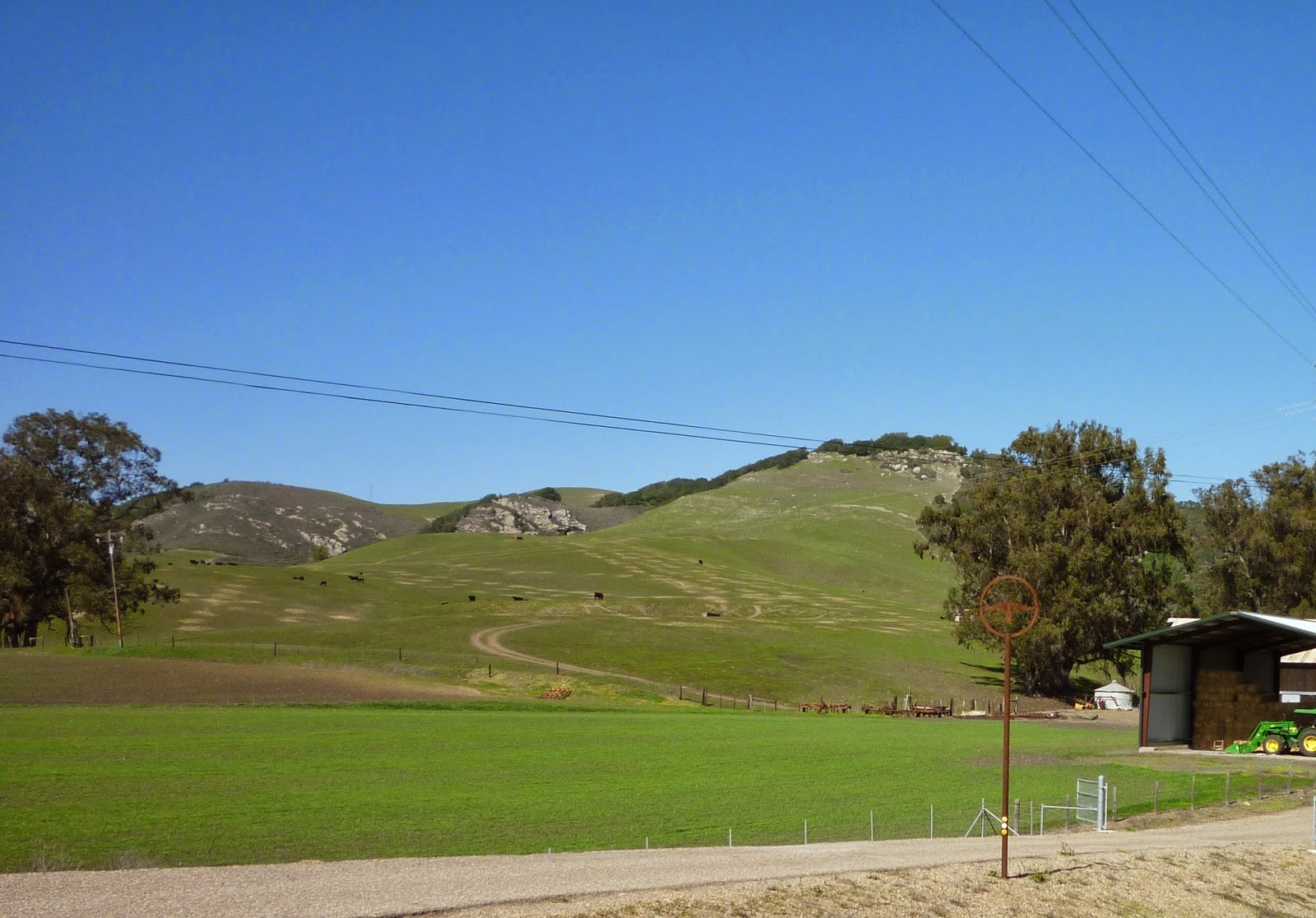
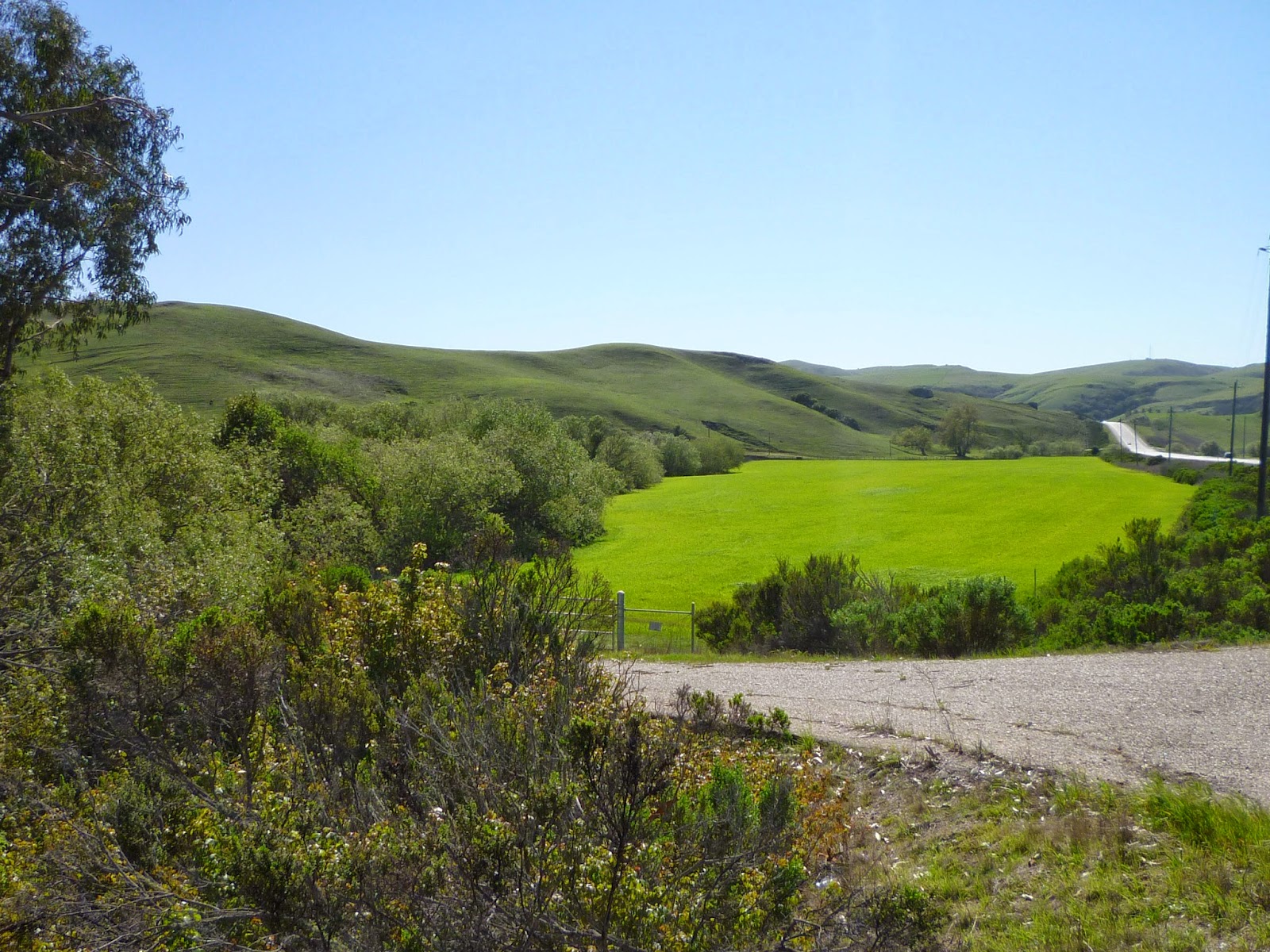
It was at Paso Robles on Hwy 101 that we cut over toward the coast, and the hills began to be greener, with even greener fields of newly-sprouted Something scattered here and there. The farms! Of course we have lots of farms in our county, too, but south of us they grow lots of different things and it does my heart good to see it. Thank you, Lord, for sending the rain to green-up the hills that will soon be golden — and brown — again.

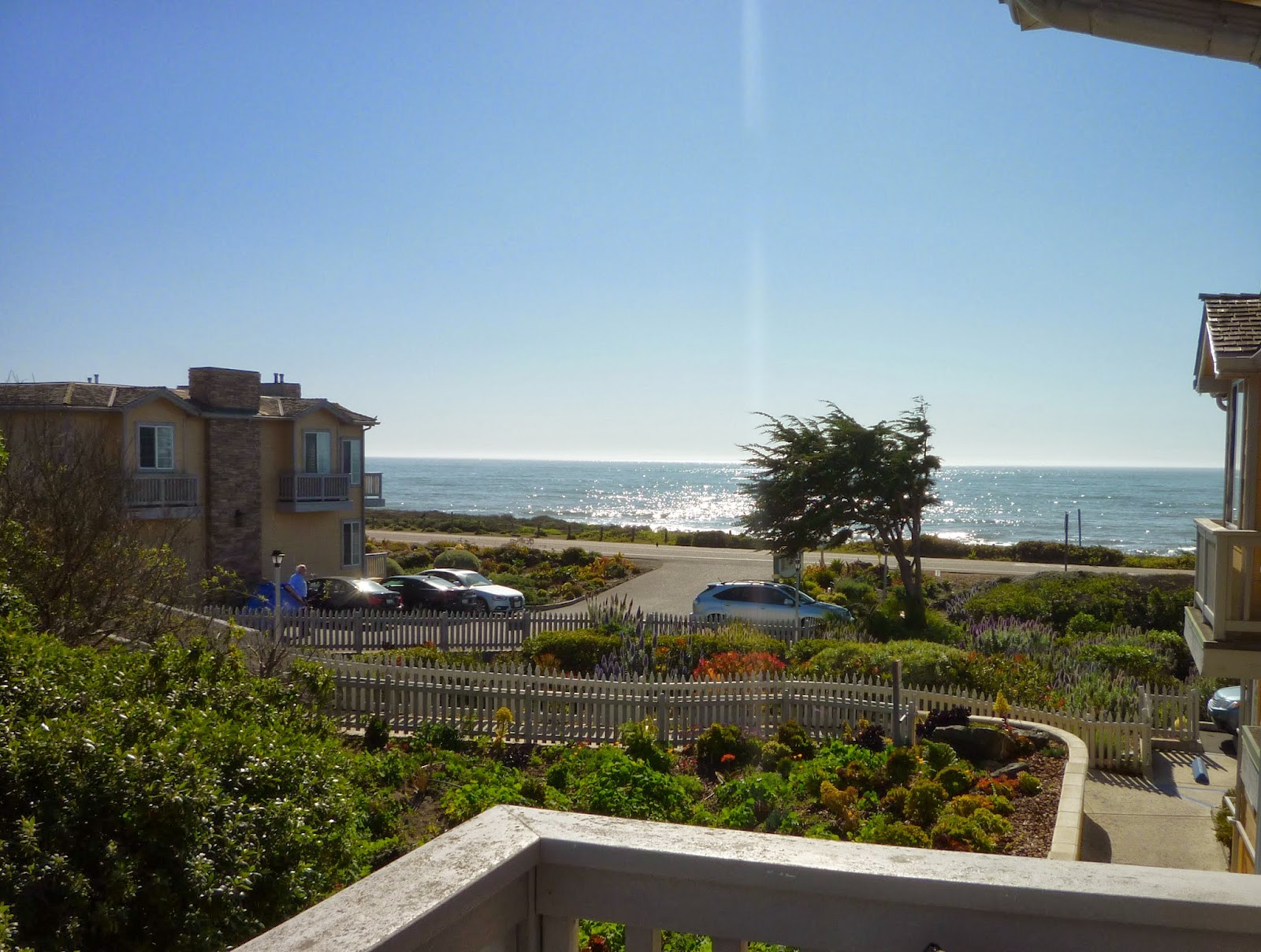
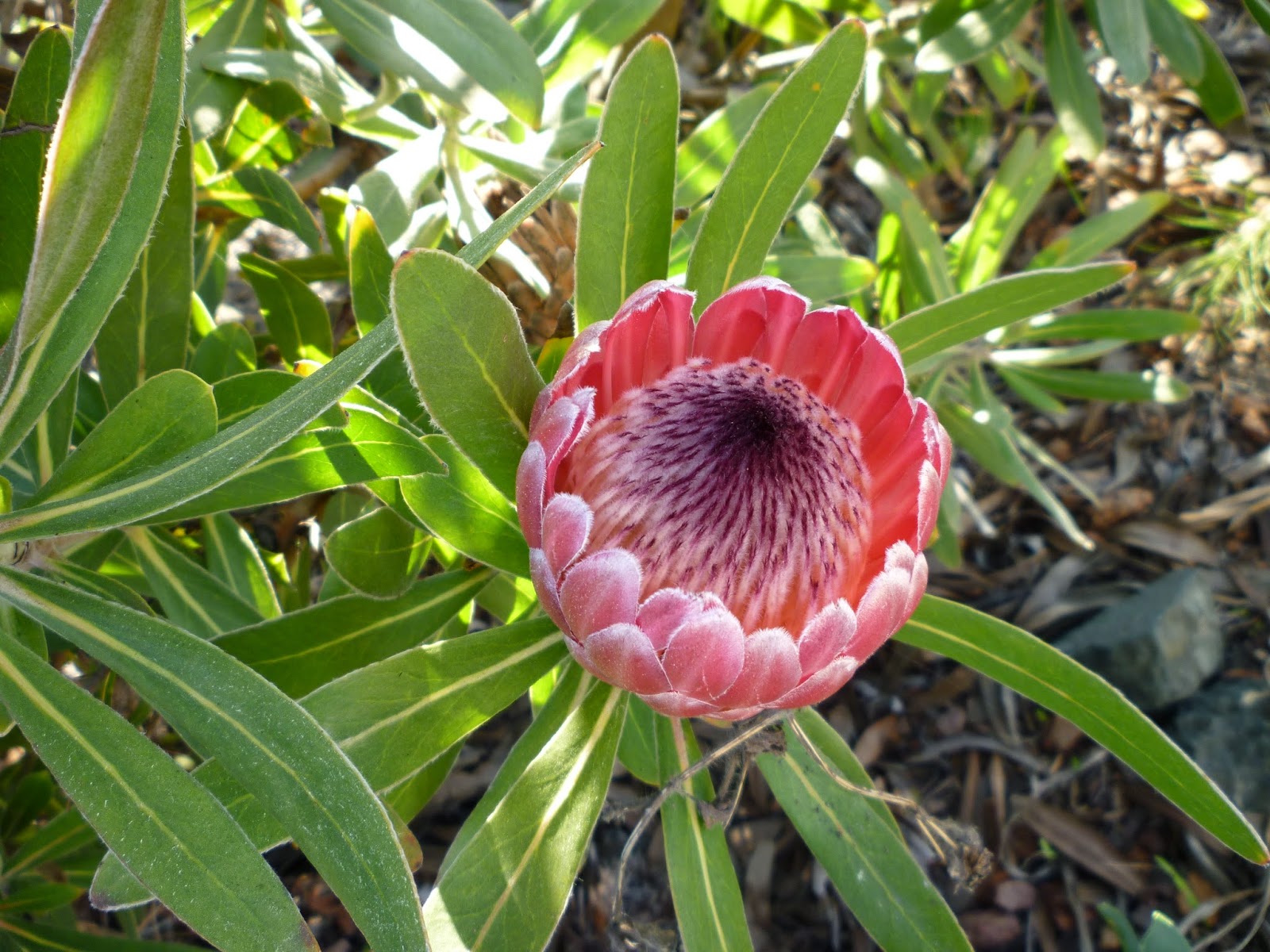
Our hotel room in Cambria had a lovely view from the balcony, not just of the ocean, but also of the lush gardens on the property, with some of those favorite plants that I only see when away from home, like proteas and our beloved Pride of Madeira.

Pride of Madeira

The latter is one that we enjoyed many times on wedding anniversary trips we’ve taken, because it blooms in March. This time I told Mr. Glad that we might consider it “Our Flower.”

a protea
town of Cambria from the boardwalk


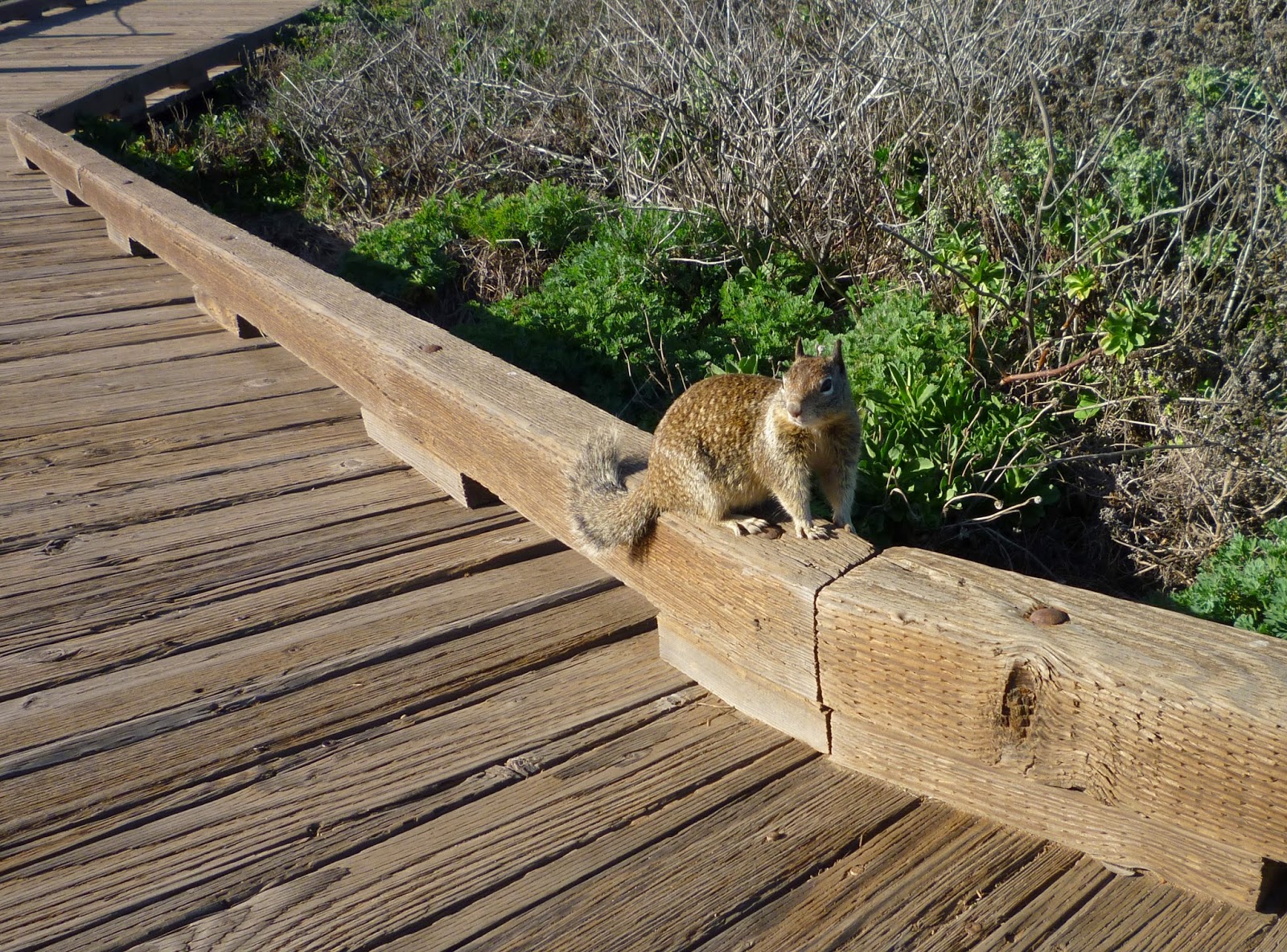
As soon as we brought in our bags we set off on the boardwalk along the long strand of Moonstone Beach, which appears to have a population of thousands of ground squirrels living under it. They popped up on one side or another every few feet to say hello and beg demurely.

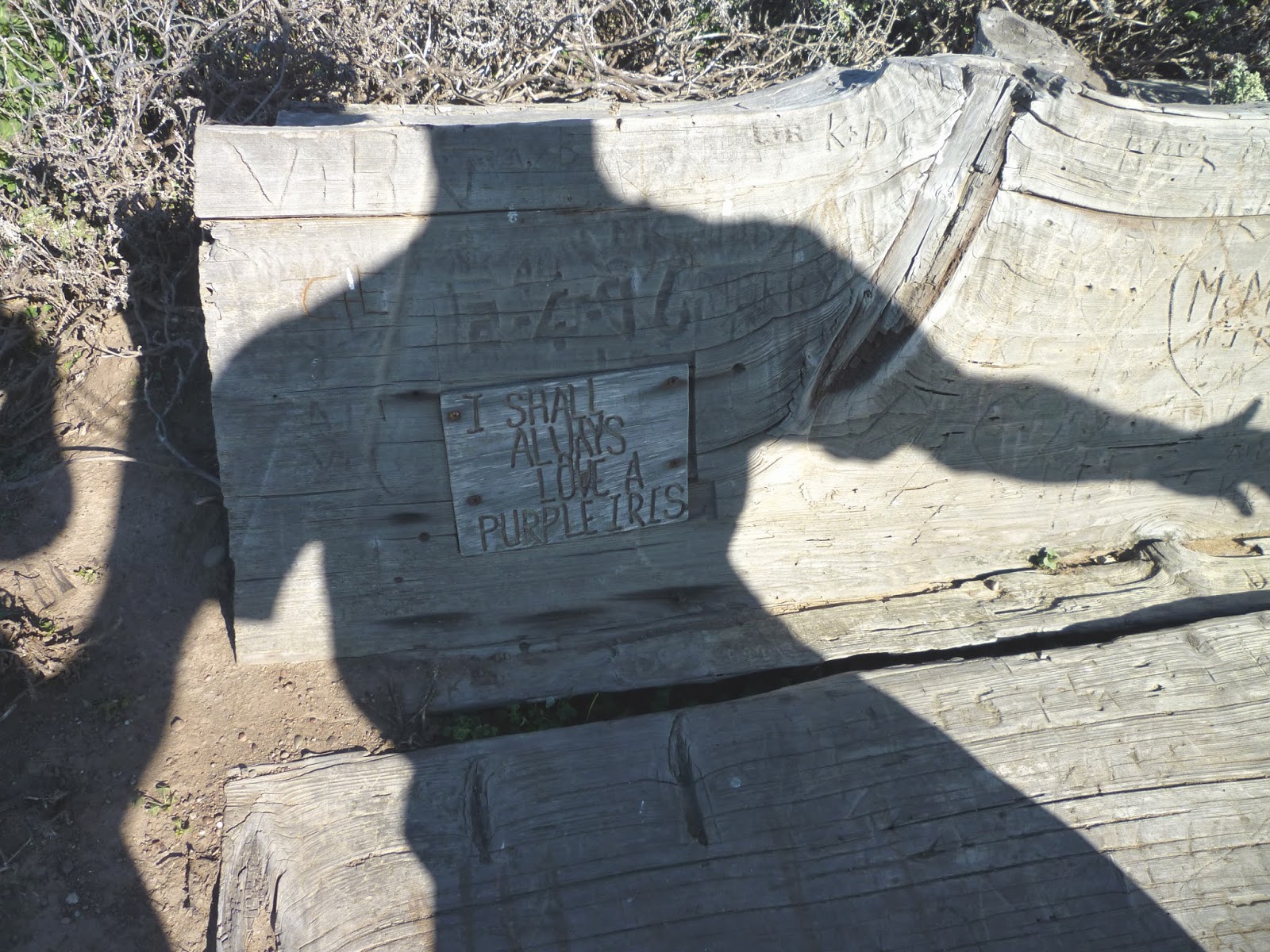
Many benches sit along the boardwalk, too, providing places for philosophers to gaze out at the great beyond. Some had extra, very personalized signs and plaques, screwed into them.

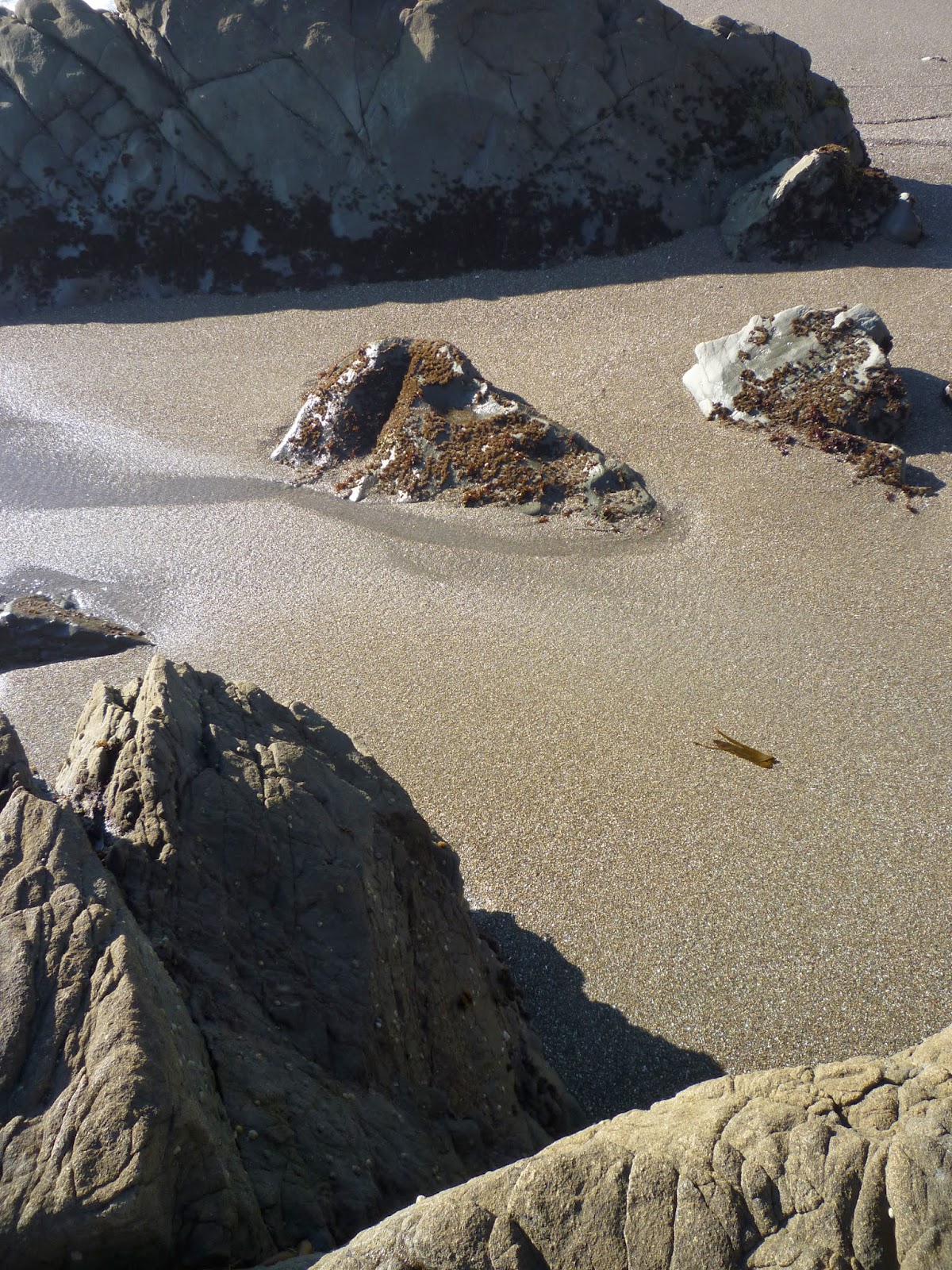
Down below we scrambled on the rocks and found crabs and snails and seaweed in the cracks and tidepools.

All the salt water stands in stark contrast to the drought that is especially bad on the California coast. At our very nice restaurant in Cambria they charged us for water with dinner! Just 30 cents for a bottle, but enough to draw attention to the problem and prevent the waste of all those glasses of water that diners might ignore.

When we left Cambria we drove south and stopped near the town of Harmony to try out the Harmony Headlands trail that cuts through a swath of farmland to link up with coastal bluffs. We could smell the sagey-beachy scent that let us know the ocean was just over the hill, but we never seemed to be reaching a place from which to get even a distant view of it, so we eventually gave up and turned back. On the way back to the car this snake slithered off the edge of the trail. When I followed him into the field he froze and posed.

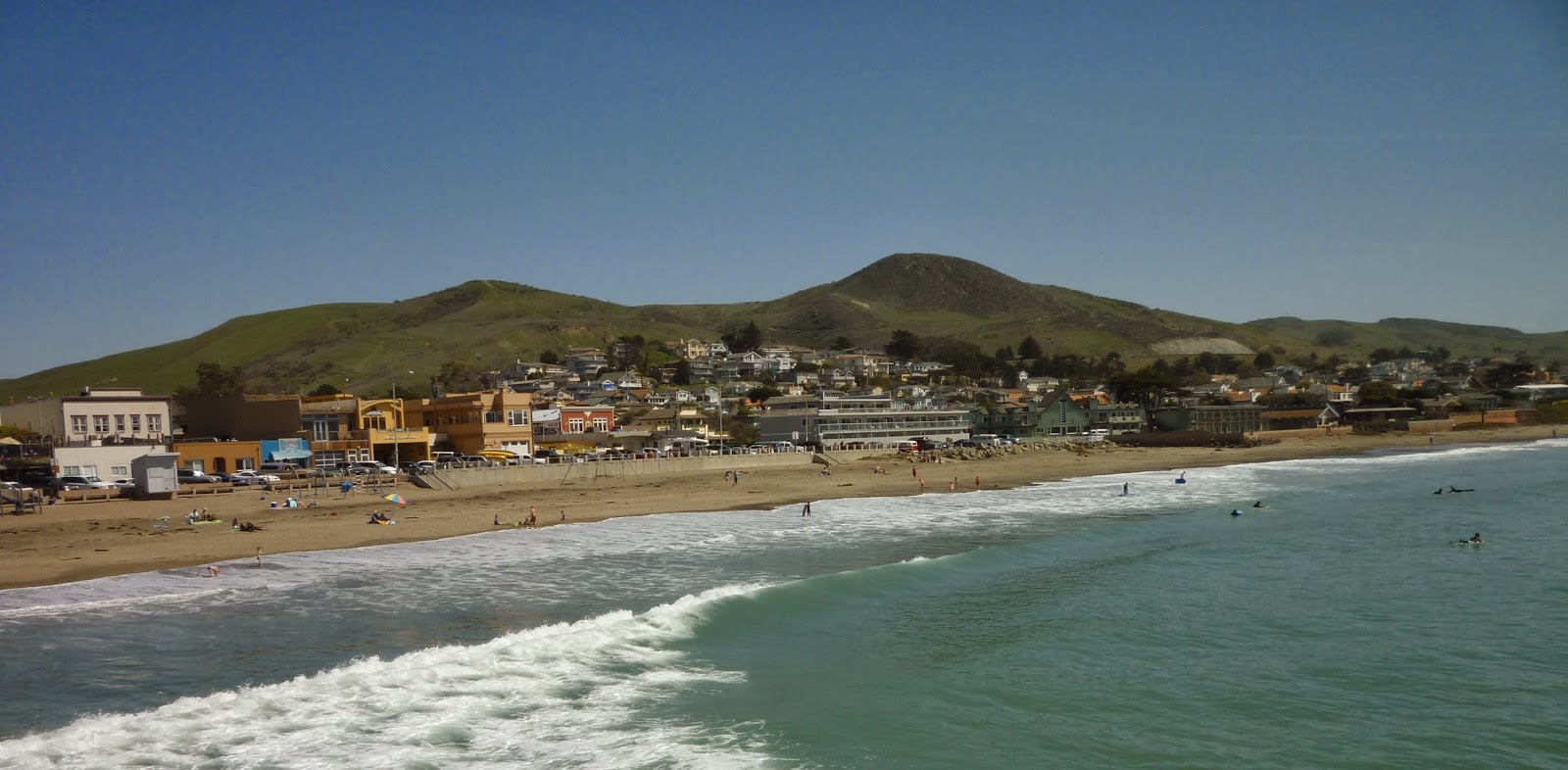
Neither of us had ever been to the town of Cayucos, which was our next stop. We liked this place a lot, with its casual and less touristy flavor. It used to be a shipping hub in the late 1800’s, and it’s close enough to San Luis Obispo and the college of “Cal Poly” that there were lots of students in town, and surfers to watch as we relaxed on the sand near the old pier.

Cayucos from the pier

At one end of the beach a woman drew in the sand with her foot, to draw attention to a seal pup that was lying like a lump near the shore. I did think it was a lumpy rock, until I saw her circle.

She was also standing guard against dogs who had been bothering the animal that she said was malnourished and waiting for the marine mammal rescue people to come. When a group of school children approached, the pup lifted its head long enough for me to snap a picture.

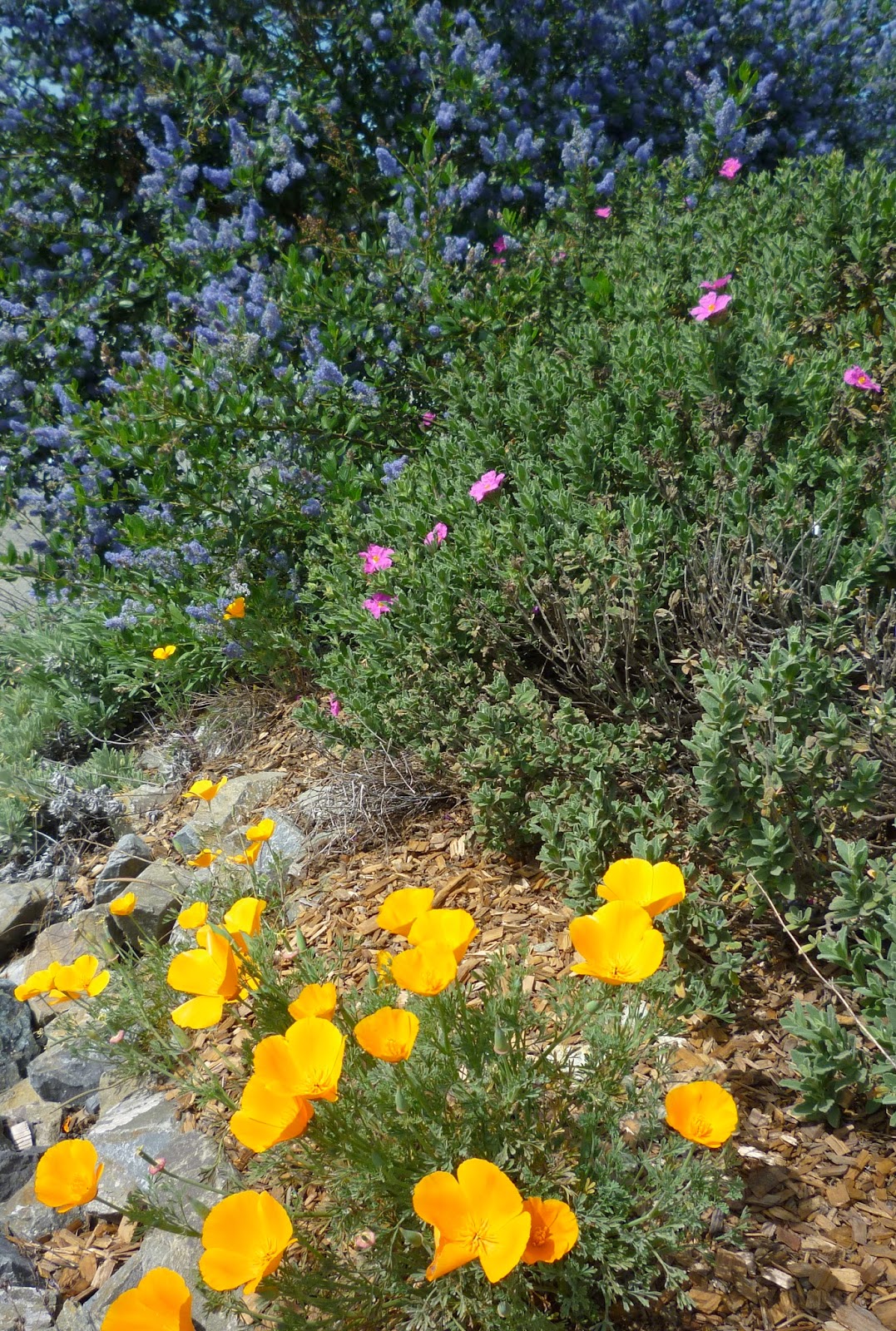
blue ceanothus, cistus, and CA poppies

Later in the week on our way home I got in more close-up views of some favorite Spring-y color combinations — at a highway rest area!

My tangible souvenirs were three, two rocks and a piece of sea glass, my material Gifts From the Sea. As to non-material and most valuable things gained….I’ll be meditating a long time on that realm of Beauty.

Pressing on to the wasteland.

Another good quote for Lent, thanks to s-p at Pithless Thoughts (posted a while back), from a Malcolm Muggeridge essay on life at the end of the last century. It seems to me still applicable in the 21st, as he describes how direly we need the Savior:

As the astronauts soar into the vast eternities of space, on earth the garbage piles higher, as the groves of academe extend their domain, their alumni’s arms reach lower, as the phallic cult spreads, so does impotence. In great wealth, great poverty; in health, sickness, in numbers, deception. Gorging, left hungry; sedated, left restless; telling all, hiding all; in flesh united, forever separate. So we press on through the valley of abundance that leads to the wasteland of satiety, passing through the gardens of fantasy; seeking happiness ever more ardently, and finding despair ever more surely.