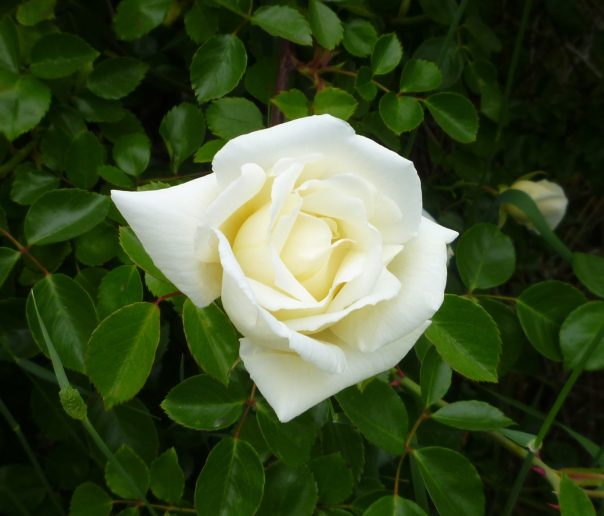
My Soul, there is a country Afar beyond the stars, Where stands a winged sentry All skillful in the wars; There, above noise and danger Sweet Peace sits, crown’d with smiles, And One born in a manger Commands the beauteous files. He is thy gracious friend And (O my Soul awake!) Did in pure love descend, To die here for thy sake. If thou canst get but thither, There grows the flow’r of peace, The rose that cannot wither, Thy fortress, and thy ease. Leave then thy foolish ranges, For none can thee secure, But One, who never changes, Thy God, thy life, thy cure.
There is a place where the town ends and the fields begin. It’s not marked but the feet know it, also the heart, that is longing for refreshment and, equally, for repose.
Someday we’ll live in the sky. Meanwhile, the house of our lives is the world. The fields, the ponds, the birds. The thick black oaks — surely they are the children of God. The feistiness among the tiger lilies, the hedges of runaway honeysuckle, that no one owns.
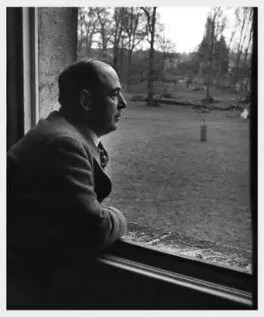
What Dorothy Parker describes in her poem below reminds me of what C.S. Lewis called sehnsucht, the heart’s longing, seemingly for its home – in God. These episodes often happen at moments when we experience something very good or beautiful, and realize deep in ourselves that it doesn’t quite satisfy, but only reveals our homesickness.
In The Weight of Glory Lewis describes this aching in our heart:
“In speaking of this desire for our own far off country, which we find in ourselves even now, I feel a certain shyness. I am almost committing an indecency. I am trying to rip open the inconsolable secret in each one of you—the secret which hurts so much that you take your revenge on it by calling it names like Nostalgia and Romanticism and Adolescence….
“We cannot tell it because it is a desire for something that has never actually appeared in our experience. We cannot hide it because our experience is constantly suggesting it, and we betray ourselves like lovers at the mention of a name. Our commonest expedient is to call it beauty and behave as if that had settled the matter. Wordsworth’s expedient was to identify it with certain moments in his own past. But all this is a cheat. If Wordsworth had gone back to those moments in the past, he would not have found the thing itself, but only the reminder of it; what he remembered would turn out to be itself a remembering.
“…These things—the beauty, the memory of our own past—are good images of what we really desire; but if they are mistaken for the thing itself they turn into dumb idols, breaking the hearts of their worshipers. For they are not the thing itself; they are only the scent of a flower we have not found, the echo of a tune we have not heard, news from a country we have never visited.”
Peder Monsted
TEMPS PERDU
I never may turn the loop of a road Where sudden, ahead, the sea is lying, But my heart drags down with an ancient load– My heart, that a second before was flying.
I never behold the quivering rain– And sweeter the rain than a lover to me– But my heart is wild in my breast with pain; My heart, that was tapping contentedly.
There’s never a rose spreads new at my door Nor a strange bird crosses the moon at night But I know I have known its beauty before, And a terrible sorrow along with the sight.
The look of a laurel tree birthed for May Or a sycamore bared for a new November Is as old and as sad as my furtherest day– What is it, what is it, I almost remember?


 “In speaking of this desire for our own far off country, which we find in ourselves even now, I feel a certain shyness. I am almost committing an indecency. I am trying to rip open the inconsolable secret in each one of you—the secret which hurts so much that you take your revenge on it by calling it names like Nostalgia and Romanticism and Adolescence….

 Gladsome Lights