In the first autumn of Gladsome Lights, I shared this old recipe for a lamb stew served as a shepherd’s pie. I haven’t had occasion to make it for a long time, but this evening when my mind turned to the kind of dishes that warm both body and soul, this one appeared.
Mutton is the meat I love.
On the dresser, see it lie;
Oh, the charming white and red;
Finer meat ne’er met the eye.

Roasting lamb is one of those aromas that reminds me of my grandmother. Combine it with Moroccan spices, and it makes for one of my favorite dishes:
Moroccan Lamb and Sweet Potato Pie
2 tsp. ground cinnamon
4 tsp. ground cumin
3 tsp. ground coriander
2 T. freshly grated ginger
1 T. all-purpose flour (or arrowroot)
1 ½ tsp. salt, plus more to taste
¼ tsp. freshly ground pepper, plus more to taste
2 lb. lean leg of lamb, cut into 1-inch cubes
3 T. olive oil
4 T. unsalted butter
2 large onions, thinly sliced
1 T. sugar
3 large cloves garlic, peeled and minced (about 1 ½ T.)
3 c. beef stock
1 28-oz. can whole Italian plum tomatoes
2 pieces star anise
2 cinnamon sticks, about 3 inches long
2 medium carrots, peeled and cut into ½-inch rounds
2 lb. sweet potatoes, peeled and cubed
12 oz. fresh spinach (optional) washed
½ c. dried tart cherries
½ c. dried pitted prunes, cut in half freshly grated nutmeg, for sprinkling
 1. In a medium mixing bowl, combine the ground cinnamon, 2 tsp. cumin, 1 tsp. coriander, flour, ½ tsp. salt, and ¼ tsp. pepper. Toss the lamb pieces with the spice mixture to coat.
2. In a Dutch oven or a large saucepan, heat 2 T. olive oil over medium-high heat. Add the lamb in two to three batches, in a single layer, and sear until dark brown on all sides, about six minutes per batch. Add the remaining T. olive oil during searing if pan becomes dry. Remove the lamb pieces and set aside.
3. Reduce heat to medium; add I T. butter. Add onions and sugar; cook 10 minutes, stirring frequently, scraping up brown bits on bottom of pan while stirring the onion.
4. Reduce heat to medium low, add the minced garlic, and cook until brown and well caramelized, about 15 minutes.

6. Meanwhile, place sweet potatoes in a large saucepan; cover with cold water. Bring to a boil, reduce heat to medium, and simmer, uncovered, for 15 minutes, until very tender when pierced with a fork. Drain potatoes, and return to saucepan. Dry potatoes, over medium heat, for 1 minutes. Pass potatoes through a food mill into a medium bowl. Stir in remaining 3 T. butter; add salt to taste. Set aside, loosely covered.
7. Preheat oven to 325 degrees. If using spinach, place in a large skillet over medium-high heat. Season to taste with salt and pepper, cover, and cook until wilted, about 1 ½ minutes. Drain, and rinse under cold water to stop the cooking. Set aside.
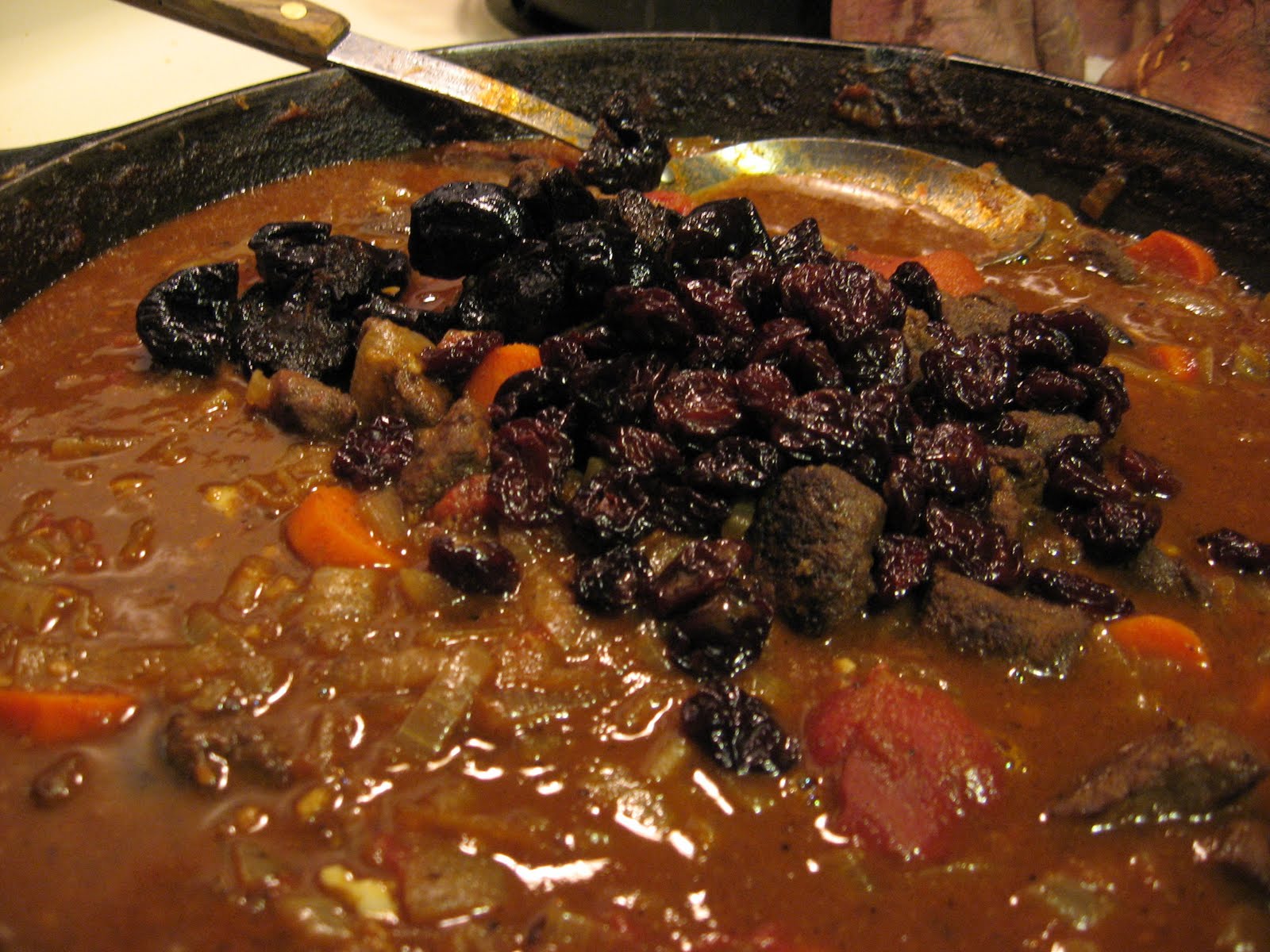
8. Remove the star anise and cinnamon sticks from the stew. Stir in the cherries and prunes. Transfer mixture to a deep 2-qt. Casserole, and place a layer of spinach, if using, over the stew. Spoon the sweet potato mixture onto the stew. Place on a baking sheet, and bake for 30 minutes. Sprinkle with freshly grated nutmeg.
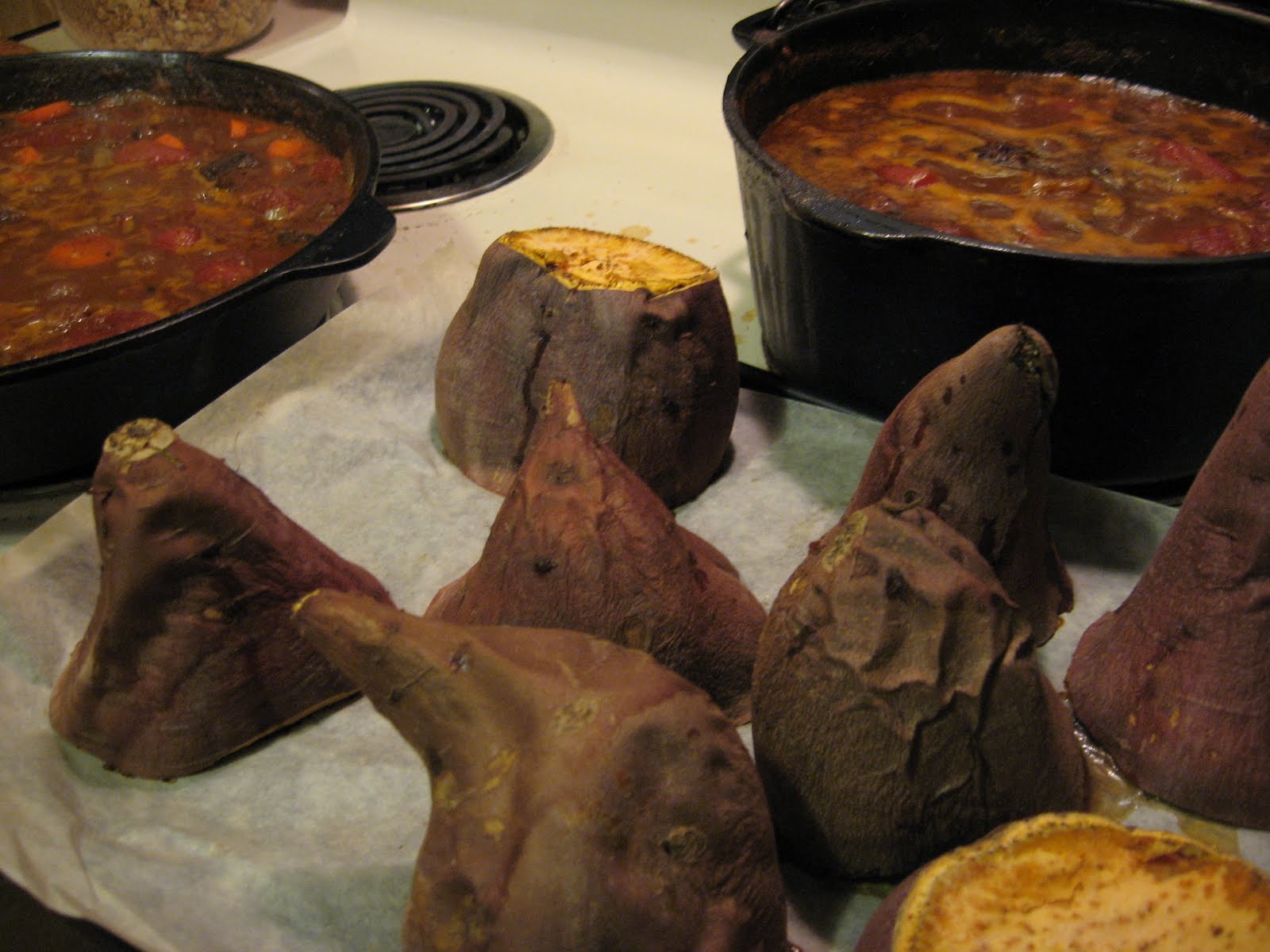 Notes: I have always used a whole boneless leg of lamb for this recipe, which usually is about 5 lb., not 2 lb., so I end up with more than 2 times the quantity. You can see I have two pots of the stew simmering.
This gives me plenty to put in the freezer for another day, which raises the question of how to prepare the yams. If I purée all the yams, they end up getting mushed up into the stew by the time I have reheated it, especially if it spends time in the freezer.
The stew tastes especially nice if the flavors have blended overnight, so I try to cook it a day ahead. Also this time I baked ahead of time the sort of monster yams, not very sweet, that are in the discount supermarket around Thanksgiving, not knowing yet how I would arrange everything the next day. Sometimes I have baked smaller sweet potatoes and served them to the side of the stew…

…but on this occasion, I ended up slicing them on top, brushed with butter and sprinkled with parsley and cinnamon, to take to a potluck. Sorry, the photo shows the dish before it had its final heating in the oven, and the butter is still solidifying on the cold yams. That evening the yam slices were gone before the stew itself.
In this season of my life, I don’t have a crowd to feed every day, but I think if I made a big pan of this stew I might be able to find enough friends to eat with me, and fortify ourselves against the coming winter. Next I’ll consider what other fallish items would fill out the menu… How about a dessert pie?



 When I am reading any sort of literature I often think of what fellow blogger M.K. has said, (forgive me, M.K., if I am distorting this) that when she finds someone whose writer’s voice she particularly appreciates, it doesn’t matter the topic of the writing, she enjoys reading everything he or she produces.

