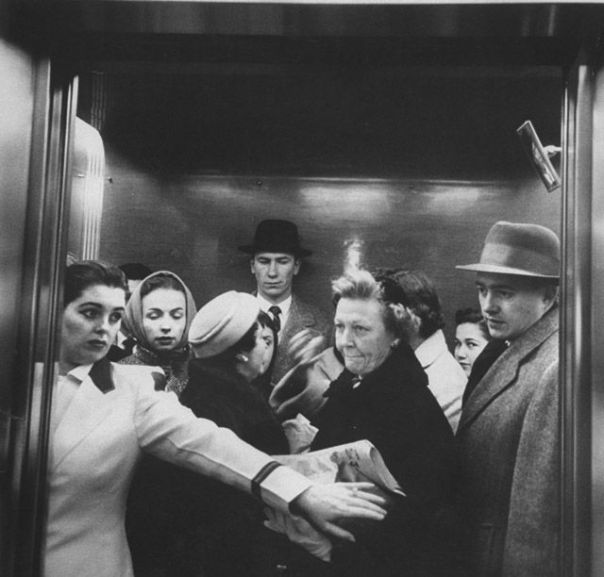
“People have always found ways to carve out moments of privacy in public space; this is part of what makes public space tolerable for everyone. Civil attention’s twin is civil inattention, ‘whereby one treats the other as if he has been seen but is not an object of undue curiosity,’ as Goffman described. We nod at the stranger stepping into the elevator and then return to staring at the ceiling or look up briefly from reading when other commuters get on the bus.
“Civil inattention is still a kind of acknowledgment, qualitatively different from being ‘looked at as through air.’ When we focus our attention on the glowing screens of our smartphones rather than on the people around us, never granting them even brief acknowledgment, we are not practicing civil inattention but civil disengagement. This is becoming the norm in public space.”
— Christine Rosen, The Extinction of Experience: Being Human in a Disembodied World
We Orthodox commemorate St. John Chrysostom on three separate dates, none of which is the day that he died, September 14, 407, in modern day Turkey. While in exile he was being moved to modern day Georgia when his health finally gave out. That date in September is the Feast of the Elevation of the Cross, so to avoid conflict his feast day was changed. One of the dates on which he is remembered is today, the date in 438 on which his relics were transferred from the site of his death in Comana to the city of Constantinople.
In the 19th century Archbishop Dmitry preached a homily on this occasion, from which I clipped this portion:
“The virtuous life thanks to which St. John won respect even in exile again aroused his adversaries’ hatred. They petitioned the empress for a decree by which the exiled Chrysostom was sent to a new exile—to the Pitiunt Fortress near Colchis, on the coast of the Black Sea.
“The officials received a special order to treat their prisoner more strictly and to bring him to his destination in a certain number of days despite the difficult roads. The famous pastor of Constantinople had to walk for three months, now in the unbearable heat of the sun, now in pouring rain, without rest or change of clothes.
“Such a journey completely exhausted St. John Chrysostom’s already weak health. Feeling approaching death on the way, he begged his escorts to stop, changed his wet and soiled clothes to white, communed the Holy Mysteries and departed from this world, which was unworthy of him, with the words: “Glory to God for all things!” With the words he loved and often repeated in his life and spoke about during his sufferings: “These words are a deadly blow for satan, but for the one who utters them in every trouble and misfortune they serve as an abundant source of hope and consolation. Once you pronounce them, every cloud of sorrow dissipates.”
-Archbishop Dimitry (Muretov), from a book of his sermons published in 1889
Translation of the relics of St. John Chrysostom
St. John Chrysostom is also celebrated on November 13 and January 30.
You can read more of his story here: oca
“Late one winter afternoon as I was walking to a class that I had to teach, I noticed the beginnings of what promised to be one of the great local sunsets. There was just the right kind of clouds and the sky was starting to burn and the bare trees were black as soot against it. When I got to the classroom, the lights were all on, of course, and the students were chattering, and I was just about to start things off when I thought of the sunset going on out there in the winter dusk, and on impulse, without warning, I snapped off the classroom lights.
“I am not sure that I ever had a happier impulse. The room faced west so as soon as it went dark, everything disappeared except what we could see through the windows, and there it was—the entire sky on fire by then, like the end of the world or the beginning of the world.
“You might think that somebody would have said something. Teachers do not usually plunge their students into that kind of darkness, and you might have expected a wisecrack or two or at least the creaking of chairs as people turned around to see if the old bird had finally lost his mind. But the astonishing thing was that the silence was as complete as you can get it in a room full of people, and we all sat there unmoving for as long as it took the extraordinary spectacle to fade slowly away.
“For over twenty minutes nobody spoke a word. Nobody did anything. We just sat there in the near-dark and watched one day of our lives come to an end, and it is no immodesty to say that it was a great class because my only contribution was to snap off the lights and then hold my tongue. And I am not being sentimental about sunsets when I say that it was a great class because in a way the sunset was the least of it.
“What was great was the unbusy-ness of it. It was taking unlabeled, unallotted time just to look with maybe more than our eyes at what was wonderfully there to be looked at without any obligation to think any constructive thoughts about it or turn it to any useful purpose later, without any weapon at hand in the dark to kill the time it took. It was the sense too that we were not just ourselves individually looking our at the winter sky but that we were in some way also each other looking out at it. We were bound together there simply by the fact of our being human, by our splendid insignificance in face of what was going on out there through the window, and by our curious significance in face of what was going on in there in that classroom.
“The way this world works, people are very apt to use the words they speak not so much as a way of revealing but, rather, as a way of concealing who they really are and what they really think, and that is why more than a few moments of silence with people we do not know well are apt to make us so tense and uneasy. Stripped of our verbal camouflage, we feel unarmed against the world and vulnerable, so we start babbling about anything just to keep the silence at bay. But if we can bear to let it be, silence, of course, can be communion at a very deep level indeed, and that half hour of silence was precisely that, and perhaps that was the greatest part of it all.”
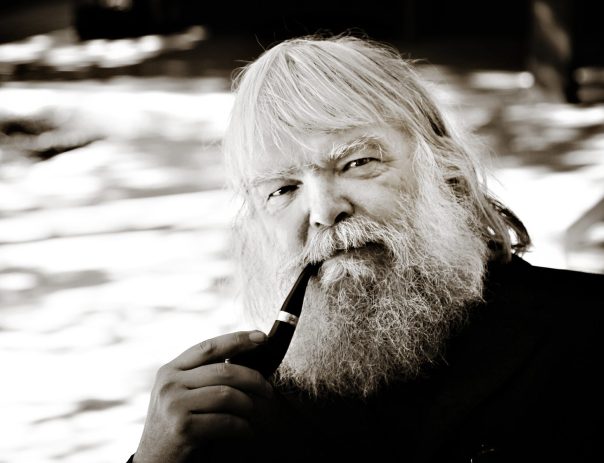
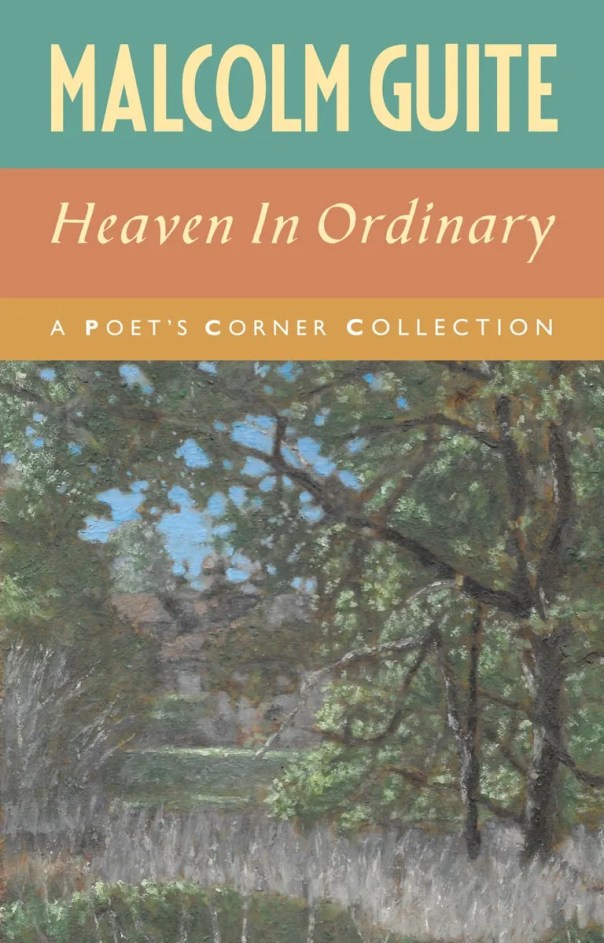
Malcolm Guite answers a question about writing poetry.
“You bring up depression. Many of your poems are helpful companions during dark times. When your poems touch on difficulty, they do so as one who has experienced it and yet you’re such a jolly man. How is that?”
“Ah, yes, well, a couple of things about that.” He laughs. “As you know, these are things we all share in common. One of the things I consciously resist and rebel against is the idea of poetry as just personal self-expression. The idea of the lonely, romantic genius in his weird, peculiar place, who everyone has to make allowances for leads to this kind of confessional poetry which gets worse and worse and more and more obscure. What does it amount to? Another strange adventure in the little world of me. I don’t buy that at all. No, I want to be the bard of a tribe, to tell the great, collective stories that bind us together, but, of course, I tell them as they’ve happened to me. Whatever is personal of mine, is most emphatically not in the poems as purely self-expression.
“Confessional poetry becomes very tedious after a while. The poetry I want to write and that I enjoy reading articulates the joys and sorrows of life. As to the jollity, I suppose I would say that anyone with lighter emotions who hasn’t experienced any pain is in danger of sentiment. I trust them about as much as I trust a Thomas Kincaid painting. You know, there’s a term Tolkien coined, eucatastrophe. Eu,meaning good, so a good catastrophe, but it still has the word catastrophe in it. In some sense, the eucatastrophe at the end of the Lord of the Rings is trustworthy because we’ve been with these characters to the very edge of the crack of doom. That’s why I trust the resurrection because the church doesn’t backpedal on Good Friday.”
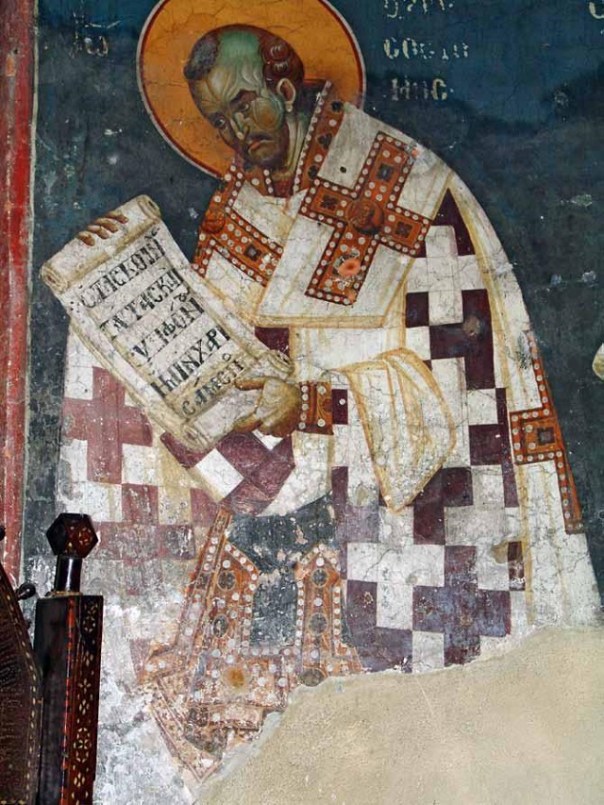 We Orthodox commemorate St. John Chrysostom on three separate dates, none of which is the day that he died, September 14, 407, in modern day Turkey. While in exile he was being moved to modern day Georgia when his health finally gave out. That date in September is the Feast of the Elevation of the Cross, so to avoid conflict his feast day was changed. One of the dates on which he is remembered is today, the date in 438 on which his relics were transferred from the site of his death in Comana to the city of Constantinople.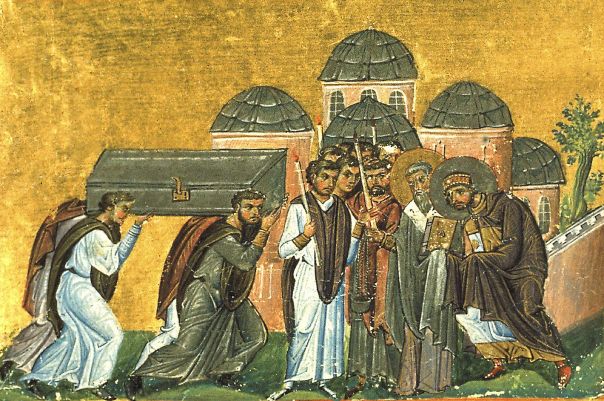
 “Late one winter afternoon as I was walking to a class that I had to teach, I noticed the beginnings of what promised to be one of the great local sunsets. There was just the right kind of clouds and the sky was starting to burn and the bare trees were black as soot against it. When I got to the classroom, the lights were all on, of course, and the students were chattering, and I was just about to start things off when I thought of the sunset going on out there in the winter dusk, and on impulse, without warning, I snapped off the classroom lights.
 suppose I would say that anyone with lighter emotions who hasn’t experienced any pain is in danger of sentiment. I trust them about as much as I trust a Thomas Kincaid painting. You know, there’s a term Tolkien coined, eucatastrophe. Eu, meaning good, so a good catastrophe, but it still has the word catastrophe in it. In some sense, the eucatastrophe at the end of the Lord of the Rings is trustworthy because we’ve been with these characters to the very edge of the crack of doom. That’s why I trust the resurrection because the church doesn’t backpedal on Good Friday.”
