
It was nearly dusk when 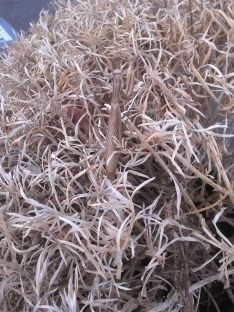 I realized I had lots of stuff to put in the yard waste bin for pick-up tomorrow, so I raked pine needles and cut tangles of wisteria vines that were trying to get in the kitchen window. At the last, I pulled out the wallflower bush that has been dead and bleaching in the sun for a couple of weeks now. I put it on top of the stuffed-in green matter, but the lid was not near to closing, so I went back for my pruners to cut up the bush a bit.
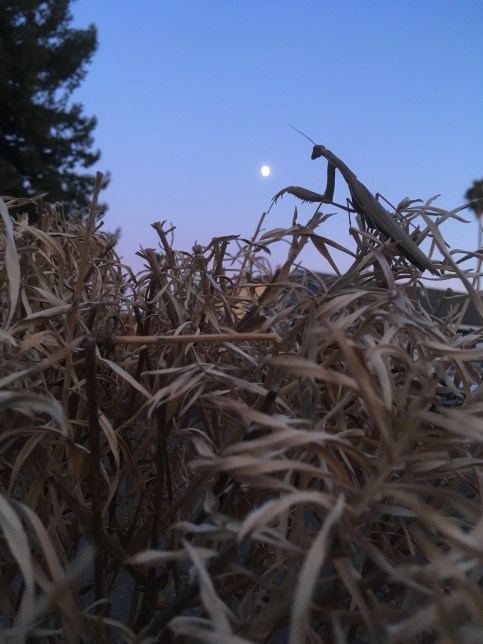
Then I saw the mantis, barely browner than the bush, and he wasn’t interested in going anywhere. So I took his picture, such a patient subject he was. My neighbor came down to look at him, too, and watched while I managed to pick him up and move him over to the coreopsis.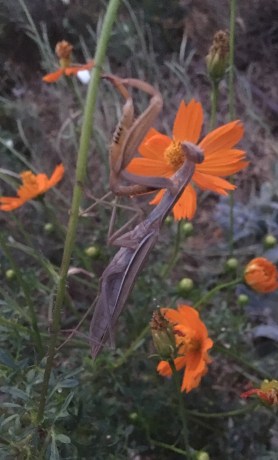
I had hoped to have a full day of gardening today, but very little of that got done. I measured bathroom floors, ran around from the tile store to the home improvement store, measured floors again… back to the tile store, researched windows and window coverings…
In an email to my contractor I wrote the proverb that came to mind, “Hope deferred makes the heart sick.” I think I still have patience; what else is there to have? But I ran out of emotional strength about three days ago. I’m managing without it.
That last little burst of pruning and raking and being in the garden was the best thing of the whole day, and by itself lifted my heart quite a bit. But the mantis saved the day, by showing up and hanging out with me for a few minutes, and letting himself be rescued. ❤
 I read on dictionary.com that this is National Read a Book Day. Do they want us to read an entire book? I might be able to do that if it’s one I picked up at the library yesterday, Phineas L. MacGuire Gets Cooking, by Frances O’Roark Dowell. I think I need to read at least a book per year by this author, to keep me grounded in the reality of middle schoolers. I’ve been slipping, though, probably because there is a gap right now in the ages of my seventeen grandchildren. The youngest of the older bunch is sixteen, and the oldest of the younger bunch is ten. The ten-year-old does love science and cooking, and would probably enjoy Phineas, and it’s always fun for me to read a title or two from the latest book loves of the children.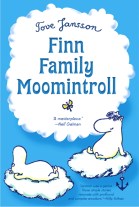
 Finn Family Moomintroll. According to the recommended age it was too advanced for them, but I went with my tendency to give the children material they might have to stretch a bit to appreciate, and to read books that I personally love. That time I don’t think they had to stretch at all to find a lot of “fruit” that was very tasty, and all the more so for being enjoyed together.

 Gladsome Lights