
An unhappy affliction lifted.
 One evening my housemate Susan baked a wonderful onion-and-potato dish, and as I walked through the kitchen I said, “Oh, my, that smells so good!” The next morning the cooking aromas were present still, and I didn’t think much about it, but the next morning…. What? How odd to have that smell hanging on. I tried putting some aromatic oil in the diffuser, but it made no difference. After a week I had figured out that this odor was not real; it was somehow generated by my own nose sending wrong information to my mind. When I researched the phenomenon online I found phantosmia, sometimes called an olfactory hallucination.
They say it can happen after a respiratory infection. I had recently (mostly) gotten over a cold and the flu. I was smelling a sort of burning-leaf scent. That’s the only thing I could think of to describe it, not that I am terribly familiar with that smell around here – but I was trying to come up with an imagination to match the fake sensation. It was there when I went to sleep, when I woke up, all day long, and when I drove to the next town for an appointment. I could taste my food, sort of, but the weird smell I was registering overpowered most other smells, so that tea was like water, and scented candles were unscented. The articles I had read say this condition “usually” goes away, but I’ve heard of people who have a permanently altered sense of taste, and that sounded like a terrible loss, so I hoped….
Also, I started taking zinc (my pharmacist friend’s recommendation) and Vitamin C, and doing more frequent saline nasal rinses (my doctor’s recommendation). After about ten days I thought maybe the odd smell was fading… and then one afternoon I returned from an errand and sniffed the evidence of my having roasted eggplant that morning – it wasn’t very pleasant, but it was a real cooking odor!
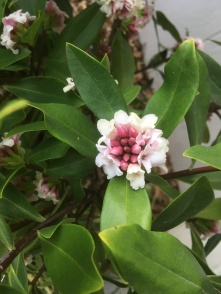
The next day, at church, incense, glorious and sweet and nothing like burning leaves. Thank you, Lord! The crowning delight was the morning I was a bit peeved at my building contractor, and without thinking why, I opened the front door, as though hoping to see a few construction guys driving up. I didn’t see anything out of the ordinary, but the scent of the daphne floated up and filled my nose and mind with its essence, welcome and true.

Hovering over the meadow.
 Our Orthodox commemoration of the Three Holy Hierarchs and Ecumenical Teachers was instituted as a result of 11th-century debates about which of them was the greatest. They themselves had to intervene by means of a vision given to St. John Bishop of Euchaita, who chose January 30 for their feast.
These three gifts to the Church are Basil the Great (330-379), Gregory the Theologian (329-389), and John Chrysostom (347-407). Each has his own feast day, but they are held in such esteem that it isn’t too much for us to remember them again together, they who in the words of a hymn, “have enlightened the world with the rays of their divine doctrines. They are sweetly-flowing rivers of wisdom filling all creation with springs of heavenly knowledge.”
A hymn of Matins on their feast day echoes a theme that runs through hagiography generally; it is the sweetness of true theology and and God’s Word imparted to us.
Like bees hovering over the meadow of scriptures,
You embraced the wonderful pollen of their flowers.
Together you have produced for all the faithful
The honey of your teachings for their complete delight.
Therefore as we each enjoy this,
We cry out with gladness:
Blessed ones, even after death,
Be advocates for us who praise you!

Quiet drizzle inside and out.
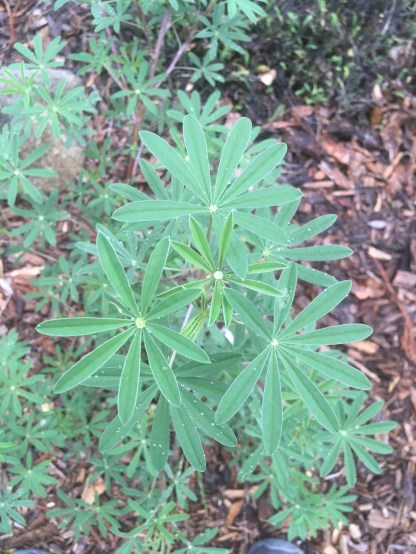
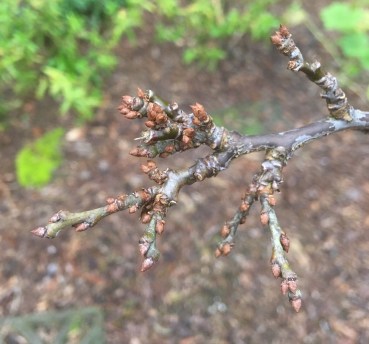
In the latter half of January, it always happens: I see spring coming. For several weeks the most growth in the garden has been of the green algae in my fountain, because I’ve neglected to put in the drops that prevent it. The sun shone briefly this afternoon, but by the time I got outside to clean leaves and redwood needles out of the little pump, I had to do it in a drizzle. The drizzle faded to a mist, and I could take a couple of pictures. The fruit trees have been pruned, and the sedum is sending out new shoots that are little cups to collect the fine rain.


Indoors, how companionable to have this color of paint in my new sewing room,
Kelly-Moore’s Quiet Drizzle:

Yes, work progresses, slowly. You can be sure that when I have
more complete results to show you, I’ll dedicate a long post to those refreshing views!

