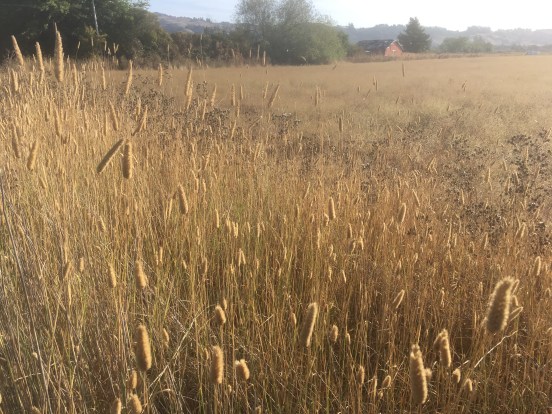
I’m in a good mood, because I cleared the driveway of weeds this morning, and brought sunflowers into the house. My foot feels all better, which had been slightly gimpy merely from wearing sandals instead of boots while gardening last week.
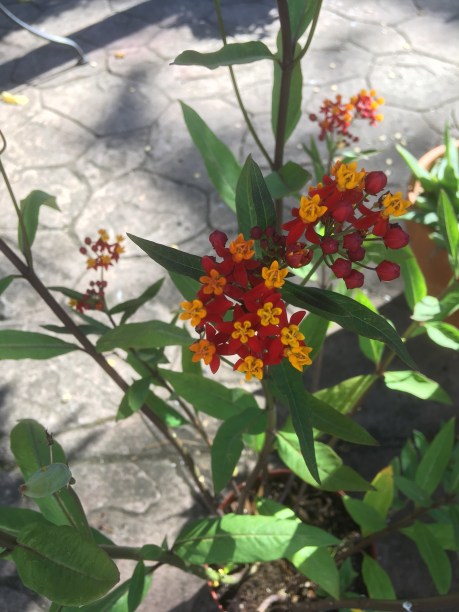
The Monarch caterpillars are thriving on giant leaves of the showy milkweed that I bring to them in their mesh cage almost every day. If they had hatched out on the spindly narrowleaf variety where Mama Monarch had laid the eggs, they’d have run out of food fast. I bought a new tropical milkweed plant when I went shopping for begonias last Sunday, but they don’t seem to care for its leaves. (At the bottom of the page is a milkweed I encountered in the mountains some years ago.)
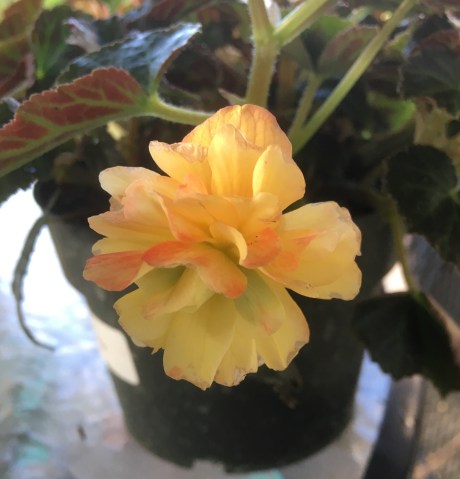
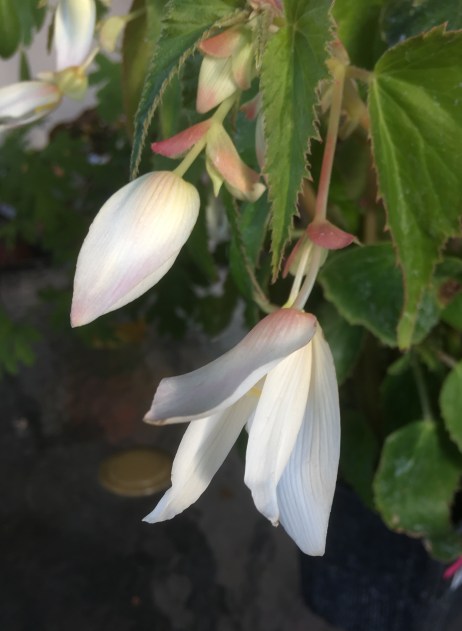

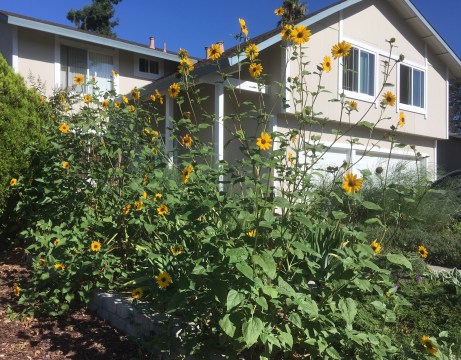
I’ve been too busy to write good sentences about All The Things. I am trying hard to learn to say NO to myself sometimes: “Remember, Dearest Self, you can’t do ALL the things ALL of the time!” Finally after four months, in the middle of which we think the city lost my application, we got the building permit for my remodeling project that I’ve been preparing for over the last year. It’s taking hours and hours to choose paint and cabinets and faucets and mirrors, and more time to watch caterpillars munch, so naturally there have been fewer hours with which to read, write, and cook.
I don’t know how to apply the principle that wise GKC is telling us about in this quote that I thought was simply lovely when I put it in a draft a while back. The word austerity doesn’t seem to fit with the way I behave, though pleasure and gratitude are the world I live in. I’d like to know what you all think about his twist on these qualities of our existence.

Purification and austerity are even more necessary for the appreciation of life and laughter than for anything else. To let no bird fly past unnoticed, to spell patiently the stones and weeds, to have in the mind a storehouse of sunsets, requires a discipline in pleasure, and an education in gratitude.
-G.K. Chesterton — Twelve Types (1903)

 ave the opportunity to know this scene as more than a poem, I thought it best not to wait to share it.