Tag Archives: California

Ladybugs warned me.

A picture from my garden in springtime:
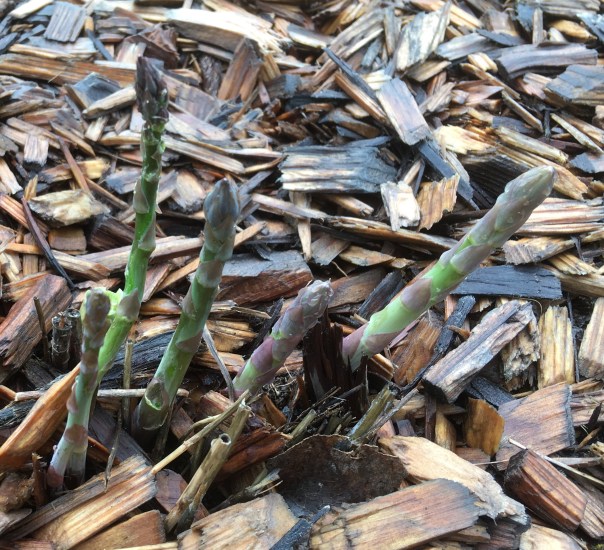
It seems I never wrote last summer about how I had to prune my asparagus early. I didn’t have time, because of how that project consumed me. The same phenomenon is forcing me to do it again this year: an infestation of aphids in the thick jungle of fronds. Last week I saw a few ladybugs on the plants, and thought, Oh, no, I bet it’s happening again. I looked more closely, but the invasion wasn’t obviously imminent.

Then today, as I was trimming the irises, I noticed that some of their leaves had the sticky “honeydew” sign of aphids. That’s exactly what I was doing last year when, as today, I looked up at the asparagus fronds bouncing off my head — Why oh why hadn’t I worn a hat? — and saw the shiny mess everywhere. I had taken a lot of pictures last year (including two I’m posting now), but never got around to sharing anything of that experience; there were immensely more pleasant things to tell about.

Searching online, I did not discover any tricks to prevent this happening every year, though I did learn that much of California is so mild that aphids are a problem with many crops; there are aphids specific to many plants, a fact I didn’t know before. Maybe I have the European Asparagus Aphids.

A single adult ladybug can eat up to 50 aphids per day, and the ones that arrived in my garden this month have feasted well, but they can’t keep up. One is supposed to wait to prune asparagus after cold weather makes the fronds turn brown, so that they have as long as possible to carry on photosynthesis. But if aphids are destroying them anyway, not much is lost by doing it early.
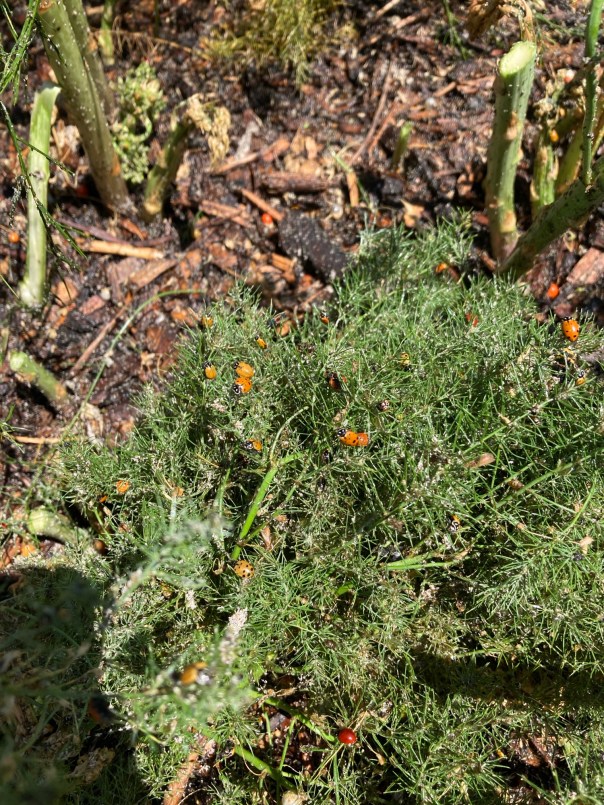
Ladybugs in ’24 after I took away much of their food.

Jacques the Gardener in San Diego shows in his video how he had the same problem I do, in his much smaller plot, and his reasoning about having to cut down the plants months before the usual time helped me to feel better about doing the same. Last year there were so many mild-weather months remaining after I removed the decimated fronds, a whole new crop of them sprouted, which I knew would start over the process of turning the fall sunshine into food for the crowns. Eventually they had to be cut off also. My spring crop following all that was pretty good this year, but it’s possible that a continued aphid plague will weaken the plants.

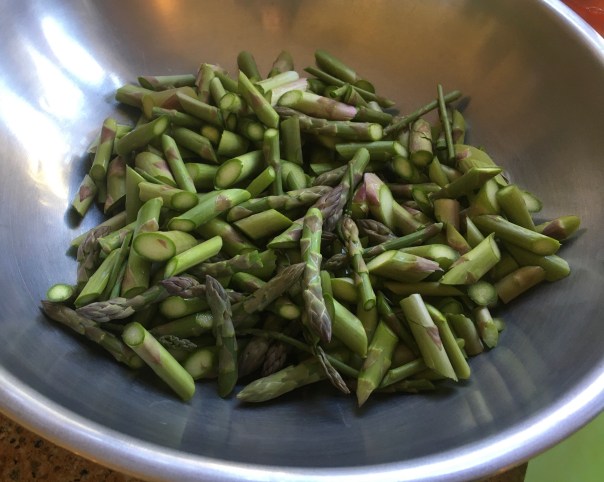
August 2024, after one of two beds had been cut back.

Today, I only cut off a few of the stalks, to clear the way for me to finish cleaning up the irises. In the process aphids and aphid carcasses drifted down on my hair and clothes. In the next couple of months I’m dividing and replanting the irises and changing things around in that area, so I think after cutting all the asparagus to the ground I’ll take the mulch off the whole space as well and start with fresh everything. I hope that might reduce next year’s aphid population a little.

In the meantime, I will close with a more positive visual reminder of why I do all this work:
 

Good-bye, Margarita.

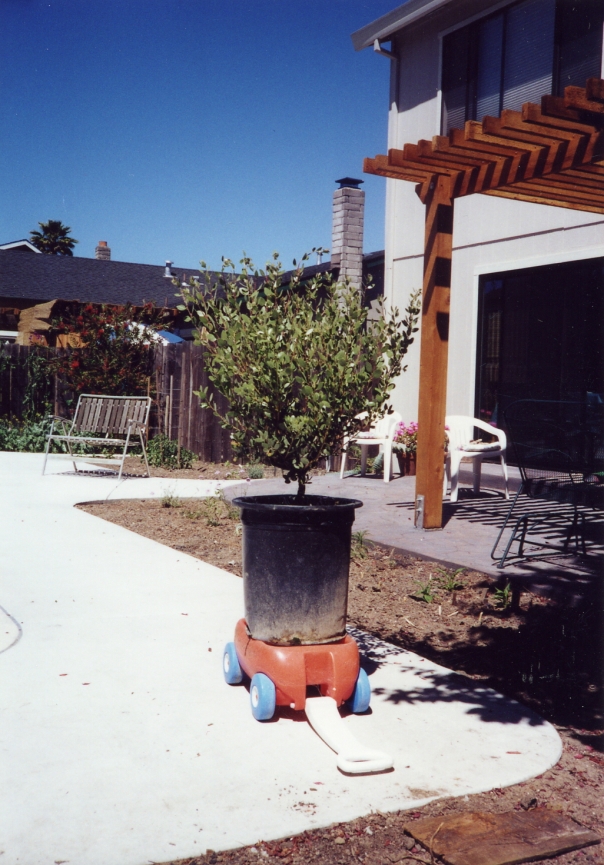
It’s a sad day here in the garden, as my dear manzanita bush is no more. Here is what she (I named her “Margarita” a few years ago) looked like when she first came into the garden in 2003:

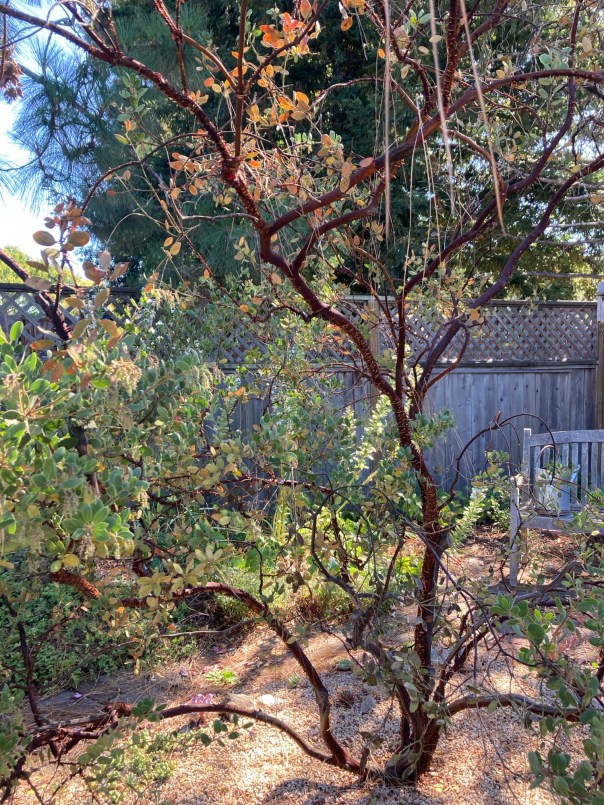
And this afternoon just before Alejandro cut off the branches:

She’s gotten leggy lately because I could not figure out how and where to prune, in the midst of her demise. And you can see the lack of green leaves in the main branch. But for most of her life, she has looked quite lovely through all seasons.

I have a new plant that will go in soon. I think it is a different variety. The leaves don’t look the same as the old plant, and I don’t know if I have the name of the previous one anywhere in my stacks of papers. This one is a boy, I guess, “Howard McMinn,” and it is famous for being the most adaptable type for growing “in captivity,” as one might say. It puts up with clay soils, and with more summer water — a typical garden condition — than would be tolerated by many species of Arctostaphylos.

I might name it “McMinn.”

Best views and favorite people.

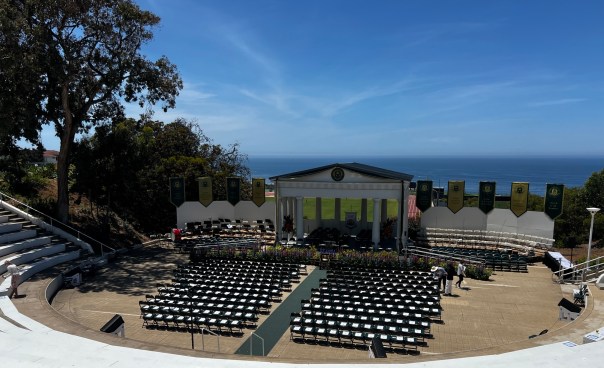
Pretty sure it was the quickest trip by plane I’ve ever made, my flight to San Diego and back, all in less than 60 hours. I went for my granddaughter Maggie’s graduation from Point Loma Nazarene University, which offers the guests at the ceremony an expansive view of the Pacific Ocean and the sky above. The weather cooperated; the day before, our view would likely have been obscured by fog and clouds.

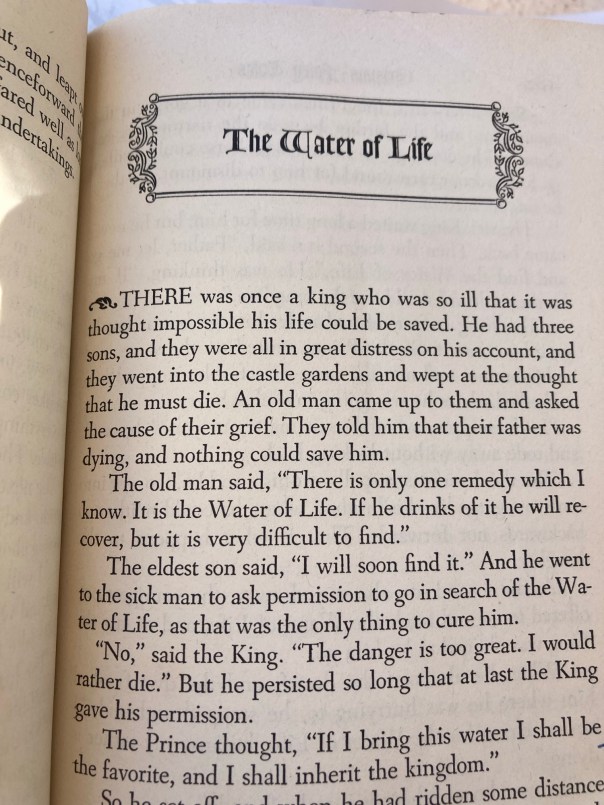
But the brightest sun beat down on us that day, and having forgotten my hat, I shaded my face with a program throughout the ceremony. Before the ceremony, for which we arrived very early as to get the best amphitheater seats, I found myself holding a venerable copy of Grimm’s Fairy Tales that possibly Maggie was planning to return to the school library. I made the most of my opportunity and read “The Water of Life,” which is a story I’d been wanting to read for some time.
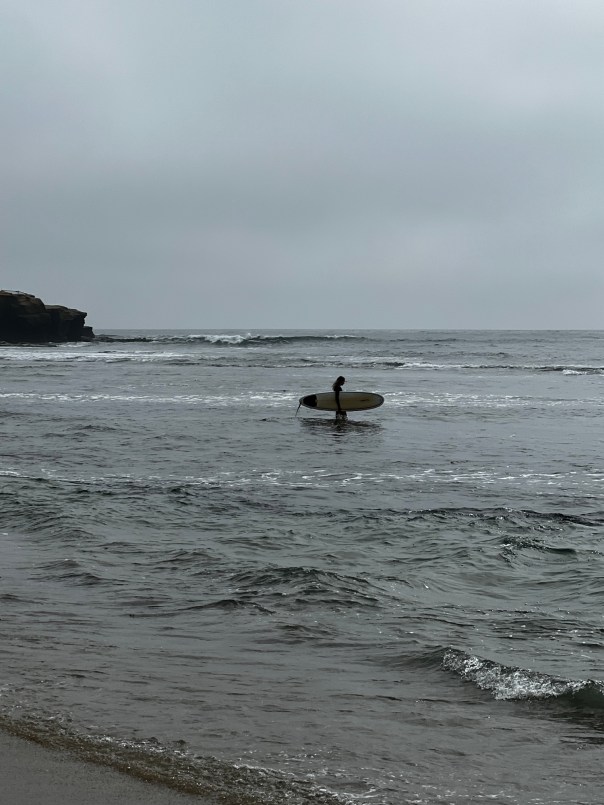
Maggie had most of her immediate family and many favorite people around her on her happy day, and we were and are terribly proud of her. It was a reunion as well as a celebration, as everyone in our group came in from somewhere else, three states represented, and we stayed in a house together across from the beach.

Maggie

Before and after the main event, we enjoyed the ocean and the beautiful campus, wonderful conversations, and lots of snuggling focused on my great-granddaughter Lora. She is of course the fourth generation from me, and all of those in her line were gathered, which was sweet!

White Bird of Paradise

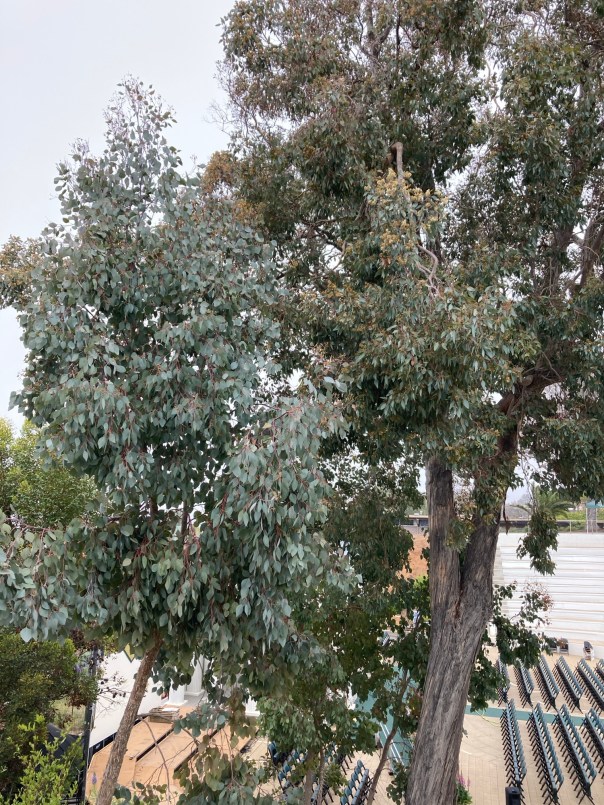
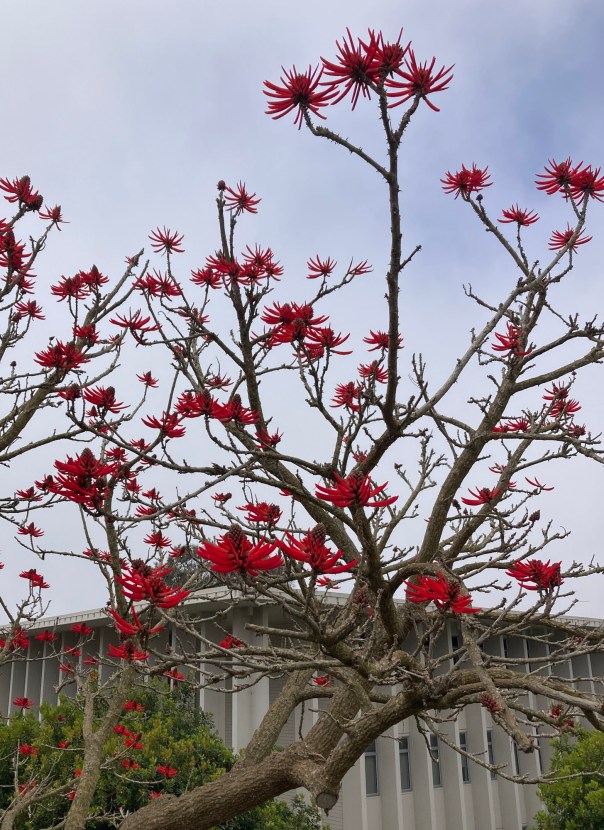
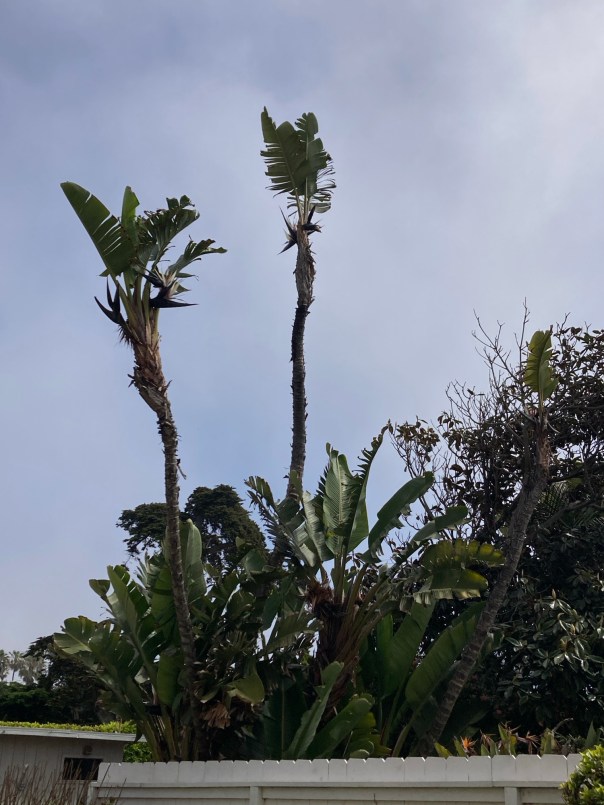
Everywhere I looked I noticed many and various plants that mostly don’t grow where I live, or don’t get as huge. I learned just now that the White Bird of Paradise, Strelitzia nicolai, is a different variety from the colorful ones, and that’s why the many such plants around our Airbnb house were taller than the two-story buildings. The lantana in the back yard grew higher than my head.

Bird of Paradise, Strelitzia reginae
Australian Tea Tree
Two types of eucalyptus trees.
Coral Tree
Princess Flower, Tibochina heteromalla, South America

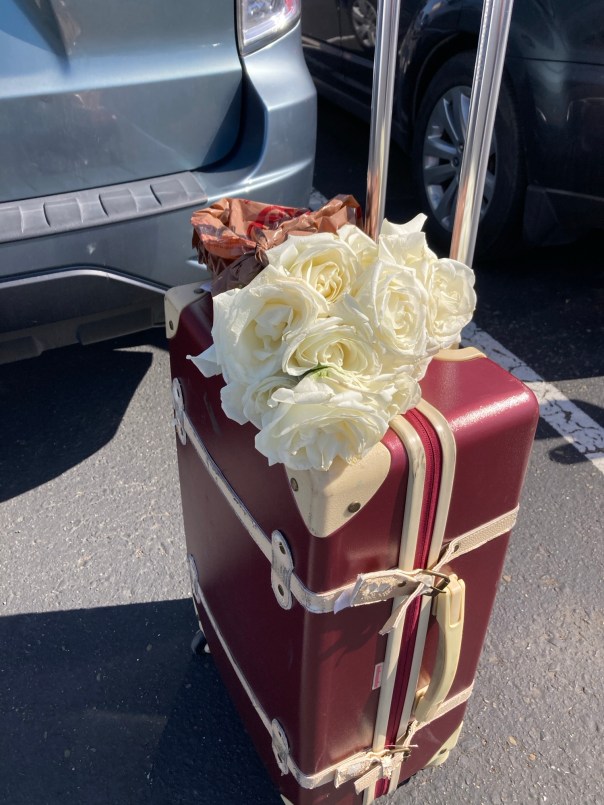
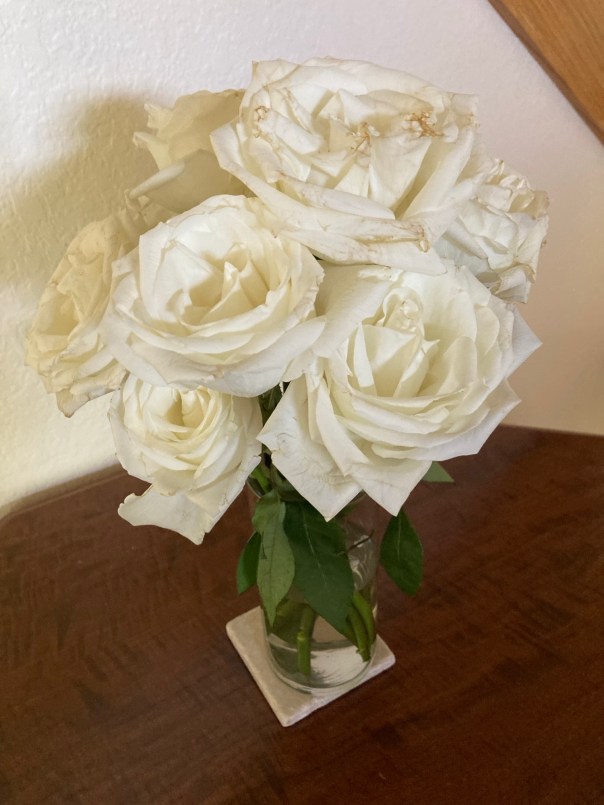
Early on the morning of Mother’s Day, we were clearing out and leaving to catch our planes, etc., but the day before, the two women who aren’t yet mothers gave the mothers among us roses. I carried mine home in my backpack, their stems gathered in wet paper towels tied up in a plastic bag.

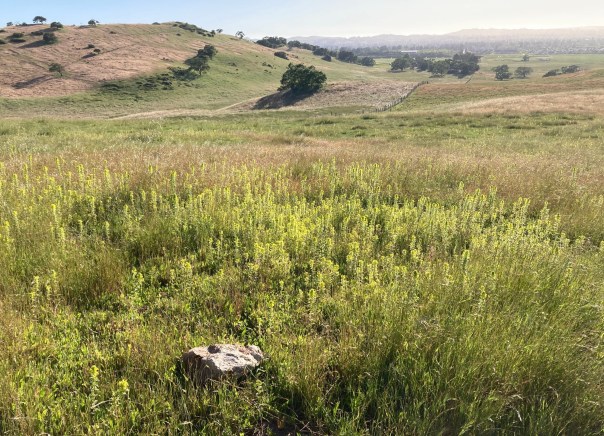
Pearl, Maggie and friend arrived at my house soon after I got home, by a complex turn of events, so our happiness continued for two more days in a different climate. Yesterday we four took an evening walk in the nearby hills where I continued to find plants  I didn’t know, or rather, as is often the case, that I didn’t know that I knew.

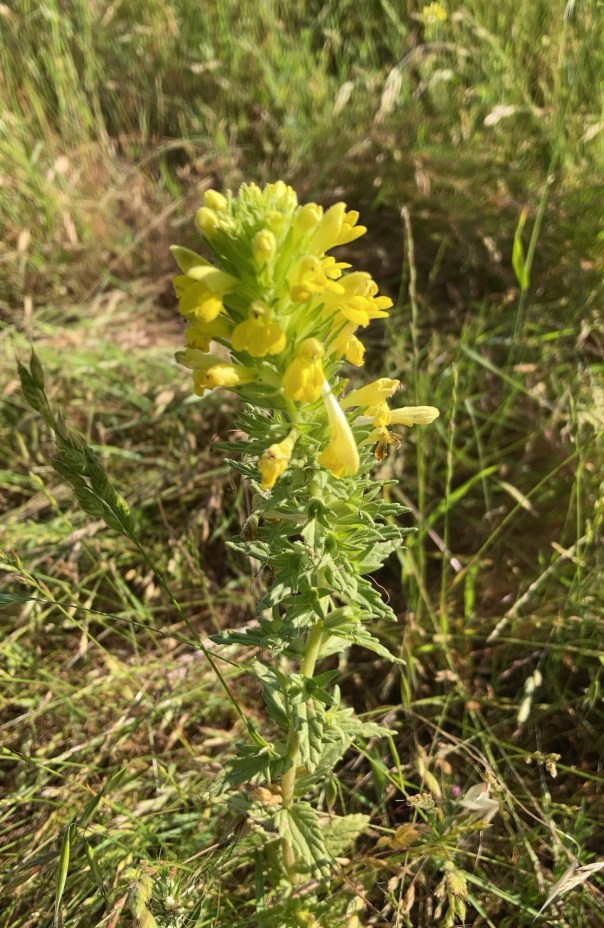
My Seek app tells me that I identified the Yellow Glandweed, Bellardia viscosa, a year ago this month, but I’m guessing from the location recorded back then that I saw one or a few flowers, and not as we experienced last night, of thousands and thousands of them spread up and down the slopes.

Yellow Glandweed

Maggie’s friend had never been in northern California before, and his sincere interest got Pearl and me talking more than we normally would about the natural history of this area especially. About poison oak, and oak trees, the California Bay Laurel, and Lace Lichen, which I had to look up again to remember what it is exactly.

Lace Lichen is truly a lichen, but Spanish Moss is not a moss: it is a bromeliad. As the latter plant is not native here and I don’t know if I’ve ever seen it, I won’t confuse myself any further by showing a picture of Spanish Moss. I may have seen it on Maui, where is is also not native but is reportedly “often confused with the native Hawaiian plant called hinahina, which is a silvery-gray native heliotrope used in lei making.” Lace Lichen:

Lace Lichen

The lichen that hangs from these trees is food for the deer and nesting material for the birds. If you look at it closely you would not confuse it with the bromeliad.

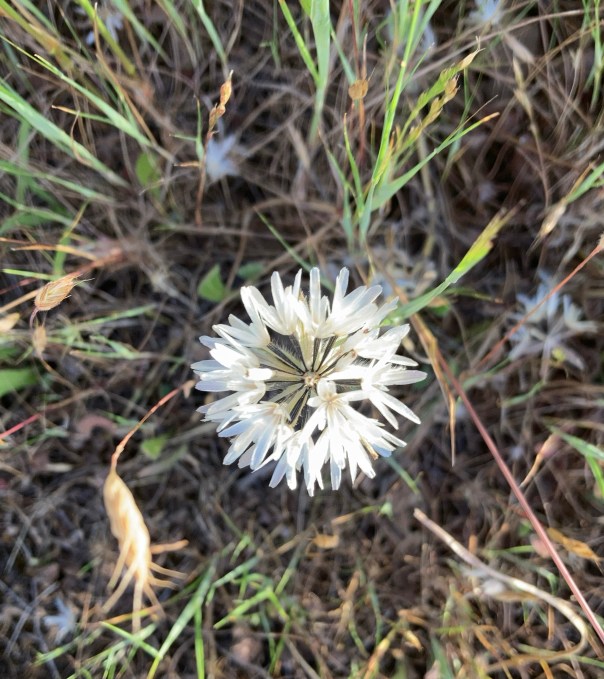
Blow Wives

The young people especially thought the golden California hills, the oaks and the bay trees most beautiful. They climbed up on the thick trunks the way our children, and some of us parents, always do. We all strolled through the grass and among the strange yellow flowers. It was a balmy walk in the hills at the end of the day when the air was still warm and our shadows were long.

Now my guests are gone, but my roses remain,
reminding me of my ever-expanding, most blessed motherhood.

Blue lake and golden squirrels.

I stood on the cabin deck watching the critters on the slope below, where they scrambled about, doing their work. After a while I pulled up a chair to the railing and watched some more. Squirrels and chipmunks had found the recent offering I’d made, seeds scattered in the little neighborhood as though from their heaven.
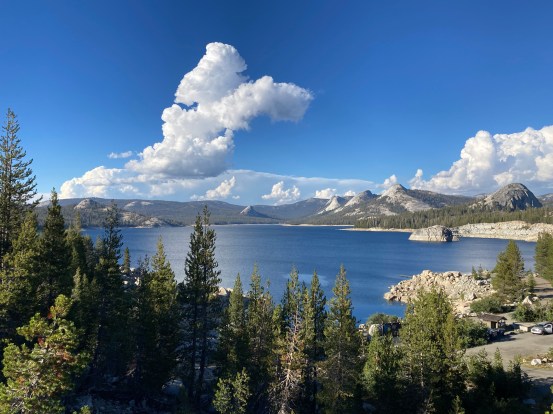
For several days I’m enjoying the mountain air at the family cabin in the High Sierra, over 8,000 feet in elevation. It’s cold this week, and the animals are no doubt storing food in their winter homes.

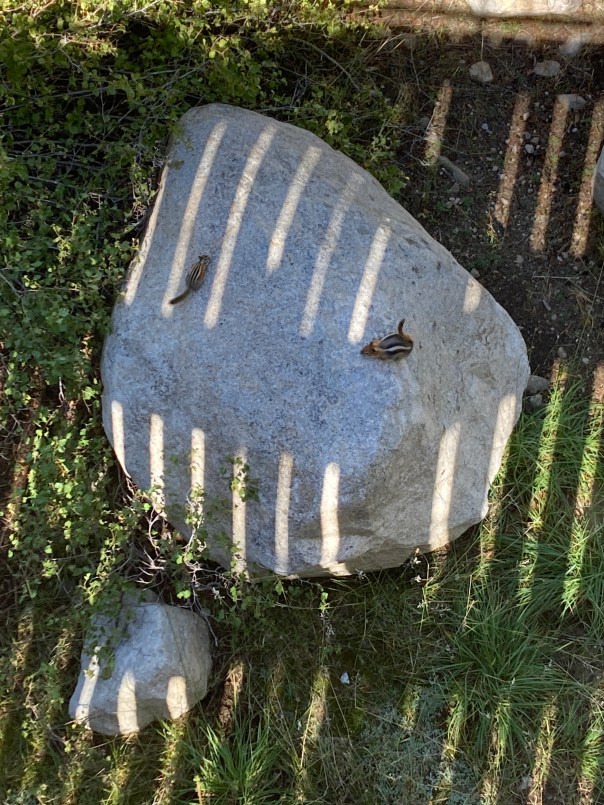
Right away I noticed that two species of small animals were present there, and I remembered the name of one, because of the many times my children and I had studied about them in the nature guides; any time our yearly camping trips took us to these Sierra Nevada Mountains, we would encounter them. The Golden-mantled Squirrel is the larger of the two, and the smaller is the chipmunk, likely the Lodgepole or Sierra Chipmunk.

Even after they discovered the seeds, the chipmunks spent time in the middle of the gooseberry bushes, hidden from view but making the branches rustle and sway. They must have been eating the dried remains of the berries. And the chipmunks especially like to play chase over and around the boulders, occasionally stopping for a second to tempt me to take their picture. I did get one blurry shot including both species.

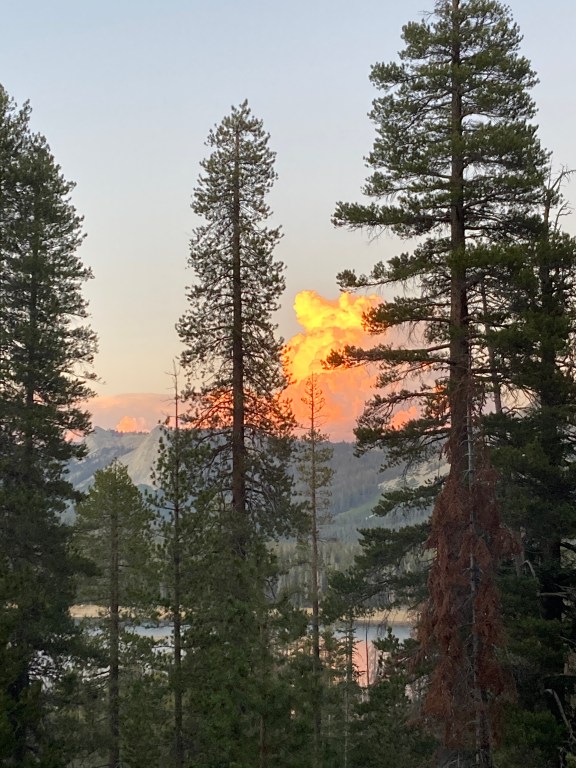
Other than watching their fun, I’ve been taking in the cloud show that is ever fascinating, and I succumbed to the requisite first-day-at-the-lake nap. I’ve already thought of more things I want to share here, from my thoughts and observations, so probably you will hear from me again soon.