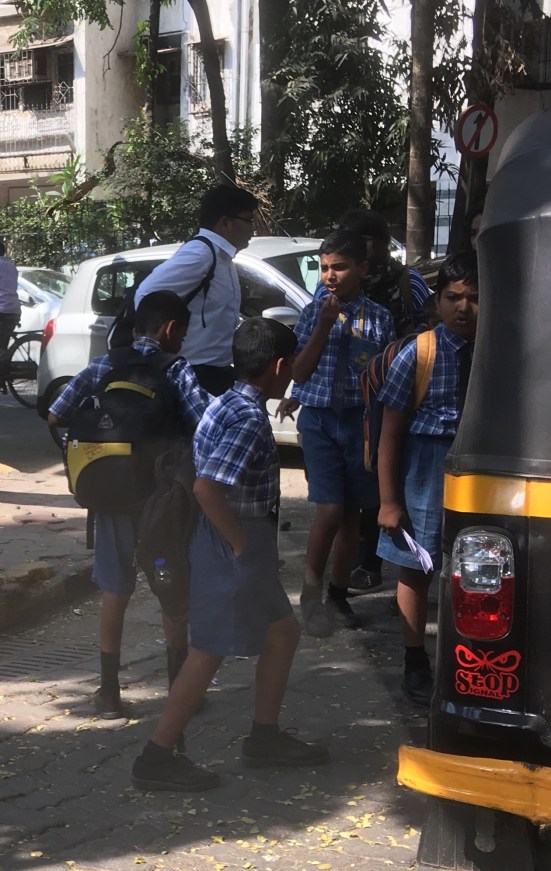
When we drive anywhere in the city, I glue my eyes to the window to watch the thousands of people and motorcycles, street vendors and fruit stands, human life and business energies streaming past. But I like best just walking here and there in the neighborhood, where I can stop at least my own motion for a moment and take a picture of the little things I notice.
On a stretch of road a block away, we passed the man who always sits on the pavement at the corner sorting greens. Passing so close beside him at work, not pausing enough to know for sure if some part of me is encroaching on the airspace above his small piles of spinach, I feel a kind of intimacy that forbids my becoming an outsider and looking on him as a curiosity.
You probably noticed that most of my pictures of women in their lovely saris and kurtas are from behind, because I am too shy to stop everything and everyone and ask to take their pictures. Last week I felt the boldness to ask rise up in me, and then quickly fade, when we passed three middle-aged women sitting and chatting in a row on chairs in front of a shop, facing the street, each in a different and brilliant sari.
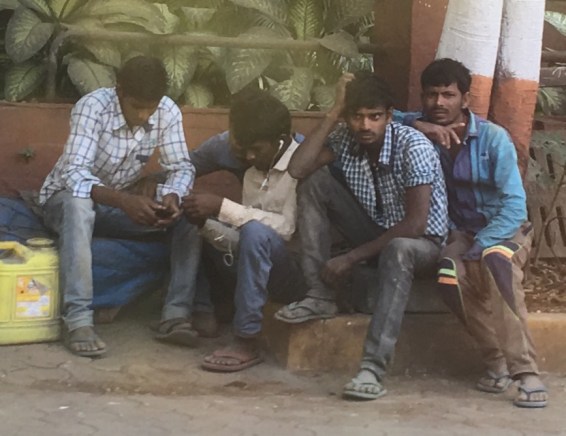
Many of the streets and sidewalks are constructed of the same sort of interlocking pavers, which are often broken, but sometimes they all look intact, even if one or another is a little wonky. Twice I walked carefully around a puddle of water on the sidewalk only to step on a dry paver that turned out to have water seeping under it, which squirted out all over my sandal and foot. Who knows where that water came from? This is not the monsoon season, and it hasn’t rained in the month I’ve been here. Ick.

One has to watch out for and walk around dog poop, and the dogs themselves that often sleep in the middle of the sidewalk or street… and the woman collecting trash, whose bag might spill right in front of you.
In the heat of the summer I’m sure more businesses close for a spell midday, but this is winter, and about noon we all four went walking to the nearby market area where you can buy nearly anything you want from one of the shops tucked in next to each other, often in the tiniest spaces, such as the place where Kate bought eggs, which were packed loose and uncushioned by anything in a packet that might be called a bag, taped together from the newspaper ad page.

When we were having a pani puri snack at a stand on one side of the street, Kate pointed out to me the man sharpening scissors by means of bicycle power on the other side. I caught his picture from a distance, squeezed in between street and sidewalk traffic on his stationary vehicle.

Tom was looking for some charcoal to use in grilling kebabs, and was directed down an alley to “the first place on the right.” So we went down there but there were no shops, and we turned back, only to realize that the charcoal seller had only a very vague and trashy area from which to do his business, but it worked fine. We teased Tom that he bought really a bit more charcoal than he needed just so he could get that most beautiful 5-kilo bag.
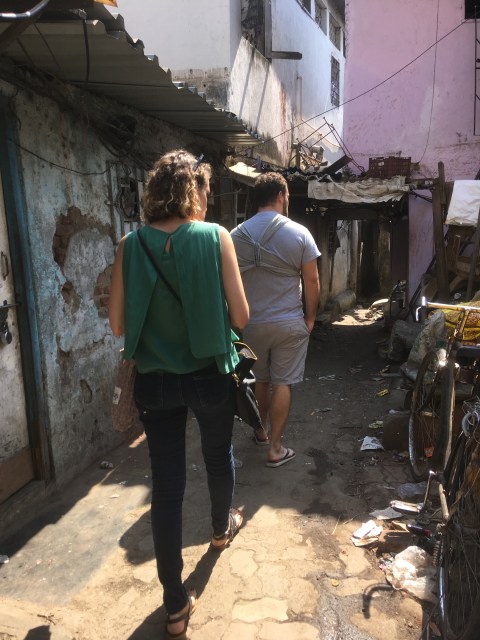

Tom was wearing Raj in the sling, and my, my, did he get stared at! Maybe some people didn’t know what bulgy thing he was carrying? But more likely they were disturbed at the example he was setting, in this land where fathers do not generally do child care.
I went shopping with Kate for a sari that she will wear to an Indian wedding in a few weeks. The shop was in the pretty yellow building shown in my last post, with scaffolding around it, also down an alley but not so sketchy looking. So elegant inside, with the beautiful fabrics and dresses and evening bags… But technologically lacking; their credit card machine would not take any of three cards we tried.
This gave me the opportunity to see some sights, as we walked a couple of blocks to an ATM for cash. While we waited for something else, we enjoyed visiting with the soft-spoken and articulate owner of the shop who told us that she would love to visit her relatives in California but her business prevented her. She asked Kate to clarify her response to the offer of a glass of water: “I’m okay.” We Americans are used to this phrase now, that means, “I’m okay as I am, I don’t want _____ that you are offering me.” But ”okay” is an affirmative answer in itself, so it’s confusing to people who aren’t familiar with the current manner of speaking. This led to a discussion of phrases I don’t think I’ve even heard, “Yeah, no,” and “No, yeah.” Really?
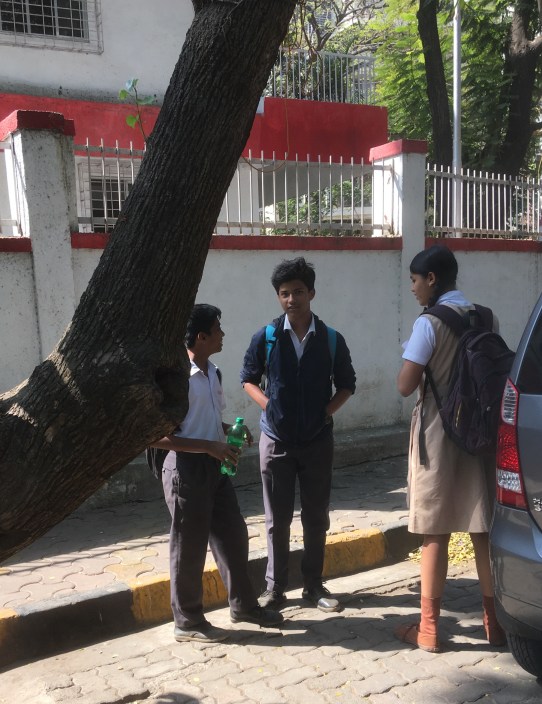
School kids in uniforms! We are likely to see lots of handsome children looking sharp in their various styles and colors of uniforms as they leave the school grounds or pile into rickshaws. Khaki, blue, plaid… The girls of one school wear deep purple dresses.
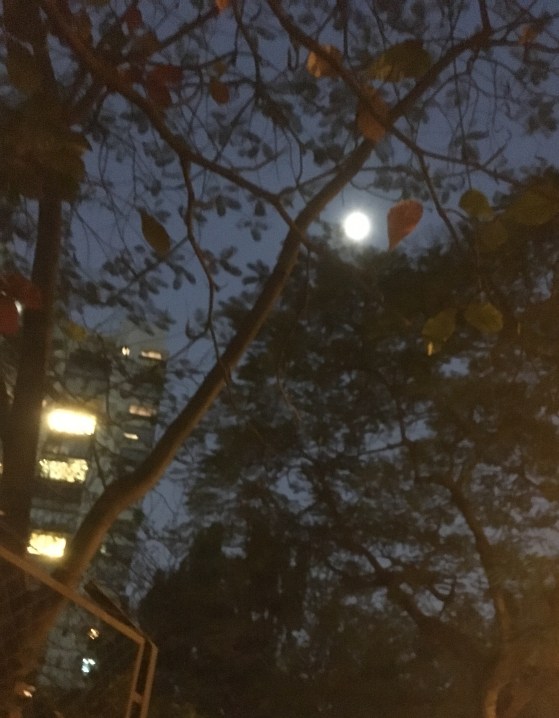
Walking home from church the other night we stopped at a flower stand to buy large white dahlias for about 30 cents each, and as we were standing there I looked up to see something unexpected: the moon! We aren’t often out at night, and the city lights and high-rises hide much of the sky… But there he was, my dear friend.
 For I remember with certainty this fixed psychological fact; that the very time when I was most under a woman’s authority, I was most full of flame and adventure. Exactly because when my mother said that ants bit they did bite, and because snow did come in winter (as she said); therefore the whole world was to me a fairyland of wonderful fulfillments, and it was like living in some Hebraic age, when prophecy after prophecy came true.
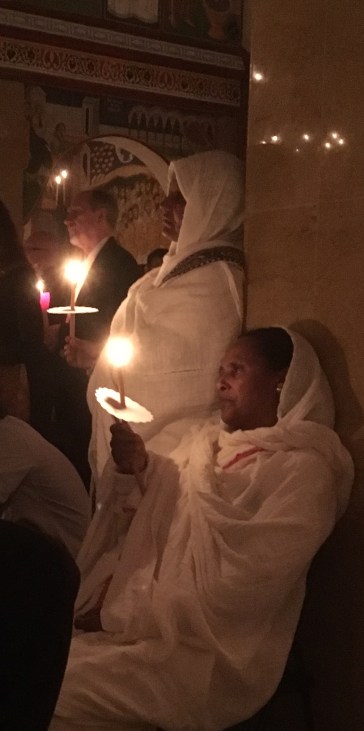
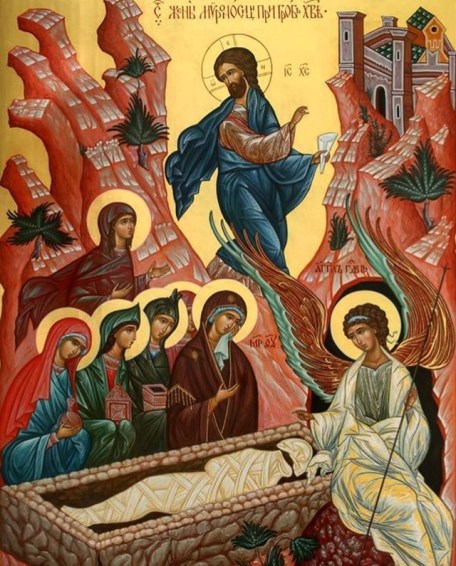
 There is not one word for the way so many of us Orthodox feel when we have come to the end of Lent and Holy Week, and are finally standing in church on Pascha night, exhausted, brain dead, dizzy from sleepiness, feeling a little (or a lot) out of whack from keeping strange hours and eating little. Parents of young children have been dealing with toddlers crying from fatigue and their older siblings longing to go to the day’s special service at church.



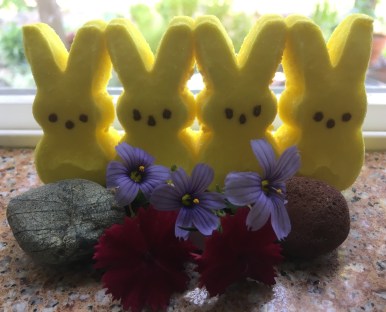





 It was a mildly wild evening with eight kids scampering upstairs and down around my house, playing the piano, building with Legos, occasionally squealing, being happy and good. They weren’t my grandchildren, but most of two young families from church who blessed me by coming to eat my soup.

 Gladsome Lights