
If you can’t make out the verse printed on the building, it says, “THE FEAR OF THE LORD IS A FOUNTAIN OF LIFE.” Pippin took this pic in Chester, England. It was a sweet surprise to find that reminder in an unexpected place.
If you can’t make out the verse printed on the building, it says, “THE FEAR OF THE LORD IS A FOUNTAIN OF LIFE.” Pippin took this pic in Chester, England. It was a sweet surprise to find that reminder in an unexpected place.
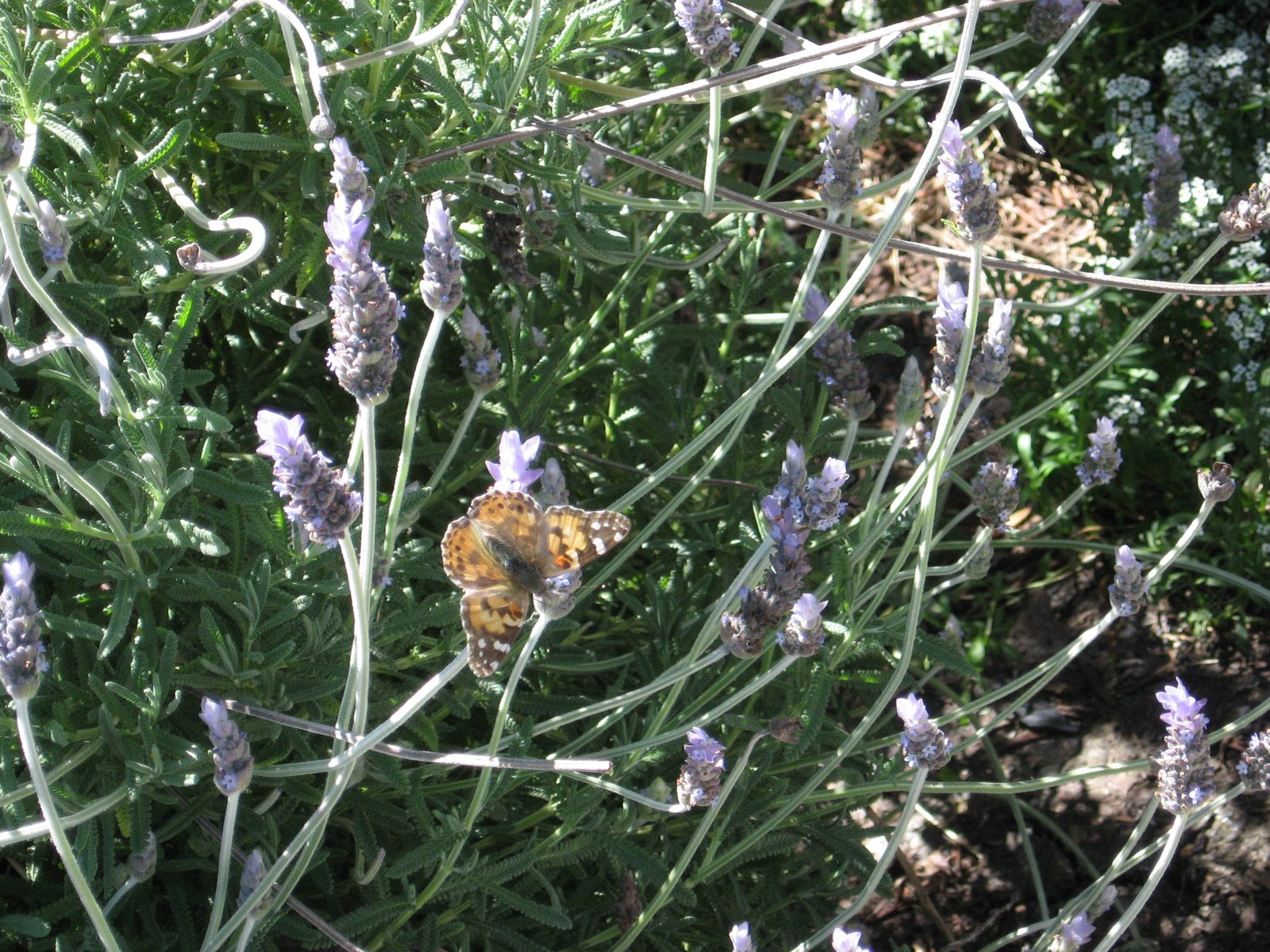 This is the time of year when lavender bloom is peaking. I’m not speaking of French lavender, where I caught a butterfly perching at least a month ago. I have two of those bushes that seem to be always blooming, and quickly grow to a huge size because there never seems to be a post-bloom time to cut them back.
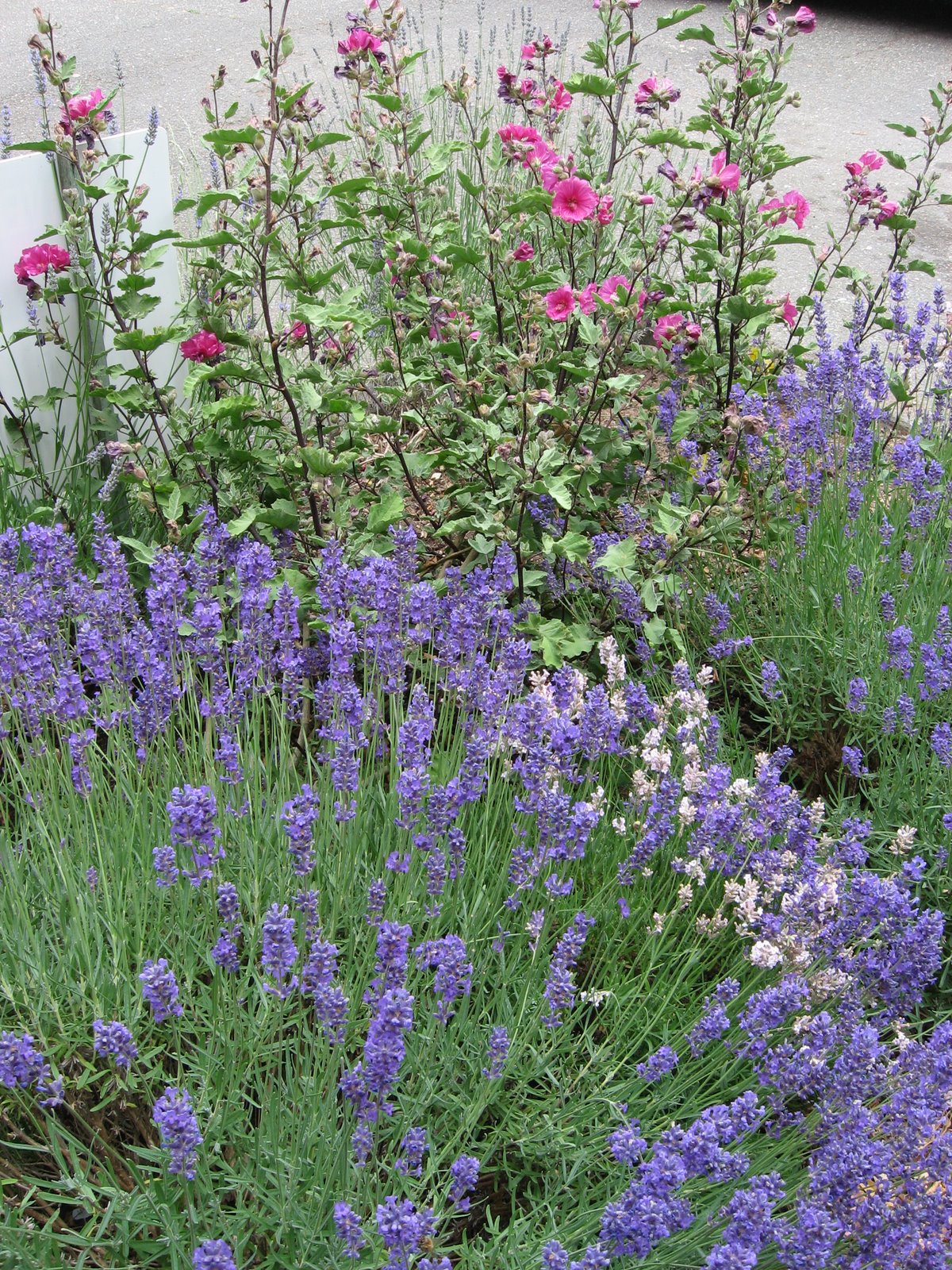
But rather, English lavender.
At church, close to my favorite rose, these two colors of lavender complement the mallow that waves over them.

And not too far away the Matanzas Creek Winery has acres of lavender in bloom right now. Many times I’ve taken friends to get a whiff and a feast for the eyes in the mornings of late June. I didn’t take this picture, though.
Pippin took many picture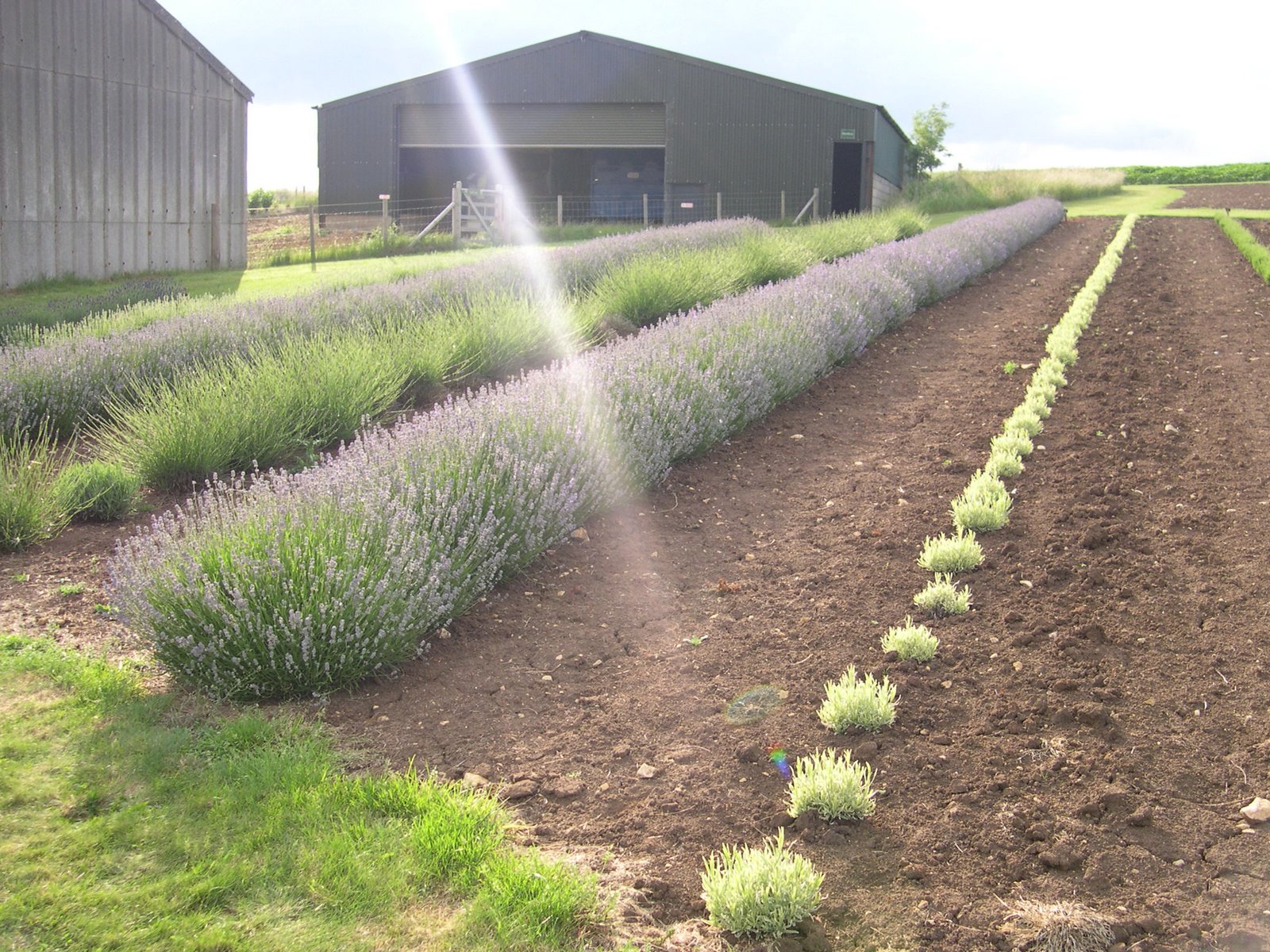 s of lavender at a farm we encountered in the Cotswolds of England at springtime several years ago. I’m not showing you her most picturesque shots, in case she wants to use them commercially sometime.

This farm grew so many varieties of lavender, and they had identifying markers at the end of each row, so that I could write the following journal entry:
On our way back to Snowshill we find the lavender farm Jacki told us not to miss. Fatigue has me waiting in the car for my daughter to take a picture, but she comes back to get me—she  knows I will want to experience this place, and she’s right. What a palette of color and textures; her photos come out looking like Monet paintings. Twickle Purple, Alba, Dutch, Nana Alba, Hidcote and Peter Pan are some of the varieties I note in my book, as we stroll on wide grass paths among the neat rows spreading out of sight for many acres. There don’t seem to be any other people around; it’s probably suppertime for most folks–or later. Some of the plants are bushy and covered with blooms, others more dainty, with the flowers just coming on. The colors range from deep cobalt through lighter blue and white. When you throw in the lavender smell, it all makes for a sensual feast.
Lavender gives such a lot of pleasure over a long season, is unthirsty and very easy to care for. After the bloom, it’s short work to prune the bushes back, and then there’s no fuss until the next spring, when I can sit on the patio and watch the bees feeding off my own lavender. Weeks ago there were bushes in bloom in our area, but I kept watching in vain: the bees had not deemed mine ready yet. But today was the day! Just this morning there they were, a dozen of them buzzing around. It takes almost more patience than I have, to get a picture like this in a garden where the breeze is nearly constant. But I did it! So I have something to give today.

 If any one rock expresses for me the metaphor the Psalmist uses in words like this (Psalm 18): “The LORD is my rock, and my fortress, and my deliverer; my God, my strength, in whom I will trust; my buckler, and the horn of my salvation, and my high tower,” it is El Capitan in Yosemite National Park. Contemplation of this edifice over time probably contributed to my love for rock and stone. It may seem odd, or lazy, that I’ve never made the effort to study geology or petrology. All I do is stare at the big rocks and collect some pretty little rocks. The latter are good to put on the soil around succulents and keep the roots warm.


To be truthful, I collect some medium-sized stones as well and haul them down from the mountains on occasion, with the help of stronger and less enthusiastic members of the family. Granite. These are not only reminders of larger hunks of granite, such as El Capitan, but they are very useful in the garden, for beautifying generally, adding another texture and color to contrast with leaves and flowers, or the colors of the cats who sit on them. In some places they also prevent cats from engaging in other less desirable activities.
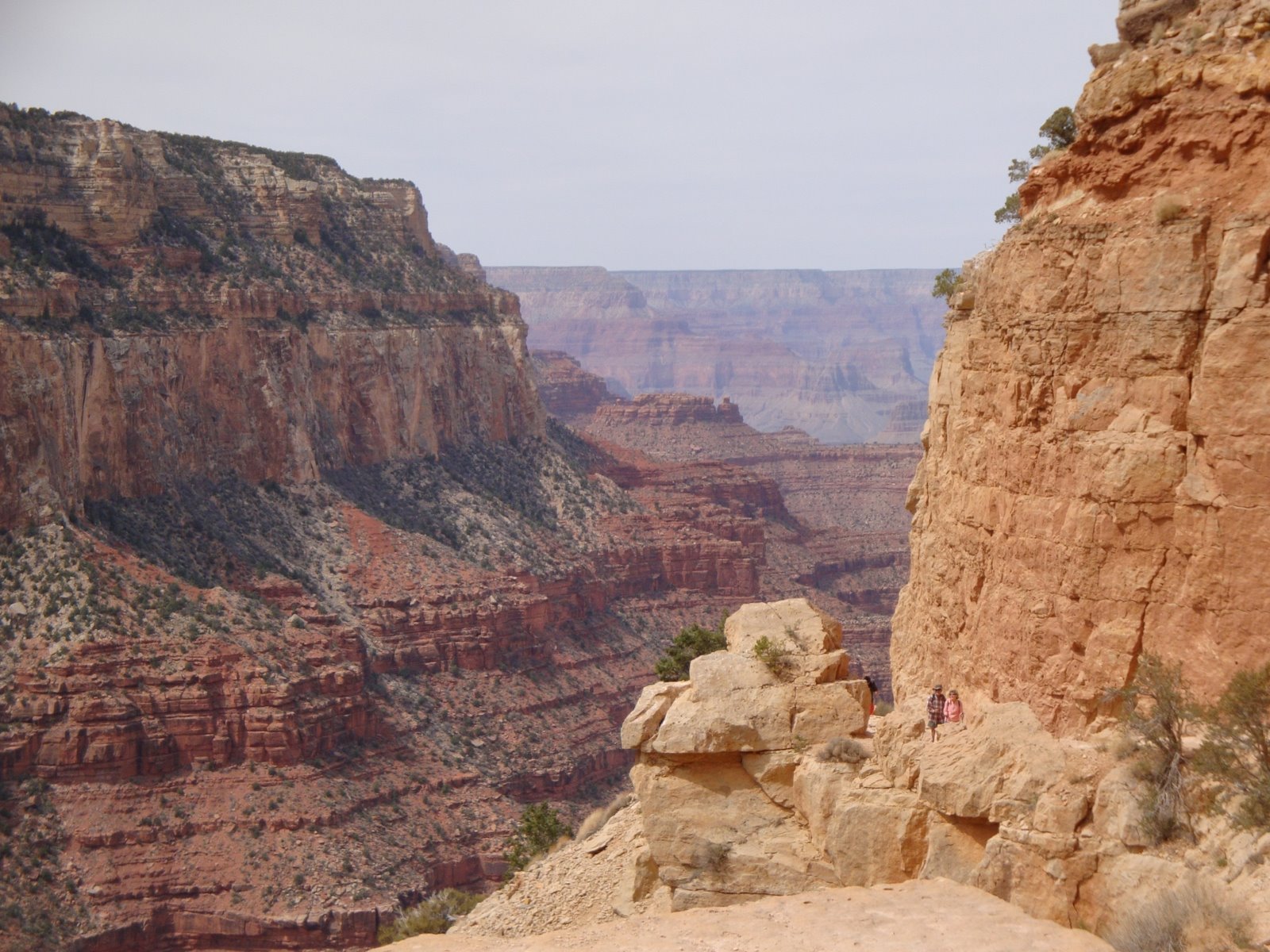
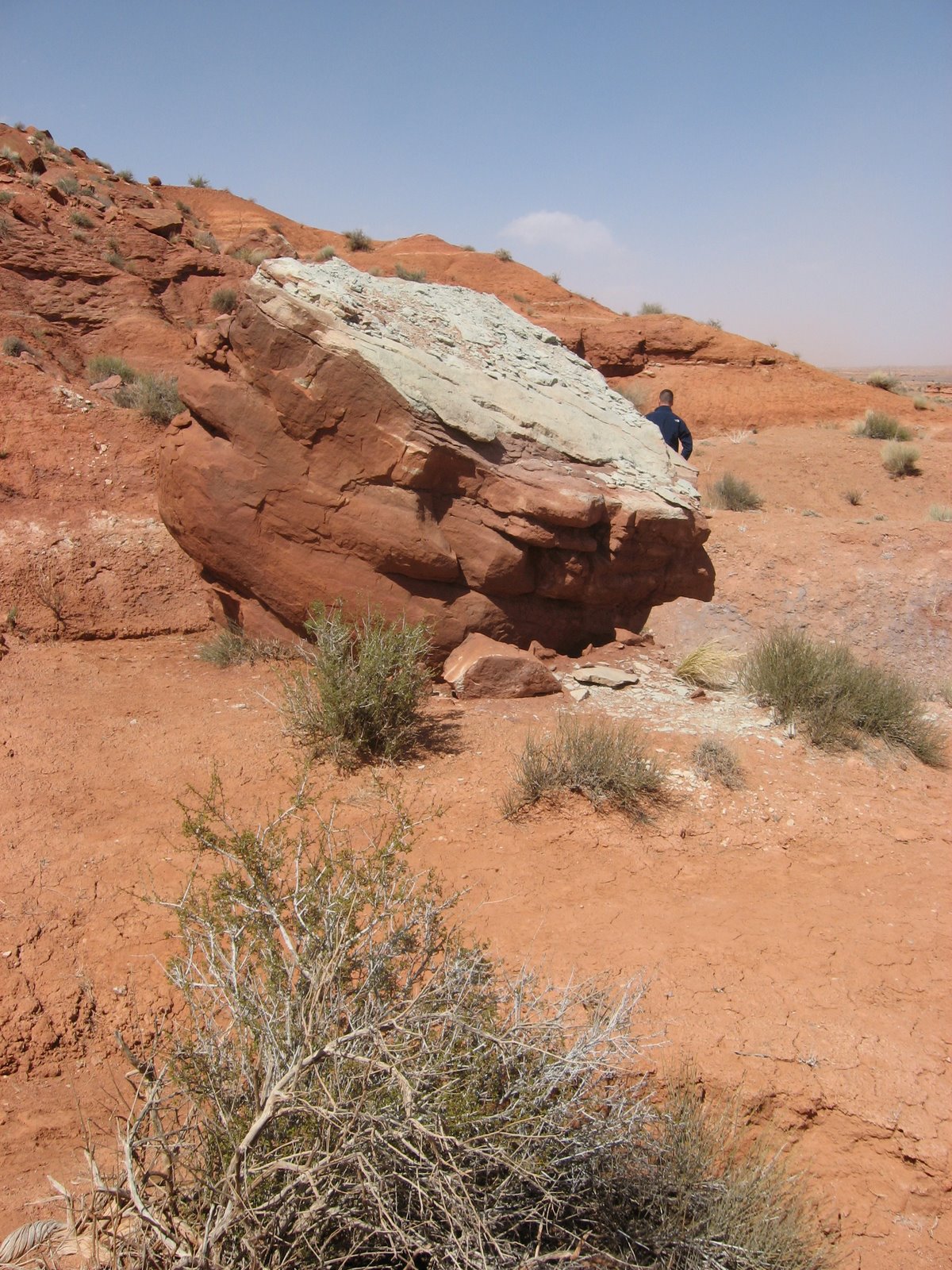 But in Monument Valley I was thrilled at aqua blue rock faces gorgeously setting off the mostly red cliffs. As we climbed out of the car and hiked in among giant boulders and hills of rock, I looked forward to taking their pictures.
Unfortunately, we were in the middle of a sandstorm, which made it unsafe to use one’s camera. My companions said, “What are you talking about? There is no blue rock here!” And when I got close to these piles of brilliant color and picked up some of the chips of sandstone, it wasn’t bright at all, but sort of grayish-white.
This photo I risked (above, with a man behind it) shows the bluest rock I saw–as it looks to normal people. I am still puzzled as to what was going on that day. If the rocks were reflecting the blue sky, why didn’t the others see that? Did I have blue sand in my eyes?
 In England and Scotland several years ago I collected small stones that wouldn’t weigh me down too much on the return flight. Here is a photo of the first place where I couldn’t help myself, where the chalk cliffs on the southeast coast of England meet the sea. I am the dark shape bending down to hunt and peck along the shore. >>
Also while in England, we visited several stone circles. Just being near these stones and thinking about the people who mysteriously erected them makes me praise God for creating humans with a desire to know the Absolute and numinous, people who are not content to live a life that is merely earthly. History is full of evidence of God’s working in men’s hearts, and I am linked with these people because we have all sought God.

The standing stones above are in Swinside. I much preferred just meandering in the historically rich countryside, soaking up….something, to visiting “museums” full of print-heavy posters that were too much like dull textbooks.

Stone fences and walls abound in Britain, including portions of the famous Hadrian’s Wall and its forts, leftover from the Romans in the 2nd Century A.D. We liked hiking alongside it for a couple of miles (below).

 the collection of specimens I brought back from Britain–one group from Beachy Head in England, and three gatherings from Scotland. The plain white one from Beachy Head is pure chalk. The black cores of the other white rocks are a kind of obsidian. Beyond that I am pretty ignorant. If you click on one of the photos it will enlarge so you can see the stones more closely. I bet you’re not surprised that I could find a stone embedded with a cross.

 Gladsome Lights