
More than one reviewer of Richard Wilbur’s late collection of poems noticed that after his wife died, the poet wrote more about death, as in this example below. That would be a natural response, of course, for someone 90 years old, even if he hadn’t been recently widowed.
I know it’s recommended that people of all ages live with awareness of the shortness of our lives, as in Psalm 90: “Teach us to number our days, that we may gain a heart of wisdom.” Or as another translation goes, “Teach us to realize the brevity of life….”
If our dearest friends and family have departed, it could exacerbate any feeling of weariness we already had with this earthly existence. In the same Psalm the poet mentions the less-than-thrilling aspects of life: “The days of our years are threescore years and ten; and if by reason of strength they be fourscore years, yet is their strength labour and sorrow; for it is soon cut off, and we fly away.”
A MEASURING WORM
This yellow striped green
Caterpillar, climbing up
The steep window screen,
Constantly (for lack
Of a full set of legs) keeps
Humping up his back.
It’s as if he sent
By a sort of semaphore
Dark omegas meant
To warn of Last Things.
Although he doesn’t know it,
He will soon have wings,
And I, too, don’t know
Toward what undreamt condition
Inch by inch I go.
~ Richard Wilbur
Richard Wilbur was a lot smarter than an inchworm, so I like to think he had this verse from I Corinthians in mind when he wrote those last lines: “But as it is written, Eye hath not seen, nor ear heard, neither have entered into the heart of man, the things which God hath prepared for them that love him.”
Because the Preparer is Love, our Last Things, though unimaginable, will be the best.

I first shared this poem of Wilbur’s ten years ago, before he had passed over, into what we might think of as the pupa stage; today I read this about the inchworm:
“After the larva hatches, he feeds on leaves for about a month before he drops to the ground via a silken thread. In late spring or early summer, the larva burrows up to 4 inches into the ground, spins his cocoon and pupates. If he’s a fall worm, he’ll emerge in the fall, usually between November and early December. If he’s a spring worm, he’ll wait until the next late winter to emerge.”
At the time of Wilbur’s death I posted one article written about him for the occasion, but just now I found another tribute in USA Today, in which the journalist remarks on the unusual quality of happiness in this poet, and quotes Wilbur:
“I think many people associate happiness with shallowness,” Wilbur told the AP. “What people don’t want is someone who is complacent. And I know that I am not a complacent man.”
Richard Wilbur was the farthest from complacent that I can imagine. He spent his life being attentive to the world around him and pursuing love and beauty. I hope that in his present state he knows even more what C.S. Lewis meant when he said:
“Joy is the serious business of Heaven.”
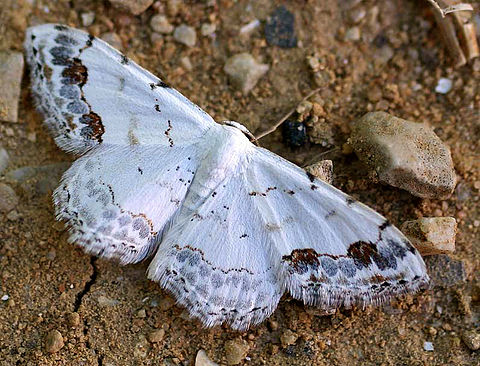
 If I don’t write more often about moments like this one that I chronicled several years ago, it’s not because “happiness” does not continue to fall on me without warning. I’m glad the poet — and even I – did write about the phenomenon at one time, so we can go back for a washing of joy and thanksgiving. But there’s nothing like right now, for being receptive to our Father’s lavish dispensations. The original post:


 Gladsome Lights