Tag Archives: Hidden Art of Homemaking

I did it for love of manzanita.

I am reposting this story from two years ago for the Hidden Art of Homemaking discussion at Ordo Amoris. It’s about one of my projects that illustrates some of the difficulties and satisfaction of interior decorating.
 
A botanical theme has emerged.
Decorating is a homemaking job that I wish I could get over and done with and on to other things. This post is about how the realization of that wish is a long time coming. On one level the story bores me to death, even though it’s my own house I’m writing about, the house I’ve been investing in for 20 years. That should warn most of my readers to leave right now and go read something more entertaining.

What’s makes me want to tell this too-long tale anyway is the way it illustrates how an incredible amount of mental and physical labor can go into what seems a simple project. I suppose I’m not used to this precisely because I’m not into home decorating and haven’t applied my perfectionistic creative energies to it so much before. In a way it’s a larger-scale version of my doll clothes effort: what I envision doesn’t come in a kit.

If I could make a kit out of it no one would buy it. It’s just the best that we could do given our priorities, and with a tract house that doesn’t have enough walls to be cozy or enough windows to brighten the view. The story I tell is also amusing if one considers the output of my mental energies compared to the mediocrity of the results.

G.K. Chesterton said,

It is the main earthly business of a human being to make his home, and the immediate surroundings of his home, as symbolic and significant to his own imagination as he can. 

I’m not sure what all G.K. meant by that, but he does seem to give me liberty, and even to tell me it is my duty, to spend time on my house and property with the purely physical and aesthetic aspects in mind.

One year ago

So, I push on. Last year we changed the arrangement of the living room furniture so that the pictures on the wall didn’t work anymore. It seemed that the painting that used to be above a couch was too “heavy” after we moved the piano under it. It was then the largest wall item above the largest piece of furniture. Also, the TV had come out of the closet and found a new and permanent place in a corner, and the emptiness above it bothered me for months while I tried to figure out what to put there.

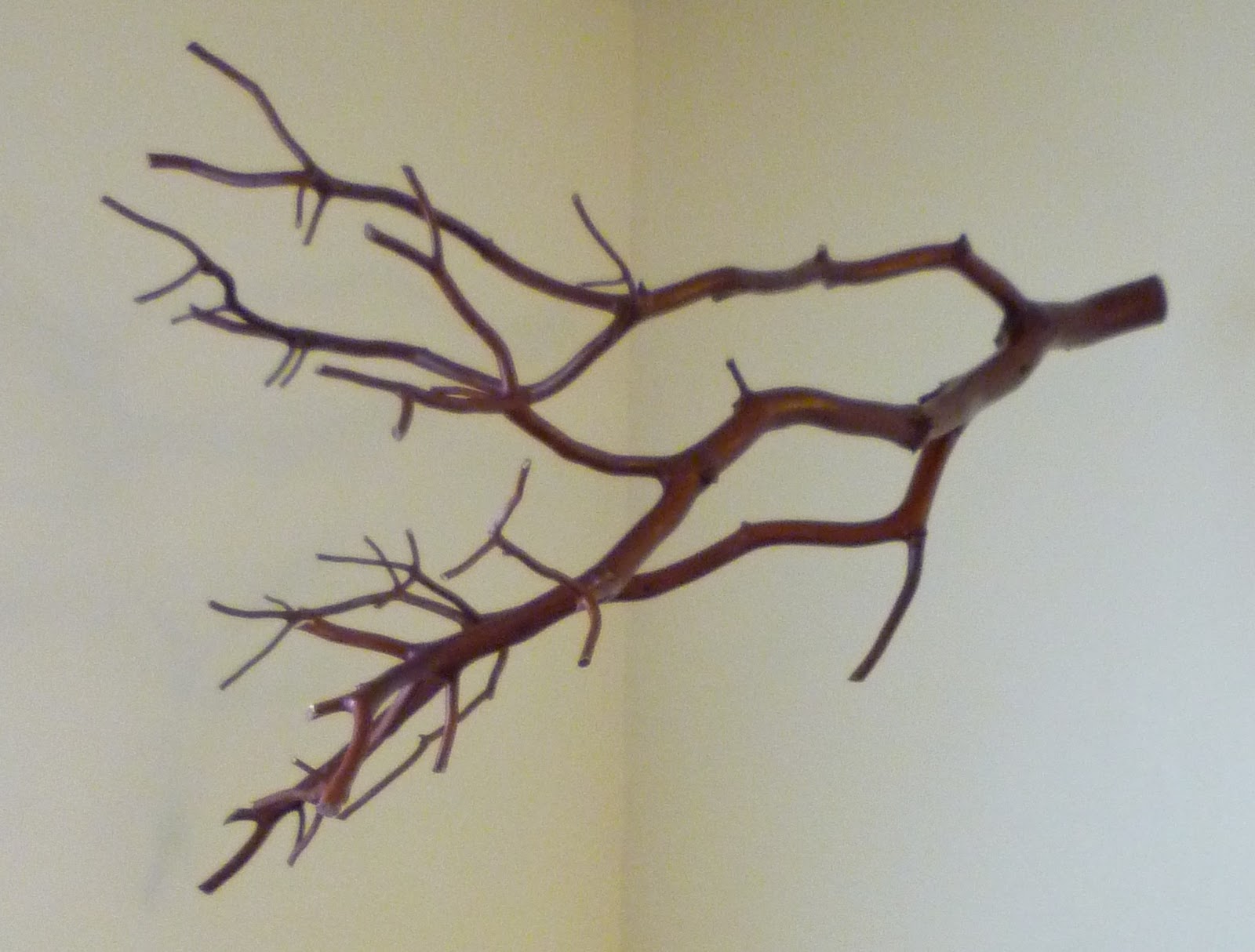
The first thing that came to mind was a manzanita branch such as I remembered my grandmother having in her living room for a while, a natural curio of sorts. Hers had sat on the coffee table, I think, but mine would hang above the TV to fill some of that airspace and balance out the piano nearby. (We’d need to get a smaller something to put above the piano, too.)

I started looking online for manzanita, but I found only small and twiggy, pale specimens, for use in flower arrangements. So I gave up for a while and spent hours looking for a decorative mobile. Nothing pleased. By that time we were in the middle of the remodel, so it wasn’t urgent.

Then in April we went north to Pippin’s place, where the previous winter’s record-breaking amounts of snow had piled up everywhere. As we walked through her forest we saw several manzanita bushes with large branches broken off. My mind started twirling around the idea that I could prepare my own decorative branch. The others helped me choose a couple that might work and we hauled them home.

Nine months ago

I still didn’t know if I could accomplish what I envisioned; I’ve never been one to do woodworking of any sort. I knew enough to trim off the flowers and small twigs. Then it occurred to me that wood needs to dry out before one can work it. I read that manzanita tends to split, so people have trouble making furniture out of it. Maybe my branches would split too much as they dried?

I left them sitting around in the garage for a couple of months and they only split a little bit. On the Internet I read somewhere to paint them with Danish oil to preserve the wood, so I did that. And one of my children said I should stain the trimmed ends of the branch so the whiteness of the wood wouldn’t distract from the lovely smooth and dark bark.

I think this is the one I didn’t use.

It was B.’s upcoming birthday party that put the fire under me to get the chosen branch up in the corner. We bravely screwed two hooks into the smooth new ceiling, and I painted them white so they would fade into the background. Then three strands of fishing line were tied to those, and to the branch.

Soldier was here and helped me position it just so; he’s tall and strong and could stand there calmly holding it in midair while I fumbled with the almost invisible threads. Then voilà! At last, that one part of my decor was in place (now we only had to ignore the empty space above the piano) and all our party guests could admire it. I began brainstorming on a solution to that remaining space nearby.

Three weeks later I dusted the manzanita with a feather duster and the next morning it crashed onto the TV and to the floor. Nothing was harmed. Guess we needed stronger filament. It took me about two months to get to the store to buy it. Then it took another month before B. and I could make ourselves re-hang the branch. See what kind of do-it-yourself-ers we aren’t?

I was sure I knew how to orient the branch, the way Pippin had told me to, but after B. and I got it centered and hung and he’d gone bike-riding, I realized by looking at previous photos that I had it exactly backwards, and it truly didn’t look the best. I tried just flipping it over, and that sort of worked; I only had to re-tie one filament, and we were o.k….except that now the branch was a little closer to the ceiling than ideal, and the top of it was vaguely lined up with the curtain rod, which didn’t look right. I suffered with that all through Christmas, trying not to care. Of course most people said it was fine because no one wanted to go through the difficulty of doing it over.

I had to buy a piano lamp before I could decide what would go behind it; our old one was shot. Piano lamps are expensive! The cheapest one I could settle on was out of stock for a few weeks, so we waited on that. I had looked at so many paintings or other wall decorations, many hours of browsing over several months, and found nothing I wanted enough to spend money on.

So I thought I would saw and paint some wooden birds to hang up there…they needed to be warm and colorful, because the corner with a black TV and a stark naked branch turned out surprisingly modern and chilly. (Maybe what I need is a branch about five times that big, just sitting on the floor behind the TV and reaching toward the ceiling…and permanently trimmed with Christmas ornaments…? )

But then we must return to how I’m not a woodworker, or a painter for that matter. I think it was on New Year’s Day that I felt desperate to make some progress; I decided to spend money and get something. B. and I knew we needed color there, and we knew the parameters of what the measurements needed to be. I bookmarked some paintings, and when B. came home from watching a football game we chose one and ordered it. Whoopee!

The painting arrived and sat on the floor near its destination for over a week. I knew we needed to be in the right mood to even talk about putting it up. In the meantime, one day I got a burst of courage and all by myself re-did the lines supporting my manzanita. I think it might be as much as an inch lower. A most satisfying inch.
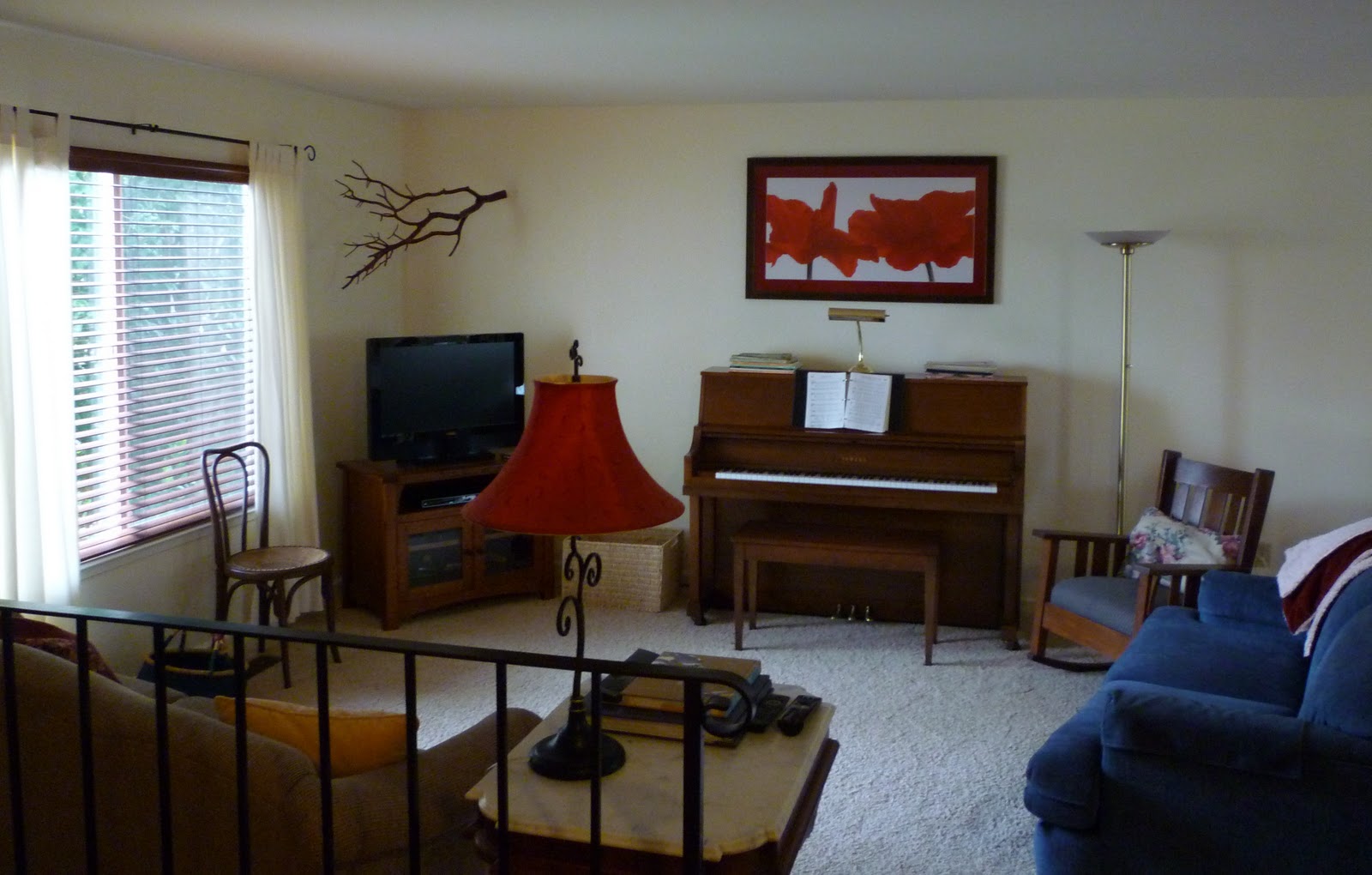
Last week we hung the picture. Those are giant poppies providing the splash of color. I hope Mr. Chesterton is happy and won’t mind if I get back to my sewing and reading now.
The Theology of Beauty

I’m re-posting this part of book review from 2012 as a contribution to the discussion of The Hidden Art of Homemaking on the Ordo Amoris blog.

Possessing Beauty

No changing of place at a hundred miles an hour will make us the one whit stronger, happier, or wiser. There was always more in the world than men could see, walked they ever so slowly; they will see it no better for going fast. The really precious things  are thought and sight, not pace. It does a bullet no good to go fast, and a man, if he be truly a man, no harm to go slow; for his glory is not at all in going, but in being.

      –John Ruskin, quoted in The Art of Travel by Alain de Botton

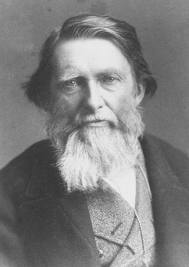
John Ruskin

Ruskin is one of the “guides” the author takes as a teacher in his study of this art of travel; this particular guide yearns to give us his students the tools to understand and possess beauty. Ruskin believed that we can only understand beauty by paying close attention to it, and that attempting to describe nature through writing or drawing was the surest way to focus the mind sharply enough.

On the topic of drawing Ruskin published two books in the 1850’s and gave lectures in London, but the point of his instruction was never to produce students who could draw well. He wanted to teach people to notice, and to “direct people’s attention accurately to the beauty of God’s work in the material universe.”

Right here is a good place to propose that we who believe in God the Creator also take as our teacher John Ruskin, rather than Mr. de Botton, because I doubt that we can learn much directly on the subject of beauty, especially on how to possess it, from a man who doesn’t understand that beauty, and in fact all that he possesses, are gifts from his Father God.

De Botton’s most recent book is Religion for Atheists, which he wrote from the conviction that a disbelief in God should not prevent atheists such as himself from making use of various aspects of the major world religions to better their lives. No doubt many professing Christians have a similar pragmatic outlook, and are missing out on the essence of the faith, Who is Christ Himself, the Bread of Life, the Glory of God the Father.

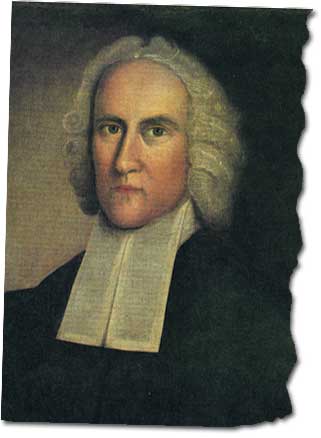
In musing about the beauty of God, I came upon a website with that title, featuring quotes from Jonathan Edwards. Many people have caught a bad impression of Edwards from those who speak of what they know not, but long ago I learned that the most frequent word in the preacher’s sermons was “sweet,” in reference to God and fellowship with Him. It’s not surprising that he had something to say about beauty as well. (The following paragraphs from Edwards were taken from his writings “The Mind” and “True Virtue” and bundled on the webpage with the added headings.)

God is Beautiful: “For as God is infinitely the greatest Being, so he is allowed to be infinitely the most beautiful and excellent; and all the beauty to be found throughout the whole creation, is but the reflection of the diffused beams of that Being who hath an infinite fulness of brightness and glory.”

Jonathan Edwards

Beauty is a kind of consent or harmony: “[Beauty is] a mutual consent and agreement of different things, in form, manner, quantity and visible end or design; called by the various names of regularity, order, uniformity, symmetry, proportion, harmony, &c. . .”

“One alone, without any reference to any more, cannot be excellent; for in such case there can be no manner of relation no way, and therefore no such thing as Consent. Indeed what we call One, may be excellent because of a consent of parts, or some consent of those in that being, that are distinguished into a plurality in some way or other. But in a being that is absolutely without any plurality, there cannot be Excellency, for there can be no such thing as consent or agreement.”

Love is the highest kind of beauty: “The reason, or at least one reason, why God has made this kind of mutual agreement of things beautiful and grateful to those intelligent beings that perceive it, probably is, that there is in it some image of the true, spiritual, original beauty, which has been spoken of; consisting in being’s consent to being, or the union of spiritual beings in a mutual propensity and affection of heart. . . . And so [God] has constituted the external world in analogy to the spiritual world in numberless instances. . . . [He] makes an agreement of different things, in their form, manner, measure, &c. to appear beautiful, because here is some image of an higher kind of agreement and consent of spiritual beings.”

“When we spake of Excellence in Bodies, we were obliged to borrow the word Consent, from Spiritual things; but Excellence in and among Spirits is, in its prime and proper sense, Being’s consent to Being. There is no other proper consent but that of Minds, even of their Will; which, when it is of Minds towards Minds, it is Love, and when of Minds towards other things, it is Choice. Wherefore all the Primary and Original beauty or excellence, that is among Minds, is Love.”

God is beautiful because He is a Trinity: “As to God’s Excellence, it is evident it consists in the Love of himself; for he was as excellent before he created the Universe, as he is now. But if the Excellence of Spirits consists in their disposition and action, God could be excellent no other way at that time; for all the exertions of himself were towards himself. But he exerts himself towards himself, no other way, than in infinitely loving and delighting in himself; in the mutual love of the Father and the Son. This makes the Third, the Personal Holy Spirit, or the Holiness of God, which is his infinite Beauty; and this is God’s Infinite Consent to Being in general. And his love to the creature is his excellence, or the communication of himself, his complacency in them, according as they partake of more or less of Excellence and beauty, that is, of holiness (which consists in love); that is, according as he communicates more or less of his Holy Spirit.”

Jonathan Edwards did not have a perfect understanding of Trinitarian doctrine, but I am still very blessed by his giving glory to the Holy Trinity for Beauty, which of course can have its source and perfect demonstration no where else. For readings on the Holy Trinity I commend to you these pages.

Above a storefront in Carmel, California

Now, back to the subject of travel…I suppose no one wonders what all this beauty-talk has to do with our goings, because don’t we all like to look at beautiful things when we travel? And when we have to move on, we also like to keep something to take home with us. How to not lose everything of the experience of a new place?

De Botton suggests three ways that we often try: 1) Taking pictures with a camera, 2) imprinting ourselves physically, as in carving our names in a tree trunk and thereby leaving a bit of ourselves behind, 3) buying something, “to be reminded of what we have lost.” And none of these actions can have as much effect on the whole person as drawing.

In explaining his love of drawing (it was rare for him to travel anywhere without sketching something), Ruskin once remarked that it arose from a desire, “not for reputation, nor for the good of others, nor for my own advantage, but from a sort of instinct like that of eating or drinking.” What unites the three activities is that they all involve assimilations by the self of desirable elements from the world, a transfer of goodness from without to within. As a child, Ruskin had so loved the look of grass that he had frequently wanted to eat it, he said, but he had gradually discovered that it would be better to try to draw it: “I used to lie down on it and draw the blades as they grew — until every square foot of meadow, or mossy bank, became a possession to me.”

De Botton chronicles his own efforts to follow Ruskin’s advice, and when he attempts to draw a window frame in his hotel he finds that he had never actually looked at one before, in all its complexity of construction.

Many passages in the book also paint exemplary word-pictures, such as a paragraph on olive trees, of which the author at first “dismissed one example as a squat bush-like thing.” On closer consideration, with the help of Van Gogh’s art as well as Ruskin’s tools, he sees the trees in all their magnificence, telling us that “the taut silvery leaves give an impression of alertness and contained energy.”

There is another way that this description by de Botton follows Ruskin: in his anthropomorphizing of natural objects, attributing to them qualities that only humans or at least animals would actually have, and feeling that “they embody a value or mood of importance to us.”

In the Alps, he described pine trees and rocks in similarly psychological terms: “I can never stay long without awe under an Alpine cliff, looking up to its pines, as they stand on the inaccessible juts and perilous ledges of an enormous wall, in quiet multitudes, each like the shadow of the one beside it — upright, fixed, not knowing each other. You cannot reach them, cannot cry to them; — those trees never heard human voice; they are far above all sound but of the winds.”

My two-year-old grandson Scout is already a traveler following in Ruskin’s (and his mother’s) footsteps. He loves to hike and to stop and look at everything. On a recent outing he said, as he wandered off, “I’m going to climb up here, Mama, and the rocks will take care of me…”

That’s what I call the spirit of good old-fashioned traveling. Not the sort that Ruskin himself decried, in the 19th century: “Modern travelling is not travelling at all; it is merely being sent to a place, and very little different from becoming a parcel.” 

When I am loaded on to a jet plane, I confess to feeling a bit like a parcel squeezed into a big crate of parcels. But Ruskin, and yes, even de Botton are helping me to be a more joyful and observant traveler, even if it’s only on a trip down the neighborhood footpath.

Before I had read just the small number of Ruskin’s words that are in The Art of Travel, I didn’t have the nerve to try my patience with drawing anything. But the man who wanted to teach me to notice has given me a vision of myself drawing a flower or a rock or a building. On my last car trip, I was even so bold as to pack into my bag a box of colored pencils.

(This post is part of a series on the book The Art of Travel.)

The Music of My Life

The third chapter of The Hidden Art of Homemaking is the impetus for this post. It is titled simply “Music,” and continues the theme of how Christians might express their creativity in their varied and unique circumstances. I am participating in the discussion of the book on Cindy’s blog, Ordo Amoris. This is a long post and I apologize — you would be smart to skip it and go do something creative!

It might have been 30 years ago that I first read Hidden Art, and I wrote on the day of the author’s death how important it was in developing a vision for my life. At the time of its publication in 1971 I don’t think there was anything else like it, but feminists were writing plenty about the stifling life of the typical housewife. It was lovely to have laid out before me many concrete examples of interesting people and their home-enriching activities.

Just a couple of years later, Karen Mains wrote Open Heart, Open Home, which also contributed to my Christian vision, on the theme of hospitality. And I was married in the early 70’s, and enjoying keeping house and garden even before the children started arriving. When the house began to fill with kids, I never lacked for creative projects and plans.

But I hadn’t even read Schaeffer’s book yet. My young-married-childbearing years were overflowing with culture and creativity, and I could not relate to the reader Edith seemed to be writing for, someone who is frustrated, locked up, or unfulfilled (her words).

Only recently have I been able to look back over my life and see with more understanding (I hope) why the story reads the way it does. I needed time to think, and I needed to see more of the plot toward the end, before I could notice how the first chapters fit with middle parts of my saga.

Part I contained an excess of family drama, as we call it these days, emotional and psychological stress that I didn’t get any help dealing with. If you have a splitting headache it is hard to tap into your creativity. It’s the same with emotional pain, maybe more so when it isn’t diagnosed or even acknowledged, but stays like an always-freshening wound that makes you want to move as little as possible.

Me in Part II

What brought me into Part II was getting married to a good man and empowered to create my own story, free of distracting pain. The setting was calm and clear and full of the hope of the gospel. It was somewhat the opposite of what Schaeffer talks about, because being home was my obvious opportunity to do just about anything. I had had no lack of examples and ideas; actually, the hippie era for me segued into a homesteading spirit a la The Mother Earth News. And there were all the creative people I’d known growing up (just about everyone), while I was storing up tinder for my creative fires.

I see that I have mixed a few metaphors here trying to tell my story — or am I writing the score for the symphony that has been playing out? Though this chapter is about music, it seems as good a place as any to bring up what seem to me to be realities on which our artistic life is built. They apply to music, too.

I received little musical training as a child, and I had no career that I had to put on the back burner. But growing up in church was good ear-training, and even in the Girl Scouts and in public school we sang a lot. I was lucky to marry a musician, and by means of his guitar and my singing we filled the house and our children’s ears with music.

We sang in the car, using songbooks I wrote out by hand. We sang around the campfire. We parents sat on the bedroom floor and crooned lullabies to our children every night. And in church I helped the young readers to develop fluency while hymn-singing, running my finger along the page under the words while they looked on. But I don’t know how to read music.

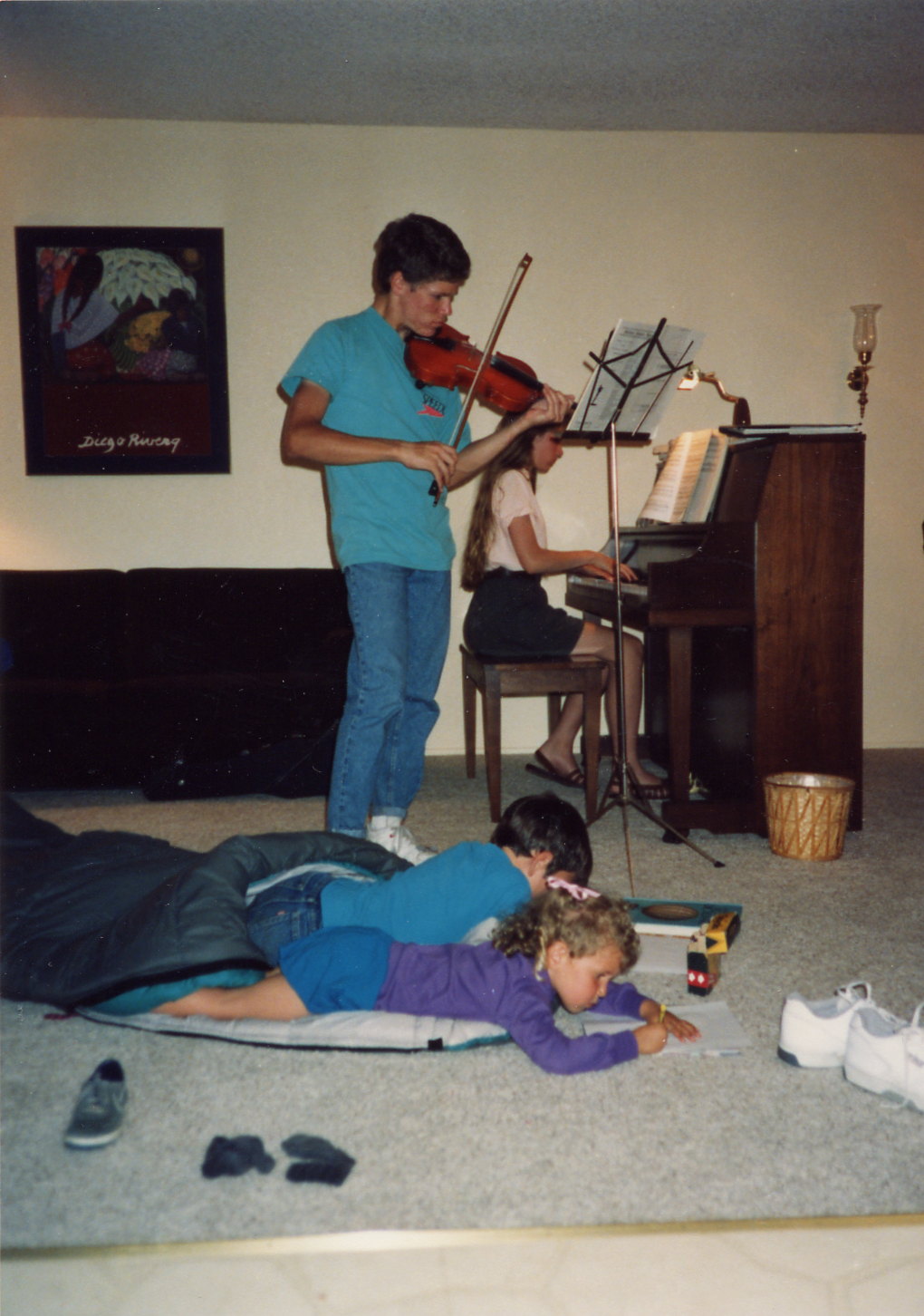
At first there wasn’t money for music lessons, and I wept over the injustice of a world in which my firstborn had no opportunity for a more structured musical education. Then grandparents and great-grandparents stepped in and God provided a generous piano teacher two blocks from our house. From that time forth the provisions continued in various ways, so that eventually all of our five children learned to play at least one instrument. The photos are of them and a grandson enjoying their music. Two of our daughters became piano teachers in their teens.

But for many families, music is not something they can really accomplish. My parents could not provide it for me, but it all worked out o.k. Some women find that their distracting drama only starts when they marry, or when a child falls ill. There are women for whom getting through the day is like climbing a steep mountain, and while they might be relieved to stop and smell the flowers, it’s asking a lot to tell them they ought to get out the seed catalog and develop a plan for further landscaping. But I suppose they aren’t the ones reading Hidden Art.

When Schaeffer says things like, “Christian homes should…be places where there is the greatest variety of good music,” I balk at the word should. I don’t know how she might otherwise have presented a picture of what she considers the ideal home, but every time she says we should do this or that to develop our creative side — and in the short Chapter 2 she used the word nine times — I get annoyed that she is telling me what my Christian duty is.

To me that’s backwards, because I can’t recall ever doing one creative homemaking thing out of a sense of duty, though I firmly believe we are all obligated to do our duty. To fear God and keep His commandments is the whole duty of man, according to Ecclesiastes (Not that we can even accomplish those basics on our own). It seems to me that the rest, the art and music and beauty, flow naturally from a human soul that is nurtured by God’s love — just as sap running up a tree trunk results in bright leaves and colorful fruit. The main thing is not to tell the tree to make fruit, but to keep the connection to the life-giving Fountain — Who is also the One who heals all those diseases of the heart that might hinder us.

What do you know — beauty in our life is one of the healing potions God provides. So if we start with small things that brighten our homes, say, singing a few lines from a hymn over the kitchen sink, or teaching a nursery rhyme to a toddler, just in response to the impulse, we are creating culture and feeding our own souls. It keeps the sap running, and the more the tree grows, the more sap and delicious fruit there will be.

Since Edith Schaeffer wrote this book and What is a Family, the only two of hers that I have read, thousands of families have discovered that homeschooling provides the opportunities to build the kind of family life and culture that the author presents a vision for. Just give us enough time with our children and all these good things are more likely to happen. The vision she sets forth was an ingredient in the soil that nourished my own heart and gave me the courage I needed. All the rest is in Part II, Part III, and still writing… Oh, and still singing new songs!


The beginning of a true newness

I am somewhat apologetically writing already another post on The Hidden Art of Homemaking, because it is the philosophy and theology, the heavenly underpinnings perhaps, that inspire me and give me the energy to carry out the practical details. From looking at the chapter titles it seems that this introductory chapter might be the one about which I have the most musings.

As to the oddness of me taking my inspiration from yet another man, when it is we women who traditionally do the homemaking and who are discussing a woman‘s book, I will just say that, Christ who enables us also was a man, and the Life of The Holy Trinity is something greater than our gender roles. The reality of the Holy Spirit operating in the world through us is our means of living out our humanity. Homemaking is one of the many facets of our calling and our life in God, and this particular pastor always encourages me in the fact of “Christ in you, the hope of glory.”

The passages from Metropolitan Anthony are from a talk on Genesis given in June, 1986, from the book Metropolitan Anthony of Sourozh: Essential Writings by Gillian Crow.

Creativeness, however, is something more complex than the ability to call out new forms, to shape one’s surroundings or even to determine to a certain extent…our destiny. It begins with the ability to change — to change intentionally. Creativeness begins with the ability a being has…to become what he is not yet, to start at the point at which he was created and then grow into a fullness that he did not possess before: from image to likeness, if you will — having begun to be, as it were, a reflection, to become the reality itself; having begun to be in the image of the invisible Creator, to become the image of God incarnate.

…And this process is a creative process. It is not an organic one; it is not something that must develop inevitably; it is something that we must choose and that we must achieve with the grace of God.

Amy mentioned the possibility that we might, contrary to our calling, create ugly or bad things, and even sometimes express not craftsmanship but craftiness. Other and various sinful impulses can also rob us of our creative strength. On the other hand, many times just creating something can give us a boost in the right direction. For example, I am learning not to be discouraged by the disorder of my messy house. Instead I can take joy from the chance to create order and space to replace — or at least reduce! — the chaos that so easily develops. But creating order out of chaos is huge. That seems like a good description of one aspect of the creative work God is always doing in our lives.

Met. Anthony says that the creative work he is primarily talking about is not the art and music and literature that we tend to think of right away,

…both of heart and intelligence, of skill and of hand, but is much more essential and also much more important because all the rest can flow from this basic source of creativeness but cannot derive from anything else.

So that here we are confronted with man, whom God has called and loved into existence, endowed with His image, launched into life, and when on the seventh day the Lord rested from his works, the seventh day will be seen as all the span of time that extends from the last act of creation on the part of God to the last day, the eighth day, the coming of the Lord, when all things will be fulfilled, all things will come to an end, reach their goal, and blossom out in glory. It is within this seventh day, which is the whole span of history, that the creativeness of man is to find its scope and its place.

And this is a wonderful call to us because each of us can be a creator within his own realm, within his mind and his soul, by making them pure and transparent to God, within his actions and life, and become what Christ said we are called to be: a light to the world, a light that dispels darkness, a light that, as in the beginning of creation is the beginning of a new day — that is, the beginning of a true newness and a new unfolding of the potentialities that are within us and around us.

(Cindy was hosting a discussion of Edith Schaeffer’s The Hidden Art of Homemaking, and this post was written as a contribution.)