 Today felt like the beginning of a fresh season. The real seasons don’t sync with the dates on the calendar, and right now presents itself as more natural for starting something, for having the necessary energy and expectation. If my helper Alejandro hadn’t come to prune, it might not have happened still. But I did ask him to come, so I guess I got the ball rolling, or the pruners opened, or something.
In the first week of January, I only needed to go to church, to be carried on a wave of feasts and exultations. I did that seven times in seven days, because of St. Basil’s Day, Theophany, and our parish feast day, with all the associated Matins and Vespers services. When I go to church it’s nearly impossible for me to get Anything Done the rest of the day. So of course I was Behind in the second week, and before I had caught up much I sank a bit Under the Weather, and put this painting as the background of my computer monitor:
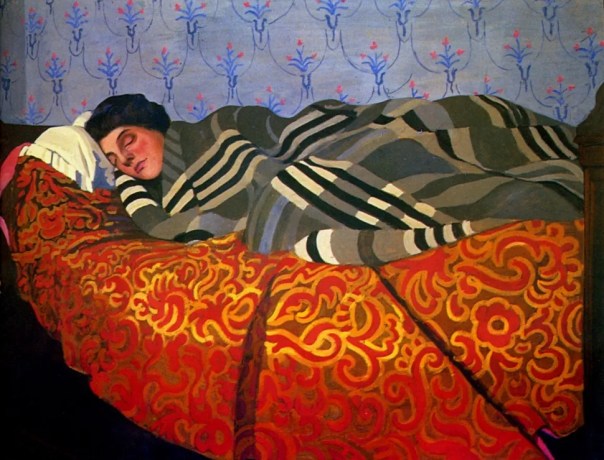
But! I didn’t resemble that lady all the time, and when I put her picture up it was at my New Computer I was sitting, the whole project of which was accomplished for 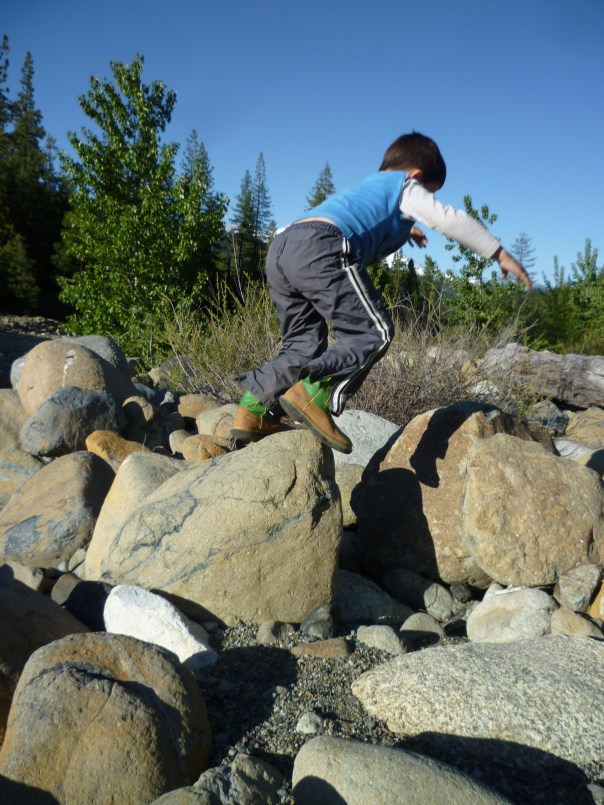 me (just before I went Under) by a team of family members, starting with Soldier, who chose and ordered the machine, and the Professor and Scout who got it set up beautifully. Especially Scout, whom some might remember as the boy at left, but who now is a young man and my favorite I.T. guy. My computing (reading and word processing) now goes blessedly like lightning, compared to the old system.
That speed enabled me to switch my Duolingo lessons from my phone to the computer, which was a relief, because all the phone pecking had aggravated my right thumb joint. It is in an effort to learn Greek that I was suffering the abuse, which led one friend to declare that I now have a Greek Thumb. I found the audio-visual lessons to be inadequate without writing practice, so once I switched to the computer I started writing down some phrases and sentences I was learning.

A trip to Greece is in my near future, if all goes as planned — I will surely tell you more about that soon. It’s doubtful that I will use the language much when I go there, but at least I may be able to make out some signage. And languages are always fun. I really need to work on my Greek penmanship, though!
My Greek Thumb had been one more cause of my enervation. But after about a week of lounging about and never quite finishing the dishes and laundry, I found myself out in the garden picking greens and stringing up pea supports. It was an overcast day, but I wore my barn coat and garden gloves and happily pulled out the rotten cherry tomato plant and took pictures of the pomegranates before they got pruned.

Many people have looked out the window at those fruits and wondered what they could be. The pomegranates get bleached by the winter rain and frosts, and don’t resemble at all the deep red fruits they were in the fall.
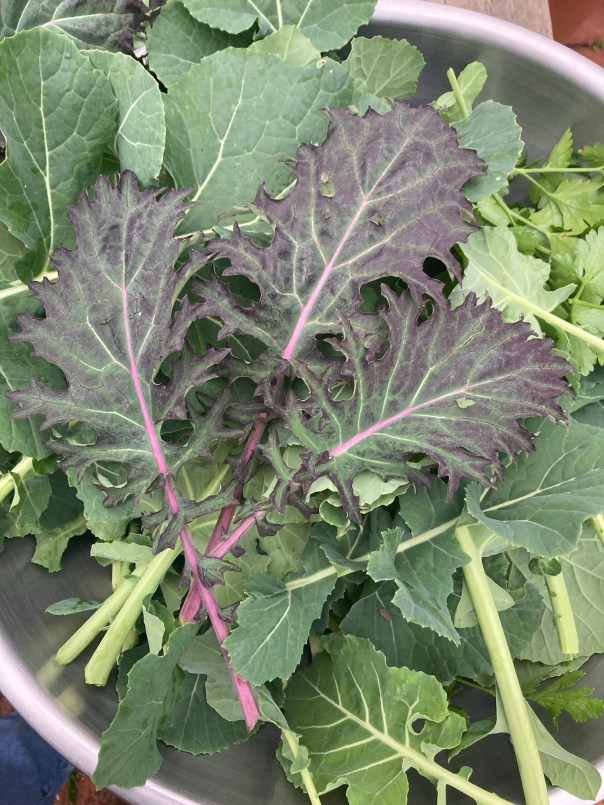
The day’s harvest of parsley, kale, collards and Swiss chard was fantastic. I hadn’t picked any for a couple of months. That type of kale on the top of this bowlful is so beautiful and hardy, I hope I can find the same seeds to plant again this year.
On the last day of lounging, my podcast listening also helped me get into a more active mode, because my contemplative self had been supremely satisfied by listening to Malcolm Guite. He was talking about George MacDonald, at a celebration last year of MacDonald’s 200th birthday.
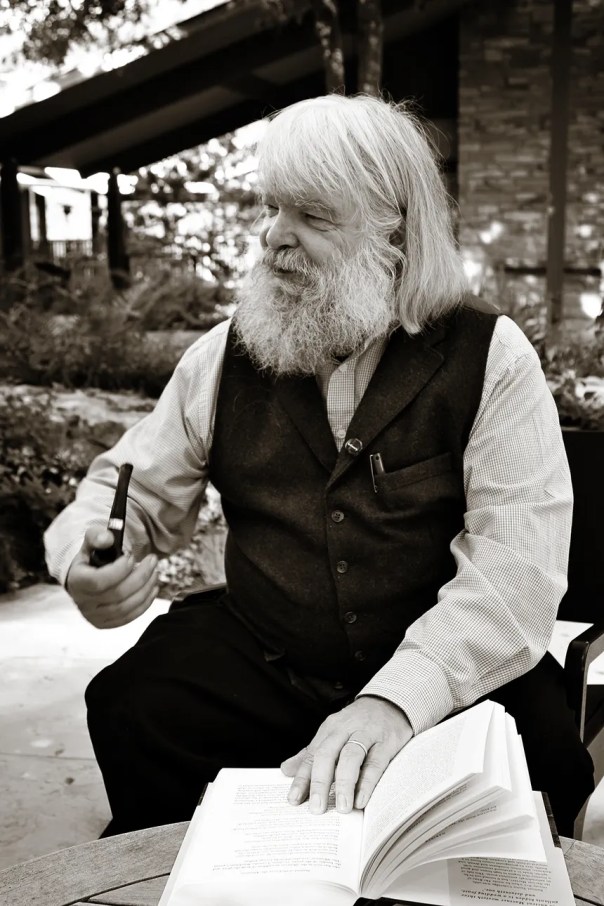 The event took place at the Wade Center at Wheaton College, and the recording of it can be found here on YouTube: “When A Heart Is Really Alive: George MacDonald and the Prophetic Imagination.”
If you are at all interested in MacDonald, C.S. Lewis’s conversion, the vision of Coleridge, or myth and the imagination generally, I very heartily recommend it. I’m going to watch/listen again. Guite’s love for God and for his subject(s) are contagious. Immediately following that experience, I had today a perfect Home Alone Day, when my scattered mind wasn’t too challenged by having to multi-task. And that helps me to get more Things Done, which is calming and energizing.
Even though my last couple of days were more about Getting Up than waking up, I put the word “wake” in the title of this post because one theme of Guite’s talk and MacDonald’s writings is Waking Up. You can listen to the podcast and hear more about what we might wake to; I will just leave you with a related thought from the author himself:
“The world…is full of resurrections… Every night that folds us up in darkness is a death; and those of you that have been out early, and have seen the first of the dawn, will know it — the day rises out of the night like a being that has burst its tomb and escaped into life.” -George MacDonald

 Though Faulkner wrote that in the 20th century, I doubt whether he would think the situation has improved in the 21st. In the same year as the Touchstone article, Czeslaw Milosz published this offering that is a form of therapy for our distorted vision: In the introduction to the anthology of poetry that he compiled, The Book of Luminous Things, he writes:



 Gladsome Lights