Tag Archives: libraries

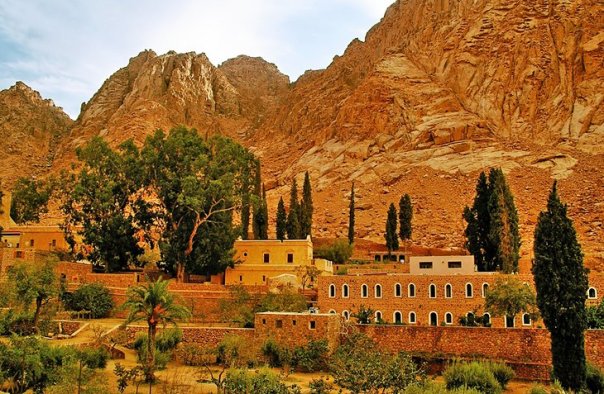
The Holy Spirit at the peak of Mount Sinai.

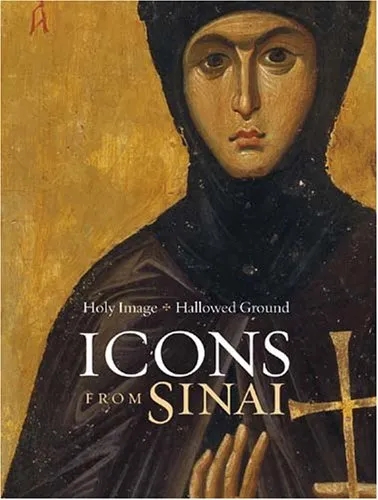
When the Getty Museum in Los Angeles hosted the exhibition “Holy Image, Hallowed Ground: Icons From Sinai” in 2006-07, the courier and caretaker of the artifacts on display was Father Justin Sinaites.

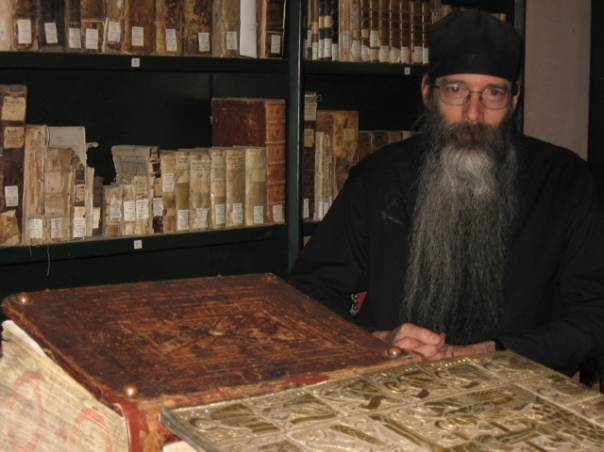
He is the librarian at Saint Catherine’s Monastery on Mount Sinai, where the extremely dry climate has kept ancient manuscripts from deteriorating the way they might in many places in the world. This monk librarian came from Texas to the Egyptian monastery many years ago; at least once before I mentioned him on my blog after my late husband and I heard him speak in Berkeley, California.

As I write, the sun has set on this Sunday of Pentecost, a celebration full of joy and light. So we are now, according to Church Time, in the day after, on which the Orthodox Church celebrates Holy Spirit Day; Father Justin has written a blog post about how they keep the feast at St. Catherine’s: “Liturgy at the Peak of Mount Sinai”:

“Every year, we celebrate the Divine Liturgy at the peak of Mount Sinai on the day after Pentecost, the Monday of the Holy Spirit. This year, we were joined by pilgrims from Greece and Russia. We made the ascent in the night, and began the Liturgy at 4:00 AM.”

The blog post consists mostly of Fr. Justin’s own photographs, which I always find very appealing. I learned more about the monk himself in this interview on the Travel Potpourri website: “Saint Catherine’s Monastery Interview with the Librarian Father Justin.”
One paragraph:

“I didn’t go from El Paso, Texas, to Sinai, in one big step. There were lots of little steps. But even in El Paso, I read the account of Moses and the Exodus in the Bible. I saw Cecil B. DeMille’s “The Ten Commandments,” which contains scenes filmed at the traditional Sinai, with Charlton Heston climbing up the mountain, and walking along a ridge with the Sinai range in the background. Also, El Paso is a desert. I used to wander in the desert for hours and came to love the stark beauty of the desert landscape. All of this was in the background when I began to read about the history and the theology of the Orthodox Church.”

If you are interested in the manuscript collection itself, you may want to look at: This Reuters article, which explains that the abbot of the monstery feels an urgency about completing the project of digitizing all 4500 manuscripts in the library, many of which are in the Syriac and Arabic languages, and very rare.
But today, all I want to do is visit Fr. Justin’s blog, and through his photographs get another glimpse of the daily life and worship at Saint Catherine’s, Sinai.

Elizabeth rescued and blessed.

“I laughed on the way home, and I laughed again for sheer satisfaction when we reached the garden and drove between the quiet trees to the pretty old house; for when I went into the library, with its four windows open to the moonlight and the scent, and looked round at the familiar bookshelves, and could hear no sounds but sounds of peace, and knew that here I might read or dream or idle exactly as I chose with never a creature to disturb me, how grateful I felt to the kindly Fate that has brought me here and given me a heart to understand my own blessedness, and rescued me from a life like that I had just seen — a life spent with the odours of other people’s dinners in one’s nostrils, and the noise of their wrangling servants in one’s years, and parties and tattle for all amusement.”

― Elizabeth von Arnim, Elizabeth and Her German Garden

An eleven-book day.

Later in the spring, 2019.

The bookishness of today was out of the ordinary in my recent life; shall we say, the last 20 years of it? And it only slightly resembled former days when going to the library was a regular thing, and between the several children and me we’d bring home bagfuls of books every few weeks, after browsing the shelves as long as we could manage.

This morning I visited our church library, looking for a specific book on the Psalms, but couldn’t find it. I did borrow two related books, though, and three more on other subjects.

On the way home I stopped at my town’s public library to pick up what I had placed on hold via the library’s website. They email you when your holds are ready, you drive to the library and phone them, and they bring your books out in a bag and put them on a table. I have formed a habit of going to the library every Friday, so that I can return books too; currently you can only do that on Fridays and Saturdays. I had four books ready to pick up, as it turned out.

When I pulled into my driveway a few minutes later, it was pleasantly warm in  my car, and I knew the house was chilly, so I sat there and looked over those four books, which were all children’s books. The three that were by the same author I left in the car, because I will just take them back; I didn’t like the particular theme that the author seemed to be stuck on.

The fourth book I had borrowed because I noticed this week that two Orthodox priests I follow on Goodreads had given it five stars, and it was a book I wasn’t familiar with. I began to read it and didn’t stop, just sat there behind the wheel for the next hour being charmed, by The 13 Clocks. I have over my life enjoyed many things James Thurber has written, so I’m not surprised. It was really fun, and I’d have liked to read it through again right then.

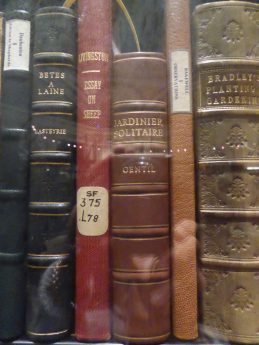
But I was getting ready to go back to church, this time for a service. My priest wrote me that he was sure he’d seen that book I wanted in a box of titles that hadn’t been shelved yet (lacking enough shelves), so I went back early and looked through not one but four boxes. There was a book with a similar title by the same author, Fr. Patrick Reardon, not about the Psalms, and which I already own. But I found two more books in those boxes that called to me, to take them home, one of them being Four Arguments for the Elimination of Television, which I read a long time ago but don’t remember much of. So eleven books came home with me, and three stayed in the car. Here are the eight books that remain.

What is strange is to bring so many books into the house in one day, and not one of them did I buy! I can take them back to their places whenever I want, no remorse. These days there isn’t such pressure even with the public library system to return books promptly; they stopped charging overdue fines even before covid, and the books take a long time in process once you do drop them in the return slot, so they have to be lenient about everything.

Maybe I won’t have any of these very long, but for now, I have happily filled more crannies and nooks with more delicious books!

The Library of Congress

p1050884
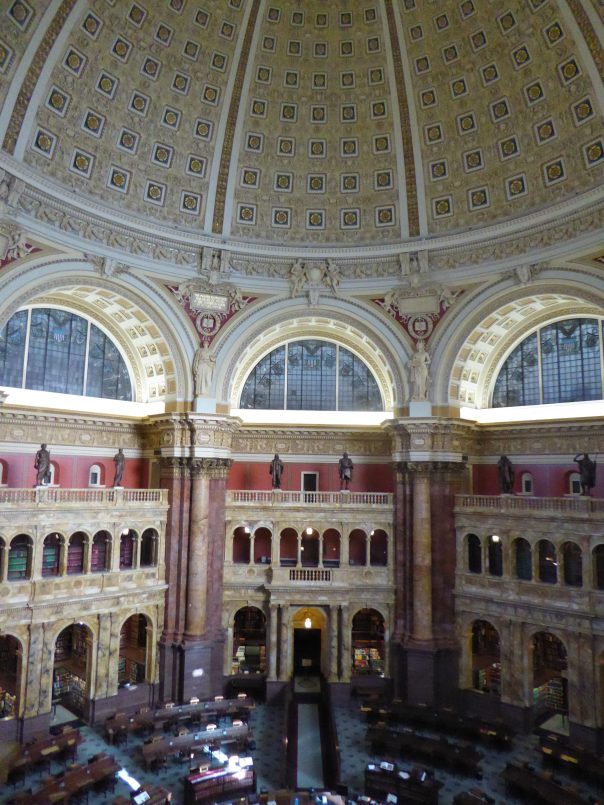
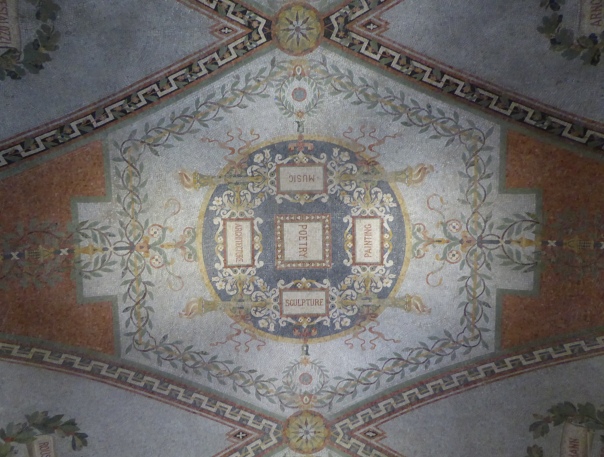
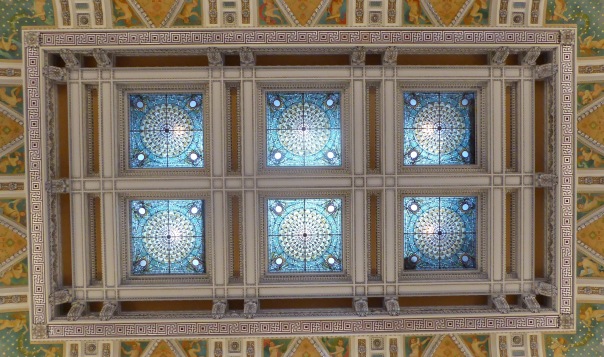
Ceiling of the Great Hall

The Library of Congress, the Thomas Jefferson Building, was a joy to visit, primarily for its architecture and design – which is not what I had anticipated. Before I had left home, when Kate suggested that we go there, I had naturally thought first of books, and exhibits about books.

We heard a story about how it ended up so beautiful: The first two construction attempts failed at the level of the foundation, and a third person was called in to complete the project. His son, who had recently graduated from the University of Beaux-Arts in Paris, took over the design and completion of the interior ornamentation. Or so our tour guide told us 🙂

When I was trying to review these facts online for this post, I discovered another version of the story in a book about “German Achievements in America.” That story does not mention any failure on the part of the original (German) architects, but rather emphasizes that they spent twenty years perfecting the design and were never given adequate credit for it.

p1050894
Main Reading Room

This page on the LOC site gives broader detail about the drama of these events — involving “the selection of the proper cement for the foundation” — and eventual completion in 1897 of the main building of the library, which was not named for Jefferson until 1980.

p1050904

Thomas Jefferson deserved to be honored this way, because he offered to sell his whole personal library to Congress after their collection of books was destroyed by fire in the War of 1812; at that time the library was stored in the Capitol. He said he would accept whatever price they decided upon. Previously they had owned only law books, but Jefferson persuaded them that “…there is, in fact, no subject to which a Member of Congress may not have occasion to refer,” and they bought his 6,487 books for $23,950. That amount was based on the number and sizes of the books.

Jefferson’s generosity was not because he no longer needed what he named “unquestionably the choicest collection of books in the U.S.” He used the money gained to pay some of his debts, and began right away in a “frenzy” to assemble a replacement library for himself, saying, “I cannot live without books….”

gle-g-at-thomas-jefferson-library-exhibit-loc
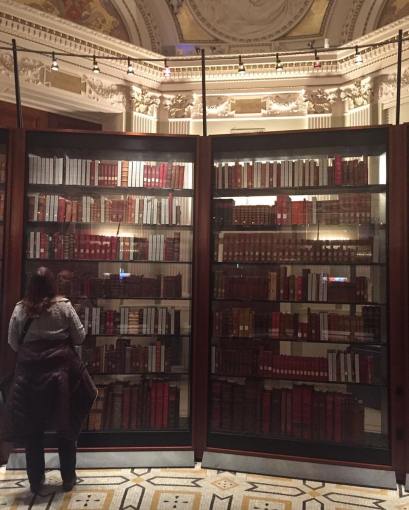
(A little part of) Thomas Jefferson’s Library exhibit

Two-thirds of the new Jefferson library was destroyed by another fire in the Capitol, in 1851. In the last decades efforts have been made to restore all the books that were in the original collection bought from Jefferson, and by 2008 replacements had been found for all but 300 of the original books; together with the volumes not destroyed by fire, these all comprise the exhibit of Thomas Jefferson’s Library which has been on display since then. Though we wandered through a couple of other exhibits in the building, this one is where Kate and I spent the most time. I had been to Jefferson’s home at Monticello ten years ago, but through this unhurried perusal of his books I felt more connection to him than ever before.

p1050890

Librarian of Congress Ainsworth Rand Spofford, an appointee of Abraham Lincoln, had wanted the Library of Congress to be not just a resource for legislators but a library for the whole nation, and he was responsible for the copyright law of 1870,  which required every author of any copyrighted map, book, piece of music, etc., to deposit two copies in the Library. This method of acquiring materials worked very well, and soon Spofford was pressuring Congress to approve a separate building dedicated to housing the collection, and to do it quickly, because books “were being piled on the floor” and he could see that his job would soon devolve into “presiding over the greatest chaos in America.” Though it took 25 more years before the new building was ready to store the books in a more orderly fashion, Librarian Spofford stayed on all that time, presumably presiding over chaos with hope.

In order to fully appreciate all of the art and architecture of the Library, someone who knows as little as I of fine arts and literature would need days of viewing and background studies. Many short quotes decorate the walls, without reference to the work quoted, and I was curious about these. I did look up this one that I liked (below), and found that it is from a Shakespeare play. Though it is a statement about what we can learn not from books but from nature, I will close with it, as I myself must leave the Library and go now to explore some other good things.

gle-quote-crop
Tongues in trees, books in the running brooks, sermons in stones,
and good in everything.

-William Shakespeare, “As You Like It”