Tag Archives: maps

Maps not of this world.

I wrote the post below before my husband died, and before I had a smart phone and GPS to use when on road trips. This morning when I was getting ready to walk the grandboys over to the playground, which is only around the corner, I felt the need to bring up its location on my phone and look at the layout of the streets for a while (lacking a paper D.C. map), even though Kate was going to show me the way. I still prefer paper maps of any sort to what one can view on a screen, and I hope they’ll continue to be available.

The accompanying poem is not about this practical aspect of maps; you might even say that it is about how maps fail to give us information that might be necessary to our survival. And there is a third aspect of the subject that I dip into. I hope there is something you might enjoy musing on.

……………………

Most people in our family love maps. The previous generations loved them, too, and I treasure the memories and pictures of various father-son or sibling groupings around a map, planning a road trip or a backpacking adventure, or just getting a better idea of the world we live in.

Geography games including maps can also be fun, such as Global Pursuit that was put out by National Geographic in 1987. It was a little challenging for someone like me who isn’t sharp in spatial orientation skills, because the map of the world was all chopped up into pentagons which never fit together all the way.
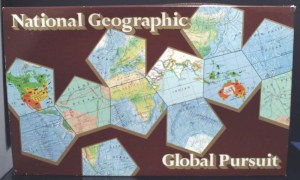
global pursuit game

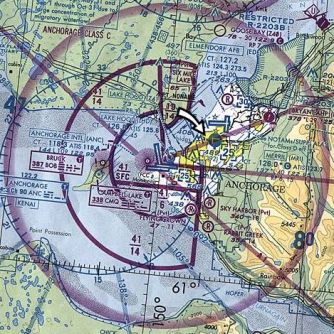
It’s easy to lose all track of time when poring over maps. One of my favorite parts of an unusual aviation ground school that was offered at my high school was studying the aviation maps pilots use to plot their course. In those days it was all done on paper, and I was fascinated by the concentric rings around airports, and all the copious information including odd names of towns in Texas, which was the area our school sample was showing. (The one below, I realize, is of Anchorage, Alaska.)aviation map
The whole concept of a map, a simplified form by which we can get a mental handle on a vastly greater reality, became useful for me in a different manner when I was introduced to the way M. Scott Peck uses it in his book, The Road Less Traveled. I have never actually read the book, but the the image of a mental/emotional map has served me well through the years. Some excerpts:

CHOOSING A MAP FOR LIFE – Truth is reality. That which is false is unreal. The more clearly we see the reality of the world, the better equipped we are to deal with the world. The less clearly we see the reality of the world–the more our minds are befuddled by falsehood, misperceptions and illusions–the less able we will be to determine correct courses of action and make wise decisions.

Map of Life – Our view of reality is like a map with which to negotiate the terrain of life. If the map is true and accurate, we will generally know where we are, and if we have decided where we want to go, we will generally know how to get there. If the map is false and inaccurate, we generally will be lost.

-M. Scott Peck

I brought all of my real and metaphorical map history to this poem I read today. The poet is another woman who also likes maps, but her poem shows clearly the ways that they fail to reflect reality. That doesn’t bother her; even in their failure she praises them for the vision they give us, “not of this world.”

Perhaps we also don’t need to worry about whether our heart-maps are all matched to our surroundings. Might they also serve a great-hearted and good-natured purpose, so that instead of giving up on our inner maps we strive to bring the full reality closer to the vision? I’m thinking of our daily prayer, “Thy Kingdom come…” and of “Love hopes all things, love believes all things….” May the Lord write the map of His Kingdom large in our hearts.

MAP

szymborska
Wislawa Szymborska

Flat as the table
it’s placed on.
Nothing moves beneath it
and it seeks no outlet.
Above – my human breath
creates no stirring air
and leaves its total surface
undisturbed.

Its plains, valleys are always green,
uplands, mountains are yellow and brown,
while seas, oceans remain a kindly blue
beside the tattered shores.

Everything here is small, near, accessible,
I can press volcanoes with my fingertip,
stroke the poles without thick mittens,
I can with a single glance
encompass every desert
with the river lying just beside it.

A few trees stand for ancient forests,
you couldn’t lose your way among them.

In the east and west,
above and below the equator –
quiet like pins dropping,
and in every black pinprick
people keep on living.
Mass graves and sudden ruins
are out of the picture.

Nations’ borders are barely visible
as if they wavered – to be or not.

I like maps, because they lie.
Because they give no access to the vicious truth.
Because great-heartedly, good-naturedly
they spread before me a world
not of this world.

–Wislawa Szymborska

Translated from the Polish by Clare Cavanagh
The New Yorker, April 14, 2014
red slate map look
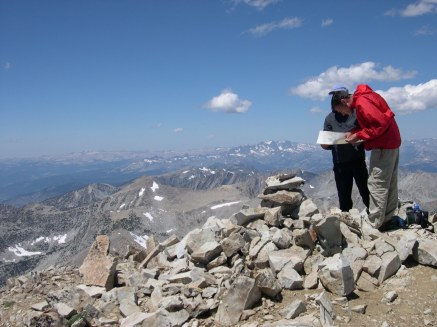
My two sons consulting a topographical map on a peak.

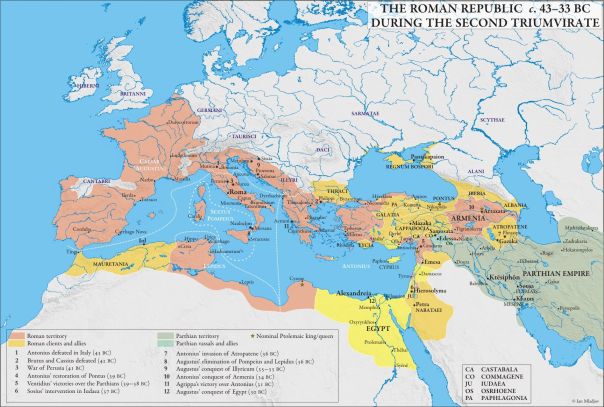
From Britain to the the Black Sea….

It is believed by the Orthodox Church that our Lord’s disciple Simon the Zealot was martyred in what is now the Republic of Georgia. I’ve been looking at maps of that world from the first century, but mine is never a systematic study, when I gaze at maps. Rarely do I come away with a clearer idea of geography or topography, or in this case, history. It’s one of those cases of too-muchness, and I no more hope to retain anything in particular than when I enjoy the view of of trees and plants from a hilltop.
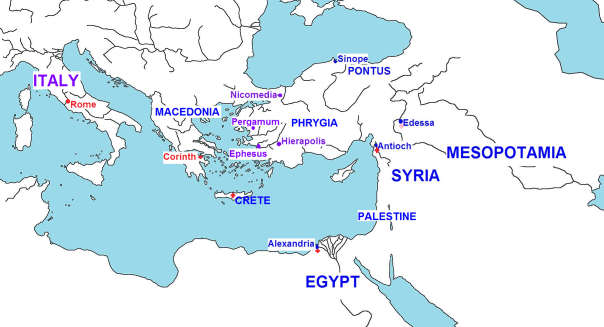
After I leave the map I never can visualize where Georgia or the Black Sea are. I should put a map just above my computer monitor, where I could gaze at it more frequently; I might even switch it out for another part of the world every few months.

Did any of you ever see the curriculum called Mapping the World by Heart? I once bought a copy of the original hard copy version for myself, not my children, thinking that I could work on it at least once a week and learn my geography. But no.

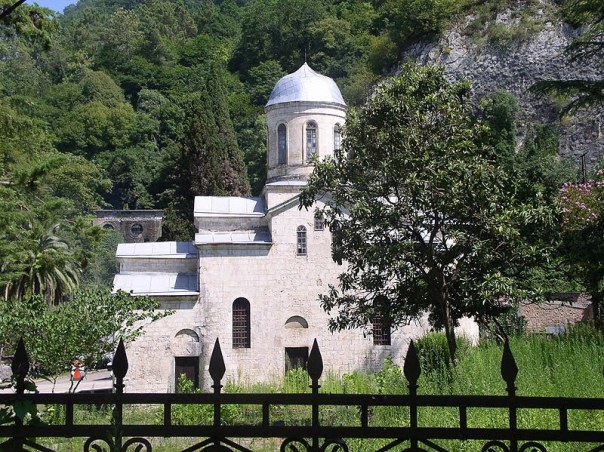
What first piqued my interest in the journeys of St. Simon was an article by John Sanidopoulos titled St. Simon the Zealot and Apostle to Georgia, in which he discusses the sources of his name Zealot and also Simon the Canaanite. He might have been the groom at the Marriage at Cana! And he is said to have traveled in Britain. There are photographs in that post of holy sites associated with the saint, like this church in Novy Afon (New Athos).

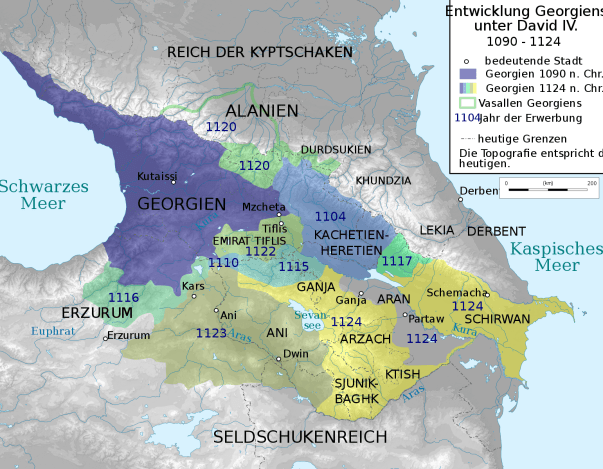
The article contains no maps, but when I set about refreshing my memory by means of a few, I came across beautiful depictions of different eras, such as this German map below, showing the 12th century in my favorite colors.

The identifying words at left, “Schwarzes Meer” are sweetly evocative of the day I swam in the Black Sea for a few hours when I was 17, near Istanbul somewhere. I wish I had a print of the picture that I took to refer to, but it is indelibly inked on my mind: A brilliant and dark cerulean sea under a cloudless sky; our feet in the warm, clean sand, and my laughing friend Viv, willowy in her swimsuit, with white-blond hair flying in the breeze.

If I ever get back to Turkey, or visit Georgia, I’d like to spend time by the Black Sea again! Whether that happens  or not, it gives me joy to think about the gorgeous places on the earth, and about the many people who have lived out their lives here or there, many of them with faith, all of them by means of God’s multitude of gifts.

Sometimes when I am just walking through my house or garden I am surprised when I notice that here I am, in my place, alive and with work to do, a life to love. God put me here. I exist. Wonders never cease!

Did St. Simon feel this, as he lived out his life, doing God only knows what? There are many sometimes conflicting stories and traditions about him, but when you think of how many years he walked the earth, there had to be at least a few thousand interesting hours and events that no one ever took much account of, which only God and maybe St. Simon remember.

I ran across this stamp commemorating the saint that was issued in Georgia in the 1990’s:

The day set aside for St. Simon the Zealot in particular was back in May, so I am posting this on the day when he is remembered with all of Christ’s apostles. Rejoice, Holy Father Simon!

Waiting right around the corner.

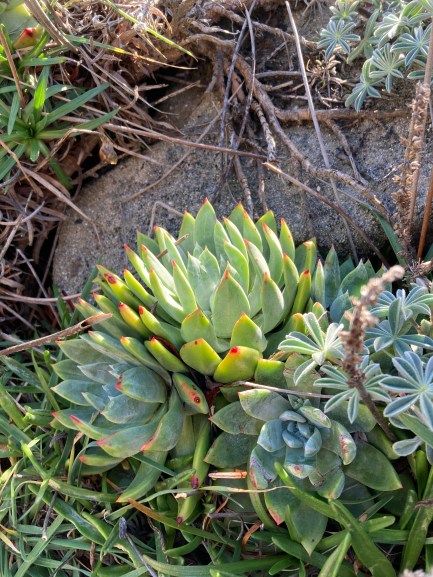
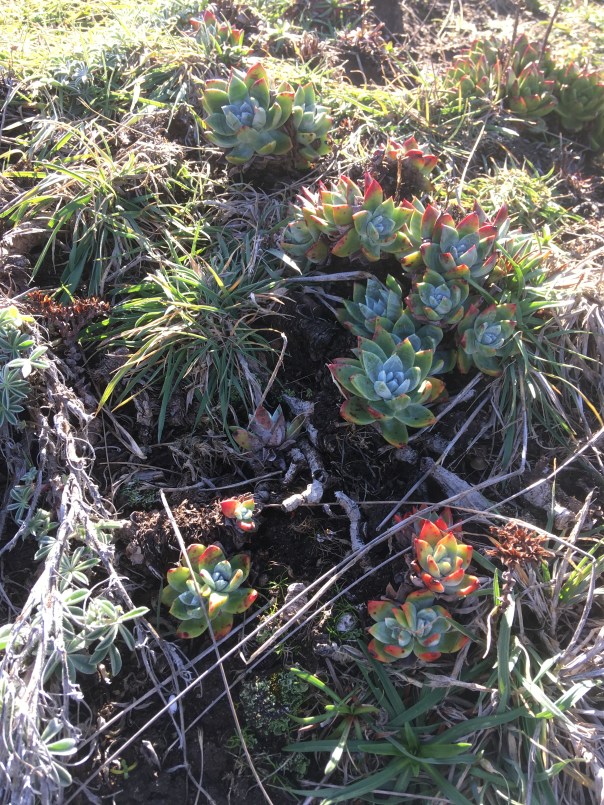
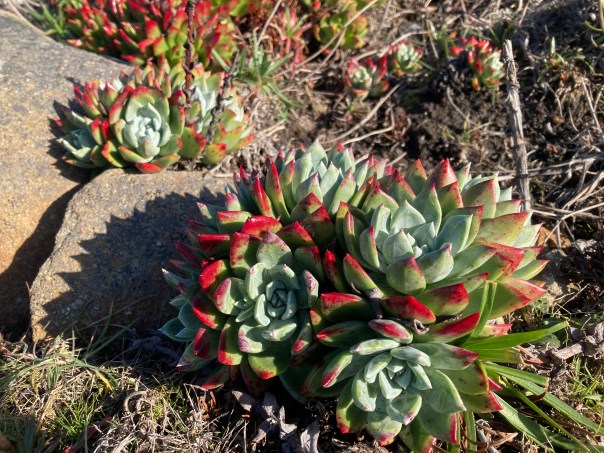
Succulents and mustard are related by their mutual membership in the plant kingdom, but also by being bright particulars of my weekend that also included lots of ocean watching.

“Why pay a premium for organic brassicas like kale and broccoli at the farmer’s market when all the free wild mustard you could ever ask for is likely waiting right around the corner?”

This question was posed in an article about food foraging that I read last weekend. Pippin’s family was here and we had opportunity to explore the topic. On Saturday we took a long drive to Salt Point State Park, farther north on the coast than I have been in many years, and passed by many vineyards looking like this:

We tried to remember whether the mustard we are used to seeing in springtime in California is at least a near relation to what one buys prepared in a jar, and that night we researched further, finding once again how many good edibles are in the Brassica family. We had no idea we’d get the chance to taste some very soon.

Yes, that mustard above is mustard, and in this context it isn’t considered a weed that needs eradicating. It actually helps suppress the nematode population among the grapevines, because mustard contains high levels of biofumigants in the form of glucosinolates. Evidently the sharp flavor isn’t appreciated by the nematodes. However the mustard got there, it’s ubiquitous now, and beneficial.

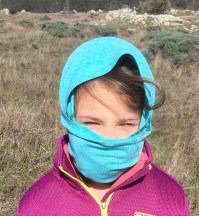
At Salt Point the sun shone on us brilliantly, and made us squint. The wind pushed us this way and that, and the sound of crashing surf thundered up the cliffs to where we walked along the headlands. Some of us had gaiters around our necks, which we pulled up to keep our hair out of our eyes and our cheeks warm.

We wanted to climb that “castle rock,” but Pippin thought she better go scout ahead for poison oak. She found a lot of it, so we gave up on that idea.

Most of the plants out there hug the ground or the rocks where they are growing. Even the milkmaids stay under cover. When Ivy took off her gaiter scarf, her hair needed re-gathering into its scrunchie; once we accomplished that, she bounced off musing, “Some people say, ‘Another day, another dollar;’ but we always say, ‘Another day, another hair out of place!'”

Milkmaids
Some brassicas are likely in this mix.
sanicle
lupine

Where the trail dropped down close to the shore, we explored the sandstone that has been carved into strange shapes by the wind. The surface of the rocks with the smoothest appearance, where I grabbed when I felt buffeted off balance, was like the coarsest sandpaper.

The children all napped on the way home that evening, but slept long in their bags after they went to bed again later that night. Before we knew it we were all up and going again, but southwest this time, aiming for a hike along the Marin Headlands. Marin County is the one just north of San Francisco County/City, and it soon became evident that this destination, so much closer to a large population, was going to be too crowded. There was nowhere to park at the trailhead.

So we went into the town of Sausalito and looked at boats in the harbor, and ate our lunch at a little park with a view of Angel Island, and the Bay Bridge to the southeast.

The first wild thing we found to eat that morning was oxalis, or sourgrass, also called wood sorrel. Once I told the children about it, they continued to break off stems and chew on it for the rest of the day, it being everywhere we went. Ivy liked the flowers best, but most of us preferred the stems.

Plantain was growing everywhere beneath our feet, mixed in with the oxalis. Scout told me that if you get a rash from stinging nettle you can chew some plantain and put it on the rash to soothe it. But there were no nettles in this neighborhood, and we left the plantain alone.
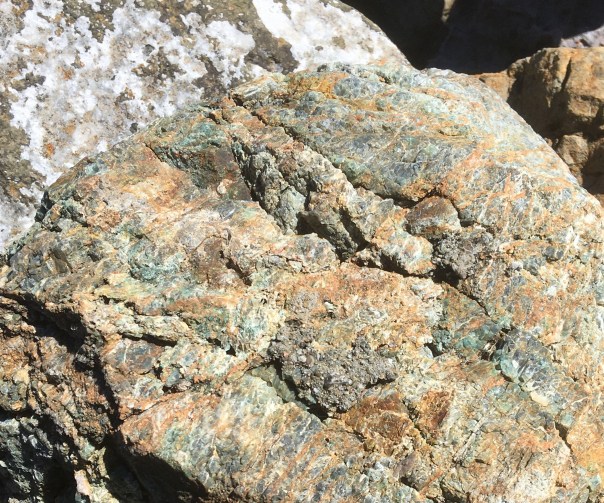
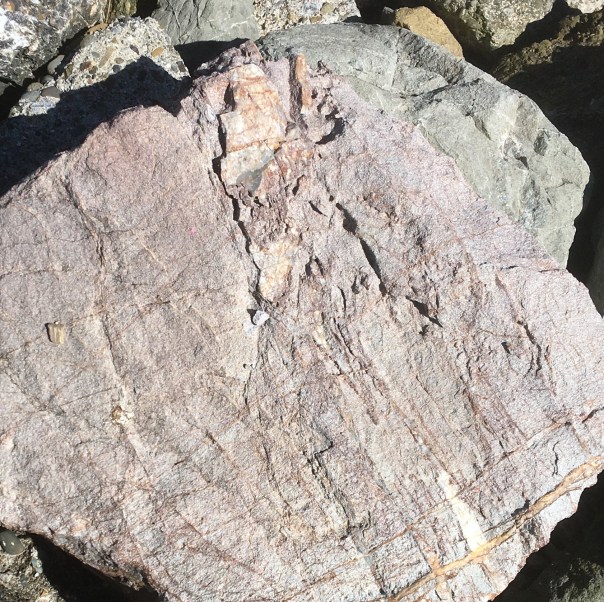
The water was glittering, and the children discovered countless crabs as they peered into their dark caves among the rocks. While the more agile folk spied on crabs, I admired the colorful minerals in the giant specimens bordering the sidewalk.

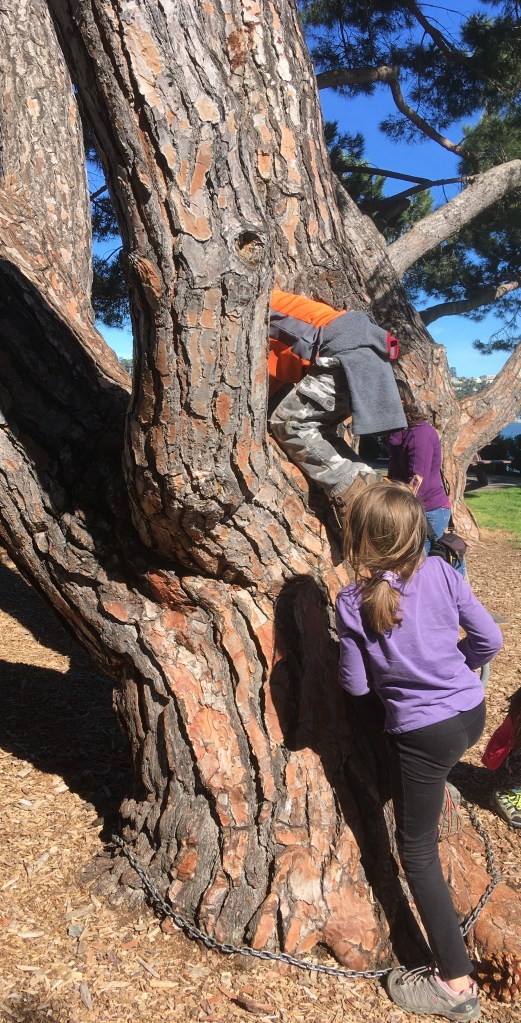
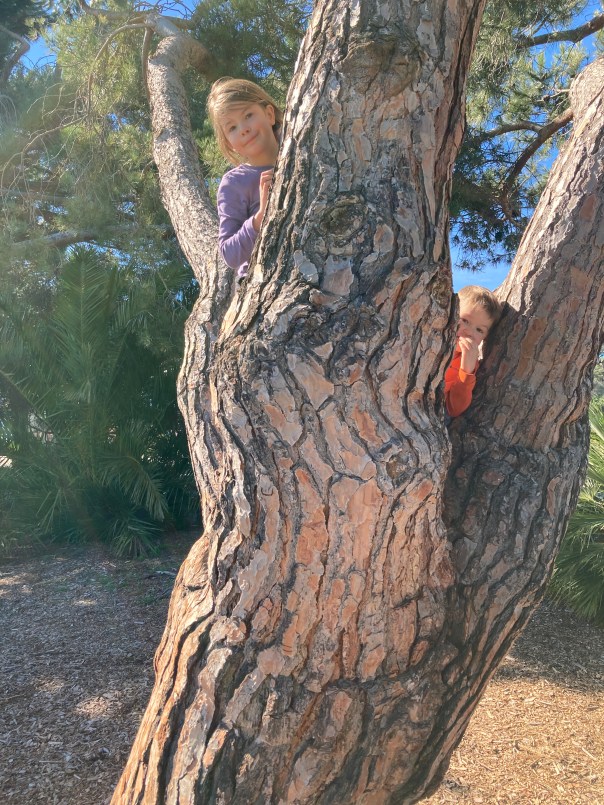
Big pine trees with gorgeous trunks shaded us at the park. Ivy and Jamie took on the challenge of climbing one of them. Their mother gave them tips from time to time; eventually Ivy gave Jamie her knee for a footstool, and he was up! Pippin then helped Ivy, and they finished their lunch in an elevated position.

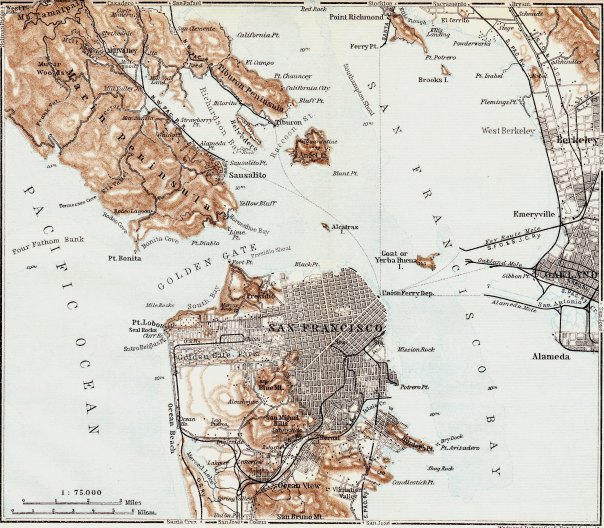
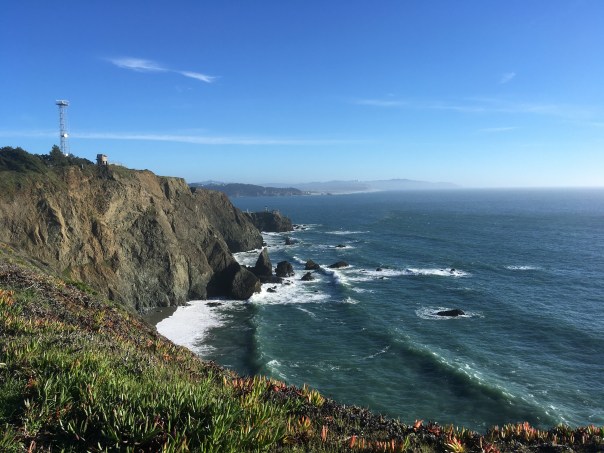
We drove to a different access point for the Marin Headlands and ended up at Point Bonita. Here is a map on which you can see the point, right where a lighthouse needed to be, outside San Francisco Bay at its north entrance. The lighthouse itself is closed currently, but we walked down the little peninsula as far as possible.

We stared and stared at the Golden Gate Bridge, from that perspective that we rarely get, looking in toward the bay. That narrow entrance to a huge bay was named the Golden Gate Strait by John C. Fremont:

“In 1846, when soldier, explorer and future presidential candidate John C. Fremont saw the watery trench that breached the range of coastal hills on the western edge of otherwise landlocked San Francisco Bay, it reminded him of another beautiful landlocked harbor: the Golden Horn of the Bosporus in Constantinople, now Istanbul. Fremont used a Greek term to name it: Chrysopylae – in English, Golden Gate. In his 1848 ‘Geographical Memoir,’ Fremont added another layer of meaning: The rugged opening to the Pacific, he wrote, is ‘a golden gate to trade with the Orient.'”

Here is another map of the bay from 1909, before the Golden Gate Bridge was built.

A couple dozen harbor seals were sunning themselves on rocks in Bonita Cove. We could see Ocean Beach in San Francisco to the south, and the skyline of the city with its new, tallest building, the Salesforce Tower, and indeed it towers over the others. I don’t think it’s as ugly as its name, which speaks volumes about our society. But let’s get back to more interesting things…

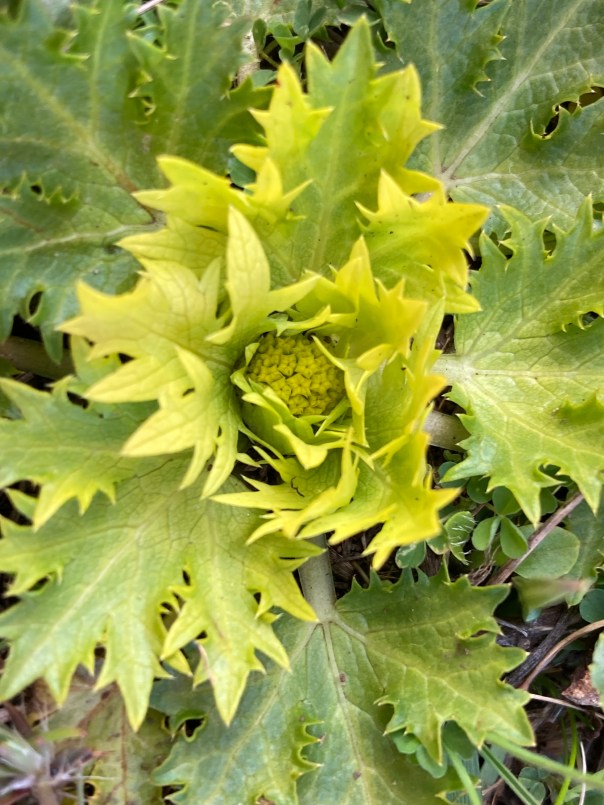
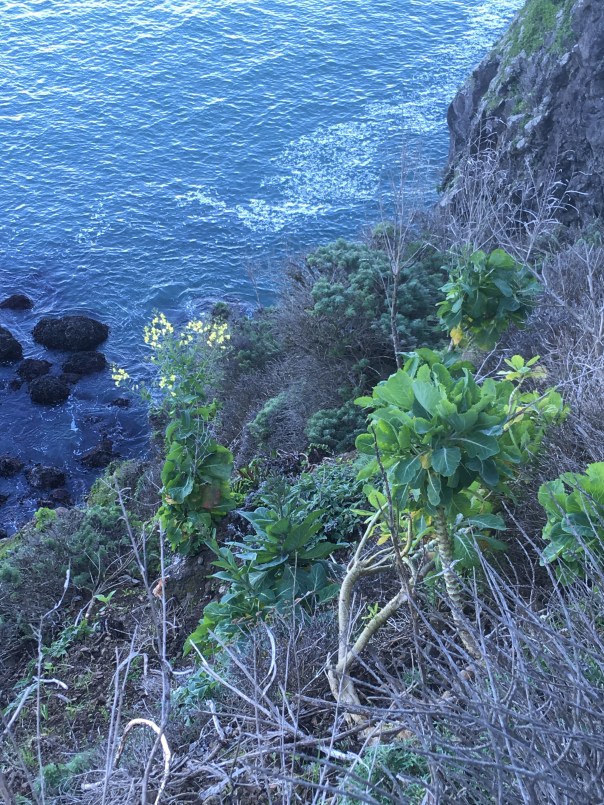
… And what do you think we saw at our feet? Mustard! I wouldn’t be surprised if these plants or their grandparents have been hanging around these bluffs for a hundred years or more; they are obviously robust and venerable.

Quite recently they’ve had baths and blow-drys, and the leaves looked so juicy…

… it’s no wonder Pippin wanted to taste a leaf. I of course had to follow suit… Yikes! That is the strongest tasting Brassica I ever hope to sample.

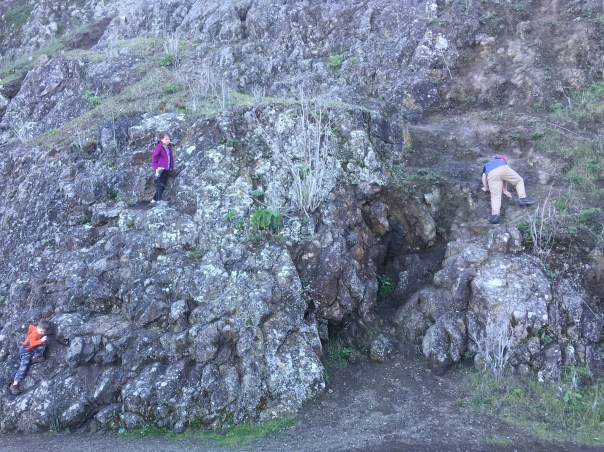
Ivy tried a periwinkle flower and spat it out. Then, the kids interacted with their environment with hands and feet, making their way up the rocky wall to our west.

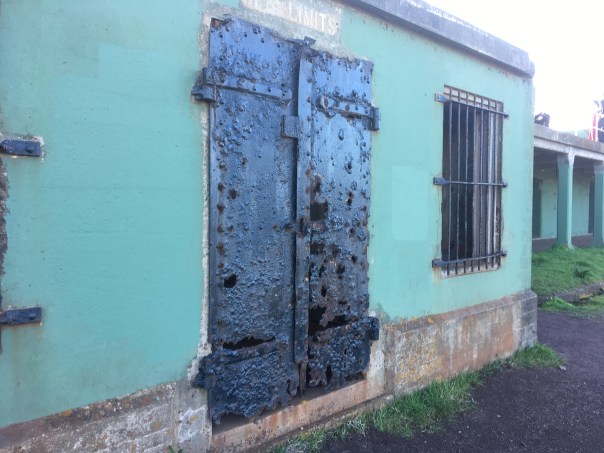
We walked back up the path and drove around the corner to the former Fort Cronkhite, now part of the Golden Gate Recreational Area. From the batteries we could see north up the coast and south to the lighthouse.

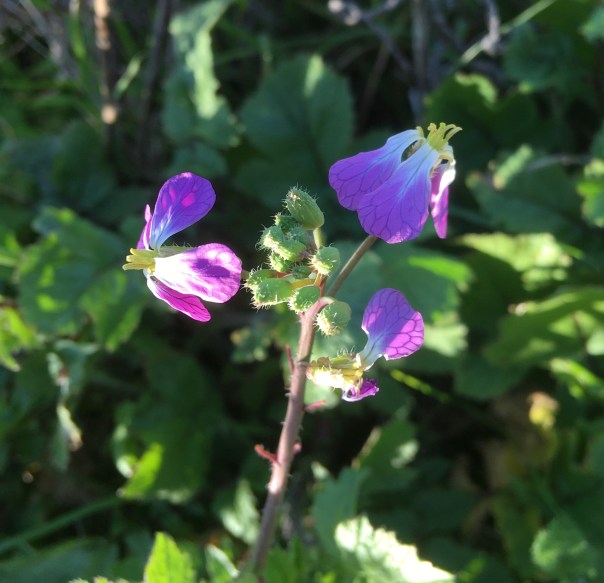
Another Brassica lives on that side, the very common wild radish, raphanus raphanistrum; shown here with violet blooms, though white and yellow are common, too. I used to notice these flowers as I walked home from the bus stop as a child. We didn’t taste this one.

wild radish
California Manroot

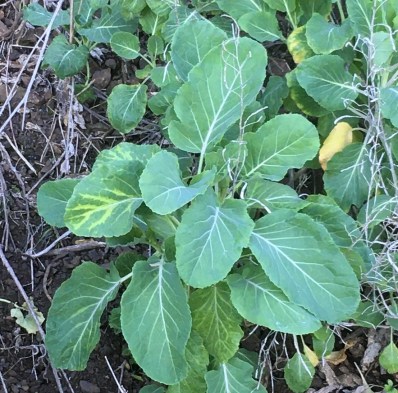
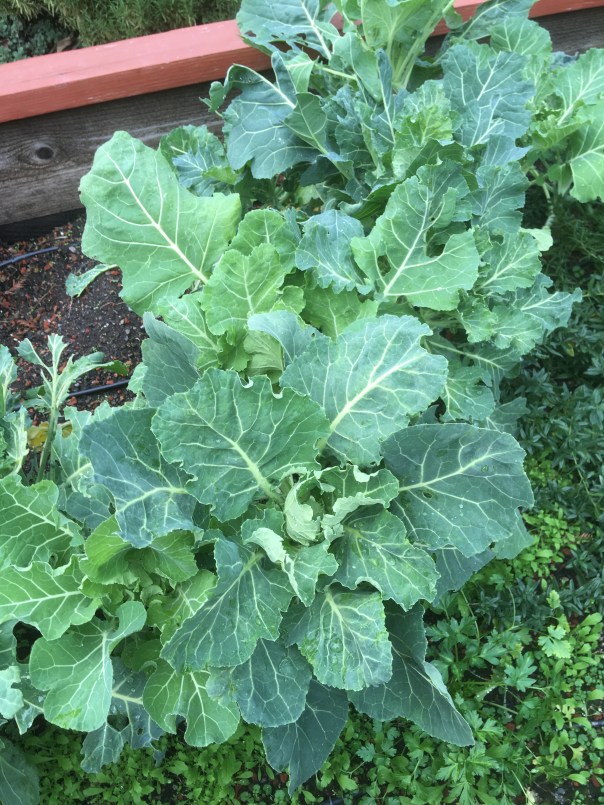
The last Brassica experience of the weekend was the next morning when Pippin took a little tour of my garden before they started home. She told me she’d eaten some of the flower buds of my collards. How did they taste? “Like broccoli.” I don’t normally eat my collards raw, but I decided to snap off all the developing flower stems, and I ate them right then. Mm-mm — they were so sweet and tender. And just around the corner of my own house.

Good-bye Mumbai!

I’m getting ready to leave Mumbai – I might even be at the airport or on the plane home before I manage to publish this post. It seemed right that I make my last Indian post about this city which has been the source and location of nearly all of my experience of India.

Seven weeks is way too short a time to get to know any place beyond the level of slight acquaintance, but Mumbai must be one of the most challenging in this regard. If she were a human, I’d have to say that I caught a glimpse of her brilliant form once for about five seconds, during which moment I heard her singing a few words I couldn’t understand.
In physical size alone, Mumbai takes up most of Salsette Island, and you would have to drive in three hours of crazy traffic to get from the north end to the south. There is a whole national park within its boundaries. I spent 90% of my time in one neighborhood, in a city of 22 million people, twice the population of Belgium.

Mumbai is the financial and fashion capital of India, and the city where 7-10 people die every day in train related accidents. The most expensive house in the world is in Mumbai, and the most educated slum. A million people live in this slum, Dharavi, which dates from the 1840’s, and 80% of them are employed. They live in 84 settlements taking up less than a square mile, which makes the population density of Dharavi 20 times that of Mumbai as a whole. (Nearly half the population of Mumbai lives in slums, if you count Dharavi as a slum, which according to some definitions it isn’t any longer.)

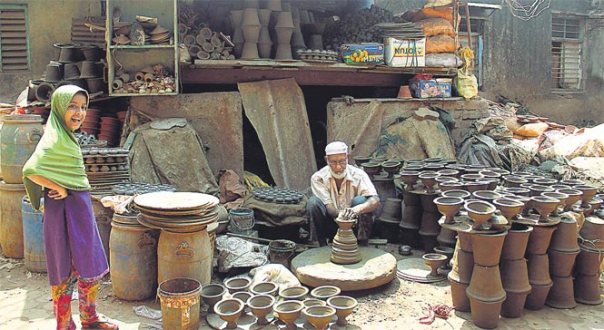
Dharavi recycles 80% of the plastic trash of Mumbai, and produces 3.5 tonnes (Tonnes are bigger than tons) of food every day. One of its many other businesses and “hutment industries” is the large pottery business at Kumbharwada:

I took a tour of Dharavi this week but didn’t take pictures, so that one above I found online. Our group walked around through the industrial and residential areas for two hours, which gave me exposure to thousands of visual images and other sensations to process, accompanied by the excellent narrative by our guide who was from the slum. I took notes on both; but I am a really slow writer, which is why here at the end of my India stay, when I’m counting down the hours, I don’t have time to convey my direct experience.

The subject and reality of Dharavi is huge and complex, and you can read much about it elsewhere if you are interested, and watch YouTube tours. It’s another one of the many Things Mumbai that I will leave here knowing just superficially, but it was a wonderful tour and did expand my understanding quite a bit.

Tiffin wallahs

The lunchbox delivery service by tiffin wallahs or dabbawalas originated in Mumbai. Maybe some of my readers have seen the movie “The Lunchbox” that tells a story centered around this local phenomenon. I saw this charming movie years ago but didn’t pay attention to its setting in Mumbai.
Tiffin wallahs have been providing their services in Bombay since 1890, and are known for their high degree of accuracy in delivering lunches from home or restaurant, and the boxes back to the source the same day. This blog does a good job of describing how it works and why it is such a regular part of so many Mumbaikars’ lives: Dabba Dabba Do! And from another article:

“Some 5,000 men dole out over 200,000 meals a day, picking up the tiffins in the morning from women, typically, who have packed steaming, spicy dishes into each compartment: a curry, vegetables, dal (lentils), and flatbread (with some variations).

“For many Mumbai residents, this is the only way to lunch — on a feast, made with the love of a mother or wife.

“‘It’s expensive to eat outside every day, besides it’s not healthy,’ said 36-year-old Naina Bhonsle in Mumbai’s Versova neighborhood. ‘I know what my husband likes eating, and so I prefer to send him a tiffin every day.’”

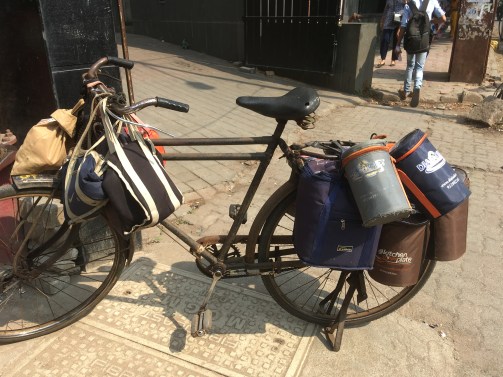
The boxes are transported and distributed by train and on bicycles; on my first day here Tom pointed out this bicycle belonging to a tiffin wallah and since then I’ve seen many of the wallahs, the typically semi-literate men who do the carrying, as they pedal around. It’s another case like Dhobi Ghat of a very organized low-tech, high efficiency system serving basic human needs, and that sort of thing makes me admire all the parties who keep the thing running.

“The Lunchbox” is not a film made according to the Bollywood formula in the style of “Lagaan,” which I mentioned before. But Bollywood style movies are worth mentioning here as a phenomenon because Mumbai is the center of Bollywood. In Reimagining India, Jerry Pinto wrote: “Bollywood is not just a film industry. It is all-pervasive: a home-grown, film-a-day dream machine that maintains a pleasant stranglehold on our imaginations. It determines — or at least shapes — how we see ourselves, how we think, how we talk, dream, speak, love, fight.”

In the same article he describes the Bollywood formula as requiring: “…a fight for the young men, a romantic story for the women, a devotional song for the elderly. Films made for the entire Hindi-speaking market would have to be patriarchal, right wing, jingoistic, and patronizing in their attitudes to anything non-Indian and nonmajoritarian.”

I didn’t know much about Bollywood until the last year or two. I saw a laughably sentimental Bollywood movie first, and then last month, “Lagaan,” a much more enjoyable example. The music of Bollywood films is often the kind that is happy and makes you want to dance, even if — or especially if? — it is separated from the dance routines of the movie. I am not much of a movie watcher in the first place, so I won’t be exploring the genre more, but as a cultural phenomenon, I wouldn’t want to miss it completely. And I have added Bollywood music to my iTunes playlist to listen to on road trips.

Art Deco City

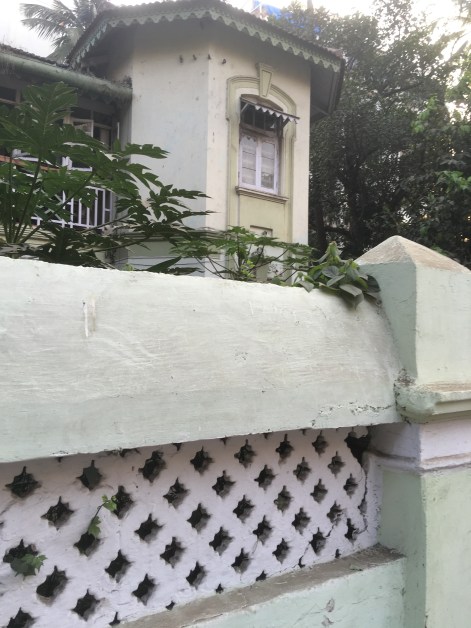
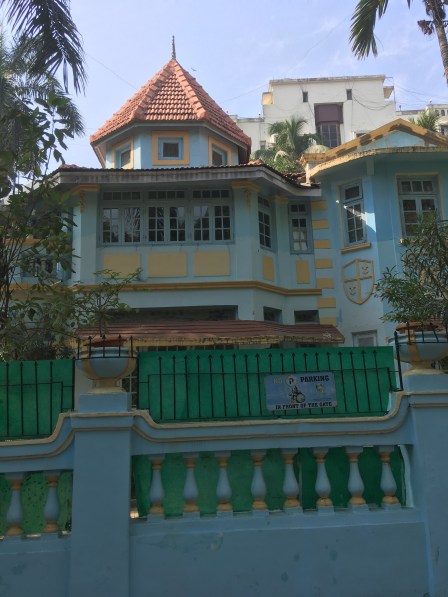
I heard that Mumbai is “the most Art Deco city in the world after Miami,” and though I hadn’t given the style or history of Art Deco one concentrated thought ever before in my life, having Tom on my first day show me some design features in their neighborhood made me focus my eyes in a new way.

From what I have read, it seems that Art Deco and India were made for each other. The Indian Institute of Architects was founded in 1929, the middle class was growing in the 30’s, and many of the buildings in the city from this period featured Art Deco elements in their design. I’ve seen structures from this century include some retro aspects from the style that Mumbai now feels is part of its tradition and heritage.

There is a whole Wikipedia article on Art Deco in Mumbai, which helped me to grasp enough of the concepts to be able to occasionally recognize the Art Deco influence on our outings. If I were going to be here longer, I’d like to go on a tour given by this organization: Art Deco Mumbai . I’ve already seen quite a few examples that would be on the tour, mostly driving past too fast to get a good picture — and some in our neighborhood.

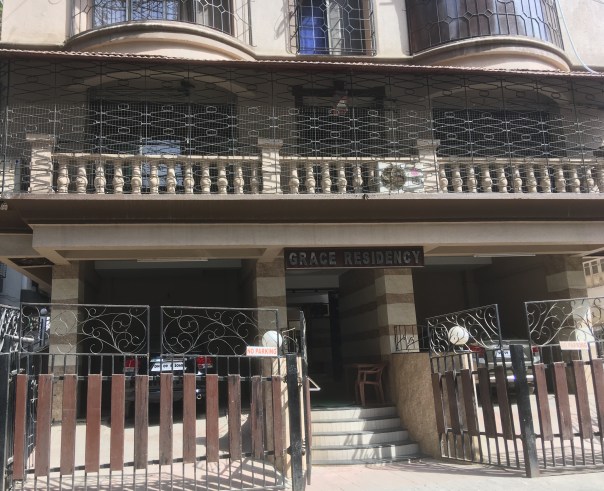
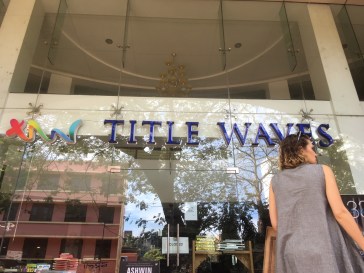
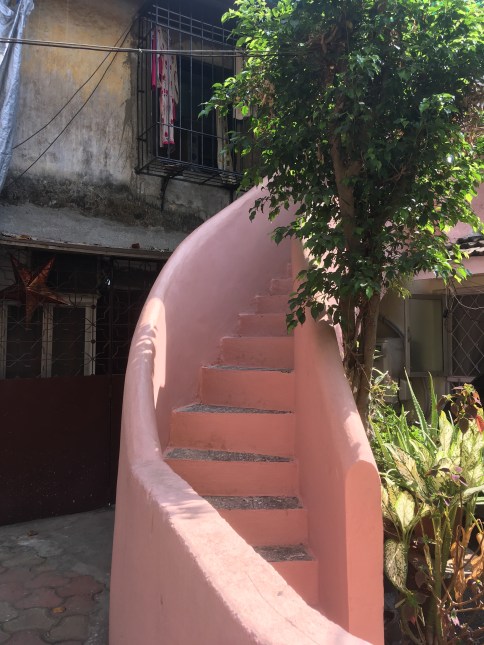
I always love to take pictures of buildings that catch my attention for some reason. Mumbai has been fun that way, because there is such a range of ages and styles — and colors. Sometimes it is just the names of apartment buildings that strike the American ear as funny. I didn’t take a picture of Flushel Apartments, but Tom joked about what was behind that name… Were they advertising that all the toilets worked, or that the walls were straight and plumb? Haha. It was right down the street from the Executive Enclave.

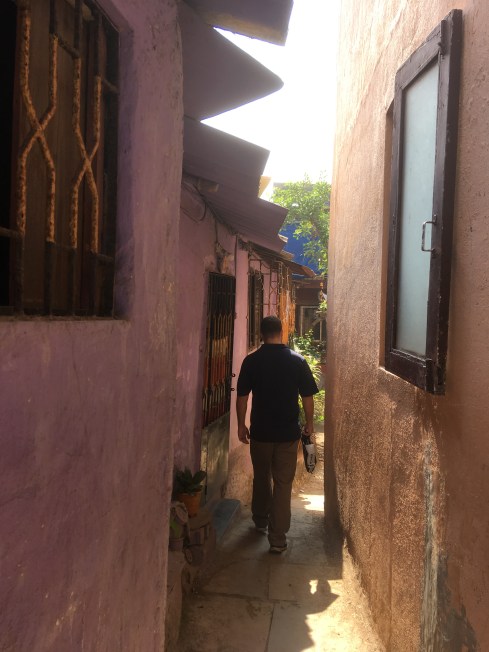
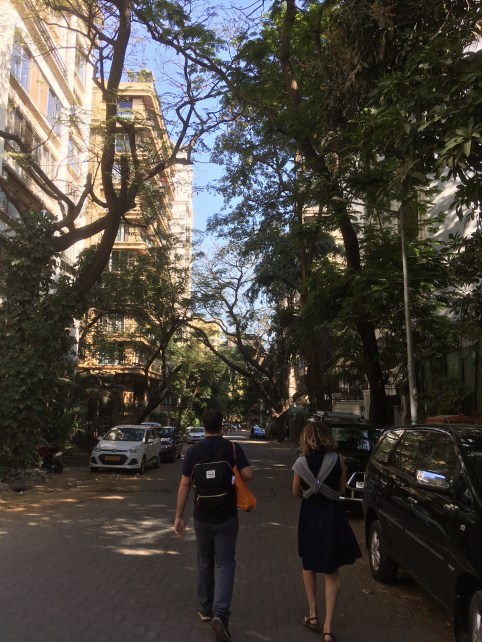
Mostly for my own convenience I am posting below some images of this city that I want to have in this handy Glad collection. Maybe you will like some of them, too!

During my last days here, the air cleared a lot, and I was quite pleased to see that one of my photos revealed blue skies with cottony white clouds!

Every walk through the neighborhood, I’m realizing, might be my last down this street or that…

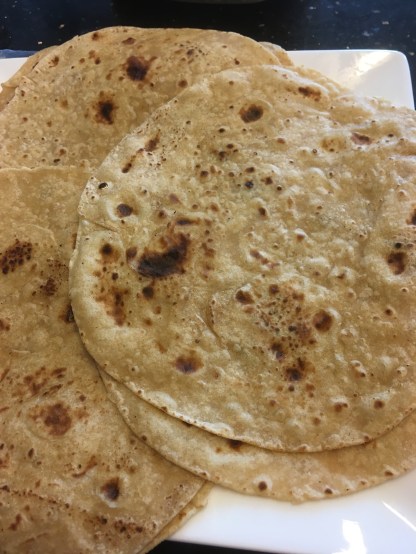
And when I ate one of Kareena’s chapatis fresh from the griddle, it was the most special ever because it was likely the last one that fresh.

I could never take enough pictures of women in colorful clothes to satisfy me, or enough videos of Kareena cooking. I can’t buy all of the lovely dresses in the shops, or learn the names of every surprising Indian dessert. My time of glorious Too-Muchness has come to an end, and I’m going home to Great Lent, which is the perfect way to transition from the superabundance of everything here to… what?

Lent is a journey to Pascha. It’s not the kind of journey where you are bombarded from outside by exciting and even dangerous forces and sensations ranging from air travel to chapatis and people on the street, but a quiet path on which all the struggles come from trying to tune one’s own heart. Considering my starting point, it will surely take all of my effort to accomplish anything in only 40 days.

The hardest part of leaving is, of course, that Raj and his parents are staying here! It has been the sweetest day-after-day to live in the same house as Kate and Tom and their new baby, and to love and be loved in person on a daily basis. The comforting thing is, that except for not being in the same house, we will go on loving and being loved, and be together at the throne of God, as long as He gives us grace. I’m not saying any kind of final good-bye to them.

But I do have to say, “Good-bye, Mumbai!”