Tag Archives: meaning

Playing around his knees.

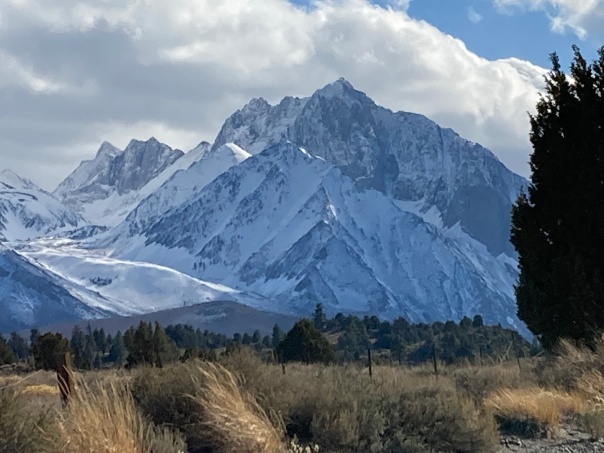
Eastern Sierra Nevada

The poem below got me started thinking about mountains and their symbolism. I discovered a very long article on the subject, “The Transfiguration on Mount Tabor: The Symbolism of the Mountain,” which I don’t have time to read deeply, because as I type this draft, I’m in the midst of packing the car for five of us who will be in the mountains together by the time you read my post. I hope the article is not paywalled. It is a treatise on the subject going back millennia, opening with this from René Daumal:

“[The] summit touches the sphere of eternity, and its base branches out in manifold foothills into the world of mortals. It is the path by which humanity can raise itself to the divine and the divine reveals itself to humanity.”
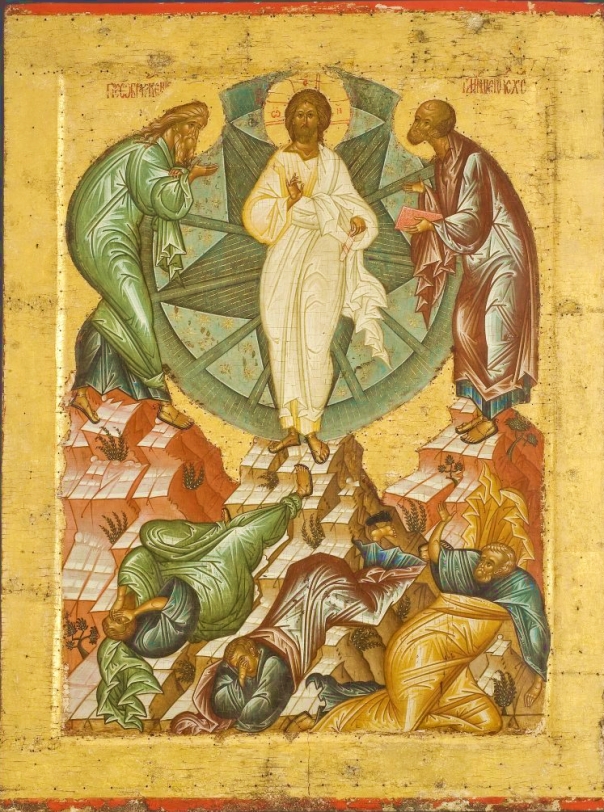
The Transfiguration, Mount Tabor

The author examines traditions throughout the world, beginning in ancient times and concluding with thoughts on what The Mountain means for us Christians who are on a continuum with those 2,000 years ago. Here is one excerpt to help you know if you are interested in the subject from a scholarly perspective :

“In the traditional Hebrew and Christian understanding of the world, places are what they are by their teleology: it is not so much by the material or structural elements that they are recognized, but by their function. Things are what they are because of their purpose and their place in a web of relationships within reality which help create our own map of meanings. Therefore, it is very difficult to understand from a purely geographical (time-space) position where God dwells with regards to this or that mountain. For this reason, many physical mountains have been ‘the mountain of God’. There is only ‘one’, but it’s not confined to one geographical space-time location as we modern people understand it.”

I guess it’s obvious that I myself am interested, and I thought of printing this article to take with me to the high country, but I’m afraid I won’t have time to read it up there, either. My family and I will be too busy playing around our grandfather’s knees.

THE MOUNTAIN

The Mountain sat upon the Plain
In his tremendous Chair—
His observation omnifold,
His inquest, everywhere—

The Seasons played around his knees
Like Children round a sire—
Grandfather of the Days is He
Of Dawn, the Ancestor—

-Emily Dickinson

Sierra Nevada, Tioga Pass Road

What’s left is The Nothing.

“What is left to a people who have believed only in politics after they lose their faith is ‘nothing,’ or perhaps ‘The Nothing.’ And what follows the failure of politics is not another form of political order but most likely the end of political community as such and therefore of properly human self-government. We are on the cusp of a new age that is at once post-political and post-human….”

The quote is from the opening paragraphs of Michael Hanby’s article, “Nothingness Rules,” in the latest Touchstone magazine. Hanby writes about the modern mind, especially its expression in the American vision, and how it sees the world from the standpoint of pragmatism. As an example he quotes John Dewey saying, “things are what they can do, and what can be done with them.” Any consideration of what things are in themselves, what their nature is, is unnecessary; more likely, it is a bothersome hindrance to getting on with controlling and changing what is.

“At the core of this metaphysical vision is the elevation of possibility or power over the givenness of the actual world. The celebration of possibility takes on mythic tones in American romanticism about the ‘frontier,’ in our political homage to the ‘American dream,’ and in a thousand mind-numbing commercials. But it is also deeply inscribed into our public philosophy, both political and natural.

“Liberalism elevates possibility over actuality in the political sphere by identifying freedom with rights. Rights create what D.  C. Schindler calls an ‘enclosure of a field of power’ around each citizen, transforming every given reality that would define me prior to my choosing—God, the moral order, and, now we discover, even my own nature—into a possible object of choice. Liberal order thereby undermines these basic realities while appearing to uphold them.”

Hanby goes on to discuss the difference between Marxist atheism and previous versions, why authority and not power is the “true source of the law’s efficaciousness,” and how “technocracy is not the rule of technocrats, but the rule of nobody.” He points out that the seeds of the new vision of nature are right there in our U.S. Constitution:

“The U.S. Constitution grants Congress the power to ‘promote the Progress of Science and the Useful Arts,’ prompting Leon Kass to comment that ‘the American Republic is  . . . the first regime explicitly to embrace scientific and technical progress and officially to claim its importance for the public good.'”

It’s a thought-provoking read which you can access online: “Nothingness Rules.”

Man was also a culture-bearer.

The trees and bushes in my garden get bigger year by year, requiring more attention from me; and several other aspects of my present life prevent me from having the leisure I once had, to write reviews of the books I read. For example, A Canticle for Leibowitz, which I only finished this month. It is the first post-apocalyptic novel I’ve ever read, published in 1959.

It made a big impression on me, which I probably wouldn’t be able to analyze or articulate to my satisfaction, so I didn’t even begin to try, but immediately moved on to a different book. (It’s my experience that reading books doesn’t require the same quality of leisure as writing reviews.) But O happy day! Jeff Bilbro mentioned the book, with a quote, in the newsletter of The Front Porch Republic, so I will just pass that on, with thanks to him. I also commend the other articles on that site, or their print journal, as worthy of your consideration. Here’s Jeff:

“I recently read Canticle for Leibowitz by Walter M. Miller Jr., and I found it a moving narrative exploring the proper cultural and religious conditions for rightly valuing knowledge. The novel follows a monastic order that forms in the wake of a nuclear holocaust, and they carefully preserve remnants of the former industrial civilization through generations of warfare until human civilization is ready to rediscover natural science and its applications. Can such knowledge ever be used wisely, or does increased technical know-how inevitably lead cultures to abandon religious and moral wisdom? Miller offers no easy answers. In this passage, an abbot of this monastic order reflects on the significance of the rising interest in their archives:

‘Now a Dark Age seemed to be passing. For twelve centuries, a small flame of knowledge had been kept smoldering in the monasteries; only now were their minds ready to be kindled. Long ago, during the last age of reason, certain proud thinkers had claimed that valid knowledge was indestructible—that ideas were deathless and truth immortal. But that was true only in the subtlest sense, the abbot thought, and not superficially true at all. There was objective meaning in the world, to be sure: the nonmoral logos or design of the Creator; but such meanings were God’s and not Man’s, until they found an imperfect incarnation, a dark reflection, within the mind and speech and culture of a given human society, which might ascribe values to the meanings so that they become valid in a human sense within the culture. For Man was a culture-bearer as well as a soul-bearer, but his cultures were not immortal and they could die with a race or an age, and then human reflections of meaning and human portrayals of truth receded, and truth and meaning resided, unseen, only in the objective logos of Nature and the ineffable Logos of God. Truth could be crucified; but soon, perhaps, a resurrection.’

“Thanks for spending some time with us on the Porch,

Jeff Bilbro”

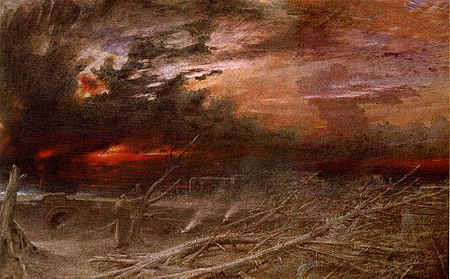
Apocalypse by Albert Goodwin

Twirling through the cosmos and time.

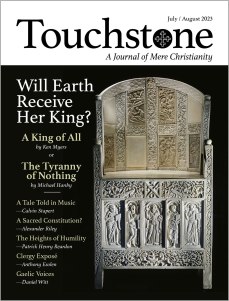
Today I’ve been tossing out most of my beloved Touchstone and Gilbert magazines, but not before I glance at notes I’d written to myself on their covers ten or more years ago, suggesting to my mind and pen (and keyboard) topics to muse and write about. I have accumulated several boxes of such periodicals, including cooking and gardening magazines as well, every issue containing provocative information and knowledge that I hoped to incorporate into my daily life, both the active and contemplative aspects.

One of them that drew me in was short enough to reread this morning: “It All Depends: on Randomness and the Providence of God,” by Philip Rempel. Rempel compares the Enlightenment view of the cosmos as orderly clockwork to the postmodern concept of it as random and chaotic. Both end up being “dead and dreary,” especially when contrasted with the reality of the world we see in front of us, and described in the language of Christ and the church.

“For the world we observe if we open our eyes is indeed a universe filled with both structure and freedom, but the structure is never a rigid structure and the freedom is never a lawless freedom. As in a dance, or all art for that matter, where rules and creativity must work in tandem to produce something of meaning, so it is with the universe. In some sense we are part of a cosmic dance, but the dance must be structured if it is to have meaning; a universe of arbitrary motion is just as unsatisfying as a universe without motion.

“The existence of every created thing, and thus its role in the dance, is entirely and continually dependent on God, and so our movement through the cosmos and through time, which is our response to his love, must be continually focused on him and directed towards him. Particles and probabilities, and people and planets, are all twirling through the cosmos in response to God’s loving call.”

-Philip Rempel