In my first view of the ocean upon arriving at the coast,
I could see whitecaps.
Velella velella
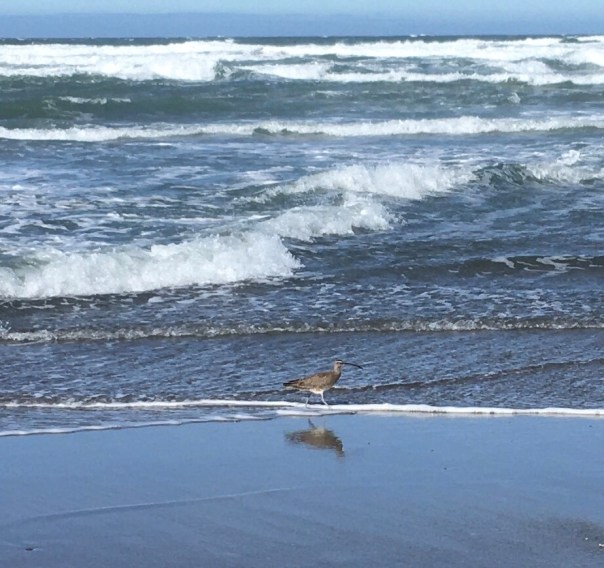
But the wind wasn’t too bad down on the beach, and I encountered new creatures: Long-billed Curlews and a By-the-wind Sailor (Velella velella). After I took a few blurry pictures of the wind-blown Sailor, a wave rushed up and snatched it back into the deep. Lucky for me I had seen a (much better) picture of that same species of “gelatinous animal” just last week. The one I saw in person was probably less than 2 cm. in diameter.
The curlews reminded me of the Godwits I’d seen last summer. But the bills of Godwits curve upward, and those of the Curlews curve downward. There are many other differences, I’m sure, such as, the Godwits seem smaller and leggier — but the bill was the thing that helped narrow my search. Here is a better photo from the internet.
Dozens of geese flew overhead in a ragged and strung out V. They were no doubt fighting the wind up there as I was doing below.
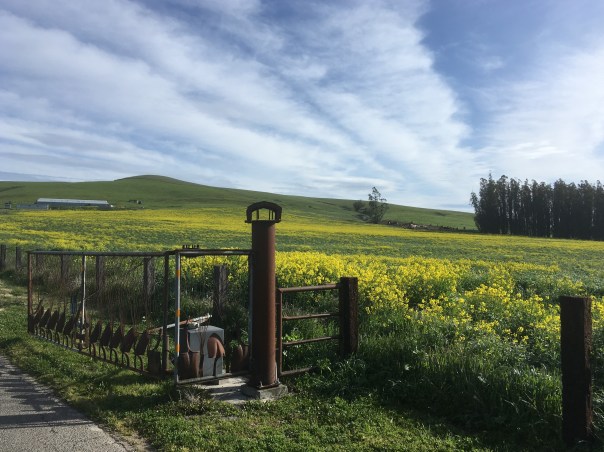
My drive to and from the coast was through lush farmland and pastures, with black-and-white cows grazing on green green grass. And mustard twice as tall as at my last viewing.
On my drive to the coast today, I listened to “How Satan Deceives People” by Elder Cleopa of Romania. That story certainly set the tone for my visit, to make it even more contemplative than usual.
I had missed my Alone Time on the beach for exactly three weeks. Because wind seemed to be in the forecast a lot, I had been wondering if I would be able to get out there very much this spring, but when the wind died down here, it did there, too. I think the air temperature was about 60 degrees, but the water felt colder than ever; it was the first time I felt it to be somewhat uncomfortable right away.
The water temperature on the beaches I frequent ranges from about 50-55 degrees over the year, with the coldest months being April and May, and the warmest, September. By the time you get as far south as San Francisco the water is five degrees warmer on average. Anyway, that’s not much variation, and I’m wondering if the water felt colder because I am older (not to say old). What I like about that reductive explanation for certain perplexing changes is that it can quickly free up time and mental energy for other more interesting inquiries.
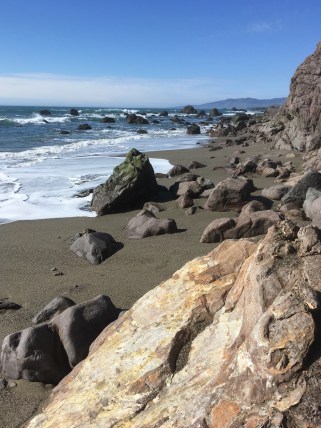
Today I was thinking about too many things to let the water temperature take over my mind, though I walked in the surf as much as ever. Tears came to my eyes, for joy at being there in the elements, my senses refreshed and my mind having encouraging things from Elder Cleopa to rest on. It was convenient that the elements were fairly gentle, and that the tide had gone out just enough to reveal comfortable sitting rocks at the north end of the beach where no other people were. I sat.
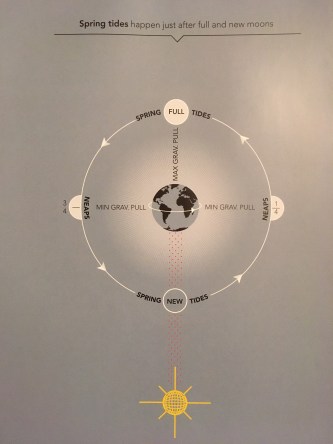
The tide had peaked high about two hours before I arrived, and as each wave fell away from the shore, it looked as though it were pulling back on itself; I wonder if that was an optical illusion from me seeing the steep slope of the beach as the wave retracted. The way tides work is pretty complex! I just read this online, when I was looking for the opposite of ebb:
“The incoming tide along the coast and into the bays and estuaries is called a flood current; the outgoing tide is called an ebb current. The strongest flood and ebb currents usually occur before or near the time of the high and low tides. The weakest currents occur between the flood and ebb currents and are called slack tides.”
I learned three things in that short paragraph. If I could find the time to study it, I would like to learn much more, from this book, Tides and the Ocean, that I borrowed from the library. I may have to take it to the beach and sit on a rock to read it, where I have no other books, and few other “tasks” to distract me. Pippin read a bit from it when she was here (away from her own books and usual tasks) and explained to me about some other things that affect the tides, like the sun, and local weather. There are many great diagrams and pictures to help explain everything.
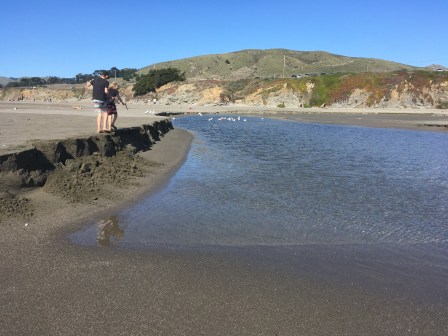
The view from my sitting rock.
One idea from Elder Cleopa’s story that impressed me was that the only thing demons can do to us is suggest thoughts. We think they are our own and we build habits out of them, and follow a path away from repentance leading to salvation.
But God, through our conscience or our Guardian Angel or maybe many means, also gives us promptings, which it’s best to follow hard on. Otherwise the demons will come right along and suggest that we procrastinate. Merely procrastinating doesn’t seem too bad… But watch out!
The kindness of God quite overwhelmed me this afternoon. I got home a little late, with not enough time left to tell you all I had planned, about my outing — especially what I saw on the way home. If I am here tomorrow maybe I will work on that part. It’s easy to get behind in recounting the gifts of our Creator and Lover and Friend.
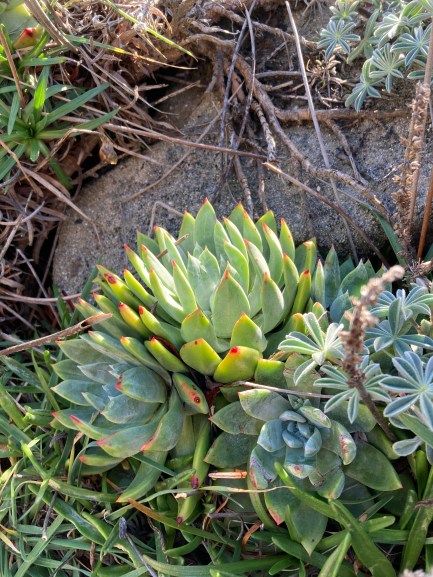
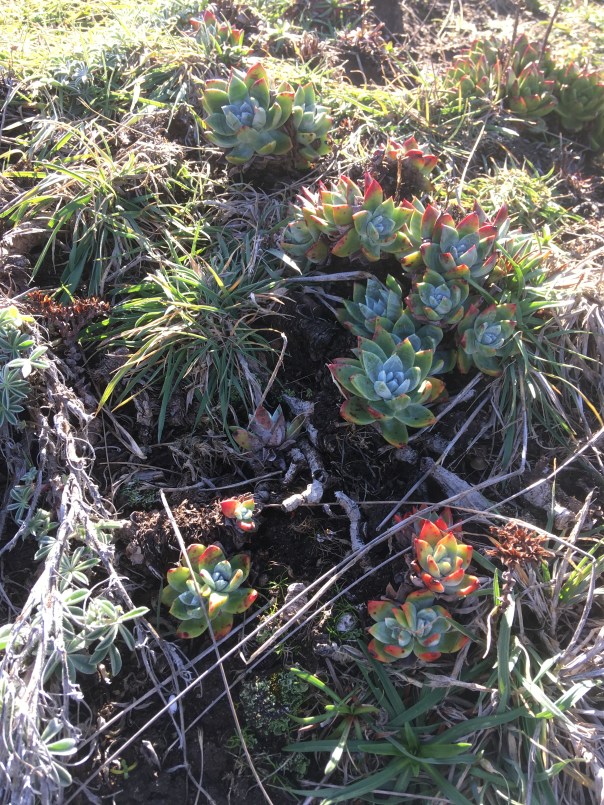
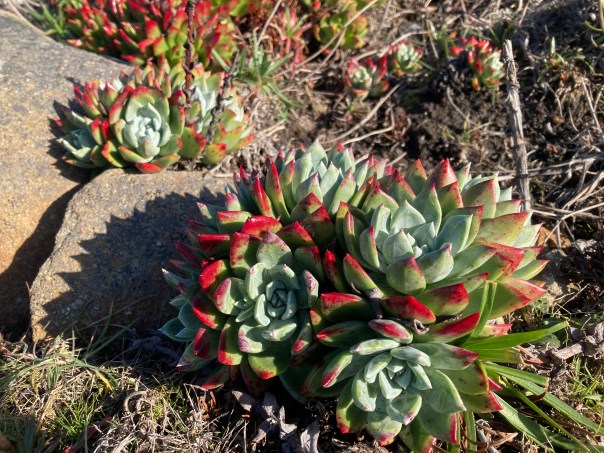
Succulents and mustard are related by their mutual membership in the plant kingdom, but also by being bright particulars of my weekend that also included lots of ocean watching.
“Why pay a premium for organic brassicas like kale and broccoli at the farmer’s market when all the free wild mustard you could ever ask for is likely waiting right around the corner?”
This question was posed in an article about food foraging that I read last weekend. Pippin’s family was here and we had opportunity to explore the topic. On Saturday we took a long drive to Salt Point State Park, farther north on the coast than I have been in many years, and passed by many vineyards looking like this:
We tried to remember whether the mustard we are used to seeing in springtime in California is at least a near relation to what one buys prepared in a jar, and that night we researched further, finding once again how many good edibles are in the Brassica family. We had no idea we’d get the chance to taste some very soon.
Yes, that mustard above ismustard, and in this context it isn’t considered a weed that needs eradicating. It actually helps suppress the nematode population among the grapevines, because mustard contains high levels of biofumigants in the form of glucosinolates. Evidently the sharp flavor isn’t appreciated by the nematodes. However the mustard got there, it’s ubiquitous now, and beneficial.
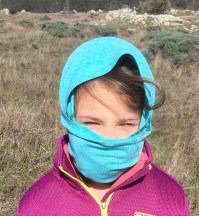
At Salt Point the sun shone on us brilliantly, and made us squint. The wind pushed us this way and that, and the sound of crashing surf thundered up the cliffs to where we walked along the headlands. Some of us had gaiters around our necks, which we pulled up to keep our hair out of our eyes and our cheeks warm.
We wanted to climb that “castle rock,” but Pippin thought she better go scout ahead for poison oak. She found a lot of it, so we gave up on that idea.
Most of the plants out there hug the ground or the rocks where they are growing. Even the milkmaids stay under cover. When Ivy took off her gaiter scarf, her hair needed re-gathering into its scrunchie; once we accomplished that, she bounced off musing, “Some people say, ‘Another day, another dollar;’ but we always say, ‘Another day, another hair out of place!'”
MilkmaidsSome brassicas are likely in this mix.saniclelupine
Where the trail dropped down close to the shore, we explored the sandstone that has been carved into strange shapes by the wind. The surface of the rocks with the smoothest appearance, where I grabbed when I felt buffeted off balance, was like the coarsest sandpaper.
The children all napped on the way home that evening, but slept long in their bags after they went to bed again later that night. Before we knew it we were all up and going again, but southwest this time, aiming for a hike along the Marin Headlands. Marin County is the one just north of San Francisco County/City, and it soon became evident that this destination, so much closer to a large population, was going to be too crowded. There was nowhere to park at the trailhead.
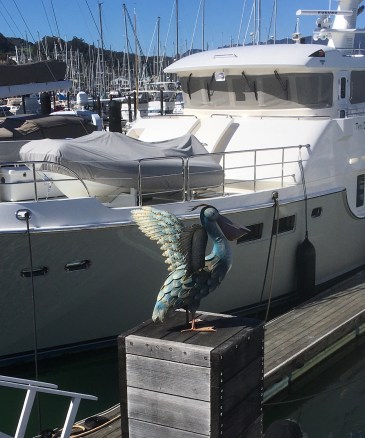
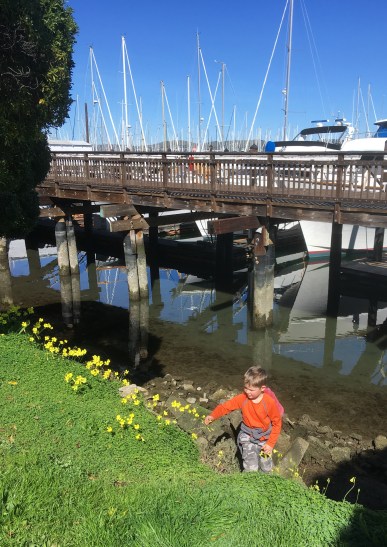
So we went into the town of Sausalito and looked at boats in the harbor, and ate our lunch at a little park with a view of Angel Island, and the Bay Bridge to the southeast.
The first wild thing we found to eat that morning was oxalis, or sourgrass, also called wood sorrel. Once I told the children about it, they continued to break off stems and chew on it for the rest of the day, it being everywhere we went. Ivy liked the flowers best, but most of us preferred the stems.
Plantain was growing everywhere beneath our feet, mixed in with the oxalis. Scout told me that if you get a rash from stinging nettle you can chew some plantain and put it on the rash to soothe it. But there were no nettles in this neighborhood, and we left the plantain alone.
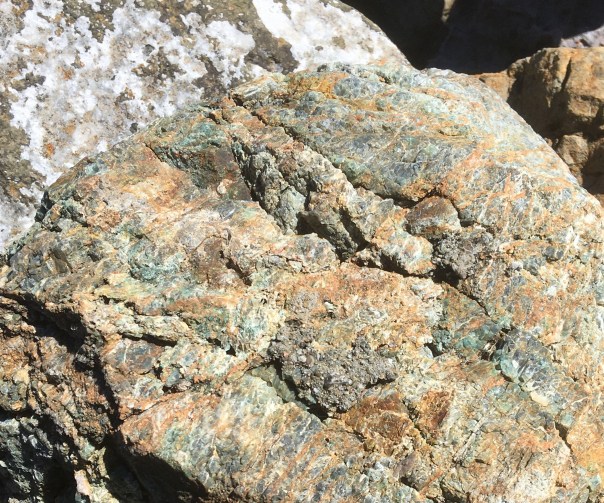
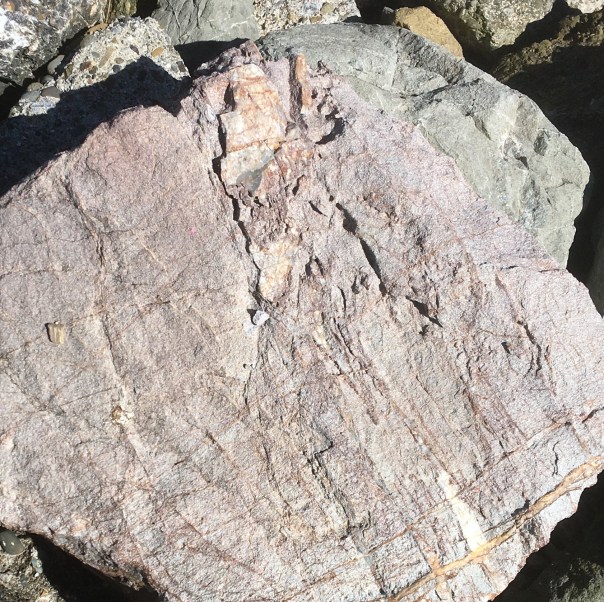
The water was glittering, and the children discovered countless crabs as they peered into their dark caves among the rocks. While the more agile folk spied on crabs, I admired the colorful minerals in the giant specimens bordering the sidewalk.
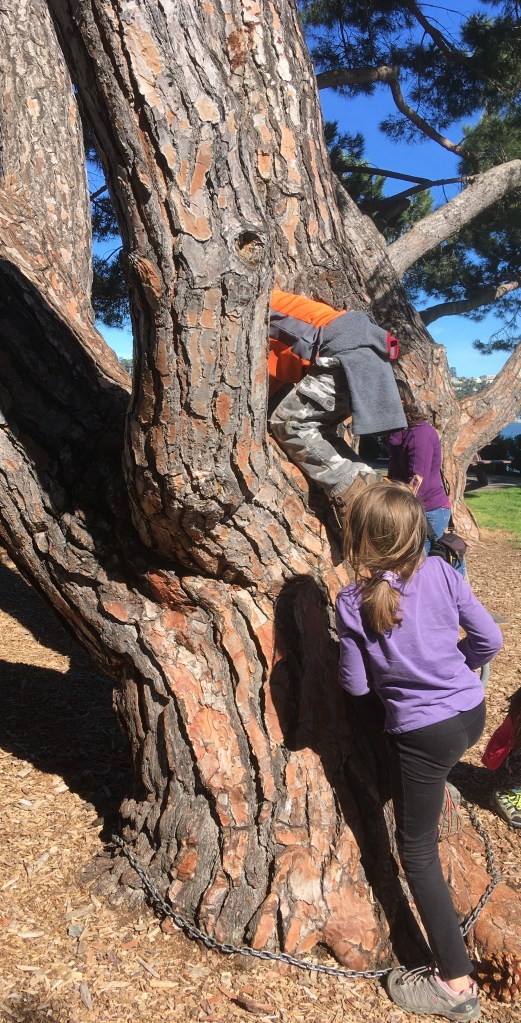
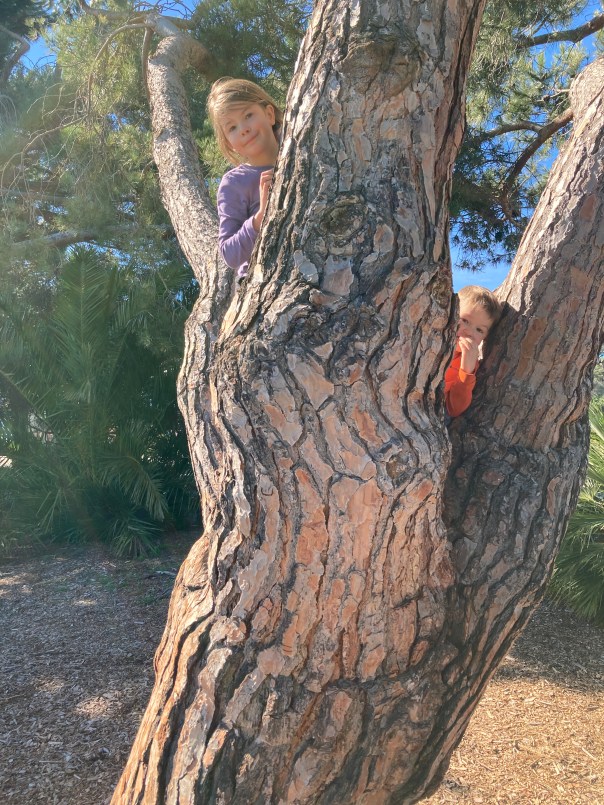
Big pine trees with gorgeous trunks shaded us at the park. Ivy and Jamie took on the challenge of climbing one of them. Their mother gave them tips from time to time; eventually Ivy gave Jamie her knee for a footstool, and he was up! Pippin then helped Ivy, and they finished their lunch in an elevated position.
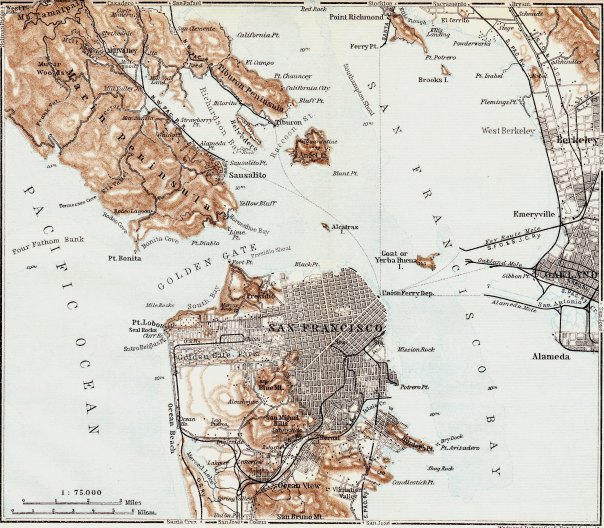
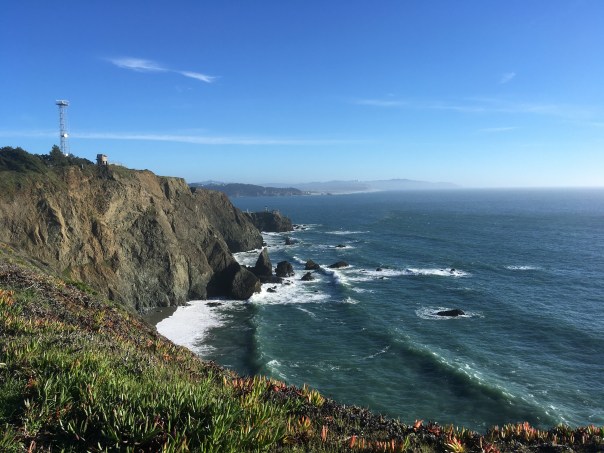
We drove to a different access point for the Marin Headlands and ended up at Point Bonita. Here is a map on which you can see the point, right where a lighthouse needed to be, outside San Francisco Bay at its north entrance. The lighthouse itself is closed currently, but we walked down the little peninsula as far as possible.
We stared and stared at the Golden Gate Bridge, from that perspective that we rarely get, looking in toward the bay. That narrow entrance to a huge bay was named the Golden Gate Strait by John C. Fremont:
“In 1846, when soldier, explorer and future presidential candidate John C. Fremont saw the watery trench that breached the range of coastal hills on the western edge of otherwise landlocked San Francisco Bay, it reminded him of another beautiful landlocked harbor: the Golden Horn of the Bosporus in Constantinople, now Istanbul. Fremont used a Greek term to name it: Chrysopylae – in English, Golden Gate. In his 1848 ‘Geographical Memoir,’ Fremont added another layer of meaning: The rugged opening to the Pacific, he wrote, is ‘a golden gate to trade with the Orient.'”
Here is another map of the bay from 1909, before the Golden Gate Bridge was built.
A couple dozen harbor seals were sunning themselves on rocks in Bonita Cove. We could see Ocean Beach in San Francisco to the south, and the skyline of the city with its new, tallest building, the Salesforce Tower, and indeed it towers over the others. I don’t think it’s as ugly as its name, which speaks volumes about our society. But let’s get back to more interesting things…
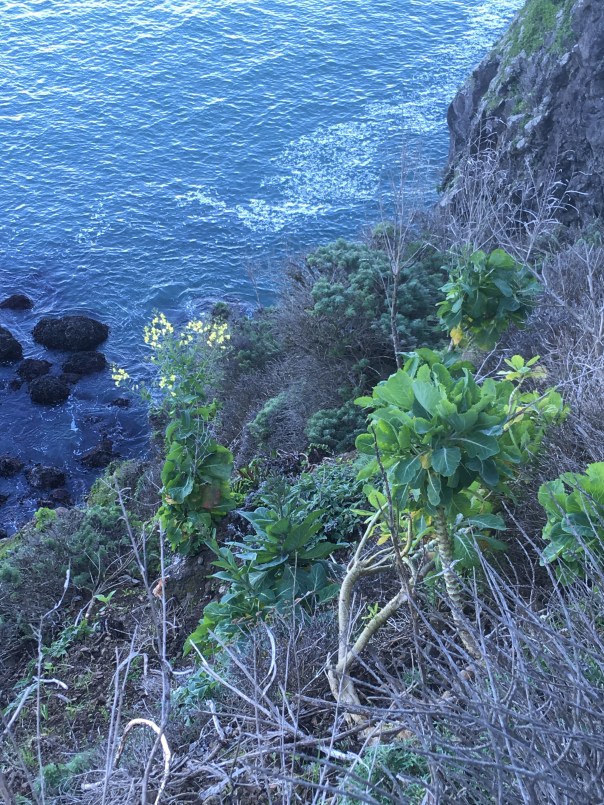
… And what do you think we saw at our feet? Mustard! I wouldn’t be surprised if these plants or their grandparents have been hanging around these bluffs for a hundred years or more; they are obviously robust and venerable.
Quite recently they’ve had baths and blow-drys, and the leaves looked so juicy…
… it’s no wonder Pippin wanted to taste a leaf. I of course had to follow suit… Yikes! That is the strongest tasting Brassica I ever hope to sample.
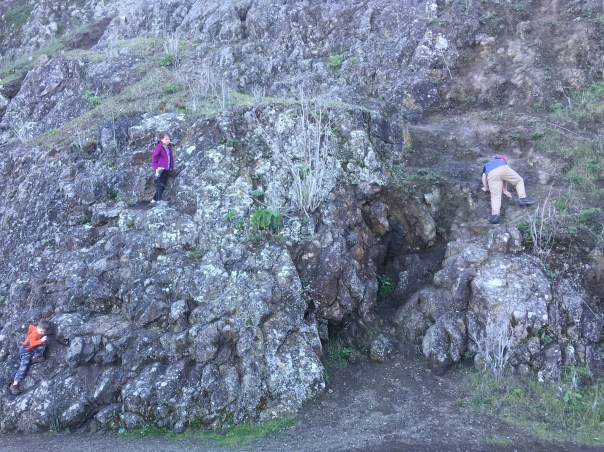
Ivy tried a periwinkle flower and spat it out. Then, the kids interacted with their environment with hands and feet, making their way up the rocky wall to our west.
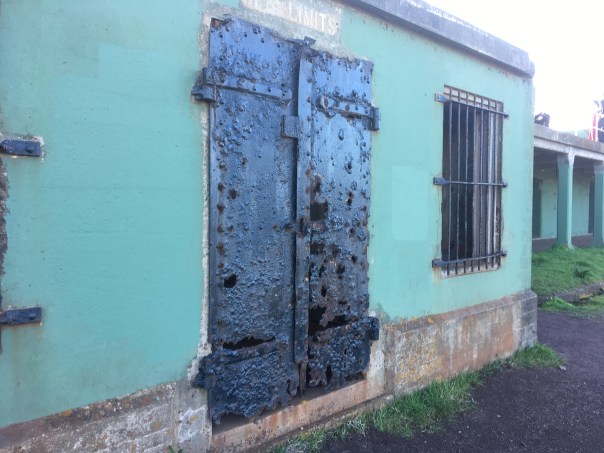
We walked back up the path and drove around the corner to the former Fort Cronkhite, now part of the Golden Gate Recreational Area. From the batteries we could see north up the coast and south to the lighthouse.
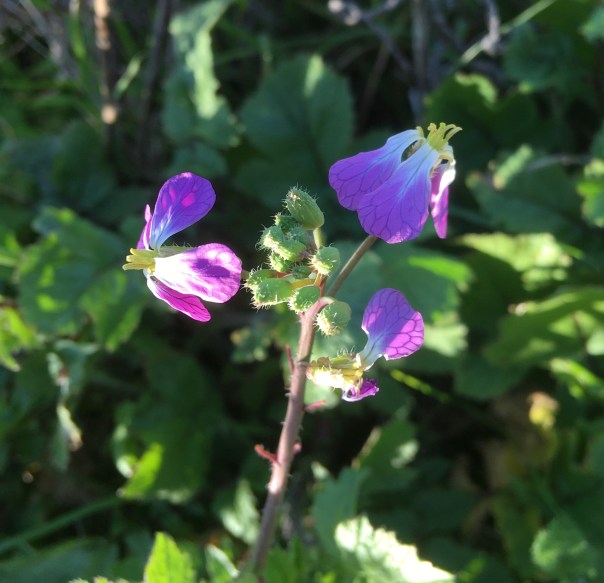
Another Brassica lives on that side, the very common wild radish, raphanus raphanistrum; shown here with violet blooms, though white and yellow are common, too. I used to notice these flowers as I walked home from the bus stop as a child. We didn’t taste this one.
wild radishCalifornia Manroot
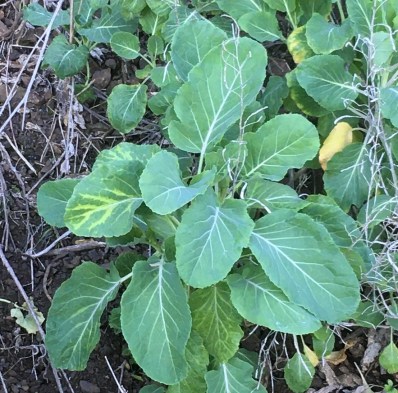
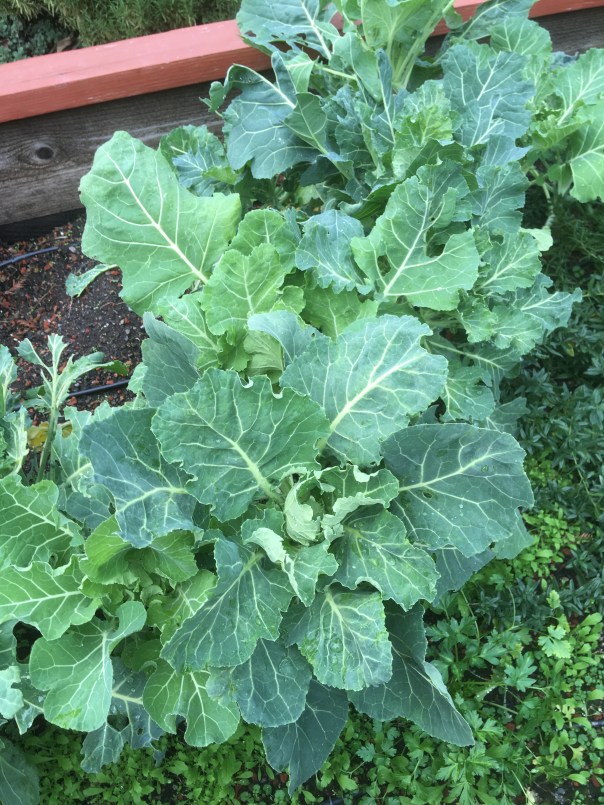
The last Brassica experience of the weekend was the next morning when Pippin took a little tour of my garden before they started home. She told me she’d eaten some of the flower buds of my collards. How did they taste? “Like broccoli.” I don’t normally eat my collards raw, but I decided to snap off all the developing flower stems, and I ate them right then. Mm-mm — they were so sweet and tender. And just around the corner of my own house.
In this era, I keep an eye on the coastal weather forecast more than the local, trying to plan well ahead so as to increase my chances of getting out there to the edge of the Pacific — aiming for several times a month.
Last week about this time I noticed that there was going to be rain nearly every day upcoming, except for one, so I penciled in my outing for Monday. I did notice that it was forecast to be windy, and I researched a little bit about just how 20-24 mph winds feel. I couldn’t remember the stats on what I’d experienced in the past. It didn’t sound too foreboding, so I dressed in layers with a windbreaker, and off I went.
Did I tell you I have been reading The Aviator by Eugene Vodolazkin? I have the audio as well as the print format. The possibility of sinking into that book makes me look forward to any longer drive to anywhere. I can’t concentrate on a book, lecture, etc. while doing anything else at home; even while driving, I can only attend well while following a familiar route. I make frequent use of the rewind button (Is there another word for that now that there is no actual winding involved?), including at times when I have to concentrate more, as at an intersection, and briefly lose the thread of the story.
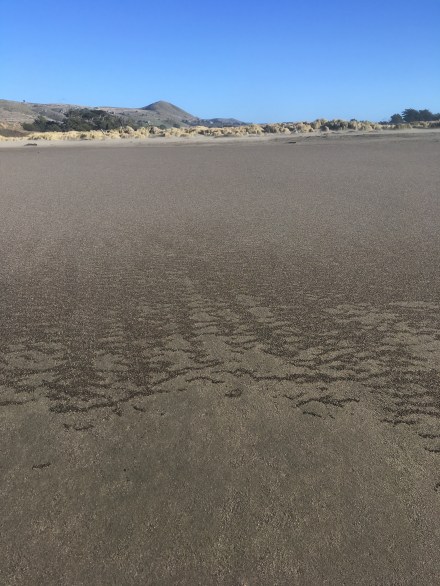
The weather at the beach was a blast. The clumps of grass on the dunes were beautiful, the way they waved in the wind. But, “This is not fun,” was the phrase that popped into my mind about three minutes after I reached the water’s edge, where the sand at least was not flying; my head had began to pound, and my eyes were burning, but I pushed against that blast toward the tidepools that I knew would have been exposed.
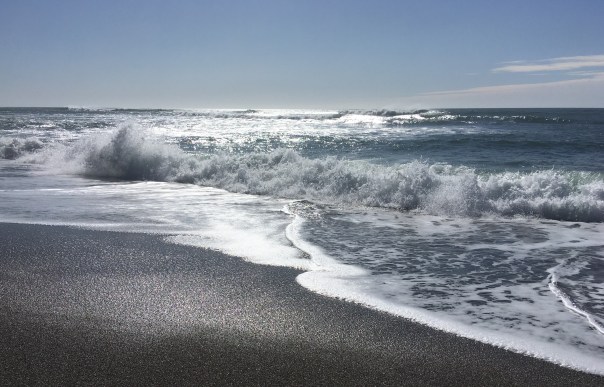
The wind was helping the waves up the beach, where they were allowed to break, but not to recede. The wind whipped them to make them lie on the sand a few more seconds than was their natural will; I could tell they were not happy about it, because they weren’t lying there quietly. Gusts attacked them over and over, yanking pieces of foam off their edges and blowing them off. The puffs scattered wildly, like sudden orphans. Their wails couldn’t be heard above those of their abuser. The sun shone brightly.
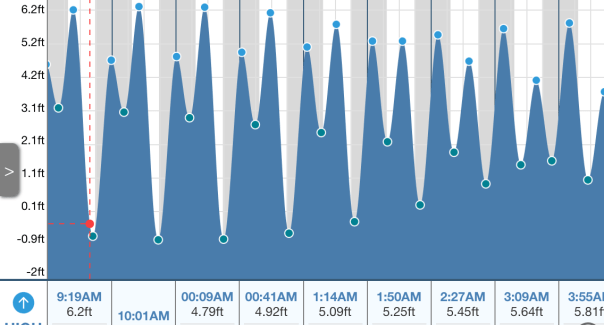
I had purposely chosen mid-afternoon for my visit, because there was going to be a minus tide, and I’ve noticed those seem to occur mostly in the middle of the night. This week there were three of them that would happen before dark.
But I was beginning to foresee that stumbling around the rocks looking for anemones, in my quickly cooling bare feet, would also not be that much fun. I turned around, and my time on the beach was shorter than usual, but I was glad I had tried the experiment.
I have been reading so many books lately that include elements of great hardship and suffering, it would not feel right if I did not push myself at least a little, and endure some amount of discomfort. Not only do I have my literary characters as examples in this, but I have fellow blogger Mags who is snow-swimming this month, in the seas of Northern Ireland! This kind of effort, when you do it voluntarily, with the knowledge that you can be home and cozy soon afterward, can be exhilarating. The experience of a Soviet labor camp, on the other hand, one doesn’t volunteer for. Just today I read more of The Aviator‘s protagonist Innokenty’s musings on it, years later:
“Well, what kind of description can convey round-the-clock coldness? Or hunger? Any story implies a completed event but there is a dreadful eternity here. You cannot warm up for an hour, or two or three or ten. It is impossible, after all, to accustom oneself to either hunger or cold.”
My garden suffered what may be the worst cold it will have to endure this winter, just two days ago. I know it was several degrees of frost — and this area has had a winter or two in the last decades without even one freeze; it rarely gets down to 20 degrees. By the time that morning’s weather test occurred, I had been doing my own trials of the new greenhouse equipment, necessitating a few emergency visits in my nightgown at 2:00 or 3:00 a.m., to adjust the thermostat. So everything was okay in there. And you know, collards get sweeter by suffering frost.
But the next day, it was the wind that hit here, and this morning I found that it had grabbed the 4-foot snow pea vines off their trellises and thrown them to the ground, to be pelted by rain. I won’t expose their humiliation in pictures. The collapsed garden umbrella was torn off its vanes, too, the wind getting hold at the top where the sun had weakened the canvas in the last five years, to make a big hole there for starters.
It looks like we will have a few more days of rain, but no high winds are in the forecast. I am almost always comfortable, having warm clothes and fire and a gas furnace. My life is easy, for sure. If peas could talk, their story would doubtless be different.





 n here, it did there, too. I think the air temperature was about 60 degrees, but the water felt colder than ever; it was the first time I felt it to be somewhat uncomfortable right away.
 Today I was thinking about too many things to let the water temperature take over my mind, though I walked in the surf as much as ever. Tears came to my eyes, for joy at being there in the elements, my senses refreshed and my mind having encouraging things from Elder Cleopa to rest on. It was convenient that the elements were fairly gentle, and that the tide had gone out just enough to reveal comfortable sitting rocks at the north end of the beach where no other people were. I sat.

 Yes, that mustard above is mustard, and in this context it isn’t considered a weed that needs eradicating. It actually helps suppress the nematode population among the grapevines, because mustard contains high levels of biofumigants in the form of glucosinolates. Evidently the sharp flavor isn’t appreciated by the nematodes. However the mustard got there, it’s ubiquitous now, and beneficial.







 Plantain was growing everywhere beneath our feet, mixed in with the oxalis. Scout told me that if you get a rash from stinging nettle you can chew some plantain and put it on the rash to soothe it. But there were no nettles in this neighborhood, and we left the plantain alone.






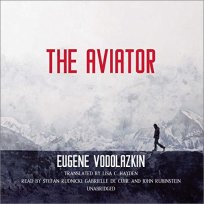 Did I tell you I have been reading The Aviator by Eugene Vodolazkin? I have the audio as well as the print format. The possibility of sinking into that book makes me look forward to any longer drive to anywhere. I can’t concentrate on a book, lecture, etc. while doing anything else at home; even while driving, I can only attend well while following a familiar route. I make frequent use of the rewind button (Is there another word for that now that there is no actual winding involved?), including at times when I have to concentrate more, as at an intersection, and briefly lose the thread of the story.
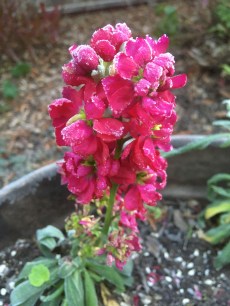 My garden suffered what may be the worst cold it will have to endure this winter, just two days ago. I know it was several degrees of frost — and this area has had a winter or two in the last decades without even one freeze; it rarely gets down to 20 degrees. By the time that morning’s weather test occurred, I had been doing my own trials of the new greenhouse equipment, necessitating a few emergency visits in my nightgown at 2:00 or 3:00 a.m., to adjust the thermostat. So everything was okay in there. And you know, collards get sweeter by suffering frost.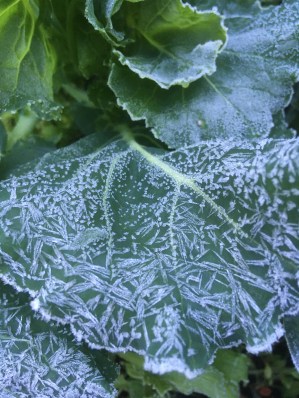

 Gladsome Lights