Tag Archives: Pippin photos

Caleb’s my man.

I came to the last page of Middlemarch, and it’s not even the last day of June! Ah, but now begins the work that is harder than the reading: sifting and organizing my thoughts about the story and stories of that novel so as to write some of them here in a way that might edify.

In the meantime, I have to say that I love the character of Caleb Garth more than anyone. His kind of “business” is not at all what people think of these days who are majoring in Business in college. They often think mostly of making a living somehow, but Caleb is intent on improving the land and doing good by people, the livestock and the earth. He often forgets to make provision for his own financial needs, and loves nothing better, as he says to his wife, than:

“…to have a chance of getting a bit of the country into good fettle, as they say, and putting men into the right way with their farming, and getting a bit of good contriving and solid building done — that those who are living and those who come after will be the better for. I’d sooner have it than a fortune. I hold it the most honourable work that is.” … “It’s a great gift of God, Susan.”

“That it is, Caleb,” said his wife, with answering fervor. “And it will be a blessing to your children to have had a father who did such work: a father whose good work remains though his name may be forgotten.”

A good man or woman adorns the earth by his presence alone, but if in addition he is able to oversee the wise management of farms and estates, with honesty and without greed, it is satisfying and holy work.

The last two weeks I’ve been working at less enduring tasks, but I’m still pleased with the results. Of course, there is always my garden which I tend. In the third year of being on my own I became acutely aware of the importance to my heart and psyche of my house as well, of the whole property that is mine alone now, and which I manage and am responsible for. The changes in my feelings are complicated and subtle; I see how God and His angels carried me through the time when I seemed to have little strength of will to apply. Now we will see how He guides me in this new phase when I am ready to participate more fully in my own affairs!

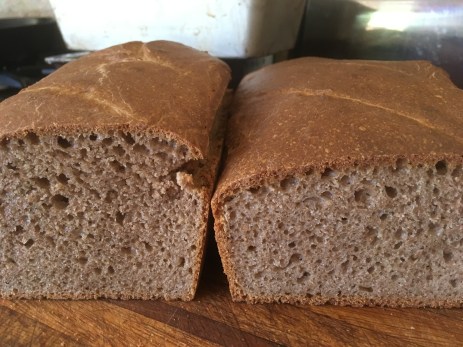
I’m working on the sourdough bread experiments again — yes, and they result in very short-lived products of my efforts, being highly desirable consumables. Today a Swedish seeded sourdough rye boule that is still rising will be cooked in the Dutch oven. Last week, these loaves:
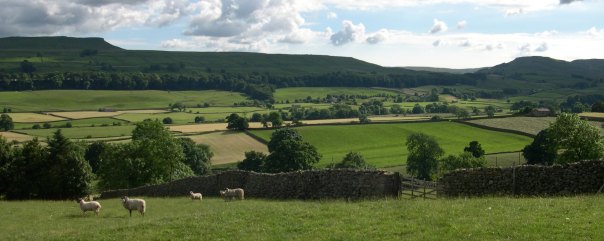
But no time yet, to dwell on details of dough and ovens, or on great themes of Middlemarch, because Pippin (who took the photo in England above, by the way) is arriving with two grandchildren for a few days. I’ll be taking care of Ivy (almost 6) and Jamie (3) while she attends a conference for work nearby. Scout won’t be in the group because he is backpacking with his father.

I’ve joined a book group of women in my parish. I didn’t finish the recent read, but I’m confident that I’ll have time to read Fidelity by Wendell Berry before our next discussion this summer.

My computer is giving me fits as usual, and the Computer Guy is on his way, so I will get back to my real, tangible work now, and give him this space, and see you next week! May your summer reading and work be satisfying.

Middlemarch – Ladislaw’s force of unreason.

One Saturday evening Will Ladislaw is thinking about the foolishness of his current situation, in which he has taken work in the town near to where our heroine Mrs. Casaubon lives, because of his feelings for that woman “for ever enthroned in his soul.” But he has been forbidden by Dorothea’s jealous husband to visit their home. So, “he could hardly ever see her.”

His thoughts are going irritably round and round on this subject when, “suddenly reflecting that the morrow would be Sunday, he determined to go to Lowick Church to see her.” It’s not his parish, and his presence would annoy Casaubon certainly, but he reasons,

“It is not true that I go to annoy him, and why should I not go to see Dorothea? Is he to have everything to himself and be always comfortable? Let him smart a little, as other people are obliged to do. I have always liked the quaintness of the church and congregation; besides, I know the Tuckers. I shall go into their pew.”

Having silenced Objection by force of unreason, Will walked to Lowick as if he had been on the way to Paradise, crossing Halsell Common and skirting the woods, where the sunlight fell broadly under the budding boughs, bringing out the beauties of moss and lichen, and fresh green growths piercing the brown. Everything seemed to know that it was Sunday, and to approve of his going to Lowick Church. Will easily felt happy when nothing crossed his humour, and by this time the thought of vexing Mr. Casaubon had become rather amusing to him, making his face break into its merry smile, pleasant to see as the breaking of sunshine on the water — though the occasion was not exemplary…. Will went along… chanting a little, as he made scenes of what would happen in church and coming out….The words were not exactly a hymn, but they certainly fitted his Sunday experience….

…. Sometimes, when he took off his hat, shaking his head backward, and showing his delicate throat as he sang, he looked like an incarnation of the spring whose spirit filled the air — a bright creature, abundant in uncertain promises.

This is one of a thousand passages in Middlemarch that so delightfully convey the personality and the feelings of one of the characters. I wish that I could transcribe a score of them just because I admire so much Eliot’s art. In this case Will is to himself in happy concord with even the weather and the season, and with the landscape that the author paints with a few perfect phrases. I think that Eliot is a little bit in love with Will Ladislaw, for how else could she make me fall in love with him?

The last phrase, though, comparing Will and springtime, is suddenly ominous, because, as we all know, the weather is unpredictable at this time of year. And the spirit of spring — I am as susceptible to its easy promises as anyone.

I did read this novel aloud with my husband 15 years ago, an acquaintance that was too shallow and distant for me to retain more than vague impressions. This time, on my own, I’m more engaged and enraptured, but still, I don’t want to take a year to read as thoroughly and meditatively as this book seems to warrant. So I’m glad Arti proposed two months, and I look forward to the remaining weeks and stories.

photo credit: Pippin

Patience, with pebbles and a saint.

I have very much enjoyed reading about St. Raphael of Brooklyn whom we commemorate today on the anniversary of his repose in 1915. He was born in Beirut where his parents had fled, because of persecution of Christians in their home city of Damascus, and he spent most of his life going where he was most needed, mostly Russia and America. It is astounding how much he accomplished in his zeal to care for his flock. He was the first Orthodox bishop to be ordained in America, in 1904, and Tsar Nicholas II gifted the new bishop’s vestments.
In those days all the Orthodox in America were together under one heirarch: “There were no parallel jurisdictions based on nationality. The Church united those of diverse backgrounds under the omophorion of the Russian Archbishop. This was the norm until the Russian Revolution disrupted church life in Russia, and also in America.” oca.org

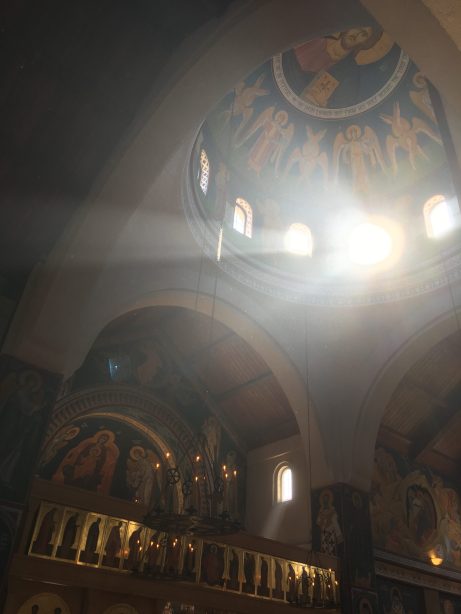
Today is the first day since I returned from India that I feel normal again. While the traveling itself felt easy enough in the 33 hours of moments, the recovery has been a process requiring patience! It took me a week to get to church, and it was a joy to be back there. My goddaughter Mary seems to have grown a lot in two months, in size and maturity. She hadn’t forgotten me. 🙂 And I had one of those experiences I’ve described before, where for about ten minutes the sun shines through a window of the dome at the perfect angle to warm my face and head, and blind me to everything but the candles before the altar, which shine like stars in my momentary darkness.

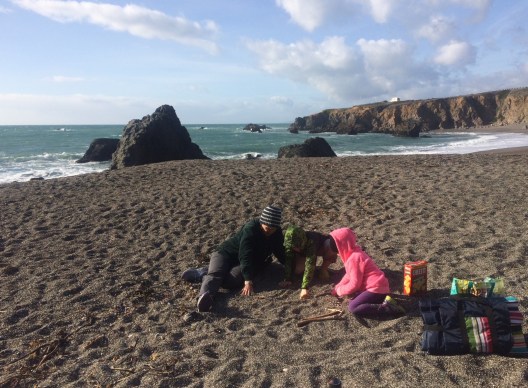
Saturday I got to see both Pippin and Soldier!! That comforted my heart that was in mourning from the separation from Kate and her family, to whom I had grown so attached in all those weeks of living with them. Some of us spent happy hours on a windy beach that was perfect for the weather because instead of sand it was composed of little pebbles that did not blow into your eyes or stick to your food or skin. We examined hundreds of of the tiniest stones, pieces of white shell or green sea glass, and whole grey-blue mussel shells.

Ivy loves climbing the way her mother also has done from a young age, and these rocks were perfect for scrambling up, and then jumping down into the sand.

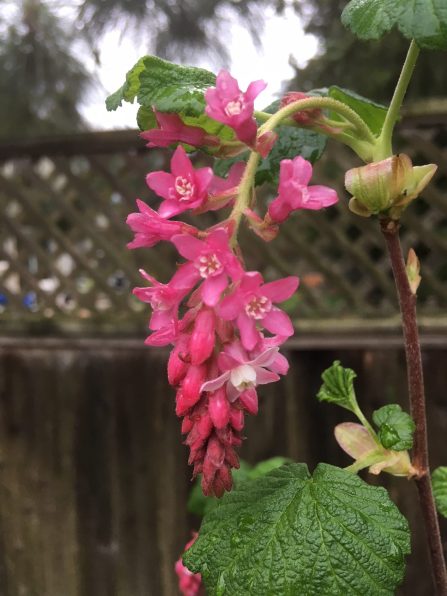
It feels cold here in sunny California, compared to winter in smoggy Bombay. I guess I didn’t stay long enough for winter to pass me by altogether; I’m glad I have a woodstove. I did go out in the garden a couple of times and see that in the midst of the chilling wind and dormant gray and brown, many little things are budding and even blooming. Quite a few of them are pink, like the native currants:

If Winter will bring rain, as it’s done today, I’ll welcome it to stay months longer. But perhaps Spring could bring some rain, and let Winter say good-bye?

Love of things dented and dropped.

Another poem about things. This poet exults in the intimacy of humans with their things, walking on them, dropping them, nearly wearing them out — but to him, all that improves their appearance and even makes the things happy.

Since first publishing this poem, I have been prompted by Jody’s comment to add the photograph below, from Elizabeth Goudge’s beloved Wells Cathedral, completed before 1500, the steps to its chapter house since that time well “trodden by many feet and ground down.”

OF ALL WORKS

Of all works I prefer
Those used and worn.
Copper vessels with dents and with flattened rims
Knives and forks whose wooden handles
Many hands have grooved: such shapes
Seemed the noblest to me. So too the flagstones around
Old houses, trodden by many feet and ground down,
With clumps of grass in the cracks, these too
Are happy works.

Absorbed into the use of many
Frequently changed, they improve their appearance, growing enjoyable
Because often enjoyed.
Even the remnants of broken sculptures
With lopped-off hands I love. They also
Lived with me. If they were dropped at least they must have been carried.
If men knocked them over they cannot have stood too high up.
Buildings half dilapidated
Revert to the look of buildings not yet completed
Generously designed: their fine proportions
Can already be guessed; yet they still make demands
On our understanding. At the same time
They have served already, indeed have been left behind. All this
Makes me glad.

-Bertolt Brecht

wells-cathedral-steps
Wells Cathedral, Chapter House stairs – photo by Pippin