 “What do I need? I need nothing on earth, except for the indispensable. What do I need? I need the Lord, I need His grace, His kingdom within me. On earth, the place of my pilgrimage, my temporary instruction, I have nothing belonging to me: everything is God’s, everything is transitory, indicated for temporary use. Whatever I have in excess belongs not to me, but to my poorer brothers.
“What do I need? I need true, Christian, living, active love. I need a loving heart, compassion for my neighbors, I need to feel joy at their happiness and well-being, sorrow during their sorrows and sicknesses, compassion for their sins, infirmities, disorders, deficiencies, misfortunes, poverty. I need warm, sincere sympathy for them in all the circumstances of their lives, to rejoice with those who rejoice, and to weep with those who weep.”
— My Life in Christ: The Spiritual Journals of St John of Kronstadt by Ivan Ilyich Sergiev
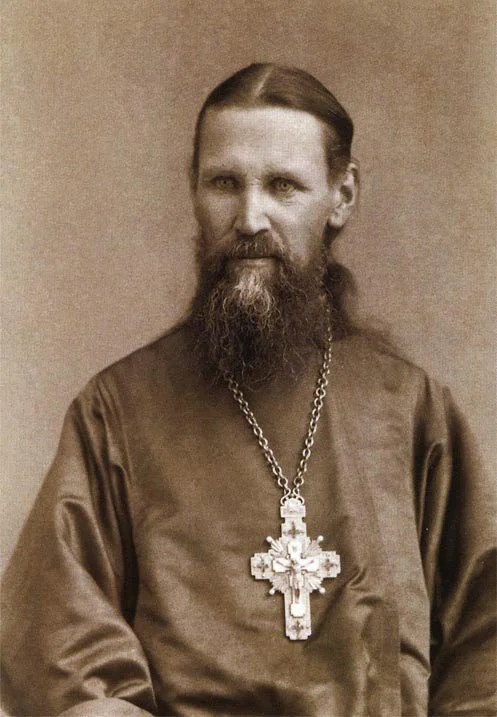
St. John of Kronstadt was a beloved priest and spiritual father in the latter half of the 19th century, and into the 20th. His pastoral care and guidance in the spiritual life did much to prepare his flock for the sufferings they were to endure in the coming decades. He was born in 1829 and died in 1909. If you want to read more about him, here is a long article with his life story and many more quotes revealing his ministry of charity and encouragement: “Saint John of Kronstadt.”
Here is one paragraph from the article, to give you a glimpse of the character of this pastor:
“How did he manage to do it all? He had the ability – acquired, no doubt, by prayer and patience – to snatch a short period of deep sleep wherever and whenever he got the chance; and he had a great love of the early morning hours for prayer and meditation, but his early morning walks in his garden were soon discovered, and then – farewell to solitude! Often, indeed, he could barely save half-an-hour for his own prayers. On the rare occasions when he was able to pass a whole day in Kronstadt he liked to walk in the streets toward midnight, praying and meditating: if he saw a light, however, he would knock – often to comfort someone ill or dying, but just as ready to join in laughter and cheerful conversation, if that should be what he found. It is not surprising that he had moments of depression through sheer fatigue; he had been beset in the same way in his student days, then later he overcame them, as he overcame all, as he achieved all, by prayer and, above all, by devout reception of the holy communion.”