For Orthodox Christians, today is the first day of the liturgical year, and also the Feast of Creation. The perfect day to think on this:
“Who is it that forms the flowers so wisely, so delicately, arranges so splendidly, and gives form to the disordered, i.e., the shapeless, formless substances of the earth? Who gives it such wonderful form? O Creator, grant us the opportunity through flowers to embrace Thy wisdom, Thy benevolence, and Thine almighty power.”
“What do I need? I need nothing on earth, except for the indispensable. What do I need? I need the Lord, I need His grace, His kingdom within me. On earth, the place of my pilgrimage, my temporary instruction, I have nothing belonging to me: everything is God’s, everything is transitory, indicated for temporary use. Whatever I have in excess belongs not to me, but to my poorer brothers.
“What do I need? I need true, Christian, living, active love. I need a loving heart, compassion for my neighbors, I need to feel joy at their happiness and well-being, sorrow during their sorrows and sicknesses, compassion for their sins, infirmities, disorders, deficiencies, misfortunes, poverty. I need warm, sincere sympathy for them in all the circumstances of their lives, to rejoice with those who rejoice, and to weep with those who weep.”
— My Life in Christ: The Spiritual Journals of St John of Kronstadt by Ivan Ilyich Sergiev
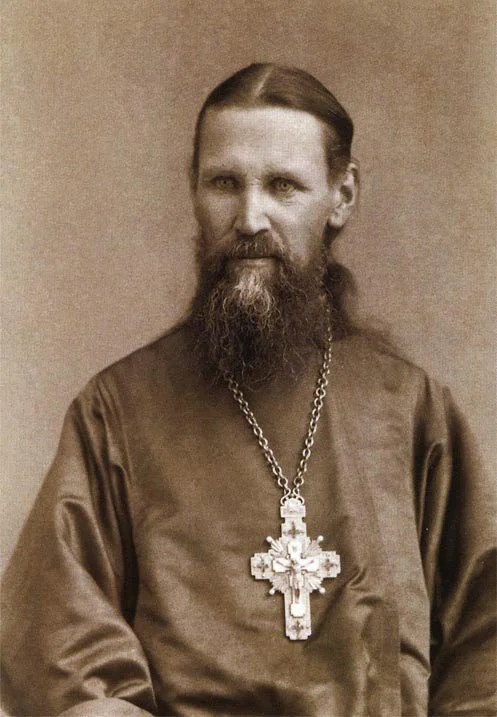
St. John of Kronstadt was a beloved priest and spiritual father in the latter half of the 19th century, and into the 20th. His pastoral care and guidance in the spiritual life did much to prepare his flock for the sufferings they were to endure in the coming decades. He was born in 1829 and died in 1909. If you want to read more about him, here is a long article with his life story and many more quotes revealing his ministry of charity and encouragement: “Saint John of Kronstadt.”
Here is one paragraph from the article, to give you a glimpse of the character of this pastor:
“How did he manage to do it all? He had the ability – acquired, no doubt, by prayer and patience – to snatch a short period of deep sleep wherever and whenever he got the chance; and he had a great love of the early morning hours for prayer and meditation, but his early morning walks in his garden were soon discovered, and then – farewell to solitude! Often, indeed, he could barely save half-an-hour for his own prayers. On the rare occasions when he was able to pass a whole day in Kronstadt he liked to walk in the streets toward midnight, praying and meditating: if he saw a light, however, he would knock – often to comfort someone ill or dying, but just as ready to join in laughter and cheerful conversation, if that should be what he found. It is not surprising that he had moments of depression through sheer fatigue; he had been beset in the same way in his student days, then later he overcame them, as he overcame all, as he achieved all, by prayer and, above all, by devout reception of the holy communion.”
Cathedral of St Andrew in Kronstadt – destroyed in Soviet times.
Earlier this month we were reminded of the popularity of St. Nicholas in the Orthodox Church around the world. If you took a vote for the favorite saint, he would win. Another, more modern saint, who lived in the 19th century, is also remembered in December: St. John of Kronstadt. I see that he had some of the same qualities as St. Nicholas. This article tells how generous he was to the poor. Here is a small excerpt:
He would shop for food, go to the pharmacy for prescriptions, to the doctor for help, many times giving the poor his last few coins. The inhabitants of Kronstadt would see him returning home barefoot and without his cassock. Often parishioners would bring shoes to his wife, saying to her, “Your husband has given away his shoes to someone, and will come home barefoot.”
He seems to have had the gift of exhortation; he truly loved people, whether the upper classes or the criminals who were exiled to Kronstadt at the time, and would spend hours at a time in the shacks of the latter, “talking, encouraging, comforting, crying, and rejoicing together with them.”
His popularity has not waned, judging from the fact that between 1990 and 2016, “more than 60 new churches or altars in Russia alone were dedicated to him,” his flat in Kronstadt became a registered museum, his biography was published in a highly respected series, and monuments to St. John have been placed in cities not only in Russia and gifted to Orthodox communities around the world, including in Washington, D.C., in 2019.
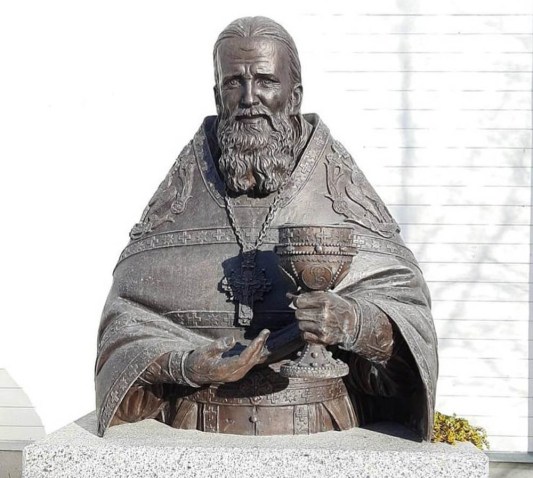
This monument to him was installed last year in his home village of Sura, Arkhangelsk Province, in northwestern Russia, which in 2010 had a population of 727:
Because of his zealous love and spirit of encouragment, one can find many helpful quotes from the saint, and I have posted a few in the past. Here I pass on an exhortation from St. John that is a good reminder to us in the current era, of ultimate reality:
“There is nothing impossible unto those who believe; lively and unshaken faith can accomplish great miracles in the twinkling of an eye. Besides, even without our sincere and firm faith, miracles are accomplished, such as the miracles of the sacraments; for God’s Mystery is always accomplished, even though we were incredulous or unbelieving at the time of its celebration. ‘Shall their unbelief make the faith of God without effect?’ (Rom. 3:3). Our wickedness shall not overpower the unspeakable goodness and mercy of God; our dullness shall not overpower God’s wisdom, nor our infirmity God’s omnipotence.”
For what purpose does the Lord add day after day, year after year, to our existence? In order that we may gradually put away, cast aside, evil from our souls, each one his own, and acquire blessed simplicity; in order that we may become truly gentle; in order that we may learn not to have the least attachment to earthly things, but as loving and simple children may cling with all our hearts, all our souls, and all our thoughts, to God alone, and so to love Him, and our neighbor as ourselves. Let us therefore hasten to pray to the Lord, fervently and with tears, to grant us simplicity of heart, and let us strive by every means to cast out the evil from our souls.
 For Orthodox Christians, today is the first day of the liturgical year, and also the Feast of Creation. The perfect day to think on this:
 “What do I need? I need nothing on earth, except for the indispensable. What do I need? I need the Lord, I need His grace, His kingdom within me. On earth, the place of my pilgrimage, my temporary instruction, I have nothing belonging to me: everything is God’s, everything is transitory, indicated for temporary use. Whatever I have in excess belongs not to me, but to my poorer brothers.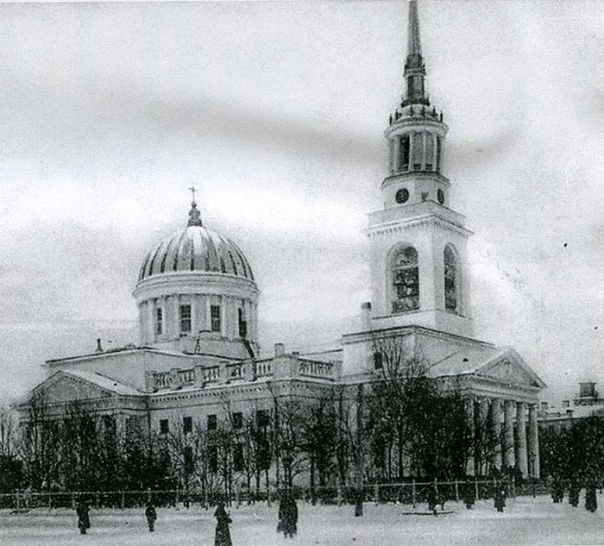
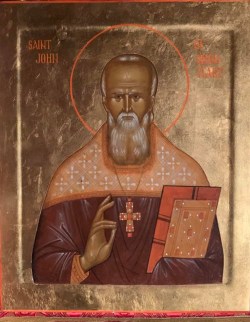 Earlier this month we were reminded of the popularity of St. Nicholas in the Orthodox Church around the world. If you took a vote for the favorite saint, he would win. Another, more modern saint, who lived in the 19th century, is also remembered in December: St. John of Kronstadt. I see that he had some of the same qualities as St. Nicholas.