Fasting is the only means by which man recovers his true spiritual nature. It is not a theoretical but truly a practical challenge to the great Liar who managed to convince us that we depend on bread alone and built all human knowledge, science, and existence on that lie. Fasting is a denunciation of that lie and also proof that it is a lie. …. Let us understand …that what the Church wants us to do during Lent is to seek the enrichment of our spiritual and intellectual inner world, to read and to meditate upon those things which are most likely to help us recover that inner world and its joy. Of that joy, of the true vocation of man, the one that is fulfilled inside and not outside, the ‘modern world’ gives us no taste today; yet without it, without the understanding of Lent as a journey into the depth of our humanity, Lent loses its meaning.
Ten years later I am re-posting this review, about a book that I put off reading for a year after I bought it, mostly because of its cover design and notes. It’s a novel about Poland that won several minor awards, including the Hemingway Foundation/PEN prize in 2010. Our church women’s book group read it at my recommendation a few years ago, when I was too busy to join in. So it may be time for my own reaquaintance.
A Long, Long Time Ago & Essentially True exceeded my expectations; I don’t remember what I read on someone’s blog that got me interested, but when the book arrived and I saw the fanciful flowery cover with notes using the words “whimsical” and “romance” on the same page, I’m afraid I unconsciously relegated it to a genre of Light Reading.
A cover truer to the story.
But a story of Poland from the 1930’s to about 1990 is sure to be full of war, tyrants, secret police, lies and alcoholism. Wives and mothers can’t even mention their men who went missing years ago; their grandchildren grapple with the generational ripples of all the wounds and deaths and separations both social and physical. I had to look up the word whimsical just now to make sure of my understanding, and no, the author Brigid Pasulka never gave the impression that she was trying to be “playful, erratic or fantastical” with her subject.
The opening chapter that tells about an upright young man named Pigeon might make you think it’s all light and charming, and perhaps to some reviewers the idea of such a hero with old-fashioned morals seems like a fairy tale. He is a shining example of the classic Pole who has Golden Hands that can make or fix anything. And he loves Anielica, a sweet girl who will soon suffer much with and for him, including the long postponement of their wedding — but that turns out to be the least of their sorrows.
The novel alternates chapters about teenagers growing up during the war years with those about their granddaughter in the late 20th century. Her life, also, is nearly wrecked by many of the same old misfortunes as well as some newer ones, like drug-dealing boyfriends. Funny moments and comic aspects pepper her story, as they did her grandparents’. Being able to appreciate the comedy is one way to deal with the heartache; that doesn’t make the story a piece of humor.
Brigid Pasulka
The book was just serious enough and just long enough for my current reading “mood,” and I did not predict the ending that lifted me out of the general bleakness that was trying to smother the characters all the way through. The Polish people had several years of trying to survive and even fight against the Nazis, and then could barely catch their breath before the Soviets took over and they had to quickly shift gears and learn how to cope with a slightly different oppression, the effects of which stretched long into the future.
Through it all the protagonists in this story, the grandparents and the parents and grandchildren, fight to stay together and to protect one another. Bribes and lies and dreadful compromises at times appear to be daily necessities, but the characters’ love and perseverance keep them from the despair that lurks around the corners of their houses like a traitorous neighbor. The moral quandaries that they experience are neither explored in depth nor treated flippantly.
The author, I read on the cover, spent a year in Poland learning the language and the culture of her ancestors. She uses often untranslated Polish words lavishly throughout the story, and they aren’t always easily deciphered versions of English words, so I was frequently left wondering what I was missing, not having a Polish dictionary handy. Nor did I want to look up the many references to obscure events in Polish history which the characters mentioned. But those are my only complaints.
In the middle of meditating on the history and people of Poland I read this poem by a Pole who would have grown up during the Soviet era. The images the writer conjures up, of a field mouse, a tree, “A grass blade trampled by a stampede of incomprehensible events,” lined up very well with the impression I got from this debut novel, of a brave people surviving by means of the virtues of their humanity, which is the grace of God.
By Zofia Stryjeńsk, artist of the interwar period.
The desire to be beautiful seems to be common to mankind, but the very atmosphere of this age is toxic with something that feeds a disease, making us obsessed with our image. One part of the toxic mix is the overwhelming abundance of pictures of faces and bodies in magazines and on every electronic device, forming a kind of lesson plan on How to Look. I was happy for a respite this morning when I read St. Nikolai’s homily for the day in The Prologue of Ohrid.
HOMILY on the beauty of Christ above all other beauty
Thou art fairer than the sons of men (Psalm 45:2).
Holy Scripture does not ascribe any particular value to physical beauty, and in general to anything transient. That is why everyone who reads Holy Scripture should take care to be sufficiently attentive and wise to transfer the praise of physical beauty to the soul and to spiritual values. Without a doubt, spiritual beauty gives a wondrous attractiveness to the most unattractive body, just as an ugly soul makes even the most attractive body repulsive. The Prophet David, pouring forth good words (Psalm 45:1), says to his King, the Lord Jesus Christ: Thou art fairer than the sons of men.
The Lord Himself created His bodily cloak as He wanted. Had He wanted to appear in the world as the physically fairest of men, He could have done so. But there is nothing in the Gospel to indicate that He drew followers to Himself or influenced men by His appearance. He Himself said: the flesh profiteth nothing (John 6:63). Therefore, it is clear that David was not speaking of the physical beauty of Christ, but of His spiritual, divine beauty. This is clearly seen in the following words of the Psalmist: Grace is poured forth upon thy lips (Psalm 45:2). So it is that the unsurpassed beauty of the Son of God is not in the form and shape of His lips, but rather in the stream of grace that flows from His mouth.
Again, the Prophet Isaiah speaks of Christ: He had no form or comeliness; and when we shall see Him, there is no beauty that we should desire Him (Isaiah 53:2-3). Do Isaiah and David agree? Perfectly well. David speaks of Christ’s inward beauty, and Isaiah speaks of Christ’s external abasement. Isaiah said that He would not be seen as a king or a rich man, but as a servant and sufferer.
O Lord Jesus Christ, Thou art fairer to us than all men and angels: glory to Thine immortal and unending beauty. O gracious Lord, correct the ugliness of our souls, which are disfigured by sin, we pray Thee.
After rain after many days without rain, It stays cool, private and cleansed, under the trees, and the dampness there, married now to gravity, falls branch to branch, leaf to leaf, down to the ground
where it will disappear — but not, of course, vanish except to our eyes. The roots of the oaks will have their share, and the white threads of the grasses, and the cushion of moss; a few drops, round as pearls, will enter the mole’s tunnel;
and soon so many small stones, buried for a thousand years, will feel themselves being touched.
 Fasting is the only means by which man recovers his true spiritual nature. It is not a theoretical but truly a practical challenge to the great Liar who managed to convince us that we depend on bread alone and built all human knowledge, science, and existence on that lie. Fasting is a denunciation of that lie and also proof that it is a lie.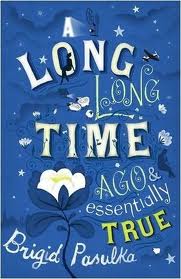


 Gladsome Lights