Tag Archives: re-post

Lenten combo – Spinach Pkhali and Himbasha

It’s been more than ten years since I was learning to make this exotic dish, which is perfect for Lent. My late husband did not keep Lent but he liked it very much, too. He had a hard time believing that there was no sour cream in the mix. I am re-posting the recipe and my notes unchanged since then. I hope I can make at least one batch this year.

The main ingredient is spinach, but the other ingredients in this dish, which can be a vegetable side or a spread for bread or crackers, make it very unusual and in my case, addictive. I know, eating in an uncontrolled manner is the opposite of what Lent is about, but maybe overdoing it on spinach is not as bad as some things. And to reduce temptation, so far I have made sure to take this dish to potlucks where I would be embarrassed to hover over the plate and reveal my piggishness.

The origin of pkhali is the Republic of Georgia. Though I have a Georgian acquaintance at church, I found the recipe on The Traveler’s Lunchbox blog, about a year ago. I’ve made it several times since then, at least twice using frozen chopped spinach, and most recently with fresh spinach.

The recipe, pasted from the link above:

Spinach Pkhali

Pkhali (the ‘kh’ is pronounced as a deep, guttural ‘h’) is a whole class of Georgian vegetable dishes that straddle the line between salad and dip. The constant is the walnut sauce, and the fact that the vegetable is cut very, very finely – almost (but not quite) to a puree. 

Beet pkhali is also very popular, and is often served alongside the spinach; to prepare beets this way, wrap 3 large ones in foil and bake until soft, then peel and finely chop (or pulse in a food processor) before mixing with the sauce. 

If you’d like to substitute frozen spinach in this recipe, I imagine it would work, though I’m not sure about the amount; maybe start with a pound (half a kilo) of the frozen stuff and add more as needed to balance out the flavors. [I used 2 -10 oz. packages, which was a bit much. -GJ]

p.s. After making this again, I’ve decided I like a slightly smaller amount of spinach, to let the flavors of the walnut sauce really shine. Alternatively, you could use the full 2lbs and make one and a half times the sauce. 

source: adapted from Anya von Bremzen’s Please to the Table
serves: 4-6 as an hors d’oeuvre or side dish

1.5-2 pounds (.75-1 kilo) fresh spinach, stems removed and washed in several      changes of water
1 cup (100g) walnuts
4 cloves garlic
1/4 teaspoon ground coriander
1/4 teaspoon ground fenugreek
pinch cayenne
1 1/2 tablespoons white wine vinegar, or to taste
1 small onion, minced
3 tablespoons finely-chopped fresh cilantro (coriander)
1 1/2 tablespoons finely-chopped fresh tarragon
salt
pomegranate seeds, for garnish

Bring a large pot of salted water to a boil, add the spinach and cook just until tender, about one minute. Drain well and let cool. When manageable, wrap the spinach in a clean kitchen towel and squeeze until nearly dry. Chop it as finely as possible (don’t use a food processor or blender, which may puree it; it should have texture) and set aside.

In a blender [I used a food processor. -GJ], combine the walnuts, garlic, coriander, fenugreek, cayenne and vinegar. Add 3 tablespoons of warm water and blend until you have a smooth, creamy sauce about the consistency of mayonnaise, adding a little more water if needed to get things moving.

Add the walnut sauce to the spinach and stir until thoroughly blended and smooth. Stir in the minced onion, cilantro and tarragon, and season with salt to taste. Cover and refrigerate for 6 to 8 hours to allow the flavors to blend. Taste again before serving and adjust the salt and vinegar if needed.

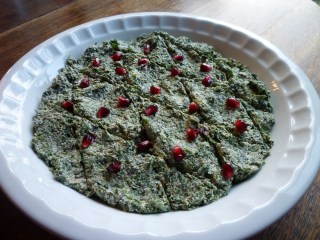
To serve, spread the pkhali on a plate and smooth the top with a spatula. With a knife, make a pattern of diamonds in the top, and sprinkle with pomegranate seeds (or, in a pinch, walnut pieces). Serve with bread.

(Me again) Using the fresh vegetable took more time, though boxes of Costco baby spinach make it easy; the result was definitely a refinement of the dish, as it did away with the many pieces of stem that you get in the frozen greens. As to quantities of all the ingredients, they are fairly flexible, and I did a lot of tasting at the end to make sure there was enough salt and spreadability.

The last time I took it to a community dinner, I also brought along a loaf of the Eritrean flatbread called himbasha, which dark-skinned parishioners in flowing white gauze bring to our church dinners every week to pass around in baskets. I always make sure to reach in and tear off a piece.

It was the first time I’d tried making it at my house. My loaf came out a little thick compared to what I think are the best versions I’ve eaten, because I didn’t notice I was supposed to make 2 loaves with the dough, and I put the whole thing into one large skillet. But it was wonderfully chewy and flavorful all the same, and my tasters loved it still warm from the pan with some of the pkhali spread on.
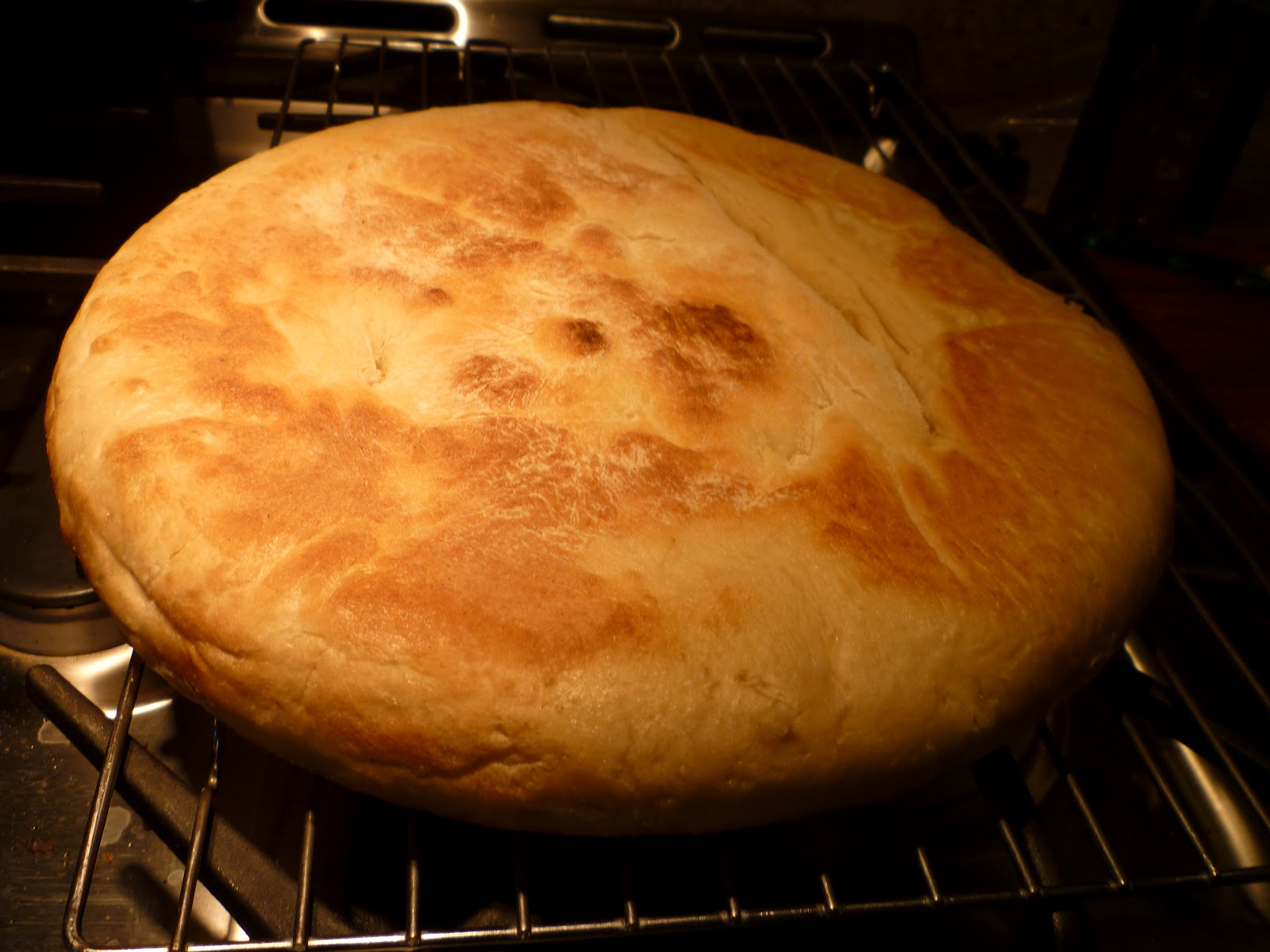
Here is that  recipe from a book I helped to compile, a small collection of international dishes that are cooked and served by members of each ethnic community (we are truly a pan-Orthodox group) for my church’s yearly food festival.
Himbasha
Makes two 12″ round breads
3 pounds flour
2 1/2 teaspoons instant yeast
1 tablespoon sugar
2 tablespoons vegetable oil
4 cups water, at room temperature
1 teaspoon salt
1/2 cup raisins (optional)
1. In a large bowl, whisk together flour, yeast and sugar. Dissolve salt in water. Add oil and water/salt mixture to flour mixture, and mix until you have a stiff dough. Add raisins and mix until incorporated.
2. Cover and let rise at room temperature until doubled in bulk, about 1 hour.
3. Turn dough out onto a lightly floured board. Form into one or two large circles the diameter of your frying pans and up to 1″ thick.
4. Lightly grease electric frying pan or cast iron skillet or paella pan. Heat over medium heat (about 300 degrees on an electric skillet) until a drop of water dances on it. Place dough carefully in pan, cover and cook about 15 minutes, until bottom is golden brown. Turn and cook another 15 minutes. Remove from pan and let cool on wire rack.


And at right, a photo of the last plate of pkhali I accomplished. Pomegranates were not to be found in the supermarkets in March, so I used the walnut option for garnishing.

You can see the little pieces of onion that I hadn’t minced finely enough….I thought they would overwhelm the dish, but no, it was as addictive as ever. Still, I might put the onions in the food processor with the walnuts next time.

Will I have time to make this again during Lent? Probably not — but we spinach lovers don’t need to be fasting to enjoy something so yummy.
The true vocation of man.

Fasting is the only means by which man recovers his true spiritual nature. It is not a theoretical but truly a practical challenge to the great Liar who managed to convince us that we depend on bread alone and built all human knowledge, science, and existence on that lie. Fasting is a denunciation of that lie and also proof that it is a lie.
….
Let us understand …that what the Church wants us to do during Lent is to seek the enrichment of our spiritual and intellectual inner world, to read and to meditate upon those things which are most likely to help us recover that inner world and its joy. Of that joy, of the true vocation of man, the one that is fulfilled inside and not outside, the ‘modern world’ gives us no taste today; yet without it, without the understanding of Lent as a journey into the depth of our humanity, Lent loses its meaning.

-Father Alexander Schmemann, Great Lent

They fight to stay together.

Ten years later I am re-posting this review, about a book that I put off reading for a year after I bought it, mostly because of its cover design and notes. It’s a novel about Poland that won several minor awards, including the Hemingway Foundation/PEN prize in 2010. Our church women’s book group read it at my recommendation a few years ago, when I was too busy to join in. So it may be time for my own reaquaintance.

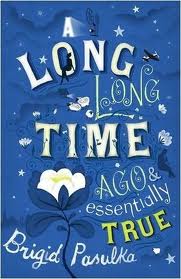
A Long, Long Time Ago & Essentially True exceeded my expectations; I don’t remember what I read on someone’s blog that got me interested, but when the book arrived and I saw the fanciful flowery cover with notes using the words “whimsical” and “romance” on the same page, I’m afraid I unconsciously relegated it to a genre of Light Reading.

A cover truer to the story.

But a story of Poland from the 1930’s to about 1990 is sure to be full of war, tyrants, secret police, lies and alcoholism. Wives and mothers can’t even mention their men who went missing years ago; their grandchildren grapple with the generational ripples of all the wounds and deaths and separations both social and physical. I had to look up the word whimsical just now to make sure of my understanding, and no, the author Brigid Pasulka never gave the impression that she was trying to be “playful, erratic or fantastical” with her subject.

The opening chapter that tells about an upright young man named Pigeon might make you think it’s all light and charming, and perhaps to some reviewers the idea of such a hero with old-fashioned morals seems like a fairy tale. He is a shining example of the classic Pole who has Golden Hands that can make or fix anything. And he loves Anielica, a sweet girl who will soon suffer much with and for him, including the long postponement of their wedding — but that turns out to be the least of their sorrows.

The novel alternates chapters about teenagers growing up during the war years with those about their granddaughter in the late 20th century. Her life, also, is nearly wrecked by many of the same old misfortunes as well as some newer ones, like drug-dealing boyfriends. Funny moments and comic aspects pepper her story, as they did her grandparents’. Being able to appreciate the comedy is one way to deal with the heartache; that doesn’t make the story a piece of humor.

Brigid Pasulka

The book was just serious enough and just long enough for my current reading “mood,” and I did not predict the ending that lifted me out of the general bleakness that was trying to smother the characters all the way through. The Polish people had several years of trying to survive and even fight against the Nazis, and then could barely catch their breath before the Soviets took over and they had to quickly shift gears and learn how to cope with a slightly different oppression, the effects of which stretched long into the future.

Through it all the protagonists in this story, the grandparents and the parents and grandchildren, fight to stay together and to protect one another. Bribes and lies and dreadful compromises at times appear to be daily necessities, but the characters’ love and perseverance keep them from the despair that lurks around the corners of their houses like a traitorous neighbor. The moral quandaries that they experience are neither explored in depth nor treated flippantly.

The author, I read on the cover, spent a year in Poland learning the language and the culture of her ancestors. She uses often untranslated Polish words lavishly throughout the story, and they aren’t always easily deciphered versions of English words, so I was frequently left wondering what I was missing, not having a Polish dictionary handy. Nor did I want to look up the many references to obscure events in Polish history which the characters mentioned. But those are my only complaints.

In the middle of meditating on the history and people of Poland I read this poem by a Pole who would have grown up during the Soviet era. The images the writer conjures up, of a field mouse, a tree, “A grass blade trampled by a stampede of incomprehensible events,” lined up very well with the impression I got from this debut novel, of a brave people surviving by means of the virtues of their humanity, which is the grace of God.

By Zofia Stryjeńsk, artist of the interwar period.

There is no lesson plan for it.

The desire to be beautiful seems to be common to mankind, but the very atmosphere of this age is toxic with something that feeds a disease, making us obsessed with our image. One part of the toxic mix is the overwhelming abundance of pictures of faces and bodies in magazines and on every electronic device, forming a kind of lesson plan on How to Look. I was happy for a respite this morning when I read St. Nikolai’s homily for the day in The Prologue of Ohrid.

HOMILY
on the beauty of Christ above all other beauty
Thou art fairer than the sons of men (Psalm 45:2).
 

Holy Scripture does not ascribe any particular value to physical beauty, and in general to anything transient. That is why everyone who reads Holy Scripture should take care to be sufficiently attentive and wise to transfer the praise of physical beauty to the soul and to spiritual values. Without a doubt, spiritual beauty gives a wondrous attractiveness to the most unattractive body, just as an ugly soul makes even the most attractive body repulsive. The Prophet David, pouring forth good words (Psalm 45:1), says to his King, the Lord Jesus Christ: Thou art fairer than the sons of men. 

The Lord Himself created His bodily cloak as He wanted. Had He wanted to appear in the world as the physically fairest of men, He could have done so. But there is nothing in the Gospel to indicate that He drew followers to Himself or influenced men by His appearance. He Himself said: the flesh profiteth nothing (John 6:63). Therefore, it is clear that David was not speaking of the physical beauty of Christ, but of His spiritual, divine beauty. This is clearly seen in the following words of the Psalmist: Grace is poured forth upon thy lips (Psalm 45:2). So it is that the unsurpassed beauty of the Son of God is not in the form and shape of His lips, but rather in the stream of grace that flows from His mouth. 

Again, the Prophet Isaiah speaks of Christ: He had no form or comeliness; and when we shall see Him, there is no beauty that we should desire Him (Isaiah 53:2-3). Do Isaiah and David agree? Perfectly well. David speaks of Christ’s inward beauty, and Isaiah speaks of Christ’s external abasement. Isaiah said that He would not be seen as a king or a rich man, but as a servant and sufferer.

O Lord Jesus Christ, Thou art fairer to us than all men and angels: glory to Thine immortal and unending beauty. O gracious Lord, correct the ugliness of our souls, which are disfigured by sin, we pray Thee.

To Thee be glory and praise forever. Amen.

From the archives