While at Pippin’s I had the great satisfaction of reading Christmas stories for a total of several hours during my stay. The genre seems most appropriate for reading aloud, but when we have our larger family gatherings, there doesn’t seem to be much opportunity for it. Meanwhile, my collection grows.
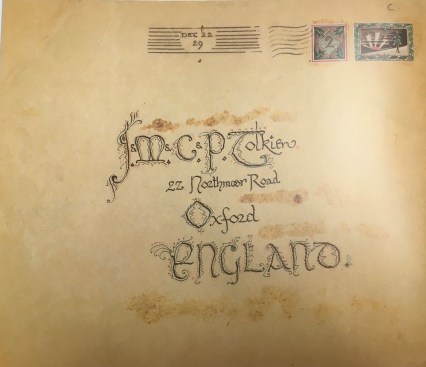
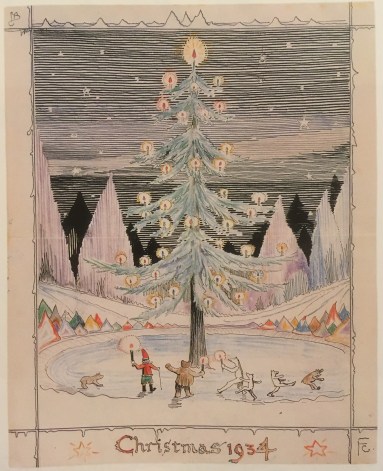 Recently I acquired Letters from Father Christmas by J.R.R. Tolkien, though in this case I think “recent” means 10-15 years ago. I’d glanced at them myself, but I think I was waiting to share the experience — to peek in on the Tolkien family and the stories that Tolkien the father created every year for his children. He wrote and illustrated them for over 20 years, starting by writing to three-year-old John, and continuing until he was only writing to his fourth child, Priscilla, with hopes that she will be hanging up her stocking “just once more.”
It is particularly interesting to me how Father Christmas refers to world events, in terms that place them in the context of the ages-long attempt of evil spiritual forces to destroy humanity once and for all. He first mentions goblins in 1932 and ’33, after he has written letters for about 12 years, and his goblins remind me of those in George MacDonald’s stories. They are a nuisance, and sometimes very scary —“Goblins are to us as rats are to you,” — but if you stand up to them they flee. They have no real power.

Most of the letters from the North Pole are about the mischief and adventures of all the people and creatures who live there: elves and snowmen, reindeer — and the North Polar Bear, who drew a bath, climbed in, and fell asleep with the water running, flooding the cellars full of toys.
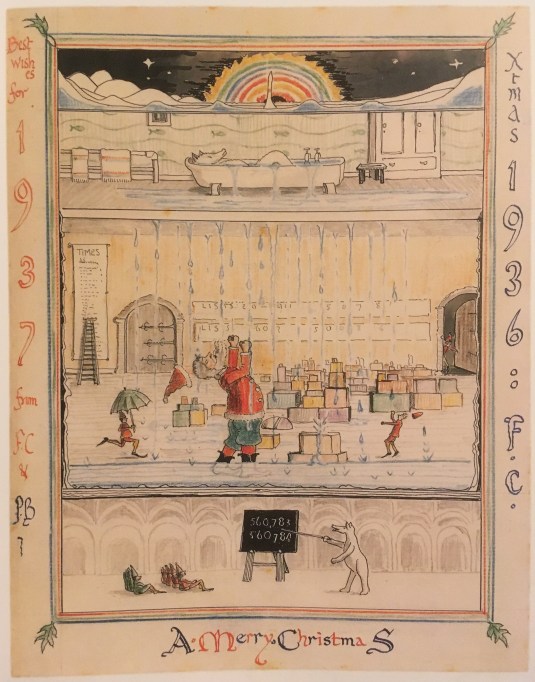
But in 1932 the same bear had an encounter with a goblin:
“…he smelt a goblin! and became interested, and started to explore. Not very wise; for of course goblins can’t hurt him, but their caves are very dangerous.” In the next letter things are still heating up:
 “Another Christmas! I almost thought at one time (in November) that there would not be one this year. There would be the 25th of December, of course, but nothing from your old great-great-etc. grandfather at the North Pole.
“Goblins. The worst attack we have had for centuries….”
More than once he mentions the last worst battle with these creatures, “the goblin-war in 1453, that I told you about.”
From then on the goblins show up regularly. The children are old enough to understand about the world situation as it affects them, and in 1940 F.C. writes more plainly, “We are having rather a difficult time this year. This horrible war is reducing all our stocks, and in so many countries children are living far from their homes. Polar Bear has had a very busy time trying to get our address-lists corrected. I’m glad you are still at home!”
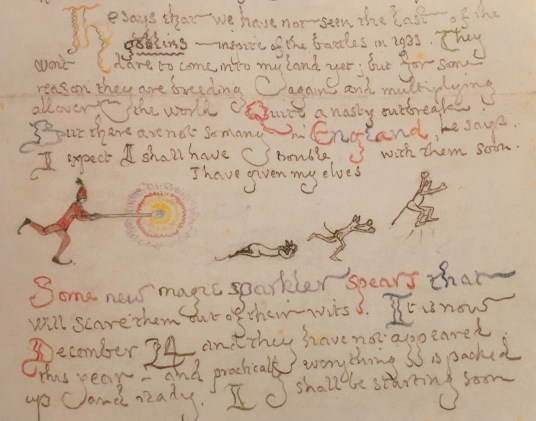
The text of the 1935 letter above reads: “[North Polar Bear] says that we have not seen the last of the goblins — in spite of the battles of 1933. They won’t dare to come into my land yet; but for some reason they are breeding again and multiplying all over the world. Quite a nasty outbreak. But there are not so many in England, he says. I expect I shall have trouble with them soon.
“I have given my elves some new magic sparkler spears that will scare them out of their wits. It is now December 24, and they have not appeared this year — and practically everything is packed up and ready. I shall be starting soon.”
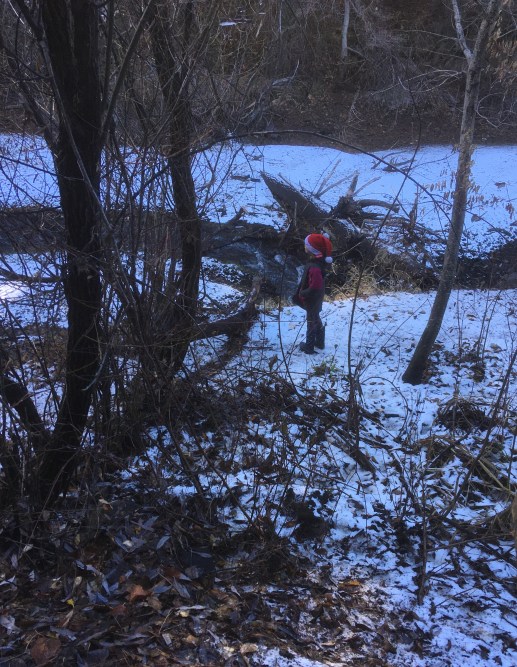
I’ve interspersed Tolkien’s illustrations with the last images from my northern adventure. Pippin and the children and I walked by the lake, and the stream flowing into it. We came home and snuggled again on the couch, with cats, and finished the last letters. I think we were all sad that the Tolkien children grew up!

 “The loneliness of leaders. Sometimes I try to imagine what they read, what books the great political leaders might pick up. I don’t mean the abhorrent dictators… but genuinely great leaders. I’m not sure such leaders even exist at this historical moment, probably not, but they did exist, fortunately enough, not so long ago, during the Second World War. Poets and novelists are reluctant to remember this….”
 I’m using this audio book now the way I have two or three others in the last years since I sleep alone, for the times when I don’t sleep. I put a well-known story to play on my phone, set the timer for 30 minutes, and let David or another nice person read me to sleep. This only works with voices that do not draw attention to themselves in various ways, usually by being overly dramatic.
 on with my blessings has a hard time imagining a home in which children do not hear reading and are not read to, even prenatally. The cadences of ordered meaning should be with
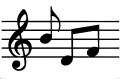
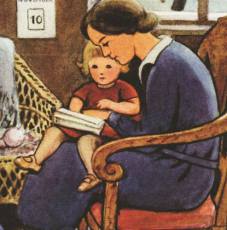 them, in them, and growing from their beginnings to a supernal End. The intuition of number, with which all are born, is, by education, not taught so much as recognized, named, and applied. Combine the intuition of number and the cadence of ordered meaning and one has music. A mother singing a melody to her unborn child is fitting him for greater glories, first perhaps of Mozart and Bach, and finally of heaven, whence all this comes and to which it returns.”
 Gladsome Lights