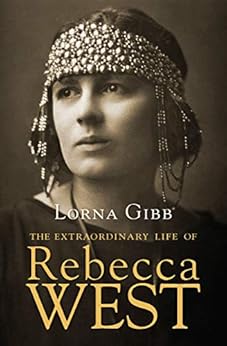
 To read the biography of a brilliant writer without having read any of her writings — that seems unwise, perhaps especially in the case of Rebecca West, who appears to have put her best self into her writings. As I told one of my readers, I’m afraid if you read her biography first, you might be put off from reading her.
It may be that Black Lamb and Grey Falcon was the first of her books that I heard about, and I did intend to read it back then. It is generally considered to be her magnum opus. My friend Cathy has read it, and so far she is the only real-life friend with whom I have been able to enjoy the kind of experience that West’s biographer describes below. Our most recent venue was the agape meal at church yesterday. 🙂
For a time I owned a large volume of West’s letters, but they were either depressing or boring for me; I wasn’t familiar enough with the personages of her era, and in letters she was often critical or complaining. The Birds Fall Down I found on my father’s bookshelf; I know it happened to be there because my grandfather had been a member of the Book-of-the-Month Club, which featured it. It was fascinating and gripping, and I knew I must read it again to truly grasp it, but first I would need an in-depth history lesson on the Bolshevik Revolution. None of that has happened yet.
I only know that West experienced some satisfaction and happiness in life because of what I read in the Aubrey Trilogy. It is a story of endless troubles, theirs and their friends’, from sibling bickering to murder, but I don’t mind sharing the drama with the Aubreys, because they manage to create such beauty and familial warmth out of their meager circumstances. Even the most traumatic or heartbreaking events become opportunities for increased love and understanding, and for growing up — but without sentimentality. West wrote the story in her 60’s, when she had surely grown up, too, and grown away from the stridency of her youth.
Besides the stories of home and family relationships, there are all the other aspects of the place and culture in which they live, plus commentary on art, politics and music — pretty much any topic might and does come up in the lively Aubrey household. I plan to share a few quotes here in the days to come.
I noticed just now that Black Lamb and Grey Falcon is on Kindle. Maybe I will read it after all; or Survivors in Mexico, another book that’s been waiting on my shelf…. But here is Gibb:
“For me, as for so many of my peers, West is a shared pleasure, passed on, read, then later discussed in dingy student Soho coffee shops in the eighties, or more recently, over wine at a picnic in a garden. Perhaps the most wonderful thing of all is that, because of the eclectic nature of West’s writing, these exchanges could be on so many topics: literature, espionage, travel, the role of women, all originating from a book or article by a single author.
“West dealt with big topics, many of which still reverberate today, such as the integration of Eastern and Western religious faiths, the contradictions of femininity and power, the causes and effects of wars. Yet, in her considerations, she did not lose sight of the domestic concerns, those personal and intimate stories taking place against the backdrop of social change and unrest. As she once stated in an article for The New Yorker, she did not wish to write history as Gibbon liked to record it, but a history of the endless troubles of everyday life.”
-Lorna Gibb, in the introduction to The Extraordinary Life of Rebecca West
 “The day was so delightful that I wished one could live slowly as one can play music slowly…. It was warm as high summer, and bars of sunshine lay honey-coloured across the floor, the air above them shimmering with motes; and bees droned about a purple branch of viburnum in a vase on the mantelpiece. We four girls were bathed in a sense of leisure we had never enjoyed before and were never to enjoy again, for we were going to leave school at the end of term, and we had passed all the examinations which were to give us the run of the adult world. We were as happy as escaped prisoners, for we had all hated being children.”
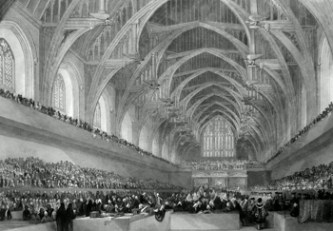 When in the novel The Fountain Overflows Rose Aubrey accompanies her father to the House of Commons to persuade a particular MP to help his current cause, we find out just how wily a politician he is. We also get a glimpse of the glory of the architecture:
 “It was like sitting in the midst of a tureen full of gravy soup. I was growing up at the end of an age which, partly by necessity and partly by choice, was very brown. In the towns chimneys poured out smoke from open fires and kitchen ranges, and light itself was permanently stained; and town-dwellers, who then so largely set the way of thinking, romanticized the obscurity to which they grew accustomed. Such sights as a narrow shaft of light struggling over a broad dark passage aroused none of the impatience we would feel today, but rather a sense that here was something as acceptable as a succession of major chords or a properly scanned line of verse.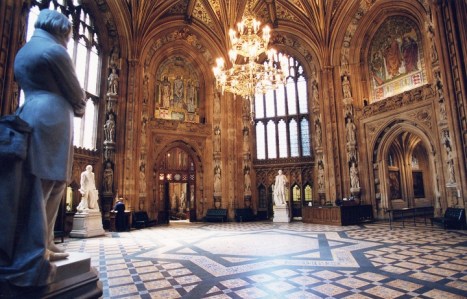

 me to grasp, and that makes me wonder, Why am I so taken with her as a writer? and How does she accomplish this enchantment? I have some ideas — maybe they will lead to something!

 Gladsome Lights