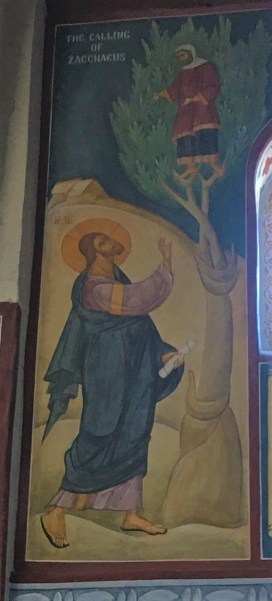
 Seeing posts of those who are at the beginning of Lent prompts mixed feelings in me. Orthodox Easter, or Pascha, does not come to us until May 2 this year, and our Great Lent begins March 15th, by which time western Christians will be halfway to their April 4th Easter.
Part of me is envious, and wishes we were already there, in that blessed season of “bright sadness.” But probably the greater part says, “Thank God we have a few more weeks!”
Yes… and I do want to take advantage of that time so that Lent itself won’t fly past without any effect on me. The Orthodox Church gives us five Sundays of preparation, and last Sunday was the first of those, Zacchaeus Sunday. Our rector emphasized to us that Zacchaeus climbed to a good vantage point because he wanted to see who Jesus was.
I appreciated Patriarch Kirill’s homily for the day in which he explained how Zacchaeus “…received his post from the hands of the Romans, the people who captured Israel, who enslaved the Jewish people. In modern terms, Zacchaeus worked in favor of the occupation power. And the freedom-loving Israelites, who painfully experienced everything that had happened to them – the fact that pagans seized power over the chosen people and over the holy places – treated those who voluntarily served the Roman authorities, collecting taxes from their own people, with contempt and indignation. That is why, in the minds of the Israelites of that time, the publicans were equal to the greatest sinners.
“But one of these tax collectors, Zacchaeus, was so eager to see the Savior that, being short, he climbed up a tree to see Him from there. The act itself is out of the ordinary, because Zacchaeus was one of those who had power, and adults who have power usually do not climb trees. If they need to see something, they have the opportunity to come closer: to push through the crowd, to make people part. But Zacchaeus climbed a tree, humiliating himself, only to see the Savior.”
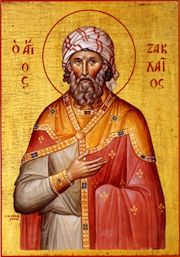 And oh, my, wasn’t he rewarded! He did see Jesus, and apparently not just superficially. His humble act led eventually to true repentance and salvation; can you imagine how the whole town must have been astounded? As another has put it, “He lived in luxury from what he stole in the name of a hated foreign power.” It likely was not an easy process to make restitution to all the people through whom he had made himself rich, and to disentangle himself from the corruption of the political system, but however it happened, he went on to become one of the Seventy Apostles described in Luke Chapter 10.
Patriarch Kirill goes on to say, “Everything in this story is so simple and so unexpected. All human conventions are destroyed by the power of humility.” If we also can act in such a way that we begin to see Jesus more clearly, there is no telling what huge changes might begin in any of us, for the glory of God and our full salvation.
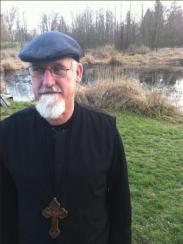 Father Michael Gillis describes himself as a grumpy old man who struggles to stay near to God; he evidently succeeds enough to be able to report, in his latest blog post, “…I think God loves so much those who reach out to Him that he tricks me into saying something to help them.”

 Gladsome Lights