Tag Archives: smells

Fairy finery, honey and roses

Many people were already in the church when I arrived about 11:00 p.m. on Saturday night. On the carpet in the transept opposite the choir several blankets and children were laid out. I bought a fat candle to have ready for the procession, but it wasn’t lit until an hour later, and in the meantime I was getting intoxicated by the honey-warm scent rising to my nose, feeling as though I was already breaking the fast with some rich dessert. It smelled richer than baklava.

Then the Easter lilies came into olfactory focus, blending with the beeswax. By this time my ears were full of the hymns reminding me of Christ’s rising from the tomb, in a garden, in a real place on the earth, because He was really a man of flesh and blood as we are. When He rose He must have noticed whatever flowers were blooming in that garden.
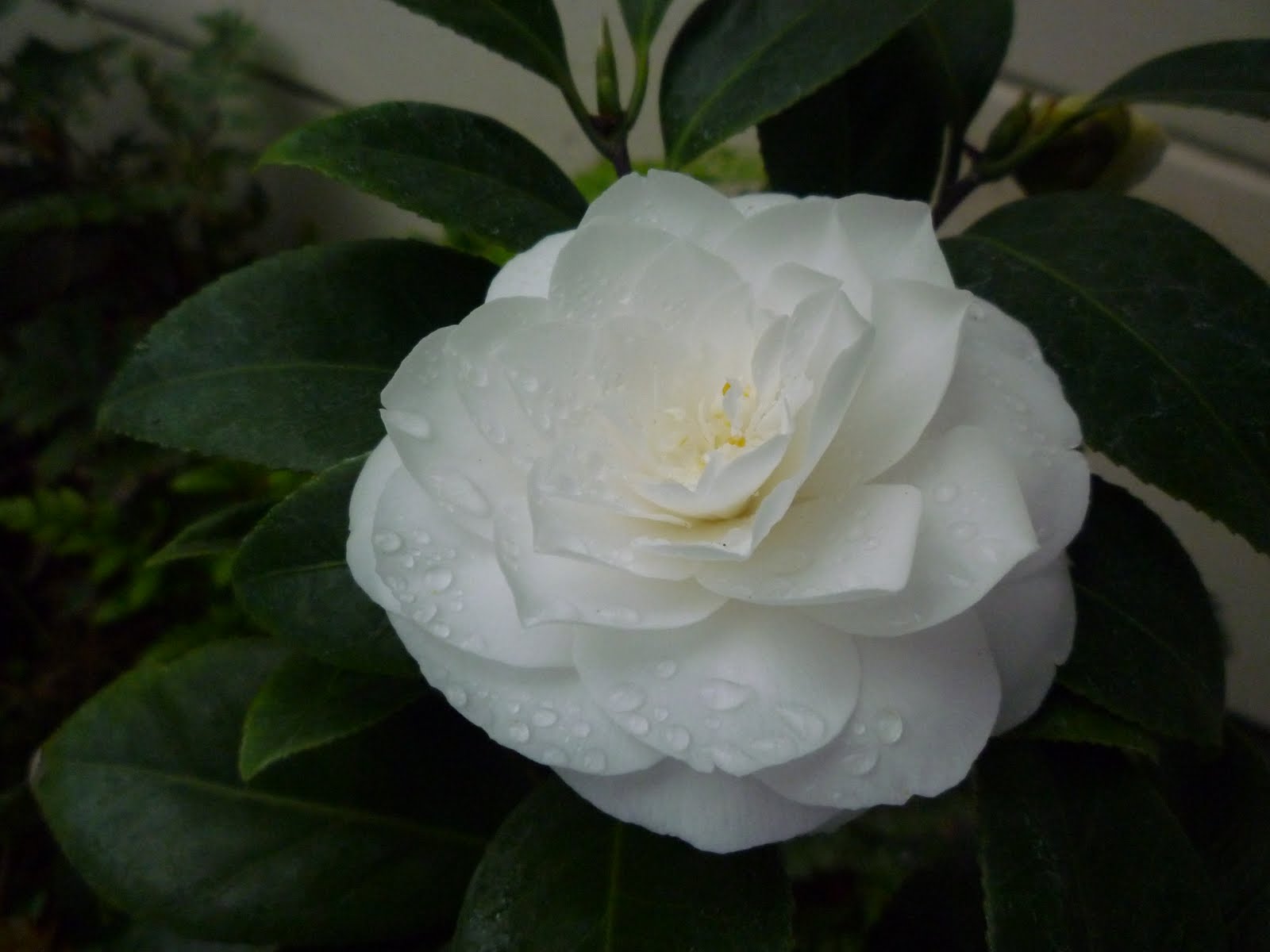
Camellia in our church garden during Holy Week

Families were arriving, and while most males were dressed in their “ordinary” best Sunday clothes, the clergy wore white vestments, and many women and girls had put together very springy and bright, often all-white, outfits. A score of little girls had flouncy skirts that would have been fancy enough for a ball, or for acting the role of a fairy in a drama. I was so happy for their being able to commemorate their Lord’s Resurrection by being their prettiest.

Even I had found a long and full eyelet skirt at a discount store, to wear with an odd assortment of other white things, and switched from black to flowered purse. There were lots of us, then, adding our white forms to the press of bodies, including the Eritreans who always wear beautiful white gauze. On this day more Eritrean men than usual wore their white gauze, too.

When the deacons and priests started around with censers, it was with the incense that is so heady I want to cry over it, knowing that “Jesus is fairer, Jesus is sweeter….” Is it made from roses? I must find out about this.

When we made our procession around the property — it was a longer route than merely around the church building — yes, there was some drizzle, but very fine, and not enough to put out anyone’s candle. We were singing our new Paschal processional hymn, which the choir tried to teach the rest of us last week, but I know I didn’t get it. Several of us noted as we were trailing along silently, too far behind in the train to hear the choir, that it had taken us ten years to learn the old Paschal hymn; it would have helped to have the choir members scattered along the line, interspersed with the rest of us and leading us.

But I think everyone was content. We were at Pascha! At one point we who were closer to the front of the long line could see across the lawn to a stream of worshipers at the end of the procession, and the view was stunning, their white garments reflecting the flickering candles they were holding up in the dark. There were hundreds of us! I didn’t think it seemed that crowded in the building.

Soon we arrived again at the doors of the church, at which the priest knocked, and then, “He is not here! He is risen!” When we went inside we heard as always on this night the Paschal homily of St. John Chrysostom, which he gave about 1600 years ago and which has never sounded sweeter to my ears, full as it is of the love and grace of God. As we float through Bright Week and through the next 50 days, its glad tidings will remind us to keep greeting one another with “Christ is risen!”

This year our Father Michael, who is over 80 years old, read the homily. Somehow his voice never weakens, and retains the strength and authority of a strong spirit. Every time he serves or preaches I am so thankful for the grace that enables him to keep going, because he is so dear. His heart is such that the message of this sermon is of the sort that would flow from his own pen and lips.

At every repetition of the phrase, “Hell [or it] was embittered,” Fr. Michael paused so that the congregation could answer with a shout: “It was embittered!” — a sort of boisterous participation that we all seem to enjoy this one time in the year.

In a hearty baritone, this is what he proclaimed:

If anyone is devout and a lover of God, let him enjoy this beautiful and radiant festival.

If anyone is a grateful servant, let him, rejoicing, enter into the joy of his Lord.

If anyone has wearied himself in fasting, let him now receive recompense.
If anyone has labored from the first hour, let him today receive the just reward.

If anyone has come at the third hour, with thanksgiving let him feast.

If anyone has arrived at the sixth hour, let him have no misgivings; for he shall suffer no loss.

If anyone has delayed until the ninth hour, let him draw near without hesitation.

If anyone has arrived even at the eleventh hour, let him not fear on account of tardiness.
For the Master is gracious and receives the last even as the first; He gives rest to him that comes at the eleventh hour, just as to him who has labored from the first.

He has mercy upon the last and cares for the first; to the one He gives, and to the other He is gracious.

He both honors the work and praises the intention.
Enter all of you, therefore, into the joy of our Lord, and, whether first or last, receive your reward.

O rich and poor, one with another, dance for joy!

O you ascetics and you negligent, celebrate the day!
You that have fasted and you that have disregarded the fast, rejoice today!

The table is rich-laden: feast royally, all of you!

The calf is fatted: let no one go forth hungry!
Let all partake of the feast of faith. Let all receive the riches of goodness.

Let no one lament their poverty, for the universal kingdom has been revealed.

Let no one mourn their transgressions, for pardon has dawned from the grave.

Let no one fear death, for the Saviour’s death has set us free.
He that was taken by death has annihilated it!

He descended into Hades and took Hades captive!

He embittered it when it tasted His flesh! And anticipating this, Isaiah exclaimed: “Hades was embittered when it encountered Thee in the lower regions“.
It was embittered, for it was abolished!

It was embittered, for it was mocked!

It was embittered, for it was purged!

It was embittered, for it was despoiled!

It was embittered, for it was bound in chains!
It took a body and came upon God!

It took earth and encountered Ηeaven!

It took what it saw, but crumbled before what cannot be seen!
O death, where is thy sting?

O Hades, where is thy victory?
Christ is risen, and you are overthrown!

Christ is risen, and the demons are fallen!

Christ is risen, and the angels rejoice!

Christ is risen, and life reigns!

Christ is risen, and not one dead remains in a tomb!
For Christ, being raised from the dead, has become the first-fruits of them that have slept.

To Him be glory and might unto the ages of ages.

Amen.

As I finish this post, it is Bright Tuesday. I went to church, and the gospel for today was the story of Christ meeting some of His followers on the Road to Emmaus soon after His rising from the dead. The unfolding of the scene, and imagining the Lord walking alongside and hearing them telling about the recent events — then their eyes being opened, His vanishing from their sight…. They said, “Didn’t our hearts burn within us?” And I got chills.

The altar is open all during Bright Week.

The day started with callas.

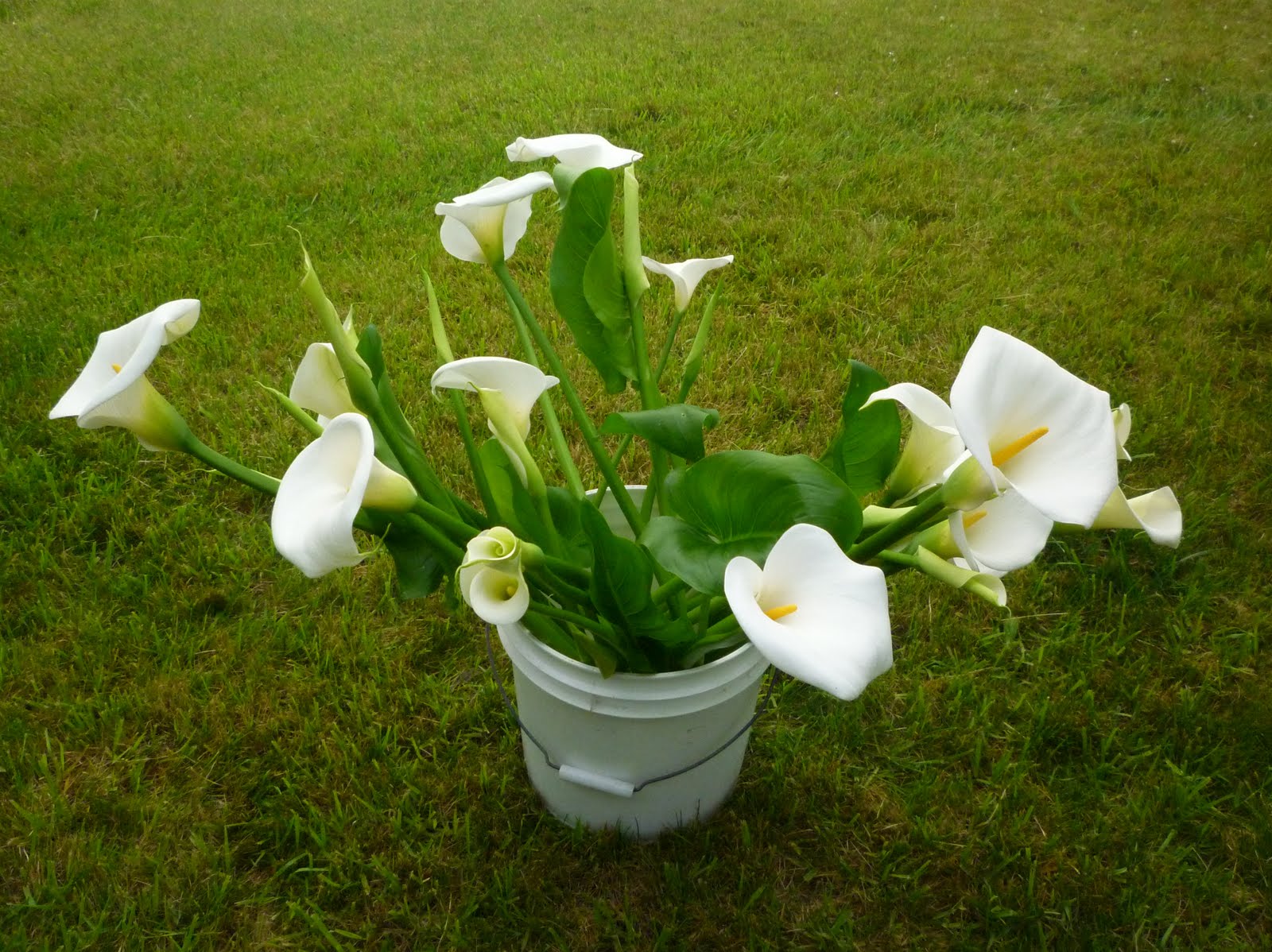
This morning I went out in the fog to cut as many nice calla lilies as I could find in my three patches, to contribute to what our Flower Lady and her team would use to decorate the church for Palm Sunday and Holy Week.

Mr. Glad came out with me and found a snail on the slab of schist that Soldier brought me from the mountains a while back.

Today was Lazarus Saturday, which is like a foretaste of Christ’s own resurrection. It marks the end of Lent, and helps us remember Christ’s power over death and hell which He demonstrated at The Event of all history, which will come to us at Pascha whether we are ready or not.

I dropped off the bucket of blooms right before Divine Liturgy (Holy Communion service) in the morning. In the afternoon, people cleaned and decorated the church.

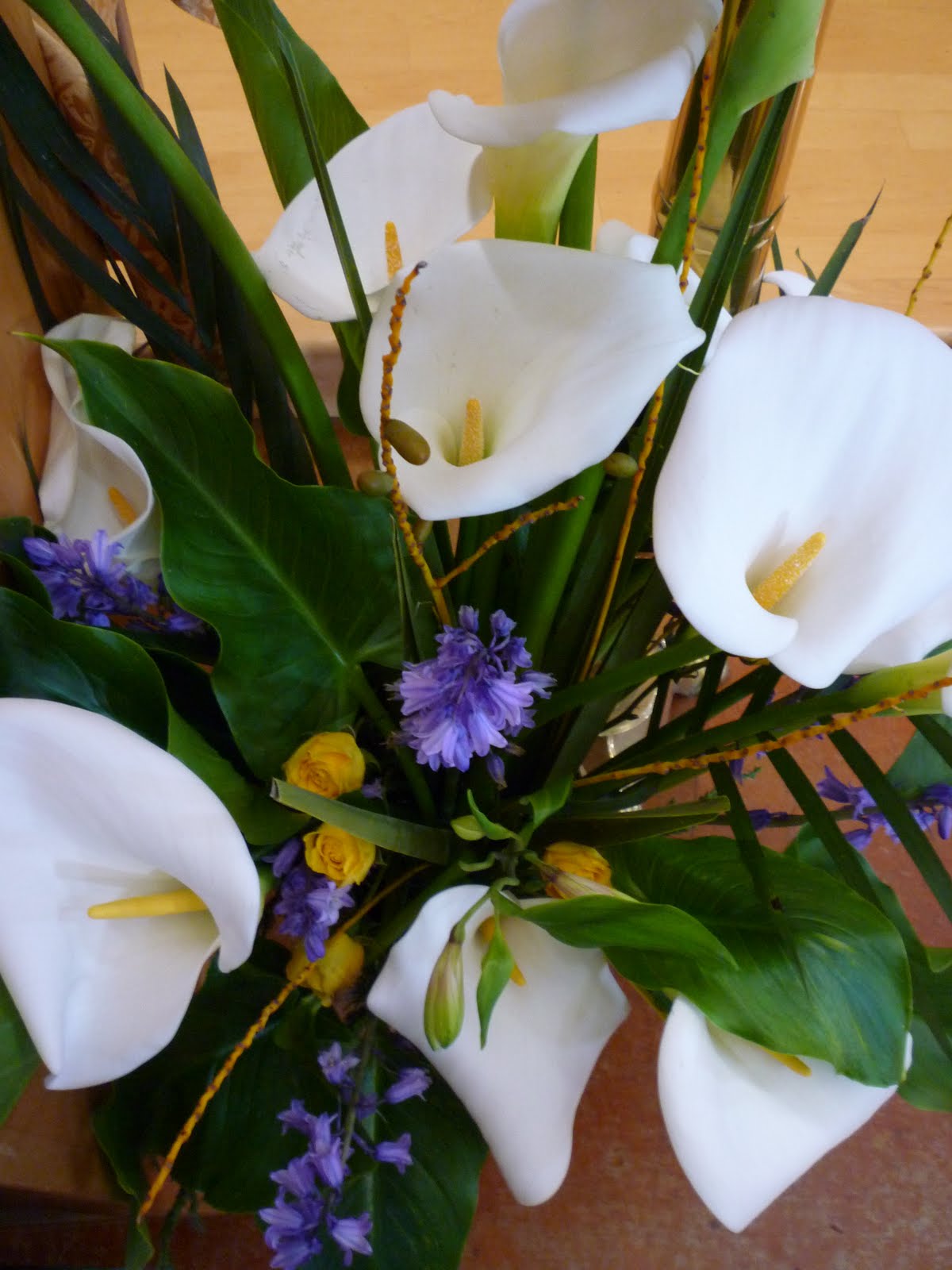
In the evening was the Vigil for Palm Sunday, a gloriously rich beginning of the feast. The callas had been added to other flowers, including something that looked like campanula, and some unusual orange woody stems with berries (?) on them.

The palm fronds were all laid out at the ready.

In the middle of the service, while the sun was still up, we processed outside and stood singing and praying for a while; I was next to the wisteria and noticed the bees buzzing and the sweetness of the flowers adding to the flavor of the Holy Spirit.

Not long after that — I am leaving out so much that was wonderful, like the flower-covered chandelier set to swinging, and special breads, but You Had to Be There — the palm fronds were given out, and once they had a branch to hold, the children found it easier to last another while.

 Blessed is He that comes in the name of the Lord!

Pacific in Pacific Grove

Seaside paintbrush

Counting my dear sons’ wives, which I very thankfully do, I now have five daughters. It’s sad to think how I spent several years complaining that I didn’t birth more children; during that time I never anticipated the familial wealth that in-laws can bring.

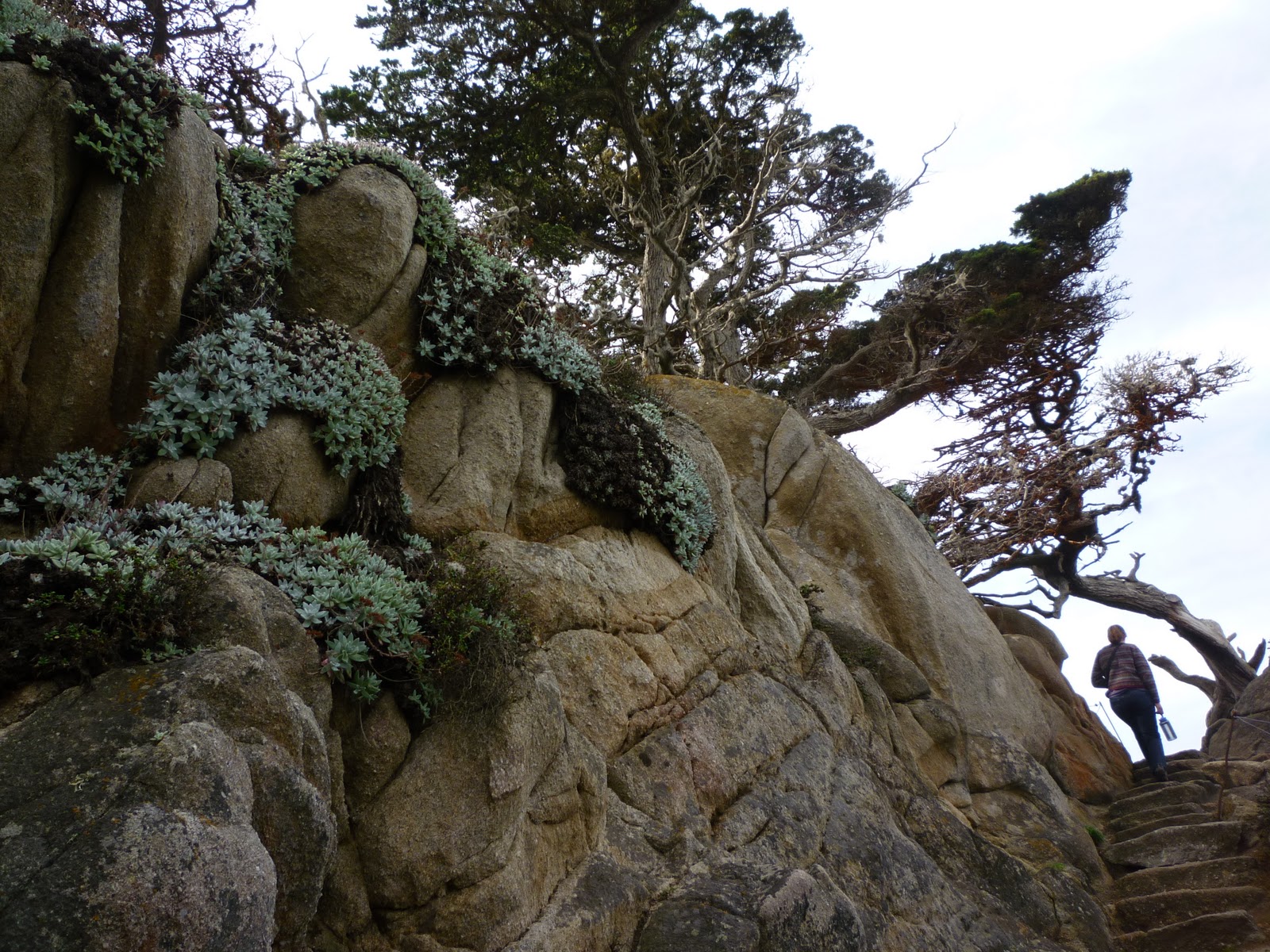
Point Lobos

In an effort to enjoy our family friendships we women spent a few months planning our first mother-daughter holiday. When continents stretch between, the grandchildren have pressing needs, and the young women pressing schedules, so it’s a tribute to our devotion that we even tried. In the end, only half of us, two daughters and I, were able to get together recently, on California’s Central Coast.

Seaside daisy

Pacific Grove was our home base. Every morning I woke with the feel of long-ago visits to my Aunt Margaret, whom I knew mostly in my teens. She lived in Carmel in a cream-colored house with white carpets, under a sky that was often white with fog or overcast, and the mood was so quiet. The sort of quiet that is filled with the sound of surf and the cry of sea gulls.

Our gathering of last week was a quiet group, too, in spite of our much talking, which I imagine was still on the low end of charts that might be made of all-women excursions, as we often stood in silent wonderment over our surroundings.

In our Keen boots — really, no one one had coordinated our foot attire, contrary to all appearances — we walked a lot, up and down the hills of Pacific Grove and Monterey and Carmel-by-the-Sea. And we looked at flowers and trees and birds and tried to identify them all.

Flower is California hedge nettle
ceanothus in Pacific Grove

On Point Lobos especially the sweet smell of ceanothus blooms was filling the air, along with the buzzing of bees who were crazy over it. We liked the challenge of photographing busy bees. They liked how the pollen was offering itself to them on vast fields of stamens.

Carrying great loads of pollen
Protea behind Cannery Row
Lucky for us that Mrs. Bread showed us a Protea in her garden our first afternoon, so that we could guess their identities when we kept seeing them everywhere from then on. The genus includes a huge variety of forms that are really striking. I came home to find that our bottlebrush tree is not a Protea, however. Proteas seem to have come originally from the southern hemisphere, but they definitely like growing on this patch of the globe.

Behind Cannery Row murals have been painted along the bike path, evoking the culture and history that John Steinbeck depicted in his books. I liked browsing this lane better than the touristy shops which carry, as Joy pointed out, all the same stuff from China that touristy shops all over the nation carry.

Oh, except maybe the otter dolls. I was expending so much mental energy drumming up buyer’s resistance that I didn’t even think about how I could have taken a picture of one. There were three stuffed toy versions of the captivating creatures that we watched lolling and playing in Monterey Bay, and I can’t find one online that is as cute, to post here.

fava plant in bloom
While in Monterey it was quite fun to revisit the Cooper-Molera House so soon after our last visit, but long enough that the plants were further along in spring, as this fava bean plant with its black-and-white blossoms. There were even little bean pods forming lower on the plant.
Another Protea
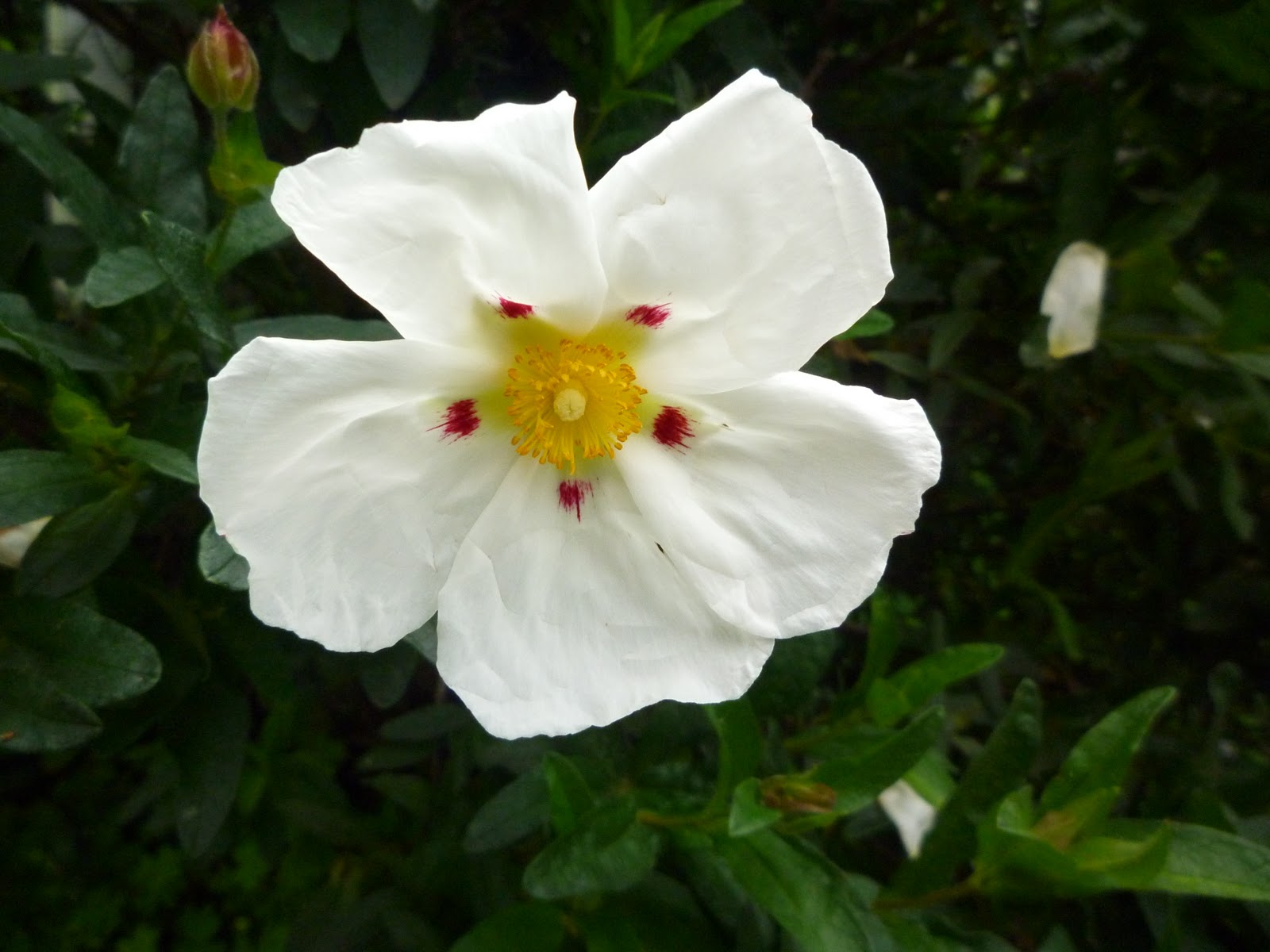
cistus
Pacific Grove is called Butterfly Town, because of the Monarch butterflies that migrate there every year. I’ve long had a vicarious and romantic attachment to the place thanks to the book by Leo Politi, and now it has become a direct relationship with the same feelings.
Updated adobe cottage in Pacific Grove

The weather we experienced was surprisingly mild in spite of frequent short showers of drizzle or light rain — but I might find it difficult to stay long where the sun doesn’t show itself often enough to keep the spirits up.

Flowers seem to glow more vividly under grey skies, though, and that makes up for the drear a little bit. People paint their houses in cheerful colors. And peace and quiet count for a lot.

The Pacific Ocean is not always peaceful, but it was fairly calm this week. The tsunami from Japan didn’t make a big wave here. You can’t see them, but two otters are playing in this picture. And peace and serenity and love were all playing some quiet music in our hearts.

Essential Aromas


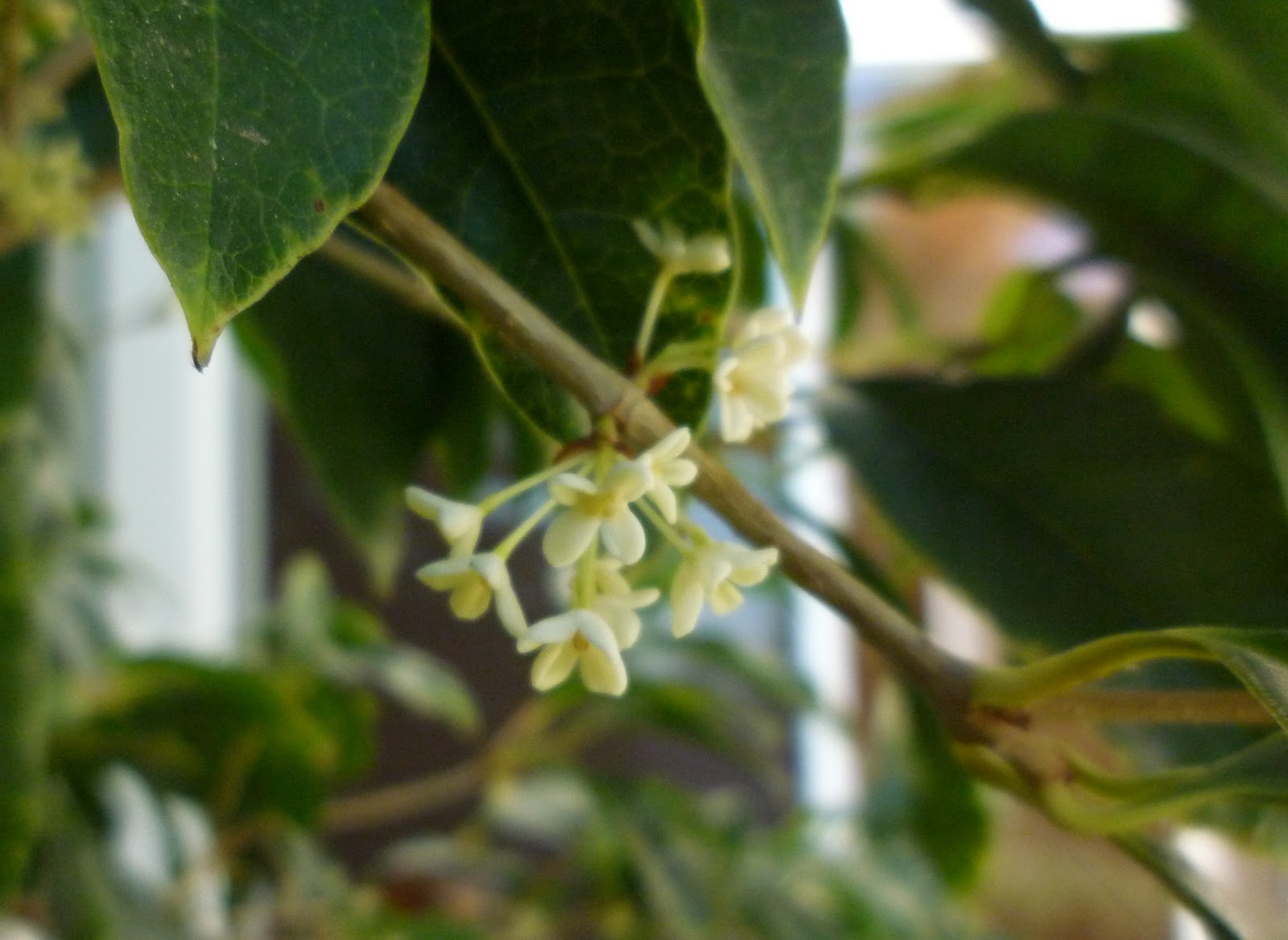
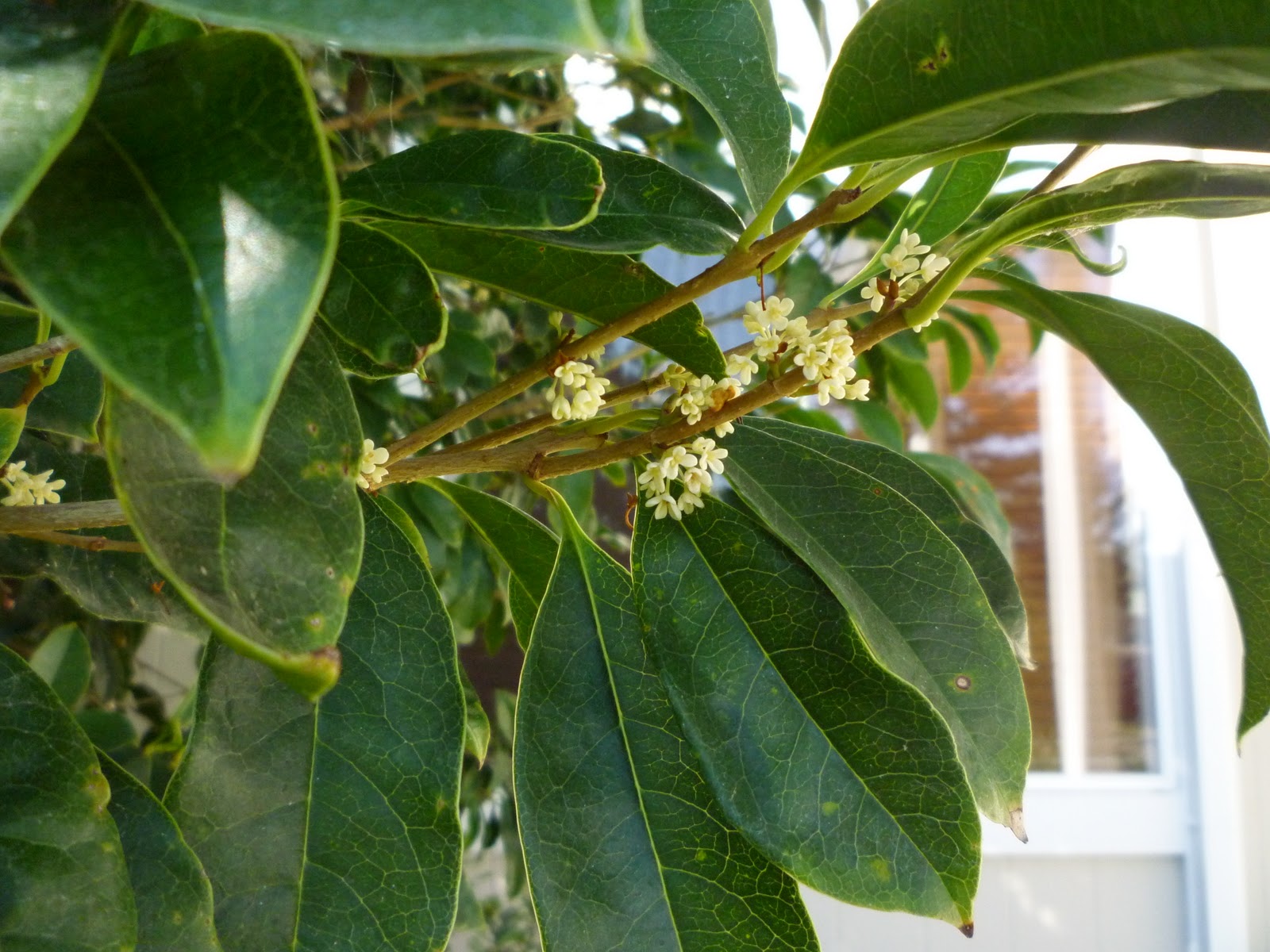
When Debbie at Artful Aspirations posted about her sweet-smelling bush, I suspected a near relation, perhaps even a twin, to my Osmanthus fragrans. She said she bought her plant because of its common name Tea Olive; I had only known mine as Sweet Olive.

Not many days later M.K. at Through a Glass, Darkly, who was not a follower of Debbie’s blog, posted photos of her “holly bush,” with descriptions of its “heady and rich” scent reminiscent of gardenia.

The challenge of describing various scents is always of interest to me. I wonder if an individual flower is easier to pin down than a whole rain forest. We usually have to say that any given smell is something like another. Having grown up in an orange grove, I didn’t confuse osmanthus with orange blossoms, but upon my first encounter I did envision some woman along the route of our neighborhood stroll setting an apricot pie to cool by the window.

Surely osmanthus is its own heady aroma that nothing else is quite like. Last year, at the end of a post about how various other scents link to my grandmother, I tried to describe its effect on me.

One website that sells many essential oils for their aromatherapy benefits describes Osmanthus fragrans as “Friendly, lively, intriguing, what’s new, what’s next, early morning excitement, setting out on a whole new journey.”

Peet’s has blended a black tea with osmanthus blossoms, which might add some extra excitement to those mornings when I choose it over plain black or green.They say “its pleasant aroma could be described as a combination of apricot, chamomile, and orange flower.” They don’t make it all year long; stocking up would be necessary if you want to be assured of having it when you want.

After she heard about osmanthus, M.K. began to wonder if her hollies might actually be Tea Olives. In the meantime I had been reading about fragrant holly bushes and found that there are hundreds of types of holly, and some of them do look a bit like osmanthus. One osmanthus looks so much like holly that its common name is False Holly. Wikipedia mentions that osmanthus flowers can be various colors, even dark orange, and that in China it is traditional to mix some osmanthus jam into millet gruel.

You can see on that page a photo of an orange-flowered osmanthus taken in Japan. All of the photos here on my blog were taken just this week in my yard.  B. and I planted the bush about 20 years ago on the advice of  horticulturist friend. If we had known how big they get, we’d have started it out farther from the house.

Wikimedia also has this whole page of related photos.

Some of my other favorite botanical scents are lemongrass and rose geranium. I have a big bush of the geranium in a pot on the patio, and in my cupboard some essential oil of lemongrass to add by drops to hand soap. So far I’ve only enjoyed my osmanthus when it happens to fill the air with its essence, and that occasion always takes me by surprise and humbles me by the extravagant gift. “The osmanthus is blooming!”  I will announce, if someone is around. This happens at least twice a year; do I really need the oil extraction at other times?

The people on the planet of Perelandra in C.S. Lewis’s novel by that name had an admirable way of making the most of every experience. They considered an actual event in time to be only the smallest part of anything that they did or that happened to them. The anticipation was also to be enjoyed for all it was worth, and the memory of the incident or act would be savored into the future. In this way even the most lovely and desirable events were completely satisfying whether or not they took place more than once in a lifetime.

When one comes upon a strong aroma, say, walking into a house where bread is baking, or walking out one’s front door to the scent of osmanthus, if the stimulus continues for a time the olfactory receptors get desensitized or something; in any case, you stop noticing, until you go out and come back again. So I don’t know, if I had only smelled osmanthus once, if I could have made much of the experience. I’m not too good at paying attention, if that’s what’s necessary.

But I’ve had decades of being enveloped by the sweetness and the love that the Sweet Olive aroma signifies to me. I think I’ll just try to bask in it for a few seconds longer next time I pass by, or sit on the step and drink it in as long as my nose will keep sending the message to my brain. And if we move to a colder climate I’m sure I’ll be busy enough sniffing the air in that place without trying to import gifts that belong to the memorable past.