Tag Archives: St. Paisios of Mt. Athos

The elder’s pain and love.

I don’t know who all will be in my class when my parish’s church school program begins again next month. But I think I know what I’ll be teaching, and it includes gleanings from this book that I haven’t read yet, With Pain and Love for Contemporary Man. The arrangement of our classes and students and how and where they will meet is one more realm of decisions that has been affected by the coronavirus situation, and that is why I didn’t know until this week to get busy and start reading; I had expected to be using a different curriculum.

This big book was first published in Greek in 1996, as the first of several volumes of the monk’s teachings. Over the course of 28 years his spiritual counsels were carefully recorded in notes and on tape, by the sisterhood of St. John the Theologian monastery in Souroti, for whom he was a guide and helper. In the preface they tell about his response at the beginning of their project:

“When Elder Paisios realised what we were doing, he was rather irritated: ‘Why are you taking notes?’ he asked. ‘Are you saving them for an emergency? You should put my words into practice; put them to work! Who knows what you are saying in these notes! Let me see them.’ When we showed him a sample, particularly the notes of one Sister, his expression changed. He seemed comforted and reassured, and exclaimed with satisfaction, ‘My goodness! She is like a tape recorder! She wrote it exactly as I said it!'”

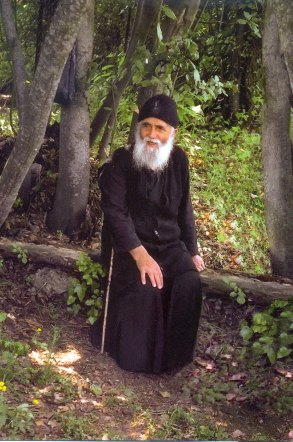
St. Paisios of Mount Athos: InjusticeThis man, who in 2015 the Orthodox Church formally recognized as a saint, was in 1924 born Arsenios Eznepidis, in Cappadocia in Asia Minor. This was just after the Greco-Turkish war, and just before those governments mutually agreed upon a population exchange that forced more than a million people to become refugees; his family was among them, and they moved to Greece. You can read all about his life here: St. Paisios, and in other articles and books. I just wanted to tell you a little bit in introduction, because I’m planning to share at least a few quotes from the saint as I go. For now I will leave you with this that I found elsewhere:

“What I see around me would drive me insane
if I did not know that no matter what happens,
God will have the last word.”

— Elder Paisios of the Holy Mountain
1924-1974


Love like the sun.

“Man is worthy of being loved just because he’s in the image of God. It doesn’t matter at all if he’s good or bad, moral or sinful. Man is worthy of being loved for what he is. Christ loved and sacrificed Himself for sinful, corrupt people. ‘I came not to call the righteous, but sinners to repentance’ (Matthew 9:13).

“We should be the same way: we should love everyone without making any distinctions. Just like the sun rises on everyone, intelligent and unintelligent, good and evil, beautiful and ugly, our love should be like the love of God – love that’s like the sun and shines on His whole creation without making distinctions.”

+Saint Paisios

(Quoted in The Gurus, the Young Man, and Elder Paisios by Dionysios Farasiotis.)

Are there any flowers here?

[From St. Paisios] Some people tell me that they are scandalized because they see many things wrong in the Church. I tell them that if you ask a fly, “Are there any flowers in this area?” it will say, “I don’t know about flowers, but over there in that heap of rubbish you can find all the filth you want.” And it will go on to list all the unclean things it has been to.

Now, if you ask a honeybee, “Have you seen any unclean things in this area?” it will reply, “Unclean things? No, I have not seen any; the place here is full of the most fragrant flowers.” And it will go on to name all the flowers of the garden or the meadow.

You see, the fly only knows where the unclean things are, while the honeybee knows where the beautiful iris or hyacinth is.paisios of mt athos sitting

As I have come to understand, some people resemble the honeybee and some resemble the fly. Those who resemble the fly seek to find evil in every circumstance and are preoccupied with it; they see no good anywhere. But those who resemble the honeybee only see the good in everything they see. The stupid person thinks stupidly and takes everything in the wrong way, whereas the person who has good thoughts, no matter what he sees, no matter what you tell him, maintains a positive and good thought.

+ St. Paisios of Mt. Athos, “Good and Evil Thoughts,” Spiritual Counsels III: Spiritual Struggle

(Elder Paisios was canonized on January 13 last year but he is commemorated on June 29/July 12. )

Make haste to live.

Metropolitan Anthony Bloom elaborates on what the Orthodox exhortation to “remember your death” really means. 

“St. Paul in one of his epistles says that we must make haste to live because time is deceptive. We live all the days of our life as though we were writing hastily, carelessly, a draft of life that one day we will copy in fair hand. It is as though we are just preparing to build, collecting all that will later be organized into beauty, harmony, and meaning…. But years pass and we never do it.

elder Paisios the Hagiorite

“This is not only because death comes, but because at every period of life we become unable to do what the previous period would have allowed us to do. It is not in our mature years that we can achieve a beautiful and meaningful youth, as it is not in old age that we can reveal to God and to the world what we might have been in our years of maturity. There is a time for all things, but once the time has gone, these things can no longer be done.

“Victor Hugo said that there is fire in the eyes of the young, but there should be light in the eyes of the old. The time of the glowing fire passes, the time of light reaches us, but when the time of being a light has come, we can no longer do those things that can be done only in the days of our flaming. Time is deceptive. When we are told that we must remember death, it is not in order to give us a fear of life; it is in order to make us live with all the intensity that we could possibly have if we were aware that every moment is the only moment we possess…. And so the remembrance of death seems to be the only power that makes life ultimately intense.”

–Metropolitan Anthony Bloom, From Living Orthodoxy in the Modern World

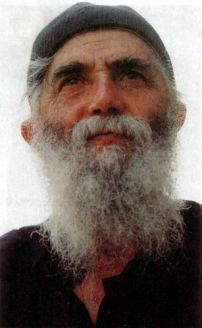
 (I put a photo of St. Paisios as an example of someone who shined with a bright light.)