 More and more I notice that people, including me, use the words brain and mind interchangeably; but they are not the same thing at all. No scientist has been able to find the mind in the brain. And when we are considering mind vs. heart, where is the heart exactly? As the Scripture says, “We are fearfully and wonderfully made.” The more researchers probe into the intricacies of the human body and its functions, the more complex we are found to be, the more questions emerge.
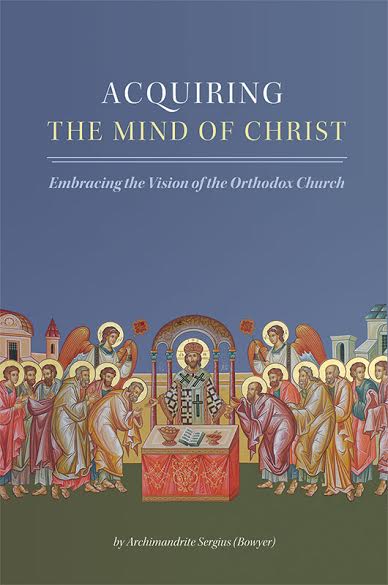
I am using the photo of the book cover at right only to illustrate one use of the word mind; it’s been a while since I read it, but I think the author may have been thinking of this passage of Scripture:
Let this mind be in you, which was also in Christ Jesus: Who, being in the form of God, thought it not robbery to be equal with God: But made himself of no reputation, and took upon him the form of a servant, and was made in the likeness of men: And being found in fashion as a man, he humbled himself, and became obedient unto death, even the death of the cross.
Father Stephen Freeman draws attention in a recent article to the way we moderns tend to think about minds and our thinking:
“We are material beings. We are not souls that have bodies, or bodies that have souls. The soul is the ‘life’ of the body, but is not, strictly speaking, a thing in itself. Most moderns mistake the soul for consciousness, and they imagine that at death their consciousness migrates somewhere else (to heaven, etc). And, we do not care very much about what then happens to the body, so long as our precious consciousness abides. This, I might add, is the mythology of Star Trek, where in at least several episodes, Spock’s consciousness is deposited in various other places. It is not, however, true Christianity.”
You can read the whole article here: “The Secular Mind Versus the Whole Heart.”
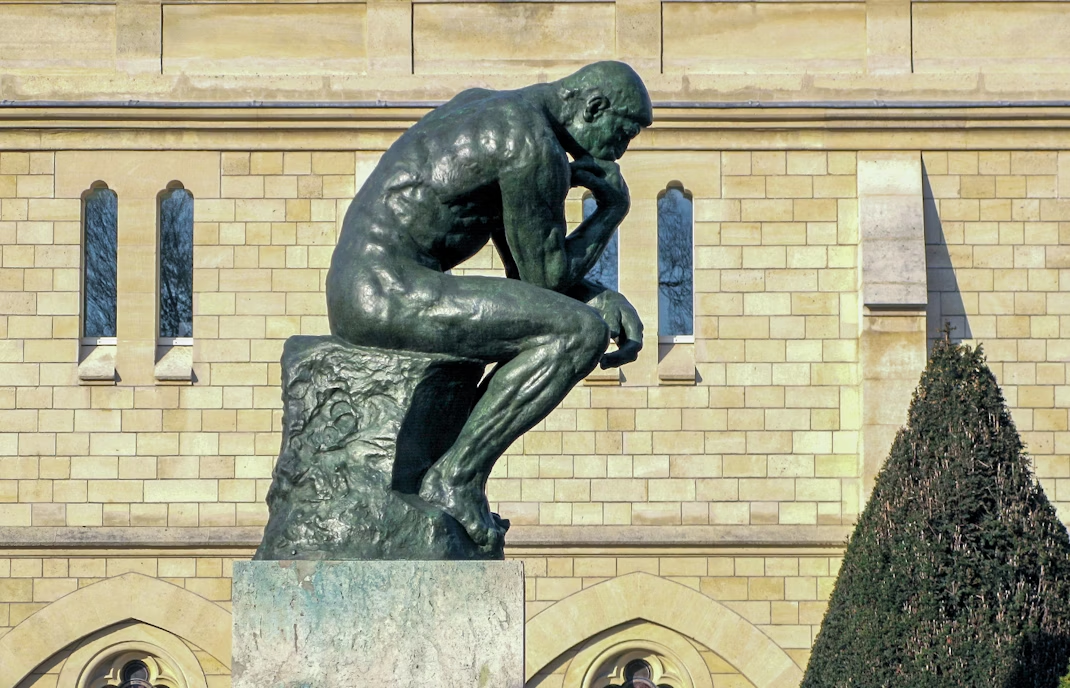

 “Materialism is a conviction based not upon evidence or logic but upon what Carl Sagan (speaking of another kind of faith) called a ‘deep-seated need to believe.’ Considered purely as a rational philosophy, it has little to recommend it; but as an emotional sedative, what Czeslaw Milosz liked to call the opiate of unbelief, it offers a refuge from so many elaborate perplexities, so many arduous spiritual exertions, so many trying intellectual and moral problems, so many exhausting expressions of hope or fear, charity or remorse. In this sense, it should be classified as one of those religions of consolation whose purpose is not to engage the mind or will with the mysteries of being but merely to provide a palliative for existential grievances and private disappointments. Popular atheism is not a philosophy but a therapy.”
 Gladsome Lights