Tag Archives: weeds

Roots and Rest

Pinecrest lk & sun
Pinecrest Lake

Sunday morning instead of driving to church I packed my car and drove up into the Sierras, not to one of the familiar destinations but to a lake on the Sonora Pass where I’d only been once before. I was meeting my three cousins for a very brief reunion. It was only two years ago that I’d met them as though for the first time, for their mother’s memorial.

Maybe because it was Sunday morning, as I headed out along the most familiar roads I tried to listen to a sort of sermon in the form of Richard Rohr’s Falling Upward, in which he speaks (and reads his own book in a very pleasant voice) as a would-be life coach to those anticipating or making big transitions in life. I liked one line I heard in the introduction: “We are the clumsy caretakers of our own souls.” But the paradigm he presented, of a life span in two halves, The First Half of life and The Second Half, was not at all useful to me. In other ways as well I didn’t feel like a member of his intended audience, so I wasn’t sorry when I realized my listening set-up was not giving me enough volume and I had to give up on books for this trip.

I had been looking forward to crossing the valley, this farmland that feeds the whole nation its fruits and vegetables, and where alfalfa and sunflowers and more also grow in plots of hundreds of acres. Even though I’ve written about this aspect of the California landscape before, I was as excited to make this drive as I was to see my relatives at the end of it. It’s because I love California, I realized with joy, and not just the agricultural parts. Thanks to my late husband, I was introduced to pretty much every region of our vast state, and it’s Home. I’m so glad I can keep on living here, where My People have lived for six generations now.
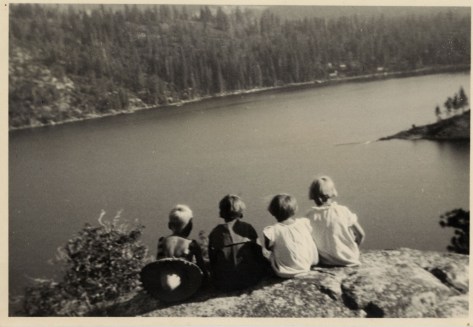
Pinecrest kids RHBJ 1927 ed
the previous generation in the 1920’s

My destination was Pinecrest Lake, where my father and his family, including my cousins’ mother, had often camped as children with their parents. They lived in Berkeley, and from there it was not too daunting an effort to get a carful of family up into the aromatic pines and cedars where the women and children might stay for the whole summer, while the menfolk would keep working down below and drive up most weekends. Eighty or a hundred years ago it probably took twice as long as my journey did, but it would have been easy to leave the city and cook dinner in camp on the same day.

I was only able to stay with my cousins one night and half a day, but during that time we took a boat out on the lake. I had a bum foot so it was just as well that they had hiked earlier while I was on the road. While we were on the water a bald eagle flew back and forth above us against the blue sky, which we took as friendly interest on his part, but he is just a speck on a cloud in the only photo I got of that encounter.

Pinecrest Mr G 07 crp
Mr. Glad at Pinecrest in 2007

We went out to dinner and told stories about our ancestors, and kept straying from that obvious subject to many others. Maybe it was being in the outdoors that led our conversation to the topic of rats and mice, and to comparing tales of house or tent visits, or downright infestations, of undesirable critters. When cockroach stories entered the stream, we tried harder to talk instead about something more appealing before the food arrived. And then we went on laughing and being happy together until a late bedtime.

After my father died several years ago, I made a point of visiting his youngest sister, my aunt Bettie, trying to hold on to whatever thin conduit might remain in the world, that might still connect me to him and that part of my history. Her family had always lived so far away that we rarely saw them and I didn’t know my cousins growing up.

I found her to be much more than a fulfillment of my familial longings; she was a warm and gracious and funny person who was quite admirable in herself, and I soaked up as much love and kindred feeling as I could in a too-brief visit. I planned to come back soon and spend more time, but those many miles prevented me, and then she died too. I was so thankful that I was then able to connect with her daughters, and now we will be catching up until we die.

Of course I cherish my brother and sisters as a link to my father, and for themselves even more, but it helps me to have cousins in my life now, too. My father didn’t pass on family history to me until it was too late to imbibe very much, but my aunt was telling her daughters stories their whole life long, and from a woman’s perspective. They can help me to know my father and even my mother better, as she and my aunt were close friends when they were young, before ripples of effects of war and family changes put such a geographical distance between them.

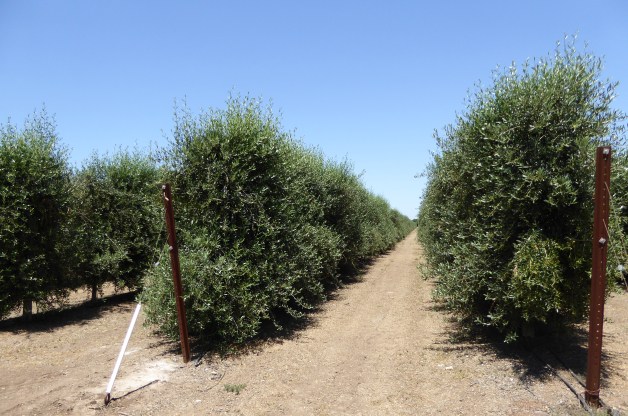
On Monday the oldest of these cousins, Renée, came home with me for a couple of nights. We didn’t stop often on the way down, and the sun was too bright for taking pictures, but even so I had to note these trellised olive trees that intrigued us as we drove across the Central Valley.
P1000347

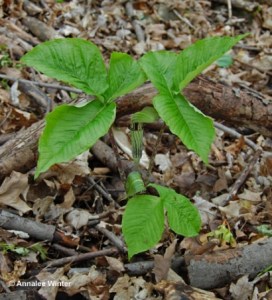
Renée wanted to help me weed my garden or whatever else would ease my grief and weariness. So we spent the next morning on the front yard, and the afternoon on the back yard. She was amazed at the difficulty of digging the taproot of a weed out of our clay soil, and amazed too that anything grows in this kind of dirt. We filled up the yard waste with pine needles, rockrose trimmings, wisteria vines and spent calla lilies. And she told me that one of my most hated weeds is Jack-in-the-Pulpit — but I don’t think so. Compare these pictures:

P1120869 weed 4-15

My weed is on the jackinthepulpit2c_thumb_410right, and Jack on the left.


Does anyone know what “mine” is? It looks like a lily of some sort… [Update: see in comments below for the full answer to my question. It’s an Italian Arum Lily.]

My last several days have been incredibly full and rich. In the wee hours of yesterday I woke to hear rain falling — in June in California! A special gift. It continued all morning and maybe contributed to the horrible traffic on the way to the airport, which made Renée almost miss her plane. When I came home and was eating my lunch I was surprised to nearly fall asleep in my tea; until then I hadn’t realized that so much talking instead of sleeping had taken such a toll that I could actually — and must — take a nap.

So I slept for most of the afternoon, and got up late today, and I think I could nap again! When I’m this tired I’m very susceptible to the floods of emotion that show me I am always on the verge of being a bit depressed. The liberty I have to pace myself is a great blessing.

Before my nap yesterday I’d read Albert’s blog post where he shared a “bit” from another blog, and even though the rain we had just experienced on our way to the airport was not cold and hard, the basic idea seems to fit how I quoted from this blog post:

Do what you can – because sometimes it is going to rain on your life and then you can only do what you can. And sometimes it is Cold hard rain. And sometimes it is on the day you had pegged to cut hay. And that is what we had yesterday. Wet, cold, hard rain.  But the work went on – just in a different direction.  We don’t need to save the world every day. Some days we just do what we can then take to the swing chairs when enough is done.

I do have a bench swing on the patio and I may use that this afternoon, after my nap. See ya later!
A little dancing sister.

>

…Nature is not our mother: Nature is our sister. We can be proud of her beauty, since we have the same father; but she has no authority over us; we have to admire, but not to imitate. This gives to the typically Christian pleasure in this earth a strange touch of lightness that is almost frivolity. Nature was a solemn mother to the worshipers of Isis and Cybele. Nature was a solemn mother to Wordsworth or to Emerson. But Nature is not solemn to Francis of Assisi or to George Herbert. To St. Francis, Nature is a sister, and even a younger sister: a little, dancing sister, to be laughed at as well as loved. -G.K. Chesterton

I’ve been enjoying my little sister in the garden this week. It started with a long weeding session, during which I rescued the sweet peas from a weed of which I don’t know the name. Does one of you know it?


It’s been growing taller than the peas, and even though I made some nice trellising for them, they have been confused by these weeds and are trying to climb on them instead.

The green and trailing weed is also flowering before the sweet peas bloom, and is not in any way an unpleasant weed to deal with.

How about this weed? Maybe someone can tell me its real name. We call it The Scattery Weed, because before the seeds are obviously ripe, when the plant still looks small and innocent, it waits with secret menace for the gardener to stroll by and brush it with her shoe or hand, then !!explosion!! of seeds in a several-foot radius.

I probably shouldn’t use the word menace when talking about my little sister. In this case she is only doing what is in her nature, and doing a good job of bearing many children for next year’s springtime.

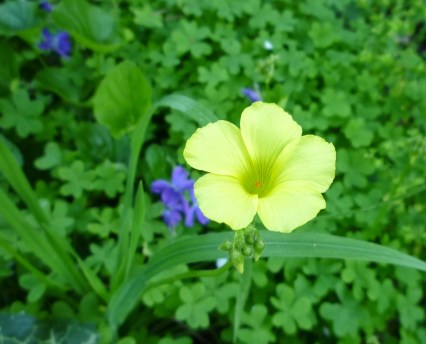
I found more signs of spring while I was out there, like this oxalis blooming among the violets…

…plum blossoms decorating violets, and the violets springing up tall to decorate an irrigation head.

Above is a field of manzanita blossoms fallen from the bush to make way for berries, and hanging over them are snowdrops, truly looking like little sisters dancing in their pretty spring petticoats.
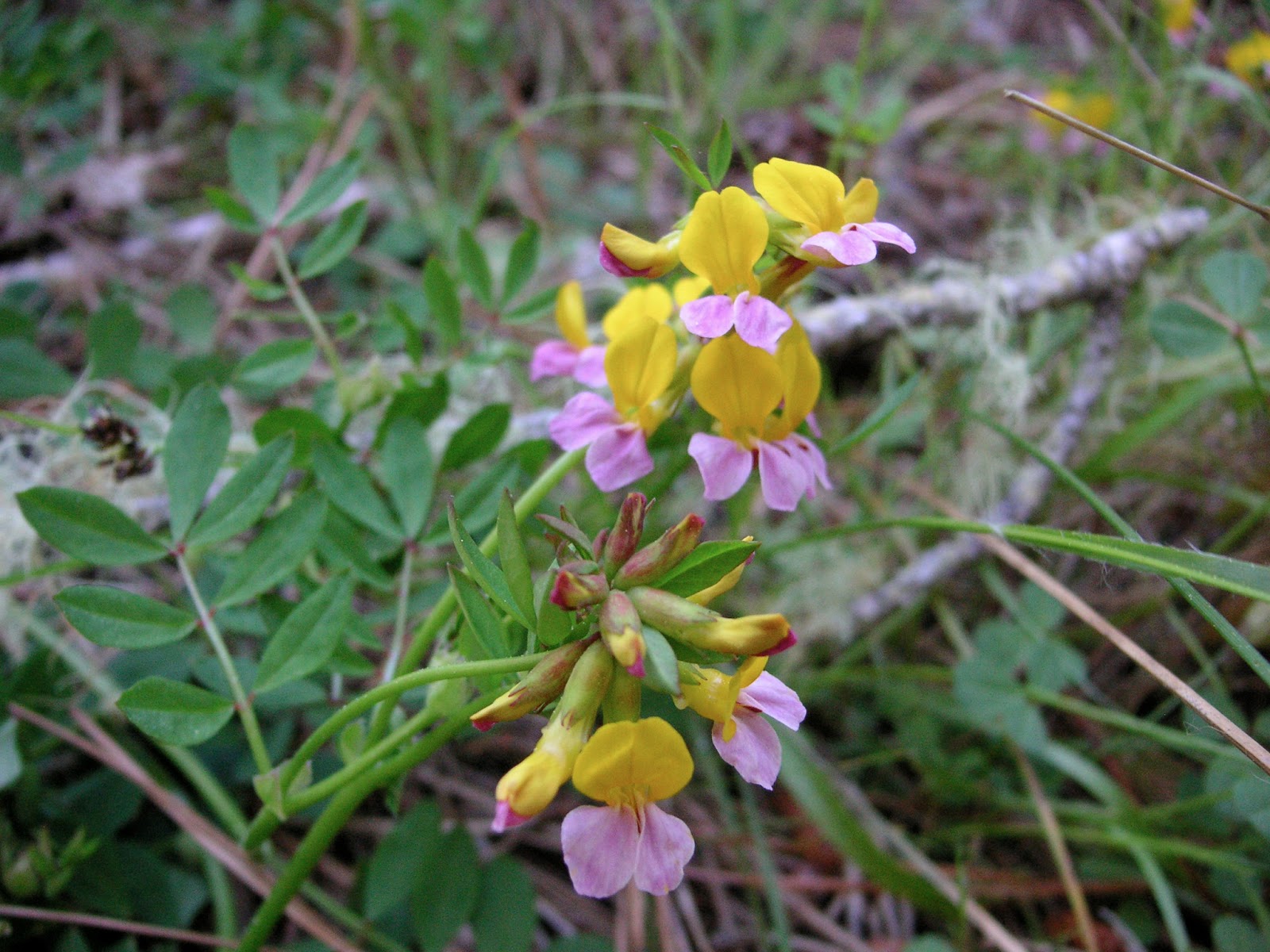
I finished my garden work just ahead of the steady rain we’ve been getting today. God is watering the earth and sending His rain “on the just and the unjust.” Thank You, Lord!

Linking up to Weekends With Chesterton.

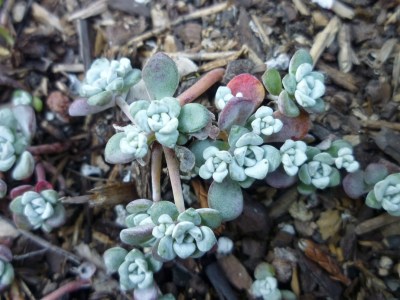
I might have found a lotus.

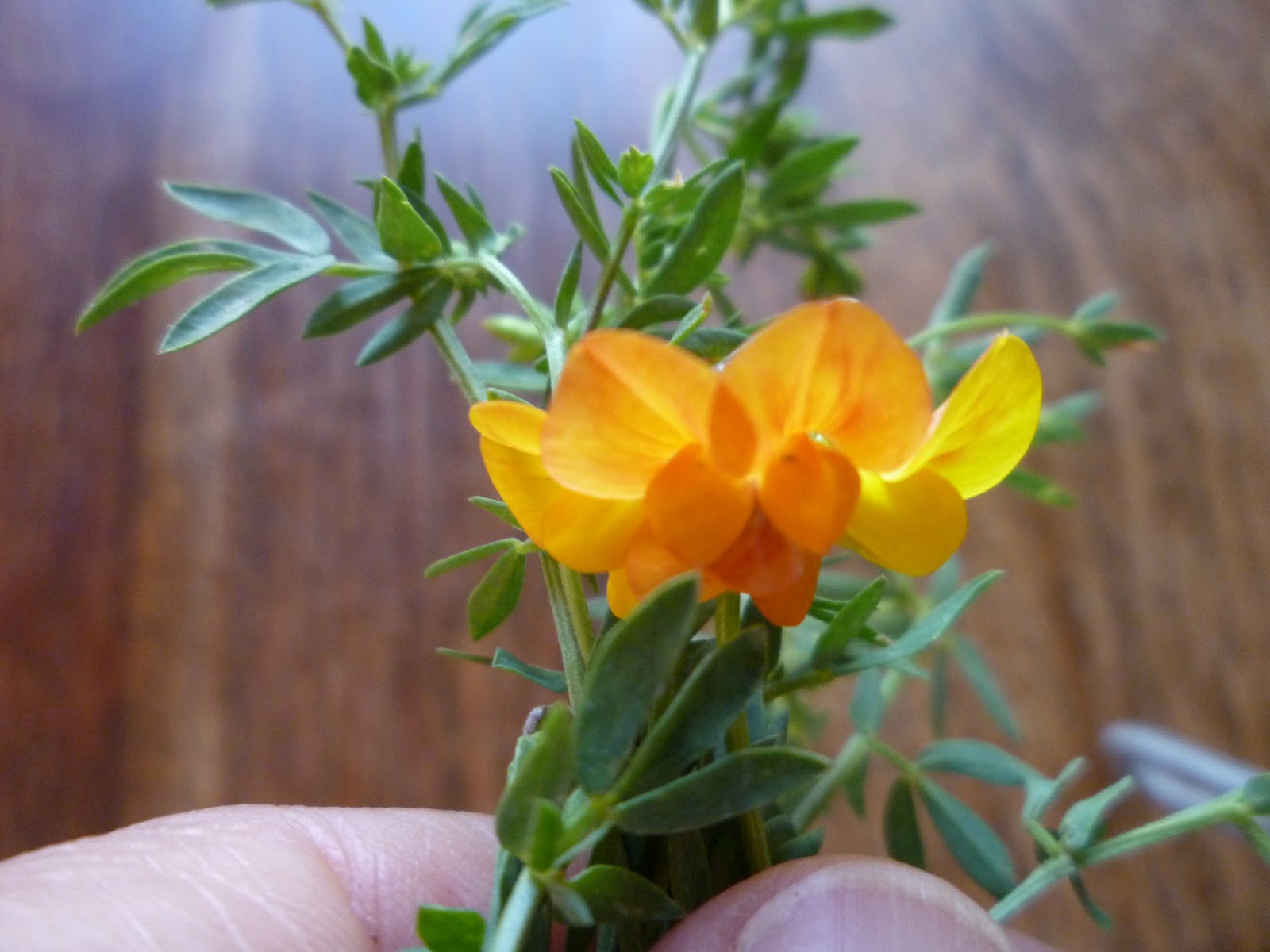
Recently on a walk through the neighborhood I noticed a pretty little weed flower by the path, and remembered having photographed something like it in the past. A few minutes after returning to my computer I saw Nature I.D.‘s blog post “lots o’ lotuses,” and the pictures looked so much like the plants I had just seen. Here’s one of Katie’s photos:

Today Mr. Glad and I were out in a different part of the neighborhood, and there was my flower growing in a sidewalk crack. I grabbed a bunch and brought it home. Here is its picture. I don’t have time to research this thoroughly right now but I’m putting up my pictures for Katie and anyone else interested to see. They are cute little flowers in any case and a welcome break from ugly thistles and puncture vines.

It just occurred to me that it would be fun to document all the weeds that grow through the different seasons around here, when they catch my attention. But I also thought of doing a similar project in my own yard, with the beloved plants that I cultivate. And the latter sounds like more fun for a starter.


Animal, Vegetable, Weed

When my husband saw the sizable box of books I had packed for this trip to my daughter’s house, he wondered why I would need so many. My answer, “Because my brain is so tired right now, I can’t imagine wanting to read any of them, so I can’t know what my appetite will be when it returns, and I want to be prepared.”

I came prepared for the journey, too, with The Message Bible on CD, My Antonia, Miles Gone By, and the latest Mars Hill Audio Journal on CD’s to choose from. I started out with the Mars Hill disk, because it’s usually very relaxing for me to stretch my brain, gentle as the exercise is when one is only eavesdropping on other people’s conversations.

This edition had a lot of discussions on the topic of beauty, the host said in the introduction, and in a small panic, I hit the button to eject. No, I wasn’t up for that–it sounded too difficult to even follow along with. What would be easier? How about, Tell Me a Story, and one I am already familiar with. My Antonia was a good choice, as it turned out, very soul-nourishing in the story and the lovely writing. And it was Beauty–not discussed, but the reality.

The last few days I’ve been living in the reality of beauty and a lot of other things that people, including me, like to theorize and philosophize about. I haven’t picked up any of those books that I thought I might read or think about or write thoughtful reviews of. I’ve been chasing around a ten-month-old who is a major explorer of his world, and maybe it is in two ways keeping me in the Grammar phase of my stunted version of classical education. You know, where you learn the facts and language and data that you will work with later.

It’s always a blessing to have little children around who are discovering everything for the first time, as it makes me notice the details of my surroundings freshly. Today I gave this guy, whom I will nickname Scout, a piece of used waxed paper that wasn’t really dirty, and after he fiddled with it a minute or two it tore in two. He had been looking at one piece of paper, and suddenly there were two pieces, and he was obviously surprised to see the smaller piece move in his hand far away from the original.

Babies aren’t wondering philosophers. They are scientists without even a theory, in the research stage, gathering information. I’ve been able to do some of that kind of mental work this week, as in learning the names of oak trees. I also took a picture in the forest of a bush with pink flowers, and when I went looking for oaks in the shrub and tree guide there was a picture of it, and I have now memorized it–well, at least for this week–Douglas spiraea.

Douglas spiraea

When Scout was exploring the back yard he came upon a weed (spurge) that I knew I should know the name of, so I looked it up in Weeds of the West, a marvelous tome that I am very pleased is now in Pippin’s collection. It’s a book several of us in the family had our eye on for a long time before someone actually took the plunge to invest in such an unappealing title.

I looked quickly through the whole book yesterday, and learned quite a few facts that have no relevance to any philosophical book review I might write, but they were so pleasing to me! My objective was to make a list of all the weeds that I already knew by sight, which surprised me by how long it was. A whole series of Weeds blogposts could be written on the links to childhood memories and events.

Then I was surprised to find in the weed book a flower that is also always in the mountain wildflower guides I’ve been consulting for years, Corn Lily or False Hellebore. It was about then I suspect I was moving into the Logic Stage, making connections and comparing one word with another, drawing conclusions using my data.

This plant is deadly and noxious, for a fact (Here’s a historical bit about that from Wikipedia: “The plant was used by some [Native American] tribes to elect a new leader. All the candidates would eat the root, and the last to start vomiting would become the new leader.”), but some of the things I thought I knew about it aren’t true, and in the middle of writing this blog I am realizing that I still don’t have the facts straight enough to tell any more about it.

About other weeds, I learned that what I thought was Black Mustard was actually Radish; these are cousins someone got mixed up and taught me wrong. Nutsedge is a cute name for an ugly weed in my own garden. I’ll be content to study the most broad Grammar of Plants for the rest of my stay here on earth.

Which brings me to the second reason hanging out with children keeps me at their level: time. When I am scurrying about during naptimes to do little pieces of chores, just keeping up with the physical bare necessities, my mind is flitting about and not in the mood for a certain kind of thinking, which I hesitate to call “higher.”

I don’t seem to be able to settle in, under deadlines, and tackle a question of theology or philosophy in such a way that I can write about it. I’m using all my mental resources doing philosophy and theology on a fundamental level that is more in keeping with my stage in life, when my body demands more sleep, and my brain loses thoughts instead of holding them. When I wake up from a nap, or when Scout goes down for a nap, the names of the flowers are still there in the nature guide, the trees and clouds are still handy for contemplating right outside the door.

Play–what Scout does–is when you do things with no immediate goal in mind. I can’t have an agenda or a syllabus when I am minding Scout while he experiments. So I try to look around and pay attention at least as well as he is doing. I’m glad I’ve arrived at a place in life where the order and complexity of the universe are certainties to me, and every flower and rock is a gift from the Creator with the potential to draw me to Himself. It might even be an advantage to have a tired brain when enjoying that kind of Beauty.