I sought the wood in summer When every twig was green; The rudest boughs were tender, And buds were pink between. Light-fingered aspens trembled In fitful sun and shade, And daffodils were golden In every starry glade. The brook sang like a robin— My hand could check him where The lissome maiden willows Shook out their yellow hair.
“How frail a thing is Beauty,” I said, “when every breath She gives the vagrant summer But swifter woos her death. For this the star dust troubles, For this have ages rolled: To deck the wood for bridal And slay her with the cold.”
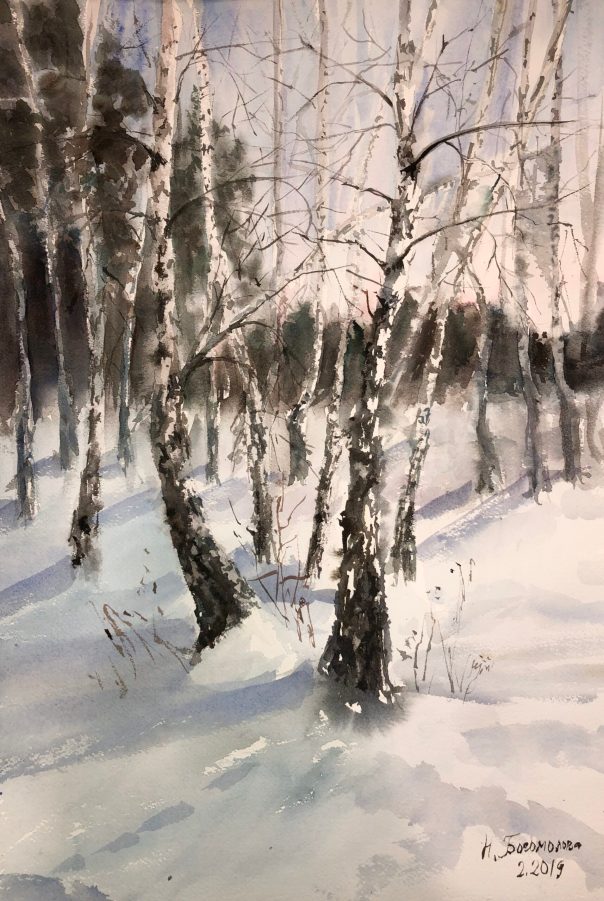
I sought the wood in winter When every leaf was dead; Behind the wind-whipped branches The winter sun set red. The coldest star was rising To greet that bitter air, The oaks were writhen giants; Nor bud nor bloom was there. The birches, white and slender, In deathless marble stood, The brook, a white immortal, Slept silent in the wood.
“How sure a thing is Beauty,” I cried. “No bolt can slay, No wave nor shock despoil her, No ravishers dismay. Her warriors are the angels That cherish from afar, Her warders people Heaven And watch from every star. The granite hills are slighter, The sea more like to fail; Behind the rose the planet, The Law behind the veil.”
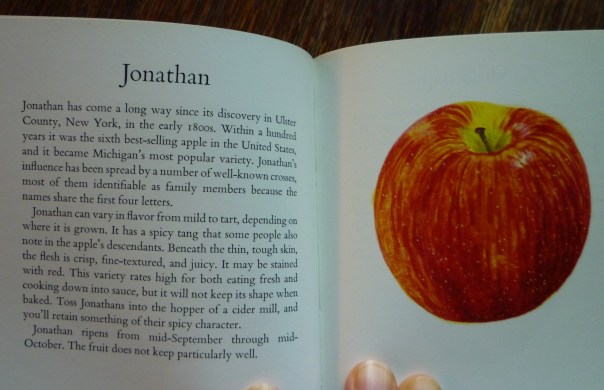
My kitchen and both refrigerators are overflowing with apples right now, as I recently made my annual visit to the apple farm I am so fond of. I’ve made jars and jars of applesauce to put in the freezer, at this point mostly from unpeeled Jonathans, which after it has cooked down and been put into pint jars, makes as pretty and pink a picture as I have ever had a hand in painting. It’s a good time to revisit as well this passage from a favorite novel, which I first shared ten years ago:
– – – – – – – – – – – – – – – – – – – – – –
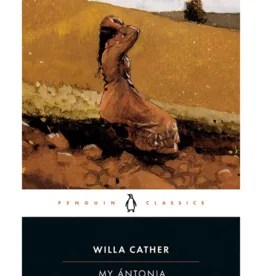
Willa Cather’s novel My Ántonia held a special place in the hearts of both my late husband and me, perhaps in our conjugal heart ? by reason of our sharing the story together more than once, and reading it on our own as well. When I’ve read it aloud it’s not uncommon for me to start sobbing at places in the narrative where the pathos hits home.
I was surprised to see recently a review in which the reader did not enjoy Cather’s writing, saying it was dry and lacking emotion. Those qualities might be why I appreciate her skill at capturing the story and drawing us in. Cather gives us the perspective of Jim, and we experience with him as narrator the various levels on which he is in love with our heroine and all that she represents, and he makes us fall in love with her, too.
Our differing response from the reviewer above probably has something to do with what we bring to the story. Though we haven’t lived in Nebraska or known any Bohemians, perhaps we are like Jim (and Willa Cather) in our grieving for the past, for the lifestyle of the pioneers and their farm life, for the good hardworking people we have lost; as I understand it, that was a theme that reappears in many of her works, but she accomplishes it without what might be called “emotional” prose. Mr. Glad and I both have farming in our roots, and our love for nature and the outdoors (and for people) is only encouraged and expanded by reading books like this.
I thought to transcribe some passages from the book on my blog, representative snatches for my own enjoyment and yours, as a way to savor again some moments from my reading experience, and perhaps introduce people who haven’t yet made friends with these characters and their world.
In the novel, there is no question but that Jim must leave the country life and go away to school and to city life. The passage below is from the last part of the book when he returns many years later for a visit, and I appreciate the way it conveys something of Ántonia’s character and also the mood of this season of the year.
“At some distance behind the house were an ash grove and two orchards: a cherry orchard, with gooseberry and currant bushes between the rows, and an apple orchard, sheltered by a high hedge from the hot winds. The older children turned back when we reached the hedge, but Jan and Nina and Lucie crept through it by a hole known only to themselves and hid under the low-branching mulberry bushes.
“As we walked through the apple orchard, grown up in tall bluegrass, Ántonia kept stopping to tell me about one tree and another. ‘I love them as if they were people,’ she said, rubbing her hand over the bark. ‘There wasn’t a tree here when we first came. We planted every one, and used to carry water for them, too — after we’d been working in the fields all day. Anton, he was a city man, and he used to get discouraged. But I couldn’t feel so tired that I wouldn’t fret about these trees when there was a dry time. They were on my mind like children. Many a night after he was asleep I’ve got up and come out and carried water to the poor things. And now, you see, we have the good of them. My man worked in the orange groves in Florida, and he knows all about grafting. There ain’t one of our neighbors has an orchard that bears like ours.’
“…The afternoon sun poured down on us through the drying grape leaves. The orchard seemed full of sun, like a cup, and we could smell the ripe apples on the trees. The crabs hung on the branches as thick as beads on a string, purple-red, with a thin silvery glaze over them. Some hens and ducks had crept through the hedge and were pecking at the fallen apples.”
When they are traveling around the American Southwest visiting the many and remote parishes in their huge diocese, the French priests in Willa Cather’s Death Comes for the Archbishop often have an Indian companion along. At night they camp on the desert sand. This passage is excerpted from the tale of one such journey:
Kneeling on either side of the embers they repeated their prayer together and then rolled up in their blankets. The Bishop went to sleep thinking with satisfaction that he was beginning to have some sort of human companionship with his Indian boy. One called the Indians “boys,” perhaps because there was something youthful and elastic in their bodies. Certainly about their behavior there was nothing boyish in the American sense, or even in the European sense.
Jacinto was never, by any chance, naïf; he was never taken by surprise. One felt that his training, whatever it had been, had prepared him to meet any situation which might confront him. He was as much at home in the Bishop’s study as in his own pueblo — and he was never too much at home anywhere. Father Latour felt he had gone a good way toward gaining his guide’s friendship, though he did not know how.
The truth was, Jacinto liked the Bishop’s way of meeting people; thought he had the right tone with Padre Jesus, and that he had good manners with the Indians. In his experience, white people, when they addressed Indians, always put on a false face. There were many kinds of false faces; Father Vaillant’s, for example, was kindly but too vehement. The Bishop put on none at all. He stood straight and turned to the Governor of Laguna, and his face underwent no change. Jacinto thought this remarkable.
-Willa Cather
Maybe the Bishop and Jacinto share some qualities of character, and that’s why they appreciate one another. One aspect of Bishop Latour’s character that I see is his humility. In fact, perhaps there is a double meaning in the book’s title: not just the usual meaning of the ending of his earthly life, which we read about in the last pages, but also the little deaths that come to him day by day, not adding up but subtracting bit by bit from the possibility of earthly glory that might have been his, if he had given his fine mind and life to a different life back in France. Instead of fame and accomplishment, he sees defeat on many levels. But he accepts that.
Fr. Stephen Freeman recently wrote in “The Despised God” about the humility of God. He says, “The ‘glory’ of God is not the glory of wondrous success, shining fame and an incomparable reputation. Instead, we are told that we behold the glory of God ‘in the face of Jesus Christ.’… The crucifixion of Christ for Paul is more than an event that accomplishes salvation – it is an event that reveals Him in His fullness.”
“For many, such meekness in Christ is treated as something of a disguise, or a temporary work for the purpose of salvation. They all too quickly turn away from this understanding to assert that ‘He will come again in glory to judge the living and the dead!’ But there is nothing to indicate that the definition of glory is somehow being altered for the sake of the Second Coming. As for the imagery of the Revelation of St. John, it should be read through the Cross rather than used as a corrective for the Cross.
“… the friends of God are foolish, weak, base and despised. That is the narrow way. Interestingly, it is a way that is the most open for all to walk. We need not be wise, strong, and well-thought-of. It turns the world upside-down and our lives along with it.
“Right now the world is desperate for a few fools.”
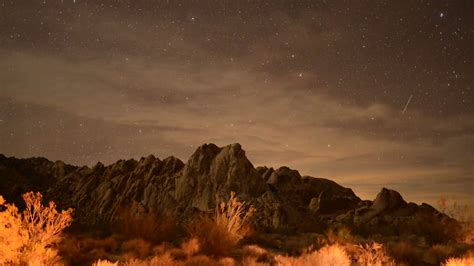
I’ve read Death Comes for the Archbishop by Willa Cather three times, including an audio recording narrated by David Ackroyd which I only recently completed. These three readings were so far apart that each time seemed a fresh introduction to the characters and the setting. And yet, I do think that the first two readings helped to form a love in my soul for the Southwest territories of the United States, so that this third time I found it there waiting for me, like the warm sand beneath a red rock butte, a place where I might bed down for the night under the stars and feel whole.
Ackroyd’s voice and narrative style seem perfect for the story. There is a steadiness and a lack of hurry that aligns with the faithful dailiness of the lives of the two missionary priests as they try to meet the spiritual needs of a vast diocese that had just enlarged by nearly 30,000 square miles with the Gadsden Purchase.
They are based in Santa Fe, New Mexico, but make frequent trips by horse or mule of hundreds and thousands of miles, even into Old Mexico, to take care of ecclesiastical affairs, to baptize babies and perform marriages, and to serve Mass. Their characters are sympathetic and rich; the story of their friendship over the decades is a thread woven through the novel, made up of small stories scattered through the years.
I’m using this audio book now the way I have two or three others in the last years since I sleep alone, for the times when I don’t sleep. I put a well-known story to play on my phone, set the timer for 30 minutes, and let David or another nice person read me to sleep. This only works with voices that do not draw attention to themselves in various ways, usually by being overly dramatic.
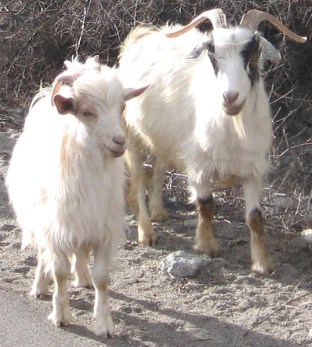
That means I am reading/listening to the book, based on a true story by the way, a fourth time. Because every anecdote and scene seems more luminous and meaningful than ever when it is told or described by a warm human voice, I may post here some passages that appear plain and dry to you poor people who may never have breathed the air of New Mexico or seen the Arizona desert in bloom. But today, it’s only goats we will consider, and I imagine that they are goat-ish the world over.
“After the feast the sleepy children were taken home, the men gathered in the plaza to smoke under the great cottonwood trees. The Bishop, feeling a need of solitude, had gone forth to walk, firmly refusing an escort. On his way he passed the earthen threshing-floor, where these people beat out their grain and winnowed it in the wind, like the Children of Israel.
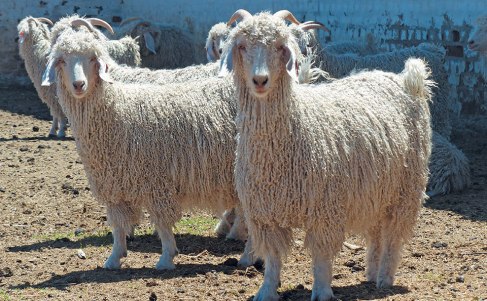
“He heard a frantic bleating behind him, and was overtaken by Pedro with the great flock of goats, indignant at their day’s confinement, and wild to be in the fringe of pasture along the hills. They leaped the stream like arrows speeding from the bow, and regarded the Bishop as they passed him with their mocking, humanly intelligent smile. The young bucks were light and elegant in figure, with their pointed chins and polished tilted horns. There was great variety in their faces, but in nearly all something supercilious and sardonic. The angoras had long silky hair of a dazzling whiteness.
“As they leaped through the sunlight they brought to mind the chapter in the Apocalypse, about the whiteness of them that were washed in the blood of the Lamb. The young Bishop smiled at his mixed theology. But though the goat had always been the symbol of pagan lewdness, he told himself that their fleece had warmed many a good Christian, and their rich milk nourished sickly children.”

 Our differing response from the reviewer above probably has something to do with what we bring to the story. Though we haven’t lived in Nebraska or known any Bohemians, perhaps we are like Jim (and Willa Cather) in our grieving for the past, for the lifestyle of the pioneers and their farm life, for the good hardworking people we have lost; as I understand it, that was a theme that reappears in many of her works, but she accomplishes it without what might be called “emotional” prose. Mr. Glad and I both have farming in our roots, and our love for nature and the outdoors (and for people) is only encouraged and expanded by reading books like this.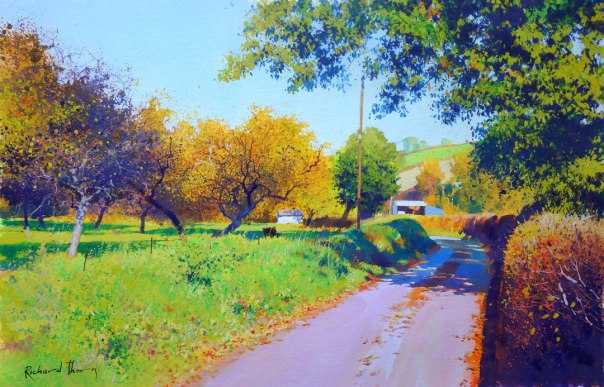



 I’m using this audio book now the way I have two or three others in the last years since I sleep alone, for the times when I don’t sleep. I put a well-known story to play on my phone, set the timer for 30 minutes, and let David or another nice person read me to sleep. This only works with voices that do not draw attention to themselves in various ways, usually by being overly dramatic.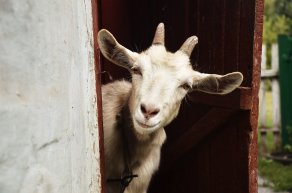
 Gladsome Lights