Monthly Archives: April 2013

I want to become a stronger swimmer.

A view from our front yard

As a man whose head is under water cannot inhale pure air, so a man whose thoughts are plunged into the cares of this world cannot absorb the sensation of the world to come.

                       ~St. Isaac the Syrian

I’ve definitely had that underwater feeling lately — so I was relieved to take part in a lenten service at church today, one designed to clear the head of transitory concerns. During Communion in the time of Lent, we sing lovely meditative hymns to the words, “O taste and see that the Lord is good.”

Because that world St. Isaac speaks of comes to us in the Eucharist. We breathe the pure and sweet air of the Holy Spirit, a taste of the world to come and tonic to strengthen us for the labors of this world.

Mr. Glad and I have all sorts of busyness on our plates these days, and much of it is of a proper and happy kind, helping and loving people. But there is the other sort, as when one’s computer crashes and requires hours of trouble transporting, repairing, restoring. For me that’s the sensation of drudgery.

There’s the fence that falls down and needs replacing, which means hours of talking to the neighbor and the lumber store, and more hours actually tearing out the old and putting in the new. This kind of work often blends into another: The old bodies of us humans wear out and need more frequent maintenance, trips to the chiropractor or pharmacy.

It’s helpful that the melody of the “taste and see” hymns stick in my mind pretty well, so I can remember and come up for a gulp of that Air of Life, Sweet Jesus. I may not be walking on water, but I’m not drowning.
Sweet Dreams and Blue Eyes

I relived one of the literally sweetest experiences of my childhood yesterday and I didn’t even have to journey the five hours back “home” to the groves my father used to tend so lovingly. We Glad gardeners visited a local nursery just to get one replacement plant for our project of last fall.

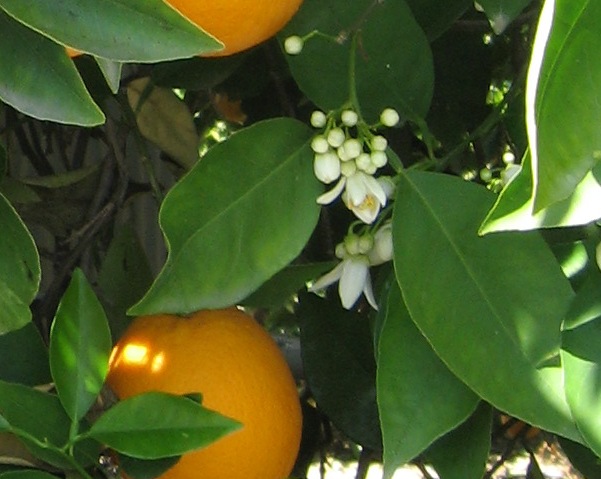
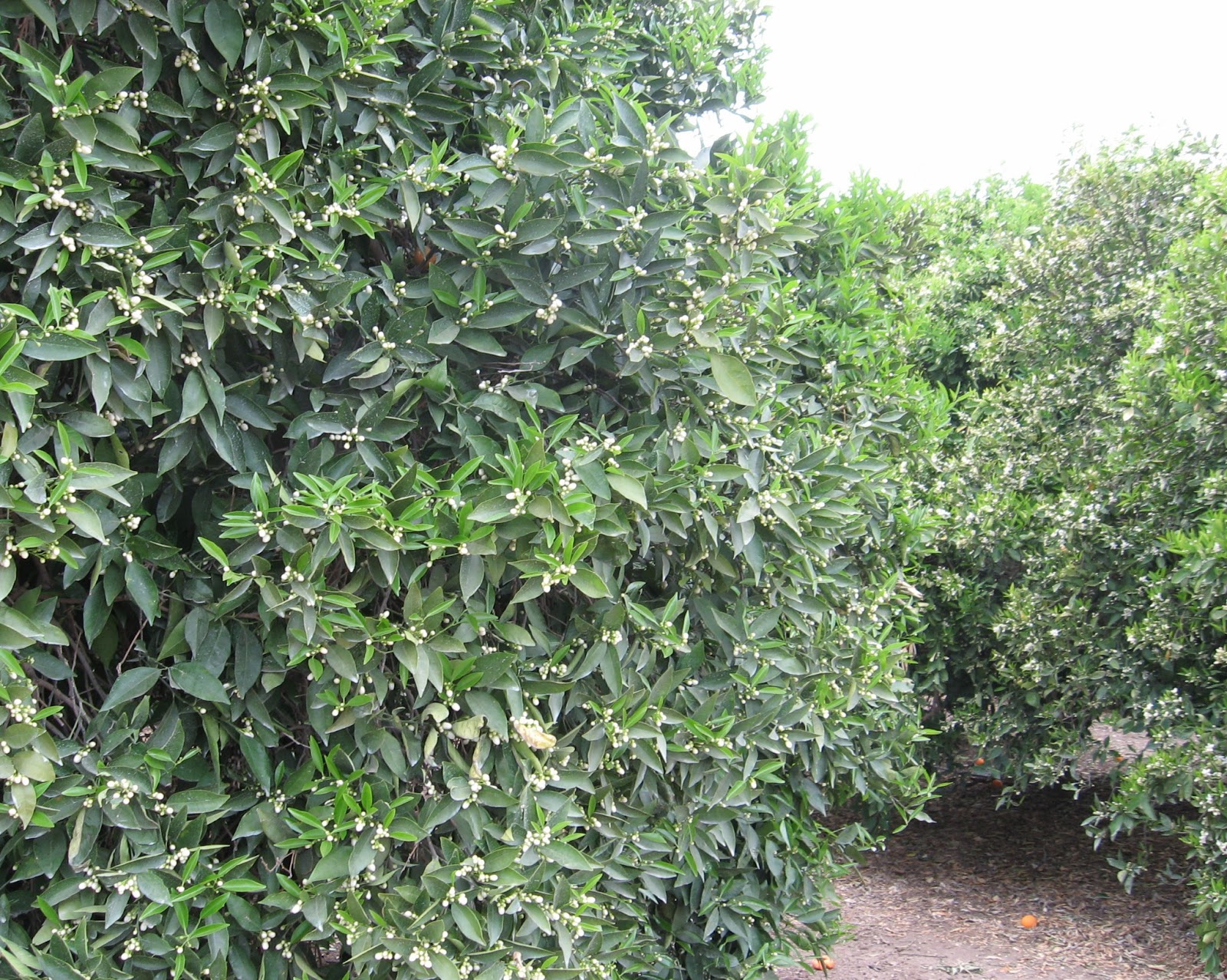
navel oranges in bloom

We were looking for a helianthemum, and they are in the area in back of the store, so we passed through the breezeway and were suddenly enveloped, not in a breeze but in a stillness heavy with fruit and flowers.

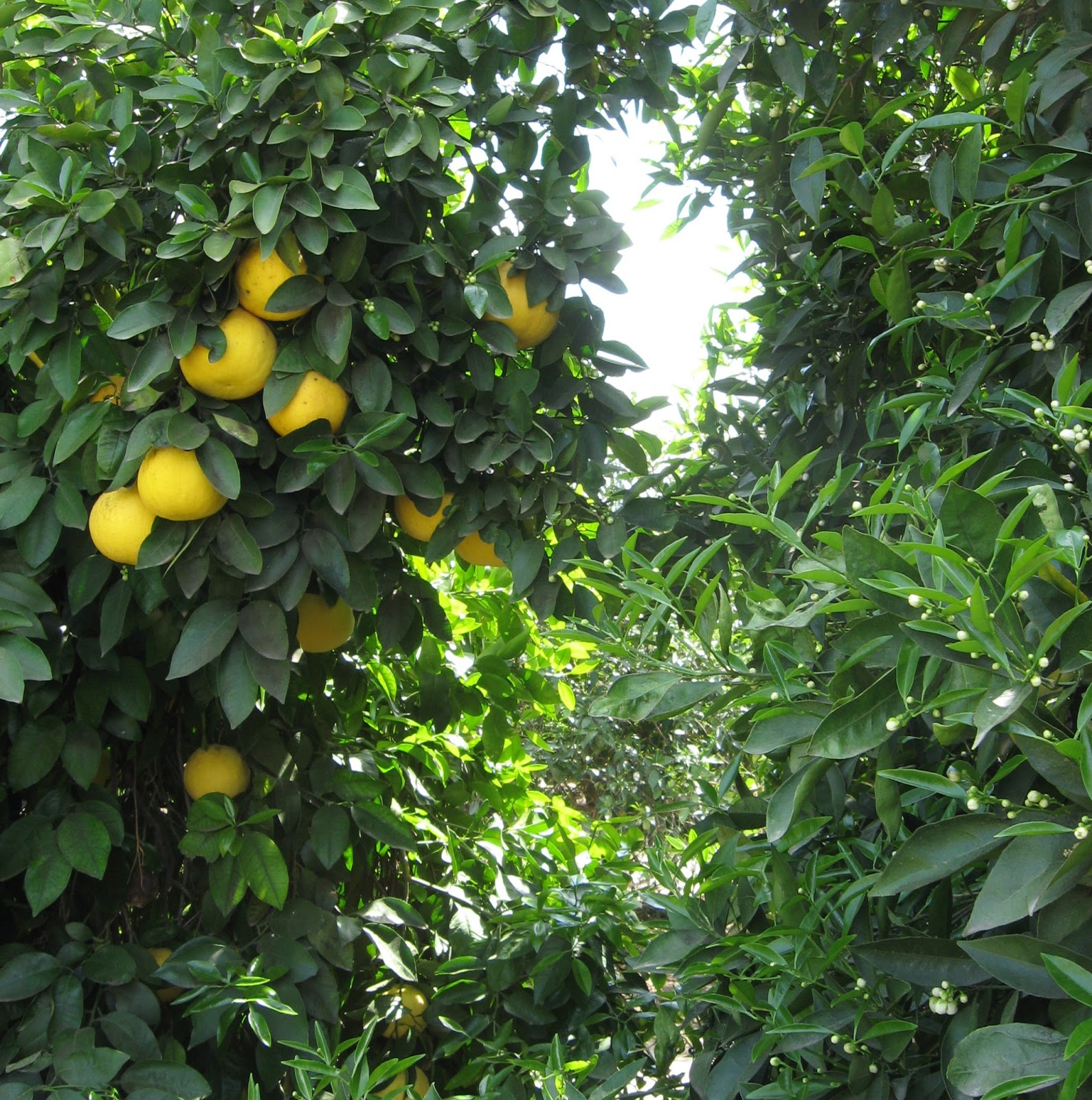
Overlapping rows of pots containing various citrus trees, including many oranges and mandarins, lined the alley and were exhaling their essence into that space. For me it was a whiff of the deep past, springtimes slowed down to a dream — orange trees taking their sweet time and confusing the mind, because isn’t springtime when everything and everyone is waking up and getting busy…?… but this air is like a drug that makes me want to lie on the grass and let my eyelids droop.

grapefruit and orange trees side-by-side

Our house was surrounded on all sides by orange trees, so that for many weeks every year we walked around in our own tropical island of scent. Can you imagine living in that house and being allergic to orange blossoms? Two family members were — and I pity them mightily, because orange blossoms are one of the happiest things in the data bank of my senses.

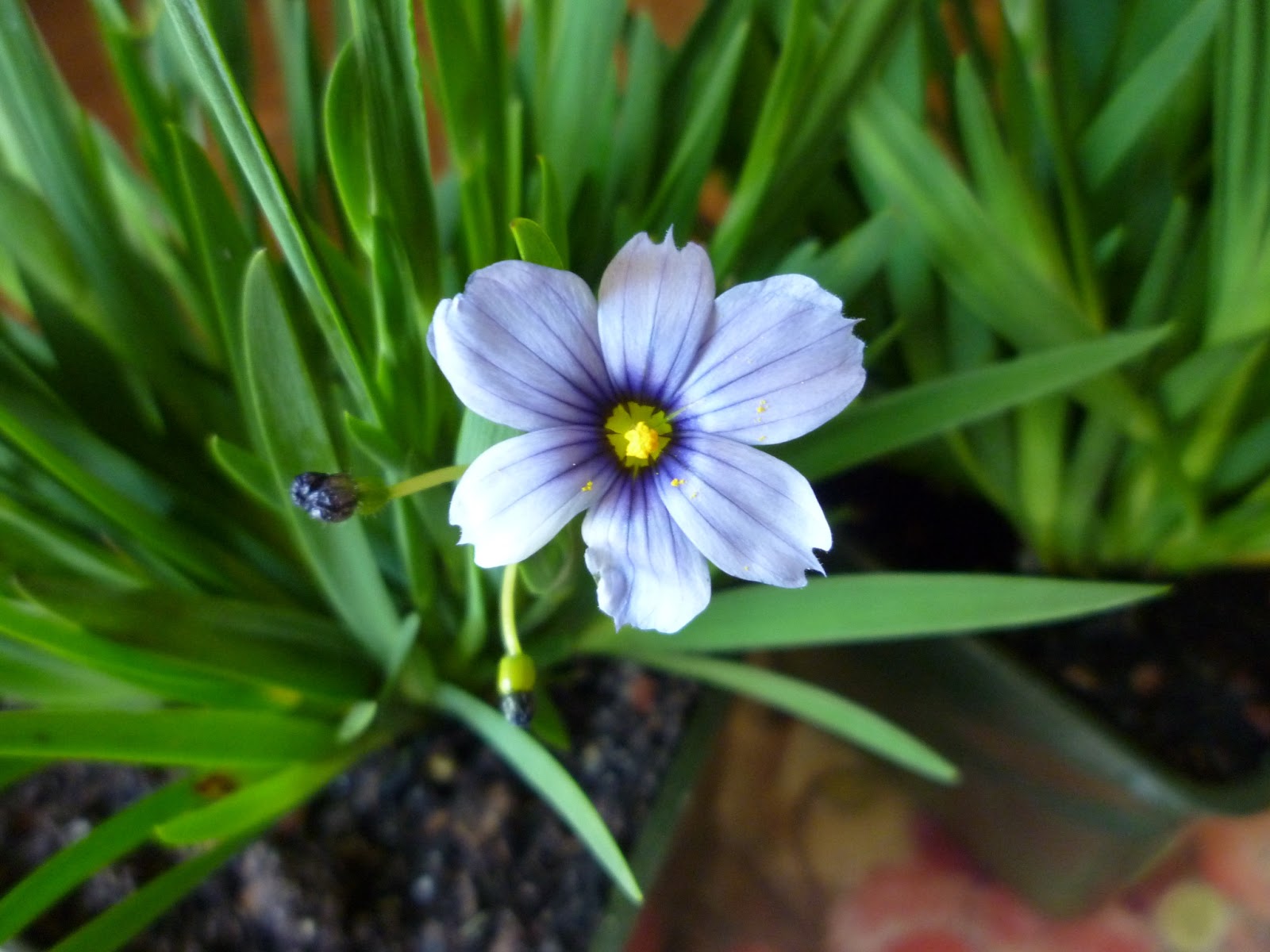
My husband and I had only a few minutes to find our plant, so I couldn’t linger, I quickly pushed on through to the shelves of California native plants and other drought-tolerant species. Our first choice wasn’t there, but we found this:

I had luckily forgotten my Western Garden Book in the car so I had to make two more passes through the little paradise to retrieve it. Then we read a bit together about the above plant and some other offerings.

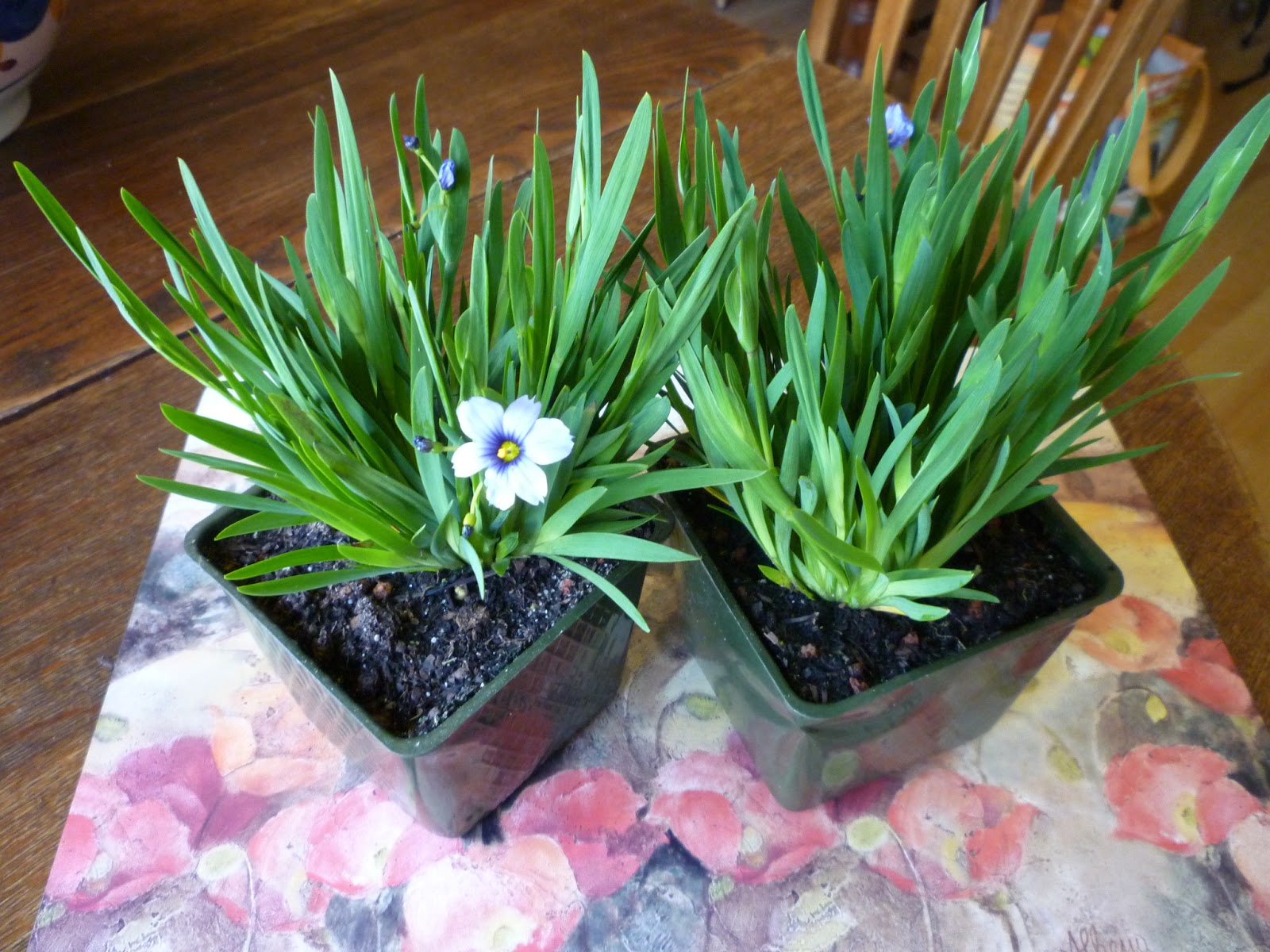
In the end we did decide on this dear low-growing plant, a newish species of Blue-eyed Grass, developed from a California native, and sufficiently xerophytic for our needs. I remember my friend May showing me one of these wildflowers decades ago as we hiked in the Coast Ranges of our state. They aren’t really grasses but are actually in the Iris family, which seems obvious now that I know it.

new planting last October

Except for the one that died, all the plants of our project shown at right are bigger now, but there’s still a lot of space to be filled in.

I can’t settle on which is more fun as a name, Sisyrinchium or Blue-eyed Grass. This is the first we’ve ever had them in our yard, and as you can see, we bought two, because they are small. I planted them tonight, where a blue penstemon, actually two, one after the other, had died last year. I hope to have nice photos of them and the whole bed to show in the future.


And before the citrus bloom is past I will return to that nursery when I have time enough time to wander. I’ll consider the snapdragons in the back, and then the perennials in the front, and I’ll go back and forth through the citrus tree lane at least a few times. I’ll walk slowly each time past the mandarins and Meyer lemons and orange trees and sip my sweet daydream.

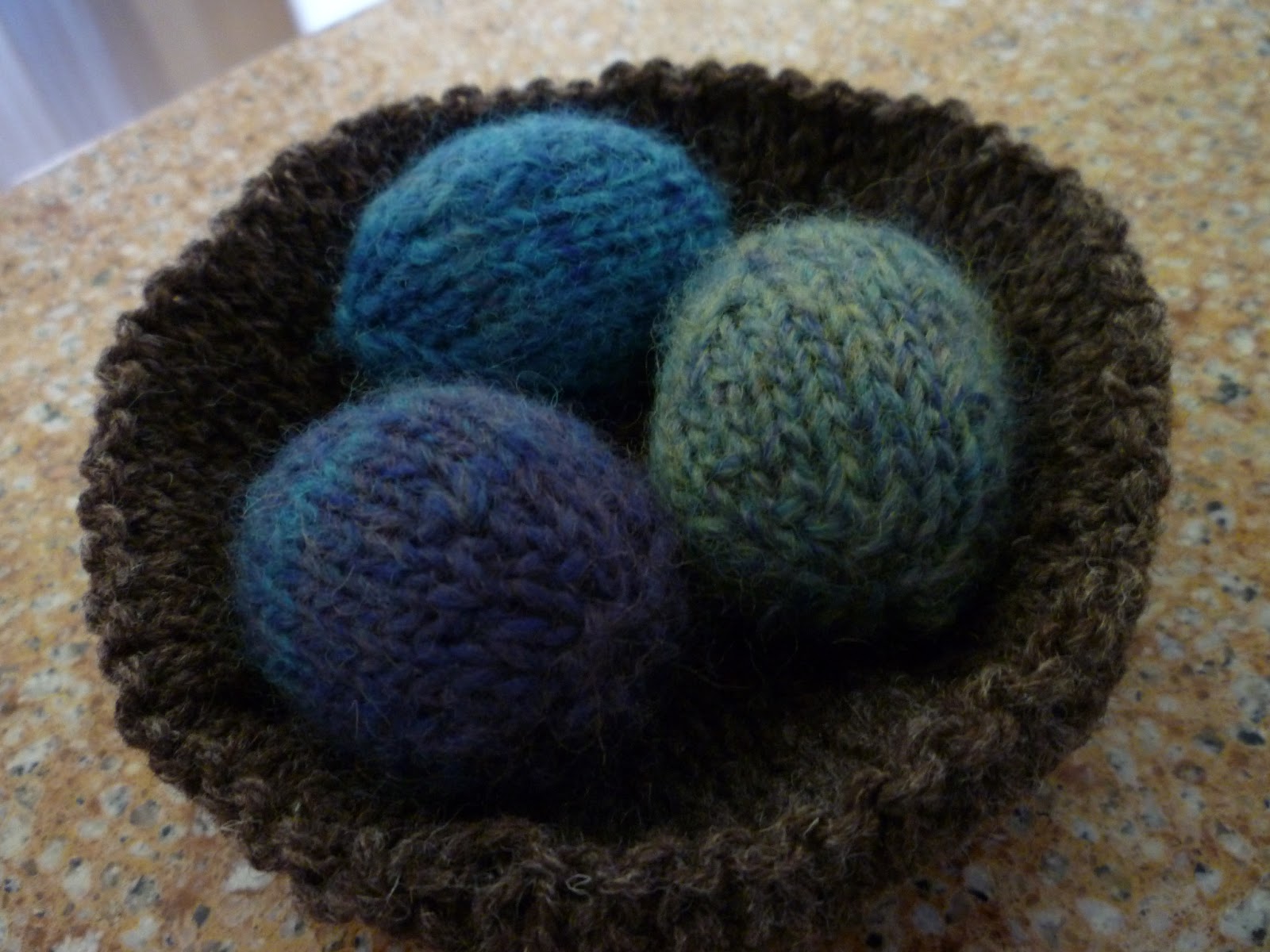
I pose my nest among flowers.

When the latest birthday package came in the mail I was alone in the house. I unwrapped the tissue paper knowing already that the gift inside had been handmade by my daughter-in-law Joy. It appeared to be something very small and lightweight….and then out came a knitted nest of eggs! The beauty of them and the love that had been expressed by the patient labor…my hands actually began to shake — lucky these eggs are soft and comfortable and not brittle.

I began to pose my new toys around the house, and then went outdoors to find a natural setting too. Every day it seems there is a new flower somewhere, so I had lots of choices of where to plant my nest.

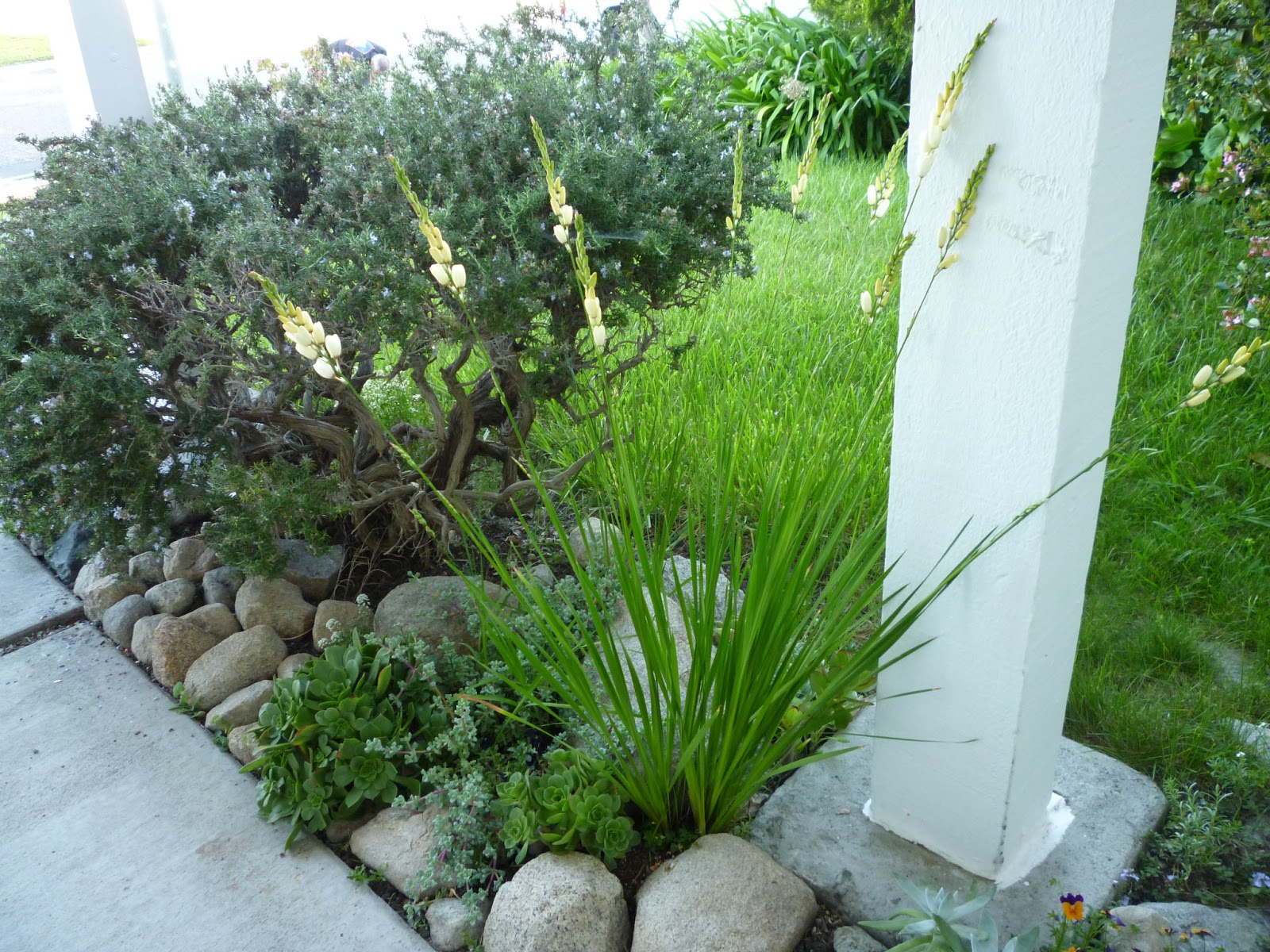
I don’t remember what these tall spiky flowers are; they grow from bulbs I planted a few years ago. They are striking for a couple of weeks, but then the flowers get too heavy and the stalks lie down on the sidewalk by the front door.

So we should enjoy them right now at their peak, before they get annoying. If you enlarge the photo above you might see Mr. Glad’s bent back, beyond the rosemary bush at the top.

And a glimpse of Johnny Jump-Ups and various other little blooms behind this close-up.

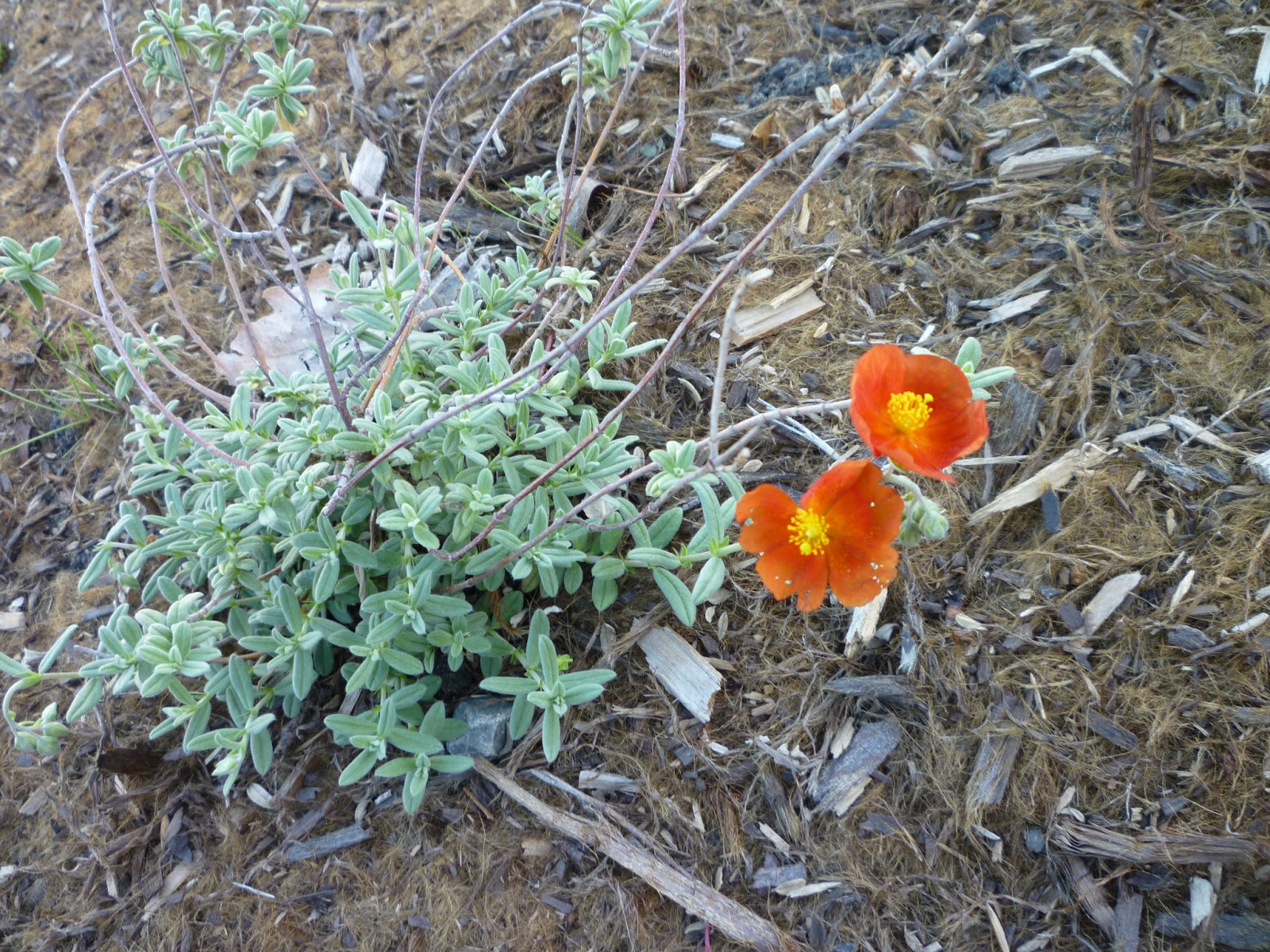
A happy discovery was that the helianthemum I have been nursing along for almost two years has finally bloomed! I know it does still look a bit scraggly but I am greatly encouraged. I think it is named Henfield Brilliant.

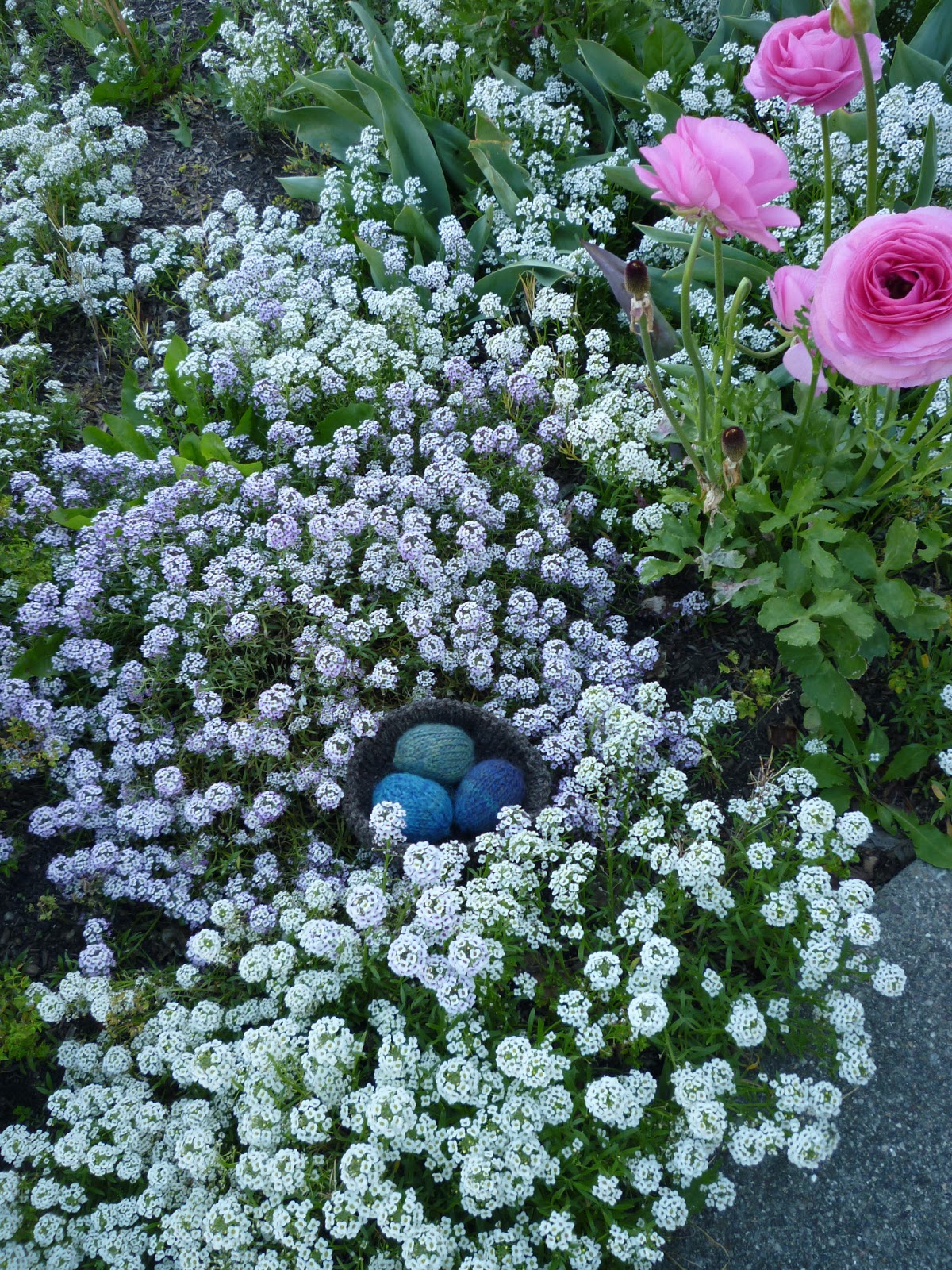
Eventually I took a picture of my birthday eggs nestled among the simple alyssum flowers. Then I brought them back indoors to be the near-perfect springtime table decoration. They would be completely perfect if they didn’t make me miss the dear gift-giver herself. Thank you, Joy!

Blowing over tulips and into turbines…

When the spring winds blow, the howling through the trees and the chimes of the patio bells drown out the call of the garden so that I can listen to the world’s discussions on many matters, including — wind! Wind power, to be precise, and wind farms.

I had no idea that those scatterings of wind turbines on the Altamont Pass east of San Francisco were called farms. When a new turbine is installed they even call it a planting. Altamont is the wind farm I am most familiar with, but now I’ve seen photos of much more beautiful and even brilliant settings for these harnessers of wind energy, such as tulip fields in The Netherlands.

Turbines neatly lined up along a canal or placed here and there among what is primarily a tulip farm don’t impress me the way they do when spread over hills that would ordinarily be drab without them. In those cases, like the slopes in California that in summer turn golden brown — or a brown that is just plain dull — the wind turbines grace the slopes with dynamic art.

I haven’t taken the time to exit the freeway and drive to a good vantage point, but I think that one man who did got some lovely pictures that capture the beauty. The most artistic photographs cost more than I’m willing to pay for permission.

Several colorful photos are on the Pattern Energy site, gorgeous shots of their turbines at installations in Manitoba, Nevada, California and Texas. And some of these pages I’m linking to tell the stories of wind farm controversy in more depth than I will, so you might like to visit them for that reason, too.

The problem with the turbines is that they kill birds. The ones on the Altamont Pass kill more raptors than any other wind farm in the world, including the protected Golden Eagles, of which the world’s largest breeding population lives in this area.

This article explains that worldwide the deaths from wind turbines are a small fraction of total bird deaths from run-ins with man-made structures such as office buildings, power lines and our houses; who hasn’t experienced the dismay of hearing a small bird hitting – whack! – against a window? Even nuclear and fossil-fuel plants kill more birds than these converters of wind energy.

But it has been found that the more modern wind turbines, which are taller and slower, kill a much smaller number of raptors. So the old ones are being replaced. Bird and bat mortality are the topics of this site, annoyingly formatted but with useful links and an explanation of why Altamont wind turbines have been particularly deadly for birds.


Driving along Interstate 5 in California, we more than once have passed a truck carrying one turbine blade. These things are huge!

Here is a photo of a “re-planting” of a turbine.

If I were to take a trip past those fields of wind turbines this month the scene might be greener and wetter, something like this.

The labor and intelligence of mankind that is applied to growing tulips results in a product that gives delight to millions of people. The wind turbine is an elegant result of technology, a thing of beauty in itself for its simplicity of design, but also as a symbol of man working with nature and using the gifts of the Creator. Thanks to God for putting some of His own creativity into us His creatures. May the glory go to Him.