Orthodox Christian, widowed in 2015; mother, grandmother. Love to read, garden, cook, write letters and a hundred other home-making activities.
View all posts by GretchenJoanna →
“Theology means the word about God. Theology is therefore ALL or nothing. The whole of nature and the super-nature and the subternature IS ALL theology; all man and every part of him is theology; every meadow and every flower is theology; Sirius and the Milky Way, nebulae and meteors are theology; the history of the planet and the history of the people, the history of radioactivity and the history of every butterfly, and of every grain of sand, and of every drop of water, and of every ray of light are theology.
“If the whole of nature is not theology, then theology is nothing or nature is nothing. If the whole of nature does not speak about God, who will believe Isaiah or Paul? If the whole of the world around is a wilderness, what can the voice of one prophet crying about God in that wilderness accomplish? If the whole universe does not speak of God, who can without contempt hear the words of one man?”
Joseph Brodsky was born in St. Petersburg, what was then Leningrad, in 1940. He writes in the first, title essay of his book, about his generation in postwar Soviet Russia, how they were “somewhat spared” the full experience of what their country had become: a “drab hell, with a shabby materialist dogma and pathetic consumerist gropings.”
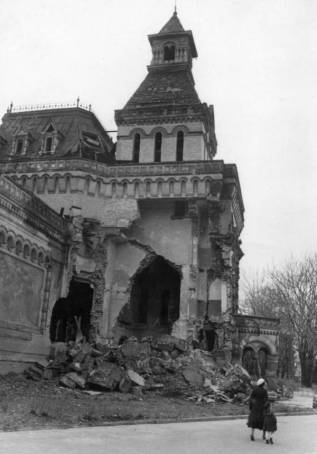
“We emerged from under the postwar rubble when the state was too busy patching its own skin and couldn’t look after us very well. We entered schools, and whatever elevated rubbish we were taught there, the suffering and poverty were visible all around. … The empty windows gaped at us like skulls’ orbits, and as little as we were, we sensed tragedy. … The amount of goods was very limited…. we didn’t develop a taste for possessions. Things that we could possess later were badly made and looked ugly. Somehow, we preferred ideas of things to things themselves….”
I can’t help comparing the cultural environment in which Brodsky came of age to that of the generation currently in their teens and twenties. When those young people in Leningrad were trying to survive the privations at every level of their being, they didn’t have the option of comforting themselves with marijuana or escaping to the metaverse. Their daily life didn’t include such diversions as shopping at the mall for the current fashions in jeans or phones. What they did have was books:
“If we made ethical choices, they were based not so much on immediate reality as on moral standards derived from fiction. We were avid readers and we fell into a dependence on what we read. Books, perhaps because of their formal element of finality, held us in their absolute power. Dickens was more real than Stalin or Beria. More than anything else, novels would affect our modes of behavior and conversations, and 90 percent of our conversations were about novels. It tended to become a vicious circle, but we didn’t want to break it.
“In its ethics, this generation was among the most bookish in the history of Russia, and thank God for that. A relationship could have been broken for good over a preference for Hemingway over Faulkner; the hierarchy in that pantheon was our real Central Committee. It started as an ordinary accumulation of knowledge but soon became our most important occupation, to which everything could be sacrificed. Books became the first and only reality, whereas reality itself was regarded as either nonsense or nuisance. Compared to others, we were ostensibly flunking or faking our lives. But come to think of it, existence which ignores the standards professed in literature is inferior and unworthy of effort. So we thought, and I think we were right.”
-Joseph Brodsky, Less Than One
This passage gives me a clue as to a question I’ve had about Brodsky: How, born a Jew and growing up under atheist Communism, did he come to be a “Christian poet”? Not only does he say (quoted in a previous post about him) that he tries to be a Christian, but Wikipedia tells us:
Daniel Murphy, in his seminal text Christianity and Modern European Literature, includes Brodsky among the most influential Christian poets of the 20th century, along with T. S. Eliot, Osip Mandelstam, Anna Akhmatova (Brodsky’s mentor for a time), and W. H. Auden (who sponsored Brodsky’s cause in the United States). Irene Steckler was the first to categorically state that Brodsky was “unquestionably a Christian poet”.
What the writer tells us about this education he and his friends got for themselves shows the power of the vicarious experience that can be had from reading good stories. The best books helped them to endure the “nonsense or nuisance” of totalitarian society, and at the same time gave them a broad, universal understanding of Reality. What a blessed bookishness; as Brodsky says, Thank God for that.
St. Gabriel Fool-for-Christ of the Republic of Georgia fell asleep in death on this day in 1995. That is a modern saint! I was advised last year to “get to know” St. Gabriel, and one way I’ve learned about him was through the several videos about his life, which include a multitude of stories from people who knew him well.
Gabriel served in the Soviet army as a youth, and later was tonsured a monk. He became famous in Georgia when on May 1, 1965 he set fire to a giant poster of Lenin at a Worker’s Day parade. That prompted his arrest, confinement in a mental hospital, and torture for seven months.
This movie about St. Gabriel is a very good one, which I never get tired of watching: “I Am Waiting for You at Samtavro;” it gives many details about his life and has the English translation dubbed in. His sister, his doctor, priests and monastics and others share about the love and miracles they experienced through his life and intercession before and after his repose. In the last ten years he has been recognized as a saint by the Georgian Church and then more widely throughout the world. From the movie narration:
“The saint and god-pleaser Gabriel is not only a great intercessor before God, but at the same time he is a role model for us on earth. His whole life was composed of great and brotherly love and it continues after his blessed repose. Being in the light of the Holy Trinity, Elder Gabriel is with us in an invisible, and sometimes visible way. He strengthens people in the faith and guides everyone, showing them the right path, cheering them up, and instilling hope.”
On the uncovering of the relics of Elder Gabriel of Georgia; photo by Zetalion.
George MacDonald’s Diary of an Old Soul is a long poem with seven lines for each day of the year. You can find the whole thing at Project Gutenberg. Here are just the first five days/stanzas of “November,” in which MacDonald so richly describes the situation we often find ourselves in, our hearts weary and plodding, and our thoughts dull. He prays for strength to face the darkness, and to find Christ in it.
1. THOU art of this world, Christ. Thou know’st it all; Thou know’st our evens, our morns, our red and gray; How moons, and hearts, and seasons rise and fall; How we grow weary plodding on the way; Of future joy how present pain bereaves, Rounding us with a dark of mere decay, Tossed with a drift Of summer-fallen leaves.
2. Thou knowest all our weeping, fainting, striving; Thou know’st how very hard it is to be; How hard to rouse faint will not yet reviving; To do the pure thing, trusting all to thee; To hold thou art there, for all no face we see; How hard to think, through cold and dark and dearth, That thou art nearer now than when eye-seen on earth.
3. Have pity on us for the look of things, When blank denial stares us in the face. Although the serpent mask have lied before, It fascinates the bird that darkling sings, And numbs the little prayer-bird’s beating wings. For how believe thee somewhere in blank space, If through the darkness come no knocking to our door?
4. If we might sit until the darkness go, Possess our souls in patience perhaps we might; But there is always something to be done, And no heart left to do it. To and fro The dull thought surges, as the driven waves fight In gulfy channels. Oh! victorious one, Give strength to rise, go out, and meet thee in the night.
5. “Wake, thou that sleepest; rise up from the dead, And Christ will give thee light.” I do not know What sleep is, what is death, or what is light; But I am waked enough to feel a woe, To rise and leave death. Stumbling through the night, To my dim lattice, O calling Christ! I go, And out into the dark look for thy star-crowned head.

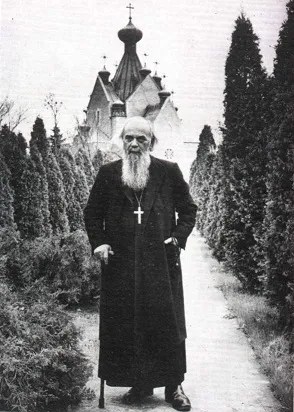 “Theology means the word about God. Theology is therefore ALL or nothing. The whole of nature and the super-nature and the subternature IS ALL theology; all man and every part of him is theology; every meadow and every flower is theology; Sirius and the Milky Way, nebulae and meteors are theology; the history of the planet and the history of the people, the history of radioactivity and the history of every butterfly, and of every grain of sand, and of every drop of water, and of every ray of light are theology.

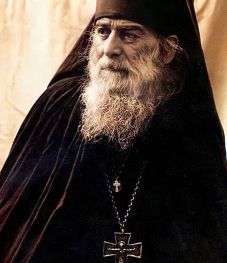 St. Gabriel Fool-for-Christ of the Republic of Georgia fell asleep in death on this day in 1995. That is a modern saint! I was advised last year to “get to know” St. Gabriel, and one way I’ve learned about him was through the several videos about his life, which include a multitude of stories from people who knew him well.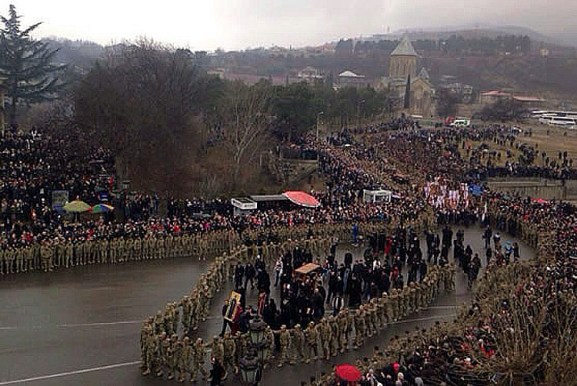

 Gladsome Lights