I already own a book on architecture that is just at my level, The Architecture of Happiness. But reading on the internet tempts me to explore many different realms… further than I actually want to go, when it comes right down to it.
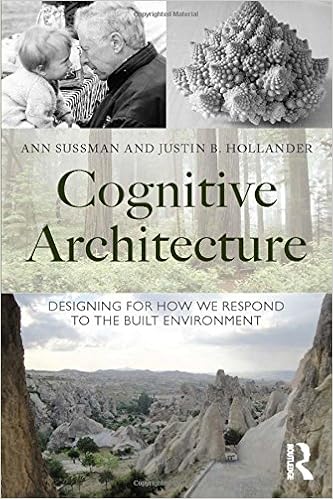 Something I read back in the fall made me want to see the book Cognitive Architecture, by Sussman and Hollander, and my library’s “Link” feature helped me to get it, from southern California. It came in just before Christmas, and just before I needed clear away piles of books and papers, seeds and seed catalogs, to make space for a few Christmas decorations.
So I barely glanced at it, and quickly put it…. somewhere. I was pretty sure it was upstairs, probably in my bedroom, and when I found it last week — after looking everywhere several times over the last month — it was in an odd little stack of things, with a prayer book and a Christmas card and other unrelated stuff. One reason I hadn’t seen it earlier was that it was so much smaller than I remembered it.
:max_bytes(150000):strip_icc():format(webp)/__opt__aboutcom__coeus__resources__content_migration__treehugger__images__2018__04__P1020567-4b1e40c7b5a84be685ca9034185d7476.jpg)
So small, my immediate thought was, maybe I could actually get through this book! Even though I’ve sort of moved on and my current goal is to whittle down the number of half-finished books I already have, without adding more.
So I only browsed, and it is pretty interesting, about designing buildings for the way people live and behave, the sort of “animal” that humans are. One example is, that people in cities are known to like to walk or congregate on the edges of open spaces or streets, near buildings or walls, so that the buildings “have their backs.” But not so much if the building is turned in on itself and doesn’t seem open to the people, with low windows, for example, for easy window shopping. An example of a space not conducive to this protected and friendly feeling is the Boston City Hall Plaza, which is known as an unloved space and is up for renovation:


It is known that people prefer not to climb stairs if they can avoid it. I know that doesn’t apply to toddlers. This is my neighbor Grace who was enjoying going up and down my front steps this afternoon.
I discovered that one of the authors, Ann Sussman, has co-authored a fascinating article, “The Mental Disorders that Gave Us Modern Architecture”!
Many of the other points of human-centered design were not new to me. I had learned a lot from De Botton’s book, and I also have this one that Pippin gave me, in which I can browse actual buildings and their architects, which is more appropriate for me, who am not considering a career in  design.
I wonder if I have other books I could write about without having read them, and in that way get some satisfaction from my failures…? I’ve enjoyed making use of this one to organize the Architecture compartment of my mind, and I found a pleasing poem in it as well:
THINGS
What happened is, we grew lonely
living among the things,
so we gave the clock a face,
the chair a back,
the table four stout legs
which will never suffer fatigue.
We fitted our shoes with tongues
as smooth as our own
and hung tongues inside bells
so we could listen
to their emotional language,
and because we loved graceful profiles
the pitcher received a lip,
the bottle a long, slender neck.
Even what was beyond us
was recast in our image;
we gave the country a heart,
the storm an eye,
the cave a mouth
so we could pass into safety.
-Lisel Mueller



 Did I tell you I have been reading The Aviator by Eugene Vodolazkin? I have the audio as well as the print format. The possibility of sinking into that book makes me look forward to any longer drive to anywhere. I can’t concentrate on a book, lecture, etc. while doing anything else at home; even while driving, I can only attend well while following a familiar route. I make frequent use of the rewind button (Is there another word for that now that there is no actual winding involved?), including at times when I have to concentrate more, as at an intersection, and briefly lose the thread of the story.
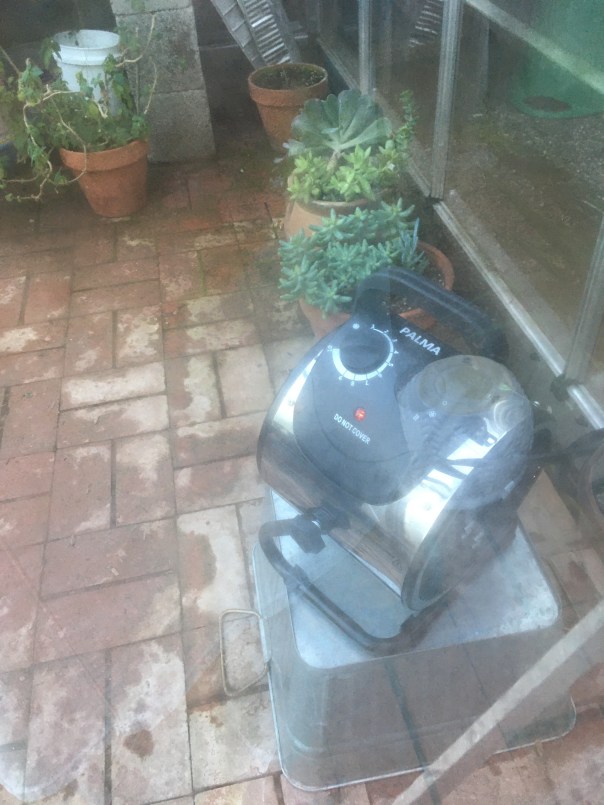
 My garden suffered what may be the worst cold it will have to endure this winter, just two days ago. I know it was several degrees of frost — and this area has had a winter or two in the last decades without even one freeze; it rarely gets down to 20 degrees. By the time that morning’s weather test occurred, I had been doing my own trials of the new greenhouse equipment, necessitating a few emergency visits in my nightgown at 2:00 or 3:00 a.m., to adjust the thermostat. So everything was okay in there. And you know, collards get sweeter by suffering frost.