All posts by GretchenJoanna

Unknown's avatar

About GretchenJoanna

Orthodox Christian, widowed in 2015; mother, grandmother. Love to read, garden, cook, write letters and a hundred other home-making activities.

We would have been destroyed.

“The good thing is that God does not abandon us. Our Good God is guarding the world with both hands. In the past, He used only one. Today we face so many dangers….”

“Things are really bad… May God help us! It is like a mother whose children have all kinds of problems. One is cross-eyed, another is slow, and yet another is difficult to handle. Then on top of that, she has to care for the neighbors’ children so that they don’t climb up somewhere and fall down, or find a knife and get cut, or hurt one another. And she must be constantly on the watch, vigilant and attentive, while they have no sense of her anguish and worry. It’s the same with our world. People do not understand that it is God Who is helping us. With all the dangerous devices available to us, we would have been destroyed many times were it not for His help….”

“If you only knew how much the devil hates humanity and wants to annihilate us! How easily we forget who our enemy is! Do you know how many times the devil has wrapped his tail around the world and tried to destroy it? But God has not allowed it. He ruins his plans. When the devil tries to cause harm, God takes the evil and turns it into good. The devil may be ploughing the field now, but in the end it is Christ Who will sow the seeds.”

-St. Paisios of Mount Athos

That fiery quality.

I love the little skippers. I had forgotten until I looked it up again just now, that the type playing among my salvia flowers is the Fiery Skipper. Which makes me think I should mention the currently fiery conditions in California. I am glad to tell you that my situation is still low-risk. But the smoke has been more constant the last week; I suppose it blows in here from various fires, but I don’t keep abreast of their details on even a daily basis. I just looked for an update, but there are so many burns making up the various fire complexes, it’s a lot to keep track of. Especially when acronyms generally are so hard for me to remember.

When I start to look up the fires in the Santa Cruz Mountains, I cannot for the life of me remember that those are not part of the SCU Complex, but rather the CZU Complex. “The SCU Lightning Complex Fire is composed of 20 separate fires in San Joaquin, Stanislaus, Santa Clara, Alameda, and Contra Costa counties.” The LNU Complex spreads over six counties. See how it is? And I haven’t tried to learn anything about the fires beyond those three, in other parts of our huge state.

Wines of the 2020 vintage from northern California might be interesting: “The early fires pose a threat if they persist and heavy smoke blankets the region for several days before grapes are picked. That can lead to ‘smoke taint,’ an undesirable burnt taste in wine made from grapes with skins permeated by smoke.”

In some areas, as below, with San Francisco Bay close to the middle, the burn scars are so large they can be seen in satellite images.

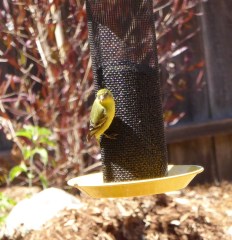
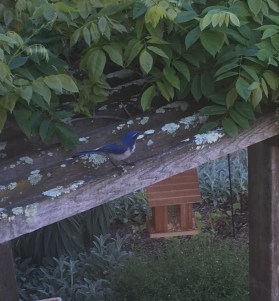
What is it like for the birds and the tiniest creatures when the air is full of ash?

They continue to go about their business, doing their work, but are they slowed down by the smoke? Are their lives shortened? They don’t worry about longevity; they just keep going until they are struck down.

A man in my church lost his house in a fire near Lake Berryessa. He had sold it only three weeks before, but was still living in it. All of his belongings burned. He said he was very glad that it happened before the new owners had moved in, so that they were his things and not those of people who would have lost all their belongings and their new house. He is a single man and seems to feel content with being completely unencumbered.

I am continuing to do what I do… Last week my neighbor gave me a couple of quarts of strawberries that were left over after the food bank distribution that she helps with. They were perfect for making into popsicles. I found my ancient molds on a high shelf in the garage and poured in the sweetened puree. Several grandchildren will be visiting next month and I’ll be ready!

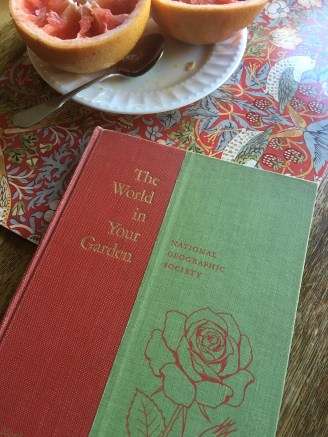
Soldier and Joy’s family are meeting me in the mountains for a few days, as part of our time together. They are flying to California, so I am trying to bring most of the stuff we’ll need in my car. Like books!

The sun will shine and we’ll be at the lake a lot… I hope it’s not too smoky up there. I also hope we will have thunderstorms, and it will be nice to be cozy and read by the fire. A fireplace fire, 100% contained.

The darkness has not overcome it.

And this is the verdict: The Light has come into the world, but men loved the darkness rather than the Light, because their deeds were evil. John 3:19

Today is the commemoration of the Beheading of John the Baptist, which we Orthodox Christians who use the Gregorian Calendar remember on August 29 every year.

John was the Forerunner of Christ, and his preaching of repentance prepared many hearts to receive Christ.  You might say that John intruded into (family) politics when he spoke up about the governor Herod’s unlawful relationship with his brother’s wife Herodias. It doesn’t appear that they had asked for his opinion, but Herodias was angry enough about it that she asked Herod, via her dancing daughter Salome, for John’s head on a platter, which was granted. In the Gospel of Mark is one passage that recounts these events.

The hymns lament that Herod and Herodias missed their opportunity to repent and gain eternal life, but rejoice that God was glorified by the prophet’s death as well as by his life, and speak of John continuing to preach repentance even to the souls in Hades.

Icon Reader tells in depth about the iconography of John the Baptist, who is often pictured with wings. These symbolize the fact that he was a prophet or messenger from God. He is also called an “angel of the desert,” because like angels he was not involved in normal mundane things. John is often pictured holding his own head on the platter; some Orthodox do not eat anything from a plate, or from any round dish, on this day, and we all keep a fast in St. John’s honor.

I have a particular interest in the Glorious Forerunner’s beheading because the saint whose name I bear, Joanna, was married to Chuza, Herod’s steward, and used her connections to retrieve the head so that it could be given an honorable burial.

This is a repeat of most of my post from five years ago. This morning I attended Divine Liturgy for the feast and was more awed than ever by the life of Jesus’s cousin John who was imprisoned for speaking the truth. Then he was killed because, though Herod was “sorrowful” about this unexpected outcome, he was a coward and wanted what he wanted, no matter that he seemed to like talking with John about spiritual things. As we heard in today’s homily, the rulers of this world always operate on the terms of their power above all.

But The Forerunner went joyfully to his reward, as do all martyrs; what they want more than anything is to be with Christ. That’s why we celebrate their deaths, which are glorious as the Cross of Christ is glorious. On this feast day we also fast, because it is to us a sort of Holy Friday; and to help our prayers for strength to have courage ourselves, to live and die in the spirit of the martyrs, in bright contrast to whatever darkness is currently trying in vain to extinguish the inextinguishable Kingdom of God.

In Him was life, and that life was the light of men.
The Light shines in the darkness,
and the darkness has not overcome it.
John 1:4-5


How and why dragons almost exist.

I’m anticipating a drive to the mountains next month, during which I want to hear the whole of this podcast, In Full Fire. This morning I only had time for the first few minutes, and was impressed with how fast I was plunged into the vast history of dragons as symbols, starting with listeners’ questions regarding contemporary books and movies that their children and grandchildren enjoy.

It’s a wide range of topics! Dragons in the East and in the West, strange or friendly, and as some stories suggest, superior to humans; dragons as dreadful enemies or sources of strength and creativity. Can dragons be tamed? De-fanged?

Fr. Andrew Stephen Damick hosts the Amon Sûl podcast and three others on ancientfaith.com. In this episode he interviews Jonathan Pageau, who has his own website and podcast, The Symbolic World. Even if you are not a huge Tolkien devotee, you might like to sample a few minutes yourself, because more than ever, dragons are everywhere – almost.

Tolkien’s illustration for Beowulf