
 “Let us now look more closely at the lily and the bird from whom we are to learn. The bird keeps silent and waits: it knows, or rather it fully and firmly believes, that everything takes place at its appointed time. Therefore the bird waits, but it knows that it is not granted to it to know the hour or the day; therefore it keeps silent. ‘It will surely take place at the appointed time,’ the bird says. Oh no, the bird does not say this, but keeps silent. But its silence speaks, and its silence says that it believes it, and because it believes it, it keeps silent and waits.” -Søren Kierkegaard
I worked very hard last week to compose a second post on Kierkegaard’s The Lily of the Field and the Bird of the Air, which I am reading along with Mags. No good fruit seemed to come from my effort, though I wrote many words in a draft and searched for appropriately themed photos. When earlier this week I heard from Simone Weil through her anthologist Laurie Gagne, who was interviewed on Mars Hill Audio, that a writer must often wait patiently for the right word, it made me think more hopefully about the outcome.
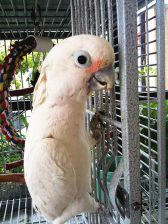 I had begun at least two weeks ago, writing about the new bird community just on the other side of my fence, a few feet away from me when I garden. They are tropical birds in several large cages, temporary residents while their owners are between houses, and they are noisily chirping and even screeching from dawn to dusk. That long time ago, as it seems now, I was focused on their being jungle birds, surely not the sort that inspired Kierkegaard’s contemplations. I cleverly speculated that if Kierkegaard had lived in the jungle he wouldn’t have been likely to write the book he did.
But more pertinent to my present situation, only days later, is the fact that they are caged birds. And right now, many of us the world over feel like caged birds, in our efforts to slow the spread of a quickly spreading virus. Some are less restricted than others because they are in a type of helping role, but they also are at more risk. I, who am healthy and feeling in some ways younger than ever, have been grouped with The Elderly; I am trying to submit meekly, in my mind as well as my body, to my classification and assigned task: to stay home. In this regard, what Kierkegaard writes about seeking God’s kingdom first is something to take to heart:
“But then, in a certain sense is there in fact nothing I shall do? Yes, quite true, in a certain sense there is nothing. You shall in the deepest sense make yourself nothing, become nothing before God, learn to keep silent. In this silence is the beginning, which is first to seek God’s kingdom.”
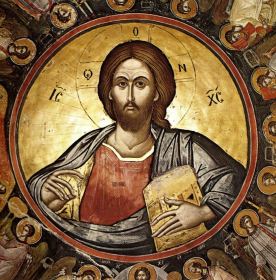
He does talk about how humans often enter into this silence when they are praying: “…as he became more and more fervent in prayer, he had less and less to say, and finally he became entirely silent…. indeed, he became what is, if possible, even more the opposite of talking than silence: he became a listener.”
Currently, the whole world is waiting. The necessity of waiting is a gift given to us, an opportunity, but if I only wait on the decisions of authorities and on the latest statistics, my waiting is of little value.
“This is also how it is with the lily, it keeps silence and waits. It does not ask impatiently, ‘When is the spring coming?’ [see Pippin’s daffodils at right] because it knows that it will come at the appointed time; it knows that it would not benefit in any way whatever if it were permitted to determine the seasons of the year. It does not say, ‘When will we get rain?’ or ‘When will we have sunshine?’ or ‘Now we have had too much rain,’ or ‘Now it is too hot.’ …. Then the moment comes, and when the moment comes, the silent lily understands that now is the moment, and makes use of it.”
Obviously I myself know little of this subject experientially, but Søren Kierkegaard and the birds and flowers and all of nature have a lot to share, which I love to pass on! Glory to God, that He somehow arranged for me to find this particular book, chosen for its brevity. Ha! Every paragraph seems to have a world of meaning that one could meditate on for a year. The author must have known how to wait for the right word, as Simone Weil talks about.
Suffering. Are we not all suffering right now? Suffering at the most superficial level by our own movements being curtailed, or because we can’t find our favorite food in the stores, all the way to those who are suffering in a holy and productive way, deeply in their souls, expressing coinherence with the healthcare workers of Italy or with the helplessly panic-stricken of any place. When I think of all the monastics and even my priest, who are accustomed to self-containment and waiting on God, who are praying for all the rest of us who pray little, I feel both grateful and ashamed. When I pray with them at all, via their live-streamed services, it strengthens my ability to wait.

Charles Williams coined that word coinherence that I used above, but I don’t think he invented the truth that each of us is mysteriously and mystically united to the other. Simone Weil knew about this, too, and not in a theoretical way, but in the compassion and solidarity that emanated from her heart. When she was only five, she heard that soldiers (in the first World War) had no ration of sugar, so she refused to eat sugar. And much later, when she was at the Sorbonne, we learn more from fellow student Simone de Beauvoir’s writings. When Weil heard about a famine in China, she burst into tears; de Beauvoir envied her for having a “heart that could beat across the world.”
Christ suffered on the Cross in taking on Himself all the death and suffering of mankind, and He calls us to do it for each other, to be little Christs, by the power of the Holy Spirit. It’s a mystery to me, for sure, but I hope that praying with my fellow creatures everywhere will help me to acquire more of this grace.
Regarding our own personal pain and death, Kierkegaard says that when we are silent, it makes our suffering less. This runs counter to modern culture in which we all want to talk in an effort to relieve suffering.

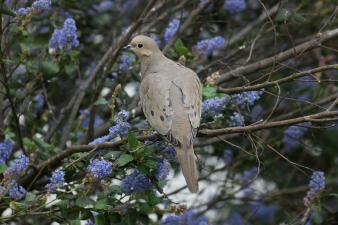
“The bird keeps silent and suffers. However much heartache it has, it keeps silent. Even the melancholic mourning dove of the desert or of solitude keeps silent. It sighs three times and then keeps silent, sighs again three times, but is essentially silent. For what it is it does not say; it does not complain; it accuses no one; it sighs only to fall silent again. Indeed, it is as if the silence would cause it to burst; therefore it must sigh in order to keep silent.”
And by that silence under suffering, Kierkegaard lists several ways suffering is eased; the bird – and potentially we humans! – are freed (I put these points into list form):
“1) From what makes the suffering more burdensome: from the misunderstood sympathy of others;
2) From what makes the suffering last longer: from all the talk of suffering;
3) From what makes the suffering into something worse than suffering: from the sin of impatience and sadness.”
Oh my, I’m afraid I have tempted you to the sin of impatience by my long post, so I am going to stop for now, though I still haven’t come to the end of my meditations on Kierkegaard’s First Discourse. Let me say, in closing, that I am praying with and for people everywhere who are distressed, joining my sighings with yours. I pray that our afflictions may be turned into the sighings of the mourning dove, who after all may be understandably melancholic about the true and sorry state of mankind. Her heartache and sighings become silence, and that is her prayer.
 My birthday hasn’t yet arrived, but since I’m unlikely to see any of my children on the proper day, the family I was with just a few days ago gave me a celebration. (Soldier had planned to come here from Colorado with Liam one day, but he wisely cancelled that trip.) Presumably we’ll all be holed up apart from one another when I cross over to a new age.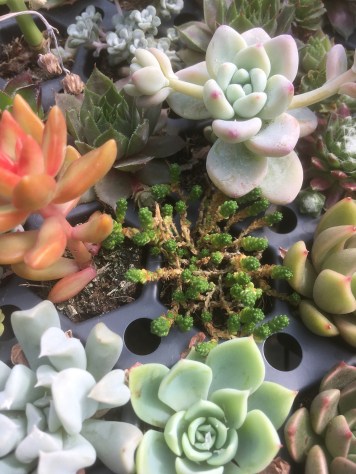




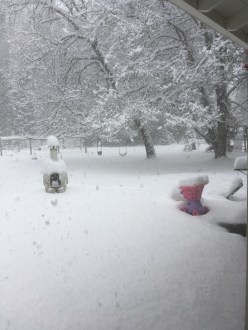 The second birthday surprise was nothing anyone could have planned: a big snowfall of the powderiest sort, followed by a morning when we could easily walk down the road a few paces to a good spot for sledding. That day Jamie had looked out the window and beamed, “It feels like Christmas!” and when I asked why, he said because of the snow.
 If not for the children, I’d have been happy to look at the snow through the window, but being able to accompany them and watch them literally throw themselves into it was the joy and the gift.

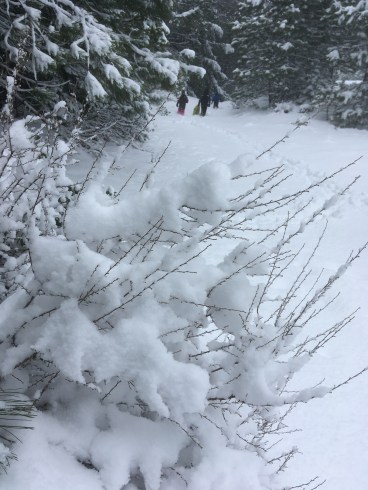
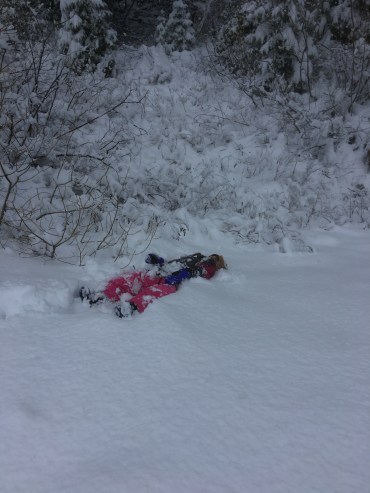



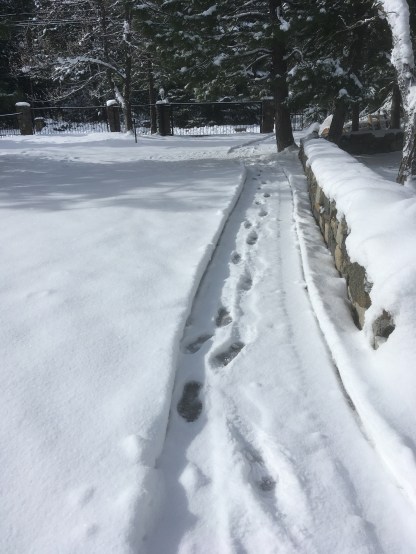
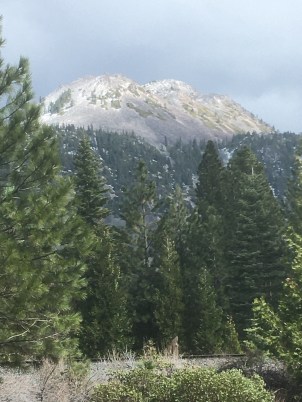 I didn’t know the name for it at the time, but one morning last week I experienced an acute and painful case of Cognitive Overload. It was the day I had been looking forward to for two months, when I would drive up to Pippin’s; the day before that I’d started packing my car with the books and food and even a 50-ft garden hose I was going to take to the family there in far-Northern California.
 “Jonathan Rauch reminded him of the inability of any one human being to bear the cognitive load of decision making that we are called upon to do every day… there is a necessity to offload some of this responsibility to a reliable and healthy community. Each of us individually can’t know what we need to know about every issue; that means we have to trust other people to help guide us and inform us. We just don’t have the cognitive energy to be able to do this…. that triage is impossible for any of us to do on our own. Don’t listen to the people who tell you to think for yourself. It’s not possible to think for yourself… we are always embedded both socially and temporally… That can work for us, if we see to it that we are properly and helpfully embedded.”
 “We are human beings, made of flesh and bones. Flesh and bones can become Chalices of God’s presence in the world, but they can also become ill. As a Christian, my duty is to comfort and to love, to keep myself and my neighbour from harm.”

