Category Archives: books

2021 – The Year of Dostoevsky

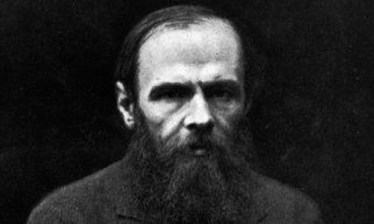
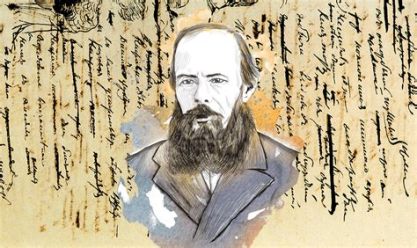
Today Nun Cornelia has kindly given us a reading recommendation in her article, “Time to Read (or Reread) Dostoevsky.” Her reason for putting forth the idea at this time is partly that today is the 140th anniversary of the death of Feodor Dostoevsky. And not only that, but 2021 marks 200 years since his birth in 1821.

Even if you haven’t read his works, you are likely to recognize his name as a writer, whose skill Sister Cornelia describes: “The details of all his characters, their mannerisms, their actions, their thoughts and words, even their names, all paint individual pictures of the human condition in relation to God and the devil—pictures that don’t fade with time, and are applicable in any culture.”

In a short essay she gives details about his childhood and temperament as described by his parents (hot-headed and cheeky), and his “morose” youth, during which he spent time in military service and then began to study literature.

“His compassion for humanity led him to socialist circles, which, as he would eventually understand, were in fact seething with anti-humanity. These attempts at social reform would also end in failure for him, and he nearly lost his life in front of a firing squad. His sentence was commuted at the last minute, and he was sent to Siberia for prison and then exile. In prison he was respected by all, but at the same time considered a dangerous revolutionary and kept in shackles and manacles for his entire sentence.”

The upbringing he was given, and the era he was given to live and suffer in, certainly contributed to his great soul; and because his writing “could not be separated in any way from his own deep convictions, his books lead us in a mysterious way to those deep convictions.”

Sister Cornelia details some of the many ways that Dostoevsky suffered, and the way his wife suffered with him for his sins and weaknesses. She ends with thanks for all his works that she hopes we will read, and read again.

“But neither can we forget that an underlying quality present in him from childhood was also key to producing the literary heritage that we have today: stubbornness. Through all his failures—and apparently, he took critical failure very hard as his epileptic fits were brought on by them—he never gave up his calling and forged ahead with novels that change people’s lives.”

At the bottom of the article are links to several others on Feodor Dostoevsky. You can find it all here.
Where to walk, what to read…

I already own a book on architecture that is just at my level, The Architecture of Happiness. But reading on the internet tempts me to explore many different realms… further than I actually want to go, when it comes right down to it.

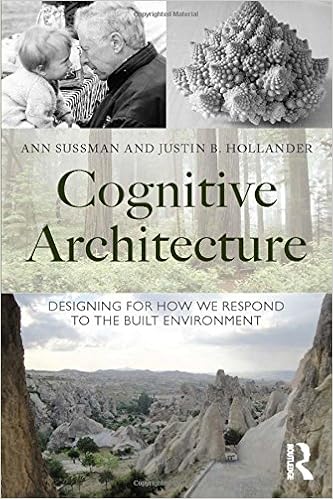
Something I read back in the fall made me want to see the book Cognitive Architecture, by Sussman and Hollander, and my library’s “Link” feature helped me to get it, from southern California. It came in just before Christmas, and just before I needed clear away piles of books and papers, seeds and seed catalogs, to make space for a few Christmas decorations.

So I barely glanced at it, and quickly put it…. somewhere. I was pretty sure it was upstairs, probably in my bedroom, and when I found it last week — after looking everywhere several times over the last month — it was in an odd little stack of things, with a prayer book and a Christmas card and other unrelated stuff. One reason I hadn’t seen it earlier was that it was so much smaller than I remembered it.

Paris

So small, my immediate thought was, maybe I could actually get through this book! Even though I’ve sort of moved on and my current goal is to whittle down the number of half-finished books I already have, without adding more.

So I only browsed, and it is pretty interesting, about designing buildings for the way people live and behave, the sort of “animal” that humans are. One example is, that people in cities are known to like to walk or congregate on the edges of open spaces or streets, near buildings or walls, so that the buildings “have their backs.” But not so much if the building is turned in on itself and doesn’t seem open to the people, with low windows, for example, for easy window shopping. An example of a space not conducive to this protected and friendly feeling is the Boston City Hall Plaza, which is known as an unloved space and is up for renovation:

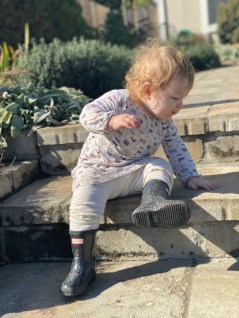
It is known that people prefer not to climb stairs if they can avoid it. I know that doesn’t apply to toddlers. This is my neighbor Grace who was enjoying going up and down my front steps this afternoon.

I discovered that one of the authors, Ann Sussman, has co-authored a fascinating article, “The Mental Disorders that Gave Us Modern Architecture”!

Many of the other points of human-centered design were not new to me. I had learned a lot from De Botton’s book, and I also have this one that Pippin gave me, in which I can browse actual buildings and their architects, which is more appropriate for me, who am not considering a career in design.

I wonder if I have other books I could write about without having read them, and in that way get some satisfaction from my failures…? I’ve enjoyed making use of this one to organize the Architecture compartment of my mind, and I found a pleasing poem in it as well:

THINGS

What happened is, we grew lonely
living among the things,
so we gave the clock a face,
the chair a back,
the table four stout legs
which will never suffer fatigue.

We fitted our shoes with tongues
as smooth as our own
and hung tongues inside bells
so we could listen
to their emotional language,
and because we loved graceful profiles
the pitcher received a lip,
the bottle a long, slender neck.

Even what was beyond us
was recast in our image;
we gave the country a heart,
the storm an eye,
the cave a mouth
so we could pass into safety.

-Lisel Mueller

Chattering, reading and resisting sleep.

“I liked thinking about people reading books in the Paris metro, since they are underground, in the earth’s dark shadow, in the artificial light of electric bulbs, with the mute, graffiti-covered walls of corridors and tunnels rushing by their windows….”

“Above us, in the airplanes, someone is also reading a book — most often one with shiny covers, devoid of mystery, constructed on simple premises and the sincere desire for abundant royalties, but it may also be that someone up in those expanses is studying a Sufi epic or Dante and will experience illumination.

“And if this reader looks out the little window, he or she will see not black walls, as in the metro’s labyrinths, but the white gleam of clouds, a splendid, perpetually sunlit landscape, and below the threads of rivers quivering like children’s thermometers, strips of highways streaked by cars, like nervous insects, the yellow strips of sand along the sea, the dark smears of forests, sometimes snow-topped mountains, profoundly motionless, self-absorbed, autistic, and also cities chattering in different languages, resisting sleep, glowing even at midnight with feverish neon lights. Above the earth and below the earth, in metro cars and airplanes, someone is always reading books.”

-Adam Zagajewski, in Slight Exaggeration, © 2011

Nowadays most people I see on public transit or airplanes, if they are not chatting with their seatmate or sleeping, are looking at their phones or laptops. You can’t tell if they are reading an e-book or playing a game, or just working.

(I know, I know, it’s the era of masks and distancing, but please humor me. It may be temporarily necessary to do without some beloved activities, but I can still remember, and muse.)

Whenever I see anyone with an actual print book, I find it hard not to stare, to strain my neck and eyes in an effort to see just what author he is interacting with, revealing this private activity so publicly. It’s not voyeurism that motivates me, but a feeling of kinship with other readers, in an era when our numbers are diminishing. Of course, the statistics on reading trends show that a huge number of people continue to read, and I notice a few of them at the library. What’s different about the readers the plane is that I might watch them over the course of an hours-long journey; they are specific examples, and encouraging in a way that statistics can never be.

Zagajewski’s musings made me think about how we readers sometimes look outwardly like the “profoundly motionless, self-absorbed” mountain, when inside we are actually engaged in intense conversation that makes us more like the cities that “resist sleep.” I have a lot of experience with that lately, without going anywhere!

On my solo travels, twice that I remember clearly I was able to talk to perfect strangers about our reading, and I think in both cases the other person spoke to me first. The last time this happened I was looking at my Kindle Paperwhite while in line at Mumbai’s airport security, when a well dressed man next to me interrupted to ask what I was reading. Always honest in the instant, as soon as I answered I felt embarrassed and wished that I had thought to name some other, less boring recent read.

But his question was just an icebreaker, so he could find out why I was in India; talking with him, I forgot to notice how slowly the line was moving. I wonder if I will get the chance again to practice his kind of boldness and make the acquaintance of commuting or traveling readers. I would like to convey somehow my happiness to meet on my journey another lover of the printed word, who might just then be on her way to experiencing illumination.

(All photos found online.)

There was a lesson to be taught.

Some time before he died in 2019, I became slightly acquainted with the work of Clive James, and even bought two of his books, one of which includes the poem below. After becoming sick unto death in 2010, he said he had felt somewhat embarrassed that he kept on living; he wrote what he called a “farewell poem” in 2014, and he continued writing his newspaper column “Reports of My Death” for a few years. I read many of those columns, and find his prose and poetry satisfying even when I don’t know what he is talking about.
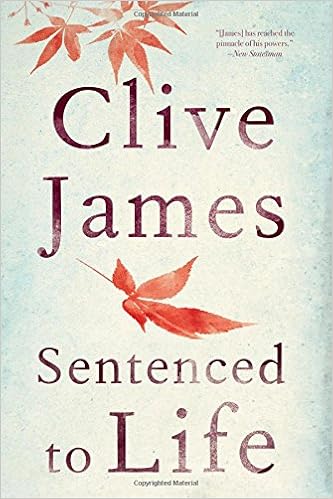
Now as I revisit James’s work, I am very interested to read about this: “Clive James spent the spring and summer of 2019 writing and editing an autobiographical anthology called The Fire Of Joy, a raid on ‘the treasure-house of his mind’: a collection of the poems that first awoke in him his love of poetry and that were lodged forever in his memory.” I was disappointed to find that the book is not in any library I can access, and it’s expensive to buy, for someone like me whose appreciation of poetry is not at a level that would justify the expense.

In any case, it was his own poem that most grabbed at my heart back then, and prompted me to pray for him, that the interior “work” he had been given to do in those last years might be fully healing, unto ages of ages.

SENTENCED TO LIFE

Sentenced to life, I sleep face-up as though
Ice-bound, lest I should cough the night away,
And when I walk the mile to town, I show
The right technique for wading through deep clay.
A sad man, sorrier than he can say.

But surely not so guilty he should die
Each day from knowing that his race is run:
My sin was to be faithless. I would lie
As if I could be true to everyone
At once, and all the damage that was done

Was in the name of love, or so I thought.
I might have met my death believing this,
But no, there was a lesson to be taught.
Now, not just old, but ill, with much amiss,
I see things with a whole new emphasis.

My daughter’s garden has a goldfish pool
With six fish, each a little finger long.
I stand and watch them following their rule
Of never touching, never going wrong:
Trajectories as perfect as plain song.

Once, I would not have noticed; nor have known
The name for Japanese anemones,
So pale, so frail. But now I catch the tone
Of leaves. No birds can touch down in the trees
Without my seeing them. I count the bees.

Even my memories are clearly seen:
Whence comes the answer if I’m told I must
Be aching for my homeland. Had I been
Dulled in the brain to match my lungs of dust
There’d be no recollection I could trust.

Yet I, despite my guilt, despite my grief,
Watch the Pacific sunset, heaven sent,
In glowing colours and in sharp relief,
Painting the white clouds when the day is spent,
As if it were my will and testament –

As if my first impressions were my last,
And time had only made them more defined,
Now I am weak. The sky is overcast
Here in the English autumn, but my mind
Basks in the light I never left behind.

– Clive James, 2014