 “Positivist man is a curious creature who dwells in the tiny island of light composed of what he finds scientifically ‘meaningful,’ while the whole surrounding area in which ordinary men live from day to day and have their dealings with other men is consigned to the outer darkness of the ‘meaningless.’ Positivism has simply accepted the fractured being of modern man and erected a philosophy to intensify it.
“Existentialism, whether successfully or not, has attempted instead to gather all the elements of human reality into a total picture of man. Positivist man and Existentialist man are no doubt offspring of the same parent epoch, but, somewhat as Cain and Abel were, the brothers are divided unalterably by temperament and the initial choice they make of their own being.”
-William Barrett, Irrational Man
These paragraphs are from a book I’ve had on my shelf for a couple of years, since it wa s highly recommended to me by one of my most philosophical Christian friends. The subtitle is A Study in Existential Philosophy. I bought a paperback copy, but probably was unconsciously put off by the size of the print and the absence of white space on the pages.
Recently I discovered that the book is on Audible, so I began yesterday on my drive to the beach to listen to it, though I wasn’t very hopeful about being able to attend to the subject matter that way, having an “ear gate” that is extra narrow or full of obstacles or something… It’s particularly hard for me to read non-fiction when I can’t underline or take notes.
It’s a testimony to the clarity and beauty of Barrett’s writing that I was swept up into the story, as he tells it so engagingly, of the context and development of Modern Existentialism. As, in his words above, the need is for true philosophy “to gather all the elements of human reality into a total picture,” so also Barrett shows us a holistic picture by describing the interplay of cultural and historical roots of existentialism and of its effects.
Since high school I’ve had an inkling, or an awareness, that I needed to understand existentialism, but I feel that I’ve made little progress toward that goal. This book and I came into the world in the same decade, but I’ve been waiting for it my whole life!
 Five speeches that Aleksandr Solzhenitsyn gave in the U.S. and in Britain in 1975 and 1976 make the book, Warning to the West. Today I sat on a log at the beach and got on with reading this collection that I’d started before Christmas; a while later I sat in my car overlooking the ocean and finished it.
 “There is a German proverb which runs Mut verloren — alles verloren. ‘When courage is lost, all is lost.’ There is another Latin one, according to which loss of reason is the true harbinger of destruction. But what happens to a society in which both these losses — the loss of courage and the loss of reason — intersect? This is the picture which I found the West presents today.”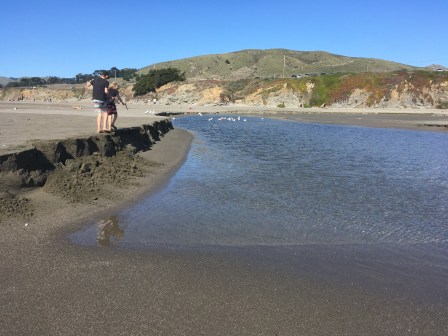
 n here, it did there, too. I think the air temperature was about 60 degrees, but the water felt colder than ever; it was the first time I felt it to be somewhat uncomfortable right away.
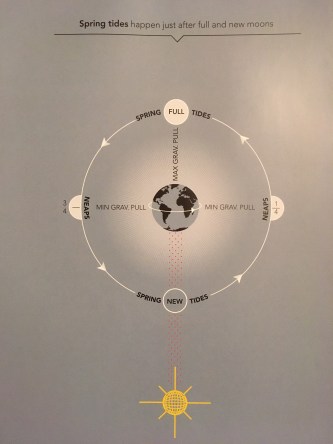
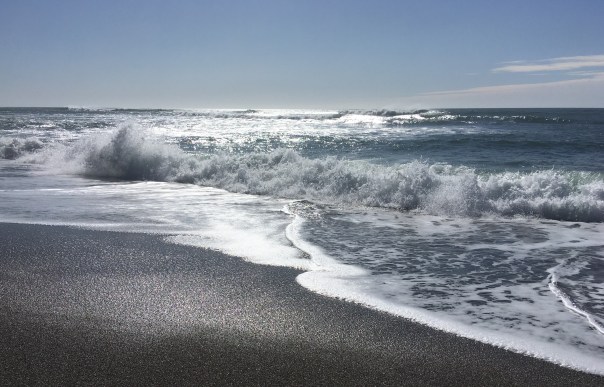
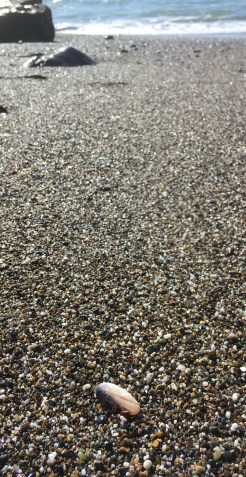 Today I was thinking about too many things to let the water temperature take over my mind, though I walked in the surf as much as ever. Tears came to my eyes, for joy at being there in the elements, my senses refreshed and my mind having encouraging things from Elder Cleopa to rest on. It was convenient that the elements were fairly gentle, and that the tide had gone out just enough to reveal comfortable sitting rocks at the north end of the beach where no other people were. I sat.

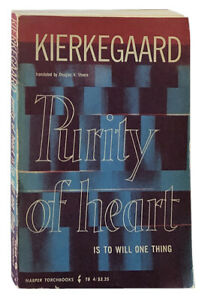 I would like to read more of Søren Kierkegaard’s writings. My intent is on display in the form of four titles by him that I have had sitting on the mobile bookshelf here in my kitchen/family room, for a year at least. I guess if I could decide which to read that would be a good start. A biography of him I am not likely to get to, but who knows…? In the meantime, I am reading this homage by Dana Gioia in the form of a poem. Seems like after this I owe it to Kierkegaard to read at least one more of his own works, though not in hopes of explaining any “riddles.” Only God can do that, and we know that He will — all of them, all of us.

