Category Archives: books

Japan – journeys and excursions

I am certainly a newcomer to the genre of Japanese literature; before this month I think I had only read one other book by a Japanese author. Never in my life have I given serious attention to the literature or culture or history of Japan, probably sensing that I could never deeply understand its soul, being an outsider, very much from the West, not East.

It seems a little random that I have now embarked on only a short excursion, if you will, into things Japanese. Last year when I traveled to India and tried to learn about that country, there was a familial motive; otherwise I would have felt similarly. It’s not that I have a lazy mind, but rather that I know myself: it’s very frustrating to go only shallowly into any subject. I always want to keep going and going and ….

I’ve now finished the third novel on my original list, Convenience Store Woman. The library is holding one I’d forgotten I reserved, The Gate by Natsume Sōseki, and since my last post I discovered another book that I have already begun reading as well: Silence and Beauty: Hidden Faith Born of Suffering by Makoto Fujimura.

“This is an elegy in the form of a weeping cherry, Japanese symbol of ephemeral beauty and now my personal symbol of enduring hope during dark times.”

Fujimura is a Japanese American artist who spent years in the country of his ancestors learning traditional nihonga painting. You can click through his name above to his website if you would like to see more of his painting and learn about the layering technique, about which he says, “The nihonga process, which flows out of a thousand-year refinement, overlaps as a metaphor for the journey of faith that is refining me.” Here I show one of his Post 9-11 series.

In the book he explores the postwar Japanese novel Silence by Shusaku Endo, and shares his own soul’s journey of faith and the many events, people and gifts that have nurtured him:

“God took me to Japan, a country of my roots, to become a Christian. Thus, my aesthetic journey overlapped with my faith journey. This book reflects on both those pilgrimages, through the lens of my encounter with Shusaku Endo’s postwar masterpiece, Silence.

“…The three critical themes in understanding Silence are hiddenness, ambiguity and beauty.”

I have barely begun reading, but I have hope that Fujimura’s gentle and reflective way of conveying his own engagement with Japan and its legacy to humanity will enrich my own mind and heart, and lay more reference points on the grid, if you will. [Update: This did not happen; on the contrary, his book was the opposite of enlightening, and I can’t recommend it, or justify taking the time to write about it.] Right now I wouldn’t know how to write about the books I have read so far for Bellezza’s Japanese Literature Challenge, because no matter that they have been translated to my native tongue, they remain foreign. Perhaps down the road, before this read-along has ended, I will have made a little progress in understanding. It might happen that I will gradually find the map easier to read, and who knows, my excursion may turn out to be not so short after all.
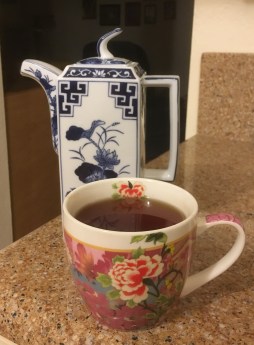
Green tea, and stories from Japan.

I have begun reading a few Japanese novels, in translation of course, and maybe I will add a nonfiction book, because Bellezza has drawn me into her Japanese Literature Challenge 12 — Yes, it’s the twelfth time she has hosted this project! I’ve never had any thought of joining in before, until this month I read a review of one novel linked from her site. It sounded intriguing, so I checked to see how many pages were in the book  — I am lately tired of slogging through 500 or 800 pages in order to complete a story — and it was barely over 200 pages, whee!

Nosing around the body of relatively modern Japanese literature with an eye to length, I soon came up with a plan. The first three books are short, and then things get more difficult, so I might not do all five before the end of March. But I did already complete The Great Passage, and am definitely having fun. It was the coziest thing on a rainy day, to sit by the fire with a book, and green tea from a Japanese-inspired pot. My list:

The Great Passage by Shion Miura

Sweet Bean Paste by Durian Sukegawa

Convenience Store Woman by Sayaka Murata

Kokoro by Natsume Sōseki

The Book of Tea by Okakura Kakuzo


If the tea in the photo doesn’t look green to you, it’s because, unfortunately, the day with green tea prevented me from sleeping that night, so I switched to a more thoroughly soothing blend for the next rainy reading session. I read while waiting at the dentist, and at the doctor, and after I crawled under the blankets at night.

Now I’m in the middle of Sweet Bean Paste, which refers to a confection that I’ve never been drawn to. The idea of mixing beans and sugar puts me off, but I should probably at least try to sample it before I write a review. If I could learn to appreciate it, it sounds like a proper accompaniment for my Japanese reading — and cup of tea.

What I need to know is, if a Japanese reader can’t drink tea with caffeine, what does she drink?

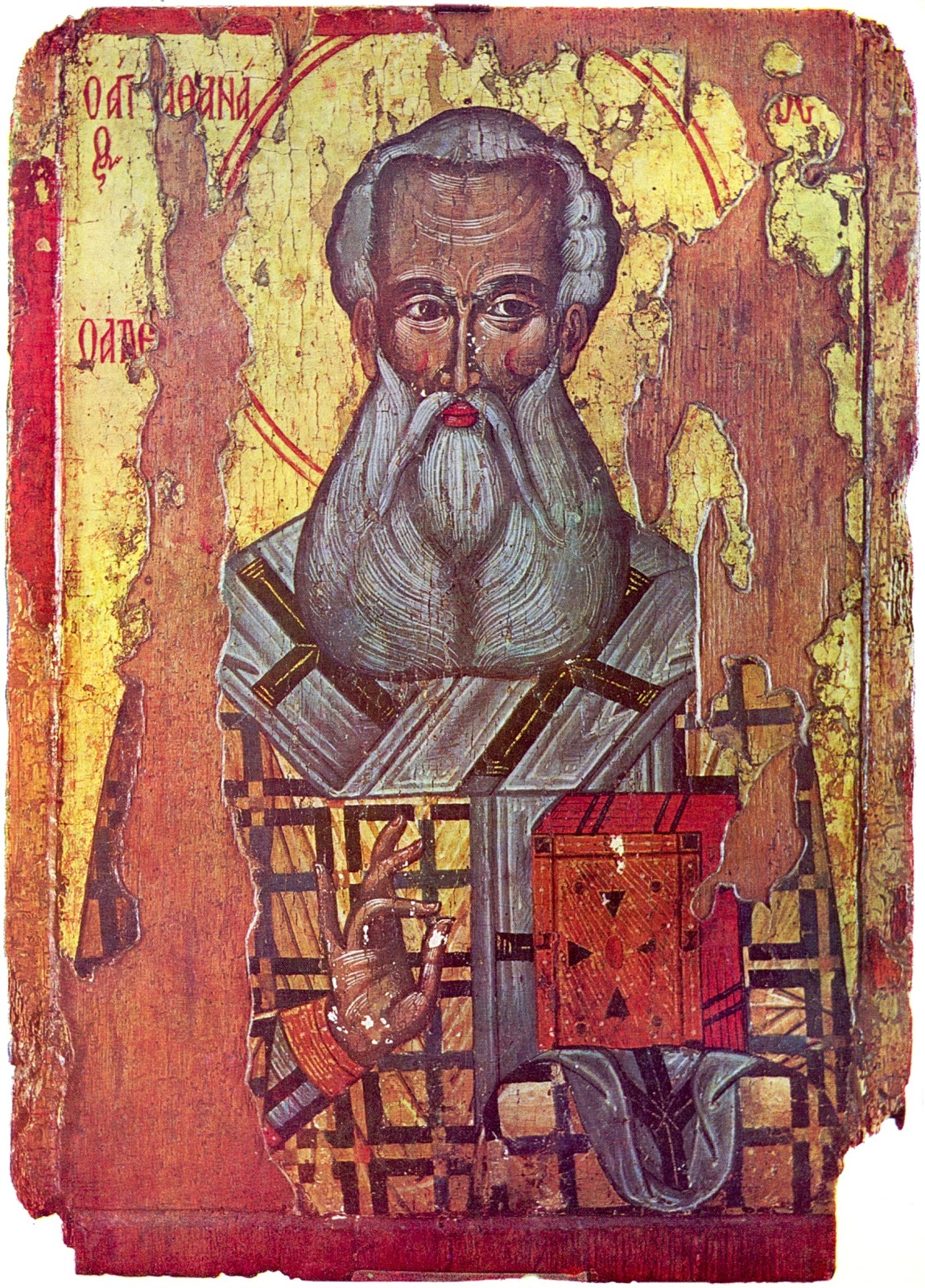
The Word of the Father has been made manifest.

I must have read C.S. Lewis’s introduction to St. Athanasius’s On the Incarnation twice before in an attempt on the whole book, without getting much beyond it, but on this third try I have kept going. It seemed a fitting little paperback to read during Advent.

In the introduction we have an instance of Lewis’s exhorting us to read more of the Old Books, like this one from the 4th century, though we are timid: “The student is half afraid to meet one of the great philosophers face to face. He feels himself inadequate and thinks he will not understand him. But if he only knew, the great man, just because of his greatness, is much more intelligible than his modern commentator.”

And Lewis also writes here about devotional vs. doctrinal works, On the Incarnation being one of the latter, that he finds the doctrinal books often “more helpful in devotion” than the expressly devotional ones. I can relate to his description of people who “find that the heart sings unbidden while they are working their way through a tough bit of theology with a pipe in their teeth and a pencil in their hand.”

Actually I don’t know about the pipe in the teeth, but I always have a pencil in my hand as I lie in bed with my book of theology or literature or whatever. And I marked some passages from St. Athanasius to share in this season when we focus on God With Us.

You must understand why it is that the Word of the Father, so great and so high, has been made manifest in bodily form. He has not assumed a body as proper to his own nature, far from it, for as the Word He is without body. He has been manifested in a human body for this reason only, out of the love and goodness of His Father, for the salvation of us men.

We will begin, then, with the creation of the world and with God its Maker, for the first fact that you must grasp is this: the renewal of creation has been wrought by the Self-same Word Who made it in the beginning. There is thus no inconsistency between creation and salvation; for the One Father has employed the same Agent for both works, effecting the salvation of the world through the same Word Who made it in the beginning.

From the archives – 2010

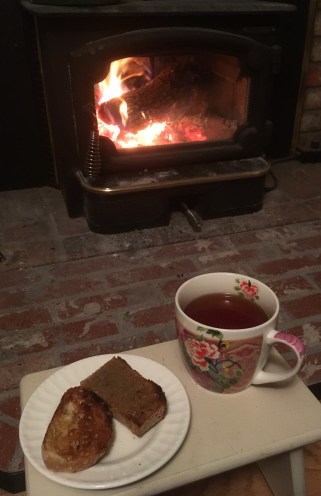
Firelight and that happy grace.

The phrase I took for the title of this post describes what my housemate and I soaked up this evening as we sat by the stove, where she had been tending a wood fire since she got home from work. When I came downstairs from a nap, it was already brightening up the whole house, and our dispositions as well. The modern world doesn’t let us feel comfortable about the slowing-down and love of staying home that are natural during these cold and short days, but Kenneth Grahame does:

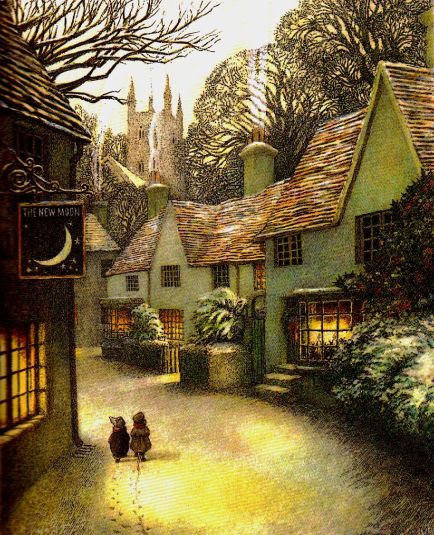
“The rapid nightfall of mid-December had quite beset the little village as they approached it on soft feet over a first thin fall of powdery snow. Little was visible but squares of a dusky orange-red on either side of the street, where the firelight or lamplight of each cottage overflowed through the casements into the dark world without. Most of the low latticed windows were innocent of blinds, and to the lookers-in from outside, the inmates, gathered round the tea-table, absorbed in handiwork, or talking with laughter and gesture, had each that happy grace which is the last thing the skilled actor shall capture–the natural grace which goes with perfect unconsciousness of observation.

“Moving at will from one theatre to another, the two spectators, so far from home themselves, had something of wistfulness in their eyes as they watched a cat being stroked, a sleepy child picked up and huddled off to bed, or a tired man stretch and knock out his pipe on the end of a smouldering log.”

― Kenneth Grahame, The Wind in the Willows