Category Archives: books

Silence and Music

My last post remembering Saint Herman prompted Pom Pom to ask me if I had read The Music of Silence, book she had just received in the mail. I haven’t read such a book, so I googled it and immediately have several tangents to run along now. I don’t know if she meant this memoir of Andrea Bocelli, or this one about singing the Hours or services of the church through the day in Gregorian Chant.

One reviewer wrote of the latter book:

“Nothing is as ordinary, or as sacred, as time. Far from being an infinitesimally small unit of measurement or a means of separating one event from another, time provides the means by which the still, small, silent voice of God may be heard.”

Silence….hmmm….I know so little of it.

When I read about music, silence, solitude, it can be an inspiration and a reminder, but my readings and thinkings are typically like so many rabbit trails, to use a term that hints at the fun of scurrying from one author or thought to another. A rabbit is doing what he was made to do, and glorifies God by it. I was made to live by the Holy Spirit in communion with my Creator.

So I need to STOP on the trail and pray–and maybe even get off the trail sometimes! It wasn’t books and ideas that made it possible for Father Herman to sing with the angels. It was prayer. The kind of prayer St Isaac of Syria is talking about when he says:

“The wisdom of the Holy Spirit is much greater than the wisdom of the entire world. Within the wisdom of the Holy Spirit, silence prevails; the wisdom of the world, however, goes astray into idle talk.”

My mind is given to talking idly with itself. So much of my remembering of my Savior is like the awareness I might have of an earthly friend when she is in the room with me, but I am not paying close attention. I might hear her talking without really listening, I might even speak with her–but not make eye contact.

Don’t we all have this weakness in our human condition, worsened by modern life, that we can’t settle our minds down firmly even when in prayer? Abba Dorotheus of Gaza says:

“Just as it is easier to sin in thought than in deed, correspondingly, it is more difficult to struggle with thoughts than with deeds.”

But C.S. Lewis encourages us:

“Virtue–even attempted virtue [I hope this includes attempted prayer]–brings light; indulgence brings fog.”

So I will keep struggling in prayer, to push past the distractions, to listen for the Silence that is God’s music.

It’s not the wonderful blog posts and the writers of them that are my problem. Nor my own writing, because just the discipline of organizing the chaos at least gets me on the road to taking every thought captive to Christ, though my readers might legitimately question how often I get to my destination. With God’s help, I know His presence and see His working in the world by the goings-on of the blogosphere and the piles of books throughout my house. Glory to God for all things! Lord, have mercy!

One more rabbit trail, leading quickly to the spot where all those paths ought eventually to end up, was brought to my attention this month, a poem by George Herbert:

Christmas

The shepherds sing;
and shall I silent be?
My God, no hymn for Thee?
My soul’s a shepherd too;
a flock it feeds
Of thoughts, and words, and deeds.
The pasture is Thy word:
the streams, Thy grace,
Enriching all the place.
Shepherd and flock shall sing,
and all my powers
Outsing the daylight hours.
Then will we chide the sun for letting night
Take up his place and right:
We sing one common Lord;
wherefore he should
Himself the candle hold.

I will go searching, till I find a sun
Shall stay, till we have done;
A willing shiner, that shall shine as gladly,
As frost-nipped suns look sadly.
Then will we sing, and shine all our own day,
And one another pay:
His beams shall cheer my breast, and both so twine,
Till ev’n His beams sing, and my music shine.

-George Herbert

Putting Books on Shelves, Taking Them Off…

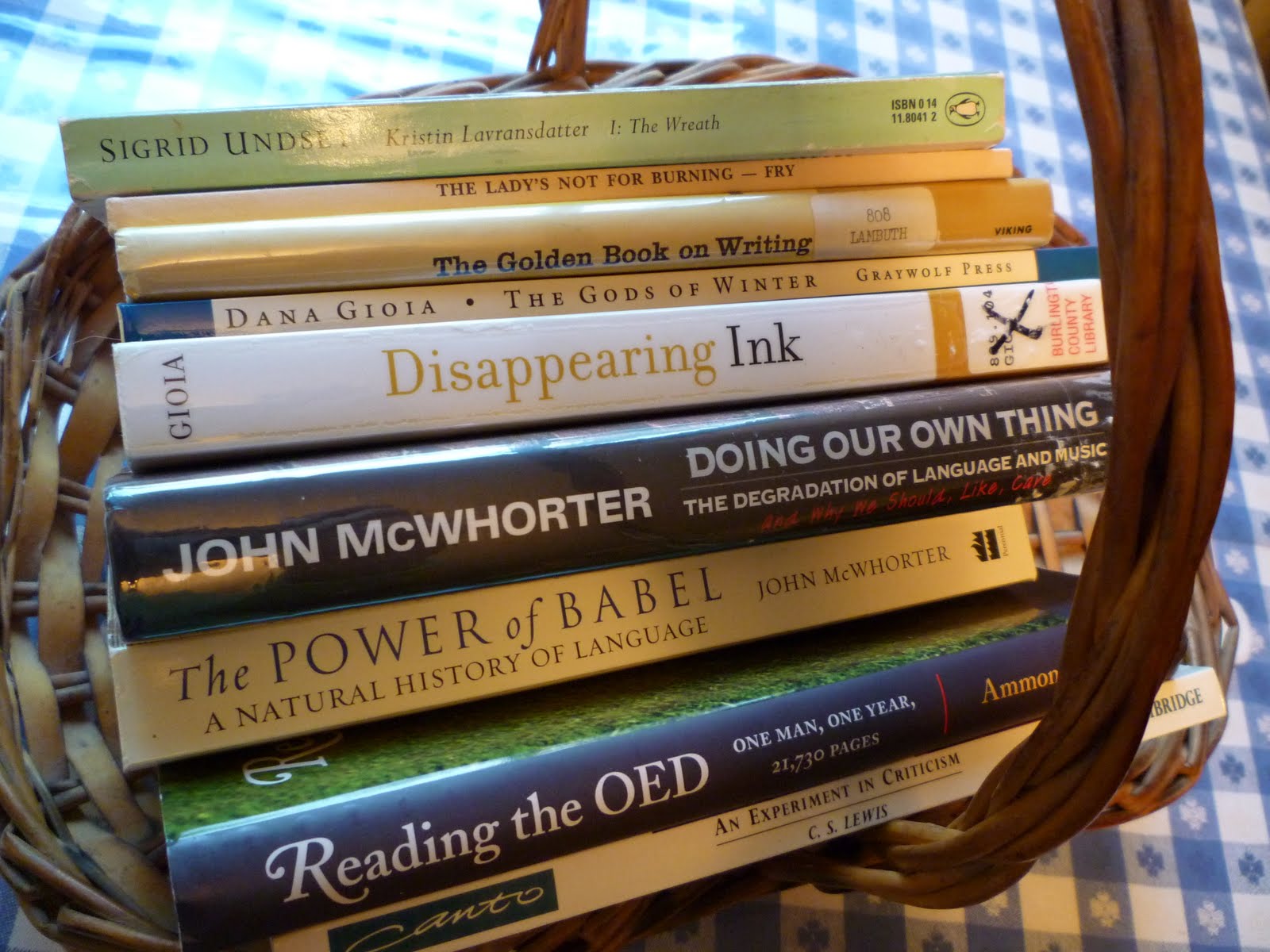
Earlier in the month I told how I got worked up when parts of my book order began to arrive in the mail. I admit, I do feel a bit sheepish, buying more books and telling about them, when there are plenty of good ones already on my shelves. But that’s me, a glutton.


These are mostly used, almost all from different sellers, and the shipping totalled way more than the books themselves. Most of the titles have been on my wish list for months or years, and I know that some of the books, now that they are in my possession, will sit on the shelf for at least months, more likely years, before I get to them. But they have a better chance of being read now.

Not to mention, they are now available for me to remove from the bookcase briefly, to open and lovingly turn a few pages–even when there isn’t time to give my full attention to the contents. Winston Churchill gave an admonition to book-lovers to do just that. I read the saying in a London museum, and it appears I’ll have to return there if I am ever going to find it verbatim.

In some cases it is a mystery how I heard about the book or why I wanted it. The Golden Book of Writing looks valuable, and I can always use help in that department, but it will have to remain uncredited as far as who recommended it. Maybe it was my friend at Amazon.com who always says, “We have recommendations for you!”

John McWhorter has been interviewed a couple of times on Mars Hill Audio, so I’ve been familiar with him and wanting to read more from his mind. Linguistics is a subject that grabs me ever since I was privileged to take a tutorial in the subject as a freshman in college. Perusing the titles of McWhorter’s bibliography feeds my book greed.

Dana Gioia is another author whose acquaintance I first made through MHA, and I mentioned that meeting here already. I only owned one book of his poems before–now I have two, and two collections of essays. Disappearing Ink is a collection of essays subtitled Poetry at the End of Print Culture.

Kristin Lavransdatter I loved so much that I snatched up sets whenever I’d see them, in the old translation that so many people despise–I didn’t. But now I want to read it in Tiina Nunnally’s rendition.

Because I dearly love my friend, whom I will call Bird, I bought The Lady’s Not for Burning, a play by Christopher Fry. Bird is 98 years old, and this play is one of her favorite pieces of writing, I think partly because it was something she enjoyed with her late husband. Bird is terribly hard of hearing, but she can hear me when I sit nearby and we talk about how thankful we are to God for many things. She is a little worried that her eyes will fail her and she won’t be able see the print on the pages of her books; I told her I will come and read to her then.

I think she would really like Kristin Lavransdatter.

That Temple You Are

We have begun the celebration of the Feast of the Entrance of the Most Holy Theotokos into the Temple, focusing on an event that is not mentioned in the Bible, but is a story with important meaning.

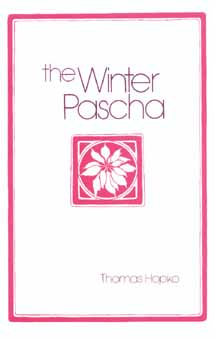
As Fr. Thomas Hopko explains in The Winter Pascha, “Its purpose is not so much to commemorate an historical happening as to celebrate a dogmatic mystery of the Christian faith, namely, that every human being is made to be a living temple of God.

“The festal event is that the three-year-old Mary, in fulfillment of a promise made at her conception by her parents, Joachim and Anna, is offered by them to God in the temple at Jerusalem.”

And in the next chapter, “In the Orthodox Church the Virgin Mary is the image of those who are being saved….she shows how all people must be when they are sanctified by the Holy Spirit as servants of God and imitators of Christ.”

Lord, may we by your grace imitate your Mother in her glad obedience, and also by your grace live as becomes temples of your Holy Spirit.

“For God’s temple is holy, and that temple you are.”  I Corinthians 3:17

Psalter and Soup

This Advent season I’m participating with other women, organized by Sylvia, in reading the Psalter every day for the 40 days. Our Psalter is divided into 20 groupings each of which is called a kathisma, and every woman will read one per day.

There are more than 40 of us participating so that the whole book of Psalms will be read twice a day. Everyone who perseveres will end up having read the Psalter through twice before Christmas, as well! What a joy it has already been.

I’m also trying to read The Winter Pascha by Fr Thomas Hopko, which has 40 readings about this period in the church year that has similarities to Lent and Pascha. I read two days’ entries and now can’t find the book, so we’ll see how that goes….

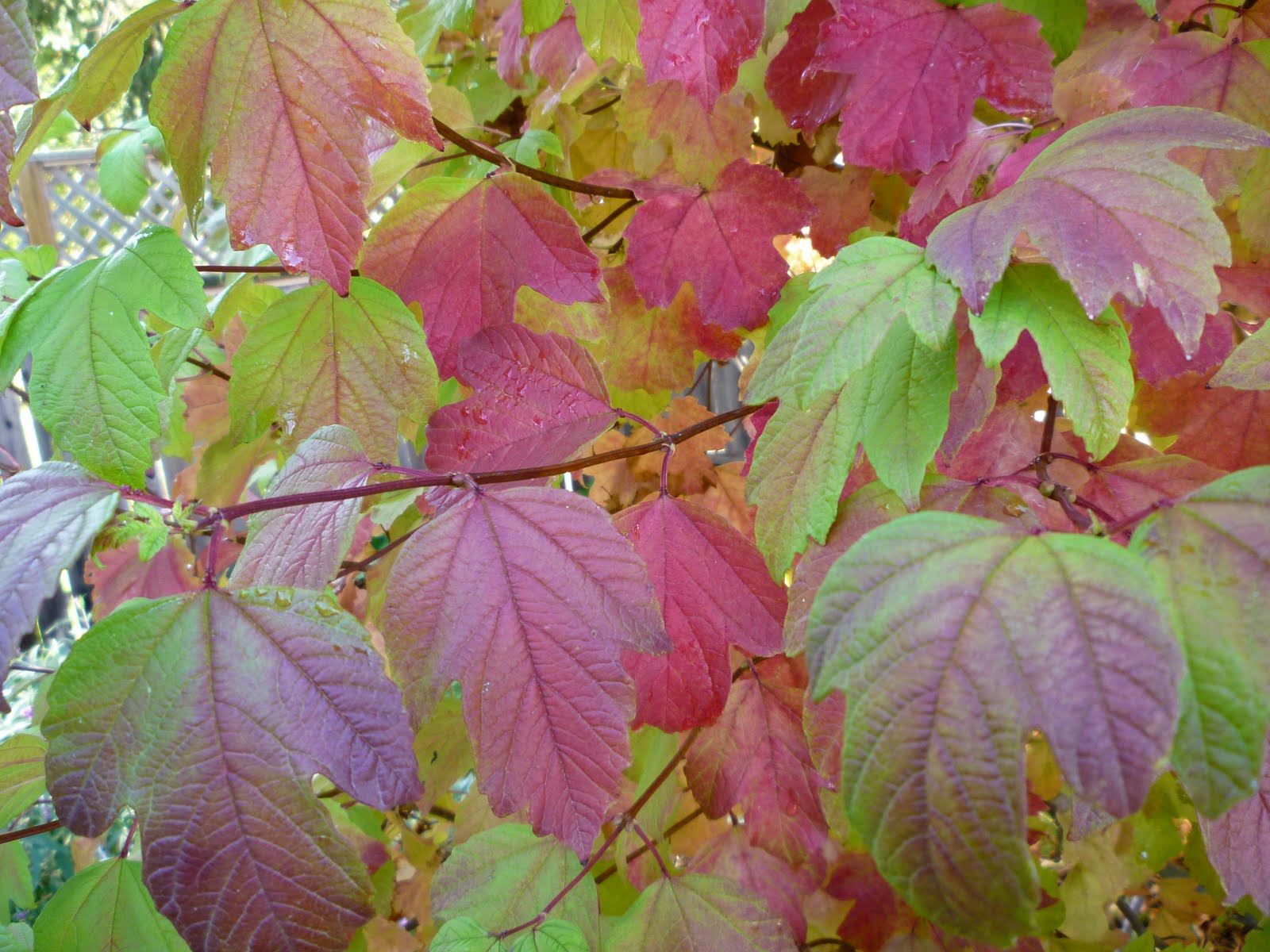
We just got a good rain and everything is washed clean, the sky is blue, and the snowball bush is showing its glory.

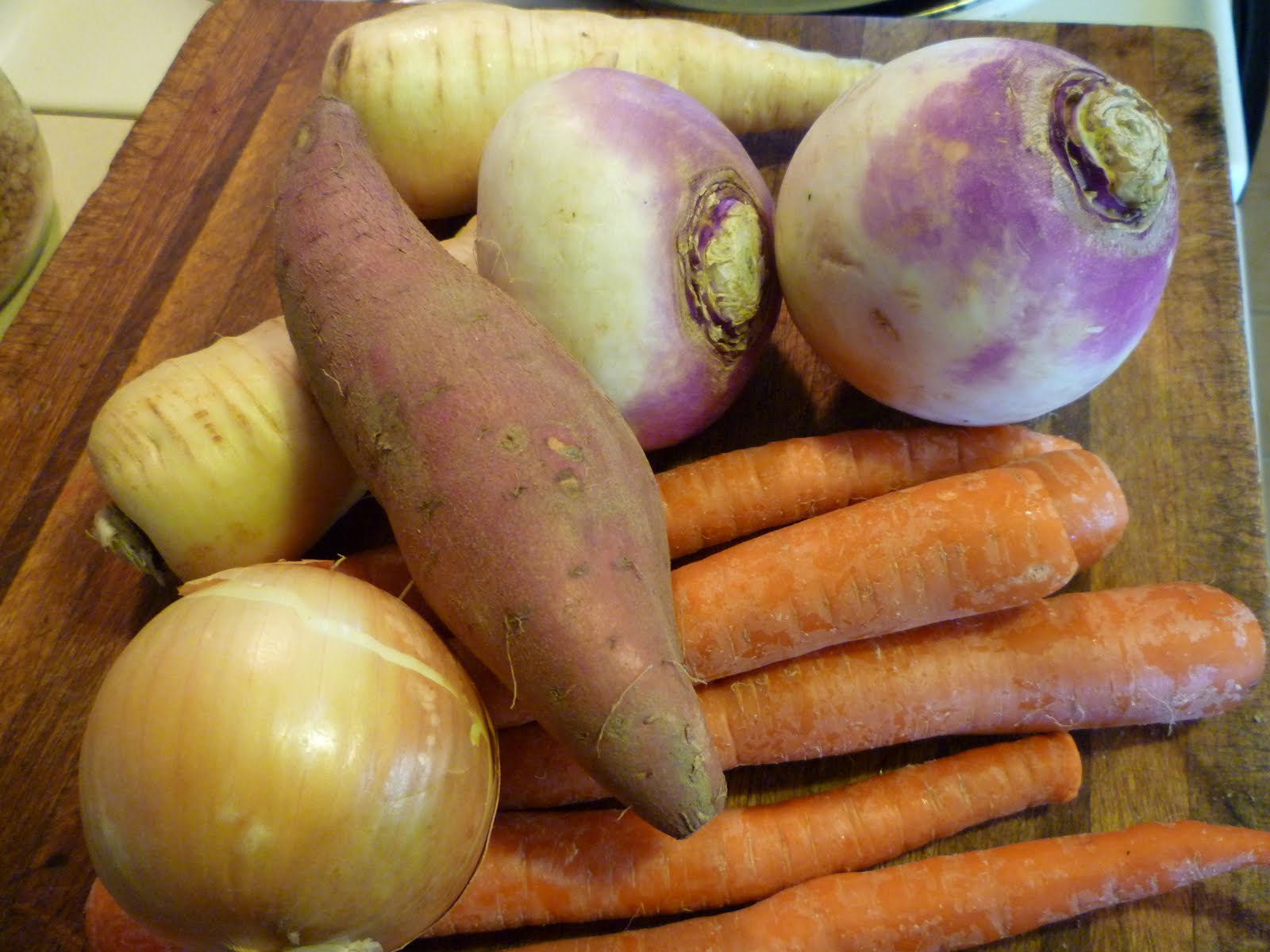
It’s the season for soup! It’s easy to make a lenten meal in the soup kettle, and today I am putting in three kinds of beans and some winter vegetables.

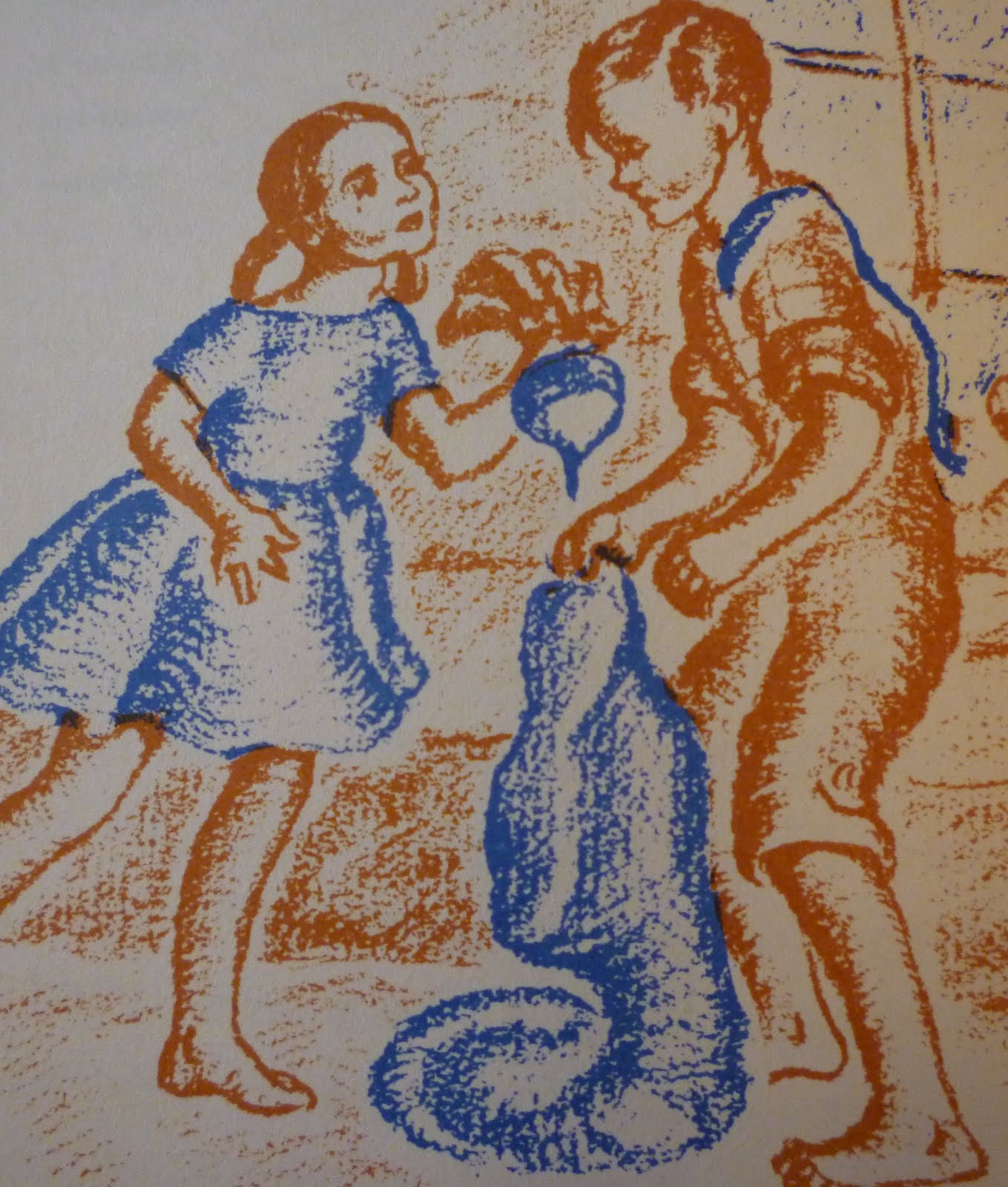
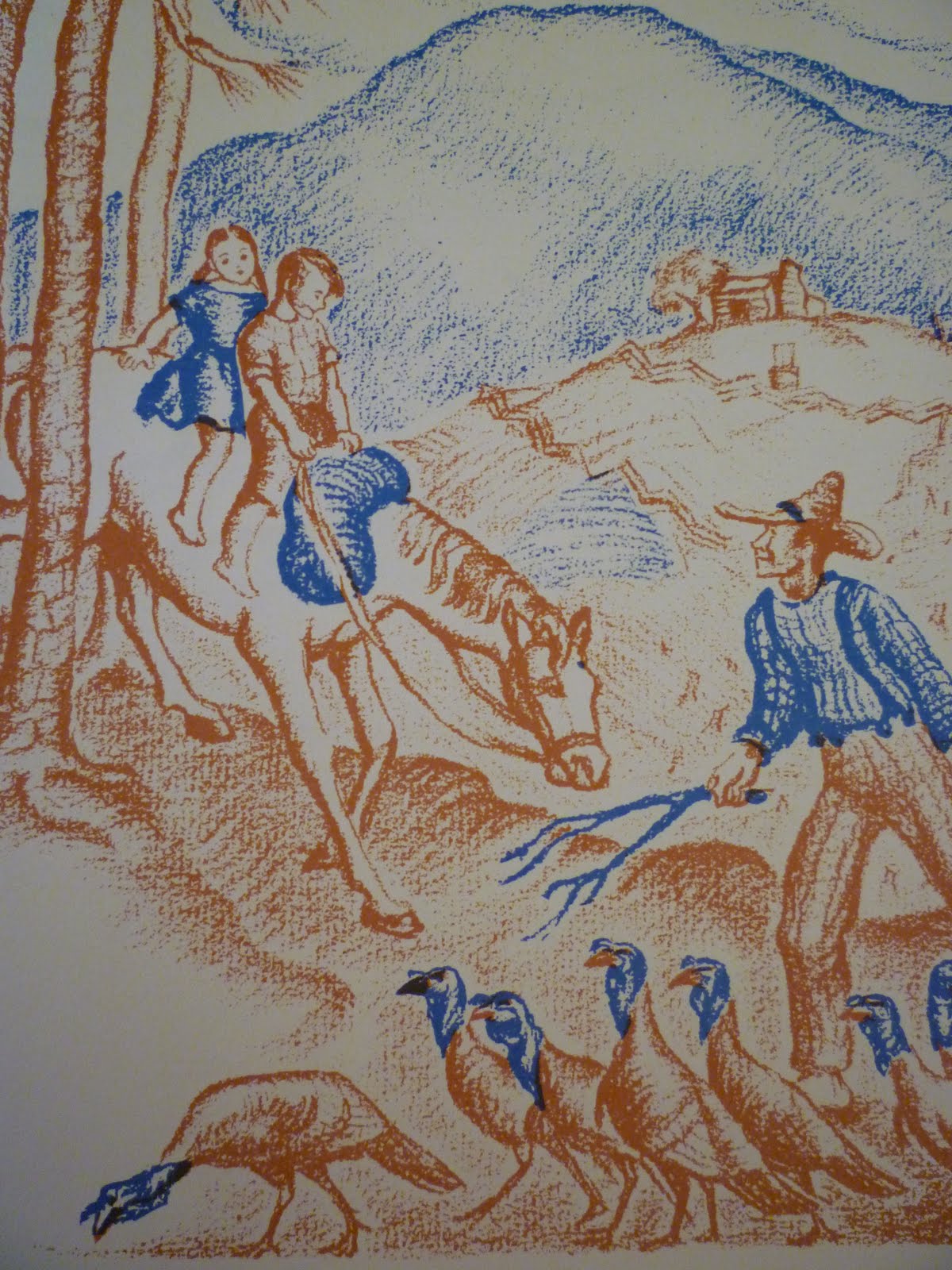
I don’t often buy parsnips or turnips. When I used to read Down, Down the Mountain by Ellis Credle to my children, the vegetables the characters are so fond of must have seemed as exotic as boys and girls riding barefoot for lack of shoes to wear.

In the story, the mountain children carry a bagful of turnips down to the town, turnips they themselves planted and tended lovingly, in hopes of selling them for enough money to buy shoes. But everyone they meet along the way is hungering and thirsting for just such a delicacy, and when they arrive in town they discover that only one turnip is left in the bag.
 I’m afraid that after my first 15 years of family cooking, with its centerpieces of lentil soup and bread, I might have inadvertently started cultivating a taste in my family for fancier food. Fast periods are a good opportunity to repent and reform.
 But this plain food tastes pretty fancy after all.