Category Archives: books

Categories of First Lines

Many of my favorite books do not have particularly memorable first lines. Some books that I will never read have clever, captivating, even brilliant openers, and among those are quite a few that are well known. If you want to test your knowledge of famous first lines, you can do so here. Thanks to my friend E. for that link.

In 2002 Jay Nordlinger on National Review‘s website mentioned a couple of his favorite first lines–not necessarily from favorite books–which led readers to send in nominations for Great First Lines. Many of those were also Famous, overlapping with a few in the quiz linked above, but often they were obscure. Warning to nit-pickers: Some of these are actually more than one sentence.

What makes a first line “great”?  Does it have to hint at what the whole book is about, or only hook you in? For me, I do like a good sentence (and I liked this article exploring the field), and if the first one in a book is well-crafted, it would make me want to keep reading, for pleasure. If it is curiosity-piquing as well, all the better.

One boring or poor opening sentence would not discourage me from reading on, but if the whole first paragraph or page is confusing or muddy I might lose patience. I am getting too old to fool around with the gazillions of pages by authors who need to practice more.

Whether one can search the archives of NR for Nordlinger’s blog posts I don’t have to know, because back then I saved all of the nominations in a document. Unlike much of my document collection, I am making use of this one, to bring a number of good first lines into this small light. Whether they are Great, I won’t judge; I will just give you a few that I liked. These are from books that aren’t my favorites, so I won’t be tempted to put them into the next List of Five. And I hope I haven’t put too many below and spoiled it for a blogger who wanted to use one of these in her own quiz-list.

Nordlinger includes this fact out front: “We have already decided — we, the great collective ‘we’: my readers and I — that ‘In the beginning . . .’ is the all-time champion. Everything else is competing for second place.” I’m glad they got that straight.

Now, a few of the competitors:

“As I write, highly civilized human beings are flying overhead, trying to kill me.” — Orwell, “England Your England” (an essay)

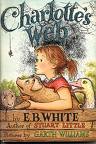
“‘Where’s Papa going with that ax?’ said Fern to her mother as they were setting the table for breakfast.” — Charlotte’s Web

“For forty years my act consisted of one joke. And then she died.” — George Burns, Gracie: A Love Story

“I am a sick man. . . . I am a spiteful man. I am an unattractive man. I believe my liver is diseased.” — Fyodor Dostoyevsky, Notes from the Underground

“A sky as pure as water bathed the stars and brought them out.” — Antoine de Saint Exupéry, Southern Mail

“She stood on the fox until it died.” — Mitchell Smith, Due North
A good sentence is a thing of beauty. This afternoon Mr. Glad and I started taking books off the shelves, turning pages to the first line, perusing those words we had long neglected, but not wanted to get rid of. (“Get rid of” suddenly sounds so crude and unfitting.) So many good phrases and clauses, and some excellent ones.

This is not the end of the matter; what is a blog, after all, but words and sentences, and the will to keep spitting them out? Annie Dillard wrote in The Writing Life, “It is no less difficult to write sentences in a recipe than sentences in Moby-Dick. So you might as well write Moby-Dick.

The way I see it, I might as well write sentences in a recipe.

Five First Lines

I can’t resist the fun of taking part in this literary meme that has been spreading around. I got it from Deb on the Run, who got it from Elizabeth at The Garden Window. It works this way:
1. Pick 5 of your favorite books.
2. Post the first sentence of each book. (If one sentence seems too short, post two or three!)

3. Let everyone try to guess the titles and authors of your books (in the Comments box).

Here are mine:


1. Dear Mrs. Coney, Are you thinking I am lost, like the Babes in the Wood?

2. “Man is what he eats.” With this statement the German materialist philosopher Feuerbach thought he had put an end to all “idealistic” speculations about human nature.

3. Even at the end of March, on the Arctic coast of northern Norway, there is no sign of spring.

4. As I left the railway station at Worchester and set out on the three-mile walk to _____’s cottage, I reflected that no one on the platform could possibly guess the truth about the man I was going to visit.

5. Farmers see things as others do not.                          

Ordinary Grace–and Two Books

I should have taken warning from these lines on the third page:

“Ordinary life does not interest me. I seek only the high moments. I am in accord with the surrealists, searching for the marvelous….But I am not always in what I call a state of grace. I have days of illuminations and fevers. I have days when the music in my head stops. Then I mend socks, prune trees, can fruits, polish furniture. But while I am doing this I feel I am not living.”

So writes Anaïs Nin in her Diary from the 1930’s. Hers was a name I had often run across, perhaps because she seems to show up a lot in collections of quotes. I didn’t know anything about her, so I bought this used paperback book last month. It’s yet another that I will stop reading now. Why did I go on as far as I did, to read such lines as, “To be fully alive is to live unconsciously and instinctively in all directions….”? I don’t know.

But I know that I find this self-absorption and drama almost laughable, and definitely boring, in its gushing descriptions of feelings. Her prose is good; it’s the content that is lacking in concreteness and pervaded by an avoidance of reality; even the erotica she is known for is infused with her self-psychoanalysis and psychobabble.

Then there are the dreaded “ordinary” activities. If Nin can’t find her “state of grace” in the concrete here and now of Everyday, in nature and housework, I would give her condition a different name.

I should start doing a little more research on authors before I take time and/or money to learn about them the old-fashioned way. Wikipedia is easy. I could have found several reasons not to read her.

Annie Dillard is the opposite of Nin in some ways. She finds God, or at least looks for Him, in every rock and cloud and human she meets. When I threw For the Time Being into my sewing basket to take to the hospital for the waiting and laboring, I didn’t know that scenes from the hospital OB ward figure heavily in the book. I read a few passages to Pippin before her labor got very laborious.

“These times of ours are ordinary times, a slice of life like any other. Who can bear to hear this? Or who will consider it?” Dillard asks, as she, like Nin, considers the ordinary, but as a member of the human community, struggling with many questions that concern us all and sharing her ruminations with the reader.

She includes categories and section headers with labels such as Now, China, Sand, and Clouds, and cycles back to the topics again and again through the book. I skipped around and read a few of the Birth paragraphs aloud, and I haven’t yet read from the beginning to see how the author ties all these parts together, but I know from her other writings that she sees the philosophical interrelatedness of everything.

I recall words from G.K. Chesterton about how it is really the common everyday occurrences such as the sun rising or the train running on time that should astound us. But the best version of his thought I can find at the moment is: “The whole order of things is as outrageous as any miracle which could presume to violate it. This is how Dillard thinks.

Of the OB ward, she writes,

“There might well be a rough angel guarding this ward, or a dragon, or an upwelling current that dashes boats on rocks. There might well be an old stone cairn in the hall by the elevators, or a well, or a ruined shrine wall where people still hear bells. Should we not remove our shoes, drink potions, take baths? For this is surely the wildest deep-sea vent on earth. This is where the people come out.”

Her appreciation of the Numinous pervading our existence brings to mind another quote from Chesterton that will be my wrap-up:

There is no such thing on earth as an uninteresting subject;
the only thing that can exist is an uninterested person.

Book Stacks


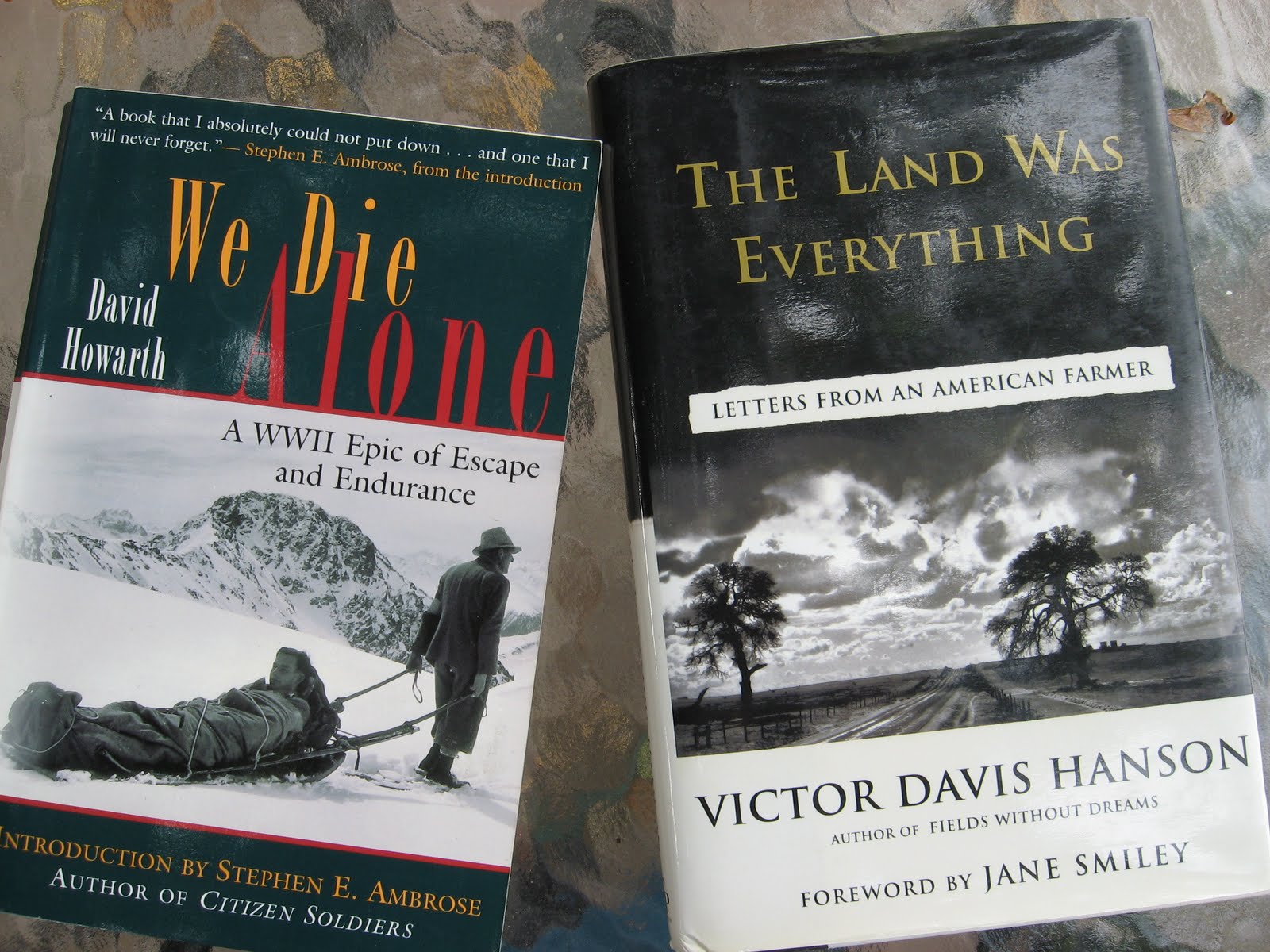
One of my blogger friends posted a picture of her book piles today. I realized that I love this sort of picture because it is a quick version of a browse over more extensive book shelves. It reminded me that I have similar piles around here. This first pile is the books I gave up on this summer, and will be shipping out. I’m still trying to find time to write about why I didn’t finish them. Several of them are by writers I know are good, but I am not equal to them, or I don’t have time for them, or something.

The second stack I just purchased at the library used bookstore yesterday. I went in with my eyes narrowed to paperbacks or very small hardcovers, because that is the category of book I am mostly limited to these days, as I read while lying in bed under the covers. There are already plenty of heavy hardcovers waiting on the shelves for me for those times when I am on vacation or sick or on a long car trip.

So I managed to find quite a range of authors and genres. My California is subtitled Journeys by Great Writers, but the only names I recognize are John Steinbeck and Dana Gioia. The Churchill book is a short biography published by The New York Times at his death in 1965. One of my teachers in junior high recommended the Thomas Wolfe book to me, and Annie Dillard is a longtime favorite. Perhaps some of these will end up starting a new reject stack, but in the meantime I feel prepared for some cozy times this fall.