From our parish bulletin:
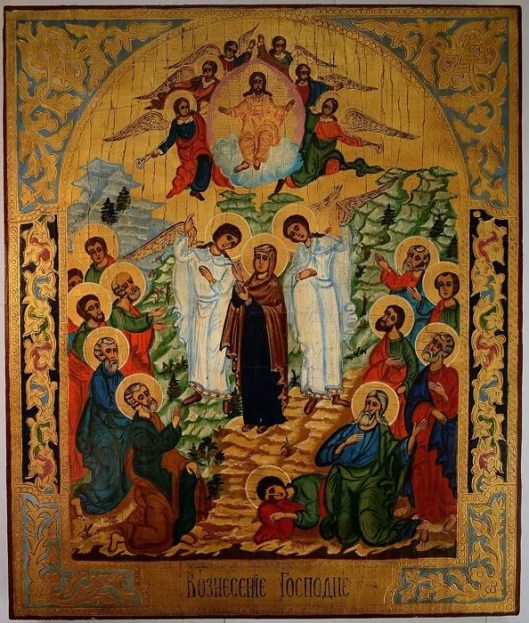
From the eve of the Ascension of the Lord (an event which we confess when we recite the Creed) until the following Friday, we sing this hymn:
Thou hast ascended in glory, O Christ our God,
and gladdened Thy Disciples with the promise of the Holy Spirit.
And they were assured by the blessing
that Thou art the Son of God and Redeemer of the world.
The Feast is always on a Thursday—Forty Days after the Resurrection (described in Acts 1). We are such materialists that it’s hard for us to conceive or understand this event. The Ascension is the vindication of the crucified, buried and risen Lord Jesus, the initiation of His reign— inauguration day—over all creation, and His power made present in us.
“Lo, I am with you, even to the end of the ages. Amen,” says the Lord as He ascends—that is, as He comes into His glory and sits upon the Throne at the Right Hand of the Father. He is with us—we are with Him too— because now, the One Who Is God AND man is in Heaven.
As St. Leo the Great, the Pope of Rome (+461) taught: “With all due solemnity we are commemorating that day on which our poor human nature was carried up, in Christ, above all the hosts of Heaven, above all the ranks of angels, beyond the highest Heavenly powers to the very throne of God the Father.”
This is simultaneously our ascension and our glorification, since we are united to Christ through holy Baptism as members of His Body. Therefore, St. Paul can further write: “For you have died, and your life is hidden with Christ in God.” (Col. 3:3) Out of our physical sight, we now “see” the glorified Christ through the eyes of faith.
St. Leo further explains how important this spiritual insight is: “For such is the power of great minds, such the light of truly believing souls, that they put unhesitating faith in what is not seen with the bodily eyes; they fix their desires on what is beyond sight. Such fidelity could never be born in our hearts, nor could anyone be justified by faith, if our salvation lay only in what is visible.”
The Feast of the Ascension is not a decline from the glory of Pascha. It is, rather, the increase of Pascha, and a movement upward toward the Kingdom of Heaven for those who are in Christ. It is the joyful revelation of our destiny in Christ.

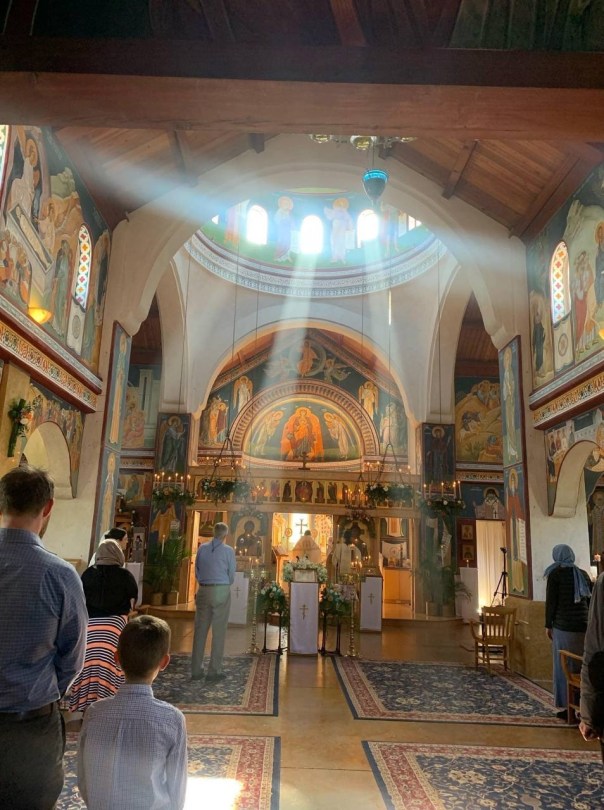
 Orthodox Christians are in Bright Week, the seven days beginning with the Feasts of Feasts, Holy Pascha (Easter), celebrating the Resurrection of Jesus Christ. It’s a week-long afterglow, the first of 40 days during which we greet one another not with “Hi!” but with “Christ is risen!”
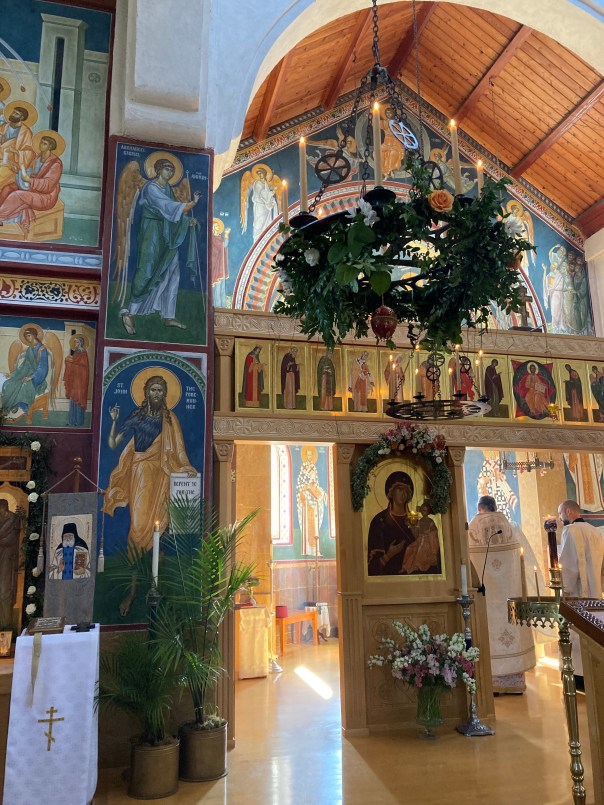
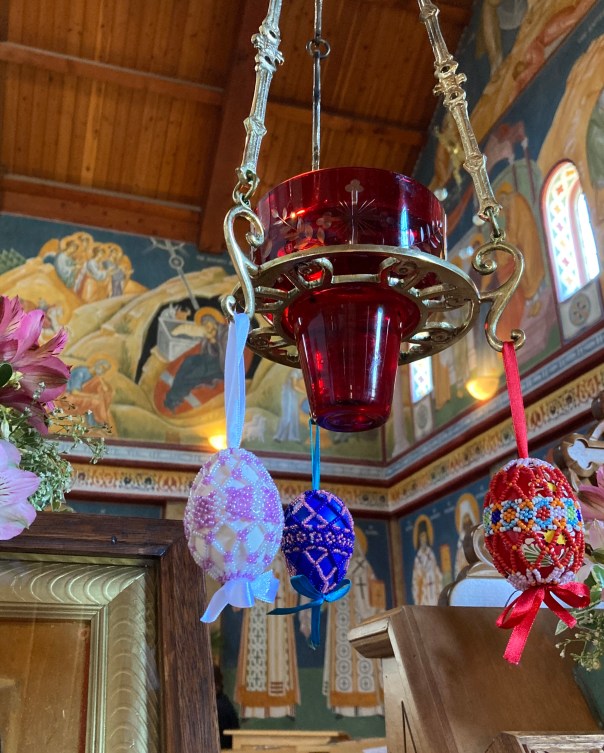
 Gladsome Lights