Category Archives: church

In the fourth week of Lent…

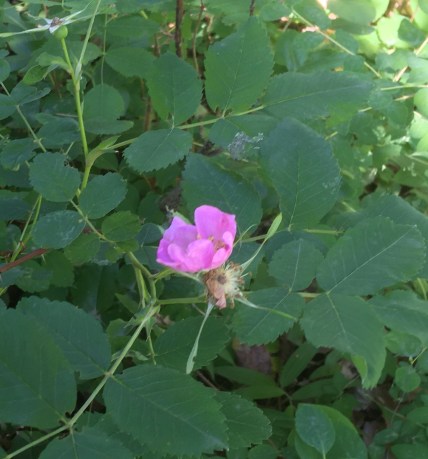
Lithodora

…in the fourth week of Lent I was busy:

1) I cooked seedy crackers, vegan tapioca pudding, and pans and pans of roasted vegetables, including my own asparagus. I boiled a few quarts of ginger tea and tried out another vegan lemon cake recipe that I probably won’t make again. I’m done with cakes for a while. It makes sense to make cakes when one can use eggs and butter.

2) I baked communion bread at church. For a year we haven’t been using the little prosphora loaves that get sent into the altar along with our prayer requests, but we are starting that tradition again; four of us made 200 prosphora. What we call lambs, the larger loaves that we didn’t bake this week, are cut up and consecrated along with wine for Holy Communion. This photo is from the past.

3) I worked in the garden and the greenhouse. Most days now, when the sun shines, I open the door and vent of the greenhouse so that the seedlings don’t swelter. Then I close them up at night to shut out the cold marine breeze. Soon I’ll need to put a shade cloth on one side of the roof as well. The first butternut squash seed took an entire month to sprout; the next several were even later. Nothing like the pumpkins which were the first of all to emerge. I’ve moved most of the plants to larger pots so they can spread their roots in the next few weeks.

4) I shopped at a farmers market with Bella. We ate breakfast there and bought a few vegetables. How long had it been since I’d been to one of those? The sun shone and everyone was cheery. Then we went across town to her community garden plot, because she had a few potatoes that really needed to get into the dirt. I wandered around dreamily while she dug. Besides us, only a very quiet father and little daughter were working their plot, in which they had strawberries in process.

Bella sent me home with some horsetail which she told me to make tea out of, but it is still waiting in the refrigerator.

5) I went to church several times, and did a little housework, and got my taxes paid. I prepared for my church school class by reading more of The Screwtape Letters, and for the women’s book group by reading some of First Fruits of Prayer, which we discussed on ZOOM this afternoon. I ended up not enjoying that book very much. The Canon was not “itself,” plucked out of its normal context of Compline, extracted as a text to read, with explanatory notes but without the usual accompanying music, prostrations, and other tactile and sensory aspects, not to mention the fellow worshipers in the services in which we pray it, divided into four parts for the first week of Lent. This week we will do the whole Canon again, all in one morning.

6) I attended a doubly belated birthday party with my friends with whom I have celebrated for 36 years now, ever since we learned that we were born in the same week of the same year. At that time we lived on the same block of our “village.” Last spring we couldn’t manage it, so this was our 35th luncheon. We ate on the patio at S.’s house and the sun was just warm enough to make it easy to sit and chat for several hours.

7) I found these eggs that my daughter-in-law Joy knitted for me a few years ago, but which were stashed away in a box during the remodel. I posed them among the flowers but then brought them in to brighten up the living room.

This will be another full week. It’s such a blessing to have many different things to do, but — can you tell how worn out I am? It’s a great gift that God gives us rest, too. It’s the 5th Week of Lent – Pascha is coming!

As with marrow and fatness.

The Psalms of the Bible are the poetry that I am focusing on this year in National Poetry Month. They are helping me to also keep a Lenten focus. I’ve had my eye on two Psalms in particular that I wanted to memorize, but deliberately working at memorizing  seems to “not be happening.” Maybe if I at least read them (a little) more frequently some of the lines and verses will start to stick. I love this green pocket Psalter so much. It is from Holy Transfiguration Monastery.

For years I’ve also made heavy use of a recording of the Ancient Faith Psalter, available from Audible. Before John Oliver begins the actual reading, there is this encouraging introduction from Fr. Michael Gillis, which I have transcribed:

Introduction to the Ancient Faith Psalter

The Psalter is a prayer book for the church. It has been so before there was a Christian church. There is an ancient saying attributed to St. Athanasius the Great that the Psalms are different from the rest of Scripture in that while the rest of Scripture speaks to us, the Psalms speak for us. When we pray the Psalms we are praying the words God has given us to pray.

It has also said that the whole story of God’s dealing with Israel is an allegory of each person’s spiritual journey, the story of God’s dealing with every human soul. Therefore, inasmuch as the Psalms sum up and interpret the story of Israel, the Psalms also sum up and interpret the spiritual journey of every human being. The Psalms touch every experience of human life in our fallen world; every joy and every terror, every fear and every hope are found expressed in the Psalms. Some Psalms are beautiful, to the point of seeming sentimental. Other Psalms are bloody and apparently vindictive.

Such a range of emotion and experience is offered to us in prayer because in some inner or outer way, at some time in our life we will all experience this full range of thoughts and feelings. In fact, because some of these thoughts and feelings are so extreme, so evidently horrible, it is only through praying the Psalms that we come to realize and then confess both to ourselves and to God in prayer that yes, even such terrible things as these at one time or another have passed through our minds and perhaps even our hands.

This literal reading of the Psalms however is only the beginning. As one prays the Psalms one soon begins to realize that the enemy, the Amalekite or the Philistine, the nations that rage against God, are not people or situations outside myself, but are most poignantly referring to the wicked impulses and evil thoughts that I must battle within myself. The psalmist’s cry for deliverance becomes my own as I see within my own heart and mind the struggle between good and evil; the betraying thought, the accusing word, or the mocking laugh.

The Psalms give us words, images and metaphors by which we can cry out to God for help in the midst of our inner struggles. What the psalmist describes as external speaks to our internal struggles, because all outer conflict is a reflection of an inward struggle. Is this not what Jesus told us when he said it is out of the heart that murders and adultery flow?

The Psalter is a prophetic book; it is prophetic of Christ but it also speaks prophetically of all who are in Christ. Just as “strong bulls” surround Christ on the Cross, so too all who pick up their cross and follow Christ experience in one form or another this attack of the strong, and come to know their own weakness in resisting it, their own need to be delivered from the “power of the dog,” “the mouth of the lion” and “the horns of the wild bulls.” Similarly, the prophetic declaration of the Resurrection of Christ, “Let God arise, let His enemies be scattered;” this also is our declaration as we experience moments of deliverance and help over our inner enemies.

The Psalms speak of God and man, Christ and Christian, inner and outer conflict, victory and defeat, heaven and earth, wisdom and foolishness. With few words and much meaning, the Psalms provide the images and words for every prayer, every need, every celebration on our journey through this world.

-Fr. Michael Gillis

A beautiful Pride, and the Cross.

One day during this week of the Cross, which comes now in the middle of Lent, I drove to the coast. It was cloudy but not as cold as inland. Here the north wind has been blowing, and a different night Susan even built a fire that I was so glad to sit in front of when I came home late. I will write about the beach on my Sea Log eventually, but here I wanted to post pictures of the Pride of Madeira echium that are so abundant out that way in this season.

In the past I’ve mentioned how my late husband and I, celebrating our wedding anniversary in March, often used to spend a night or two at the coast, and it was on those trips that I first encountered this plant. We were always delighted to see it again and again up and down the California seashore, for more than forty years.


It does grow a ways inland, even in my neighborhood, but it seems to prefer the coast. And the botanical cousin that I have in my back yard, called Tower of Jewels, I do not love as much, even if it is more rare. I’ve never seen so many and varied colors and forms as I did this week along one stretch of Highway 1.

I also wanted to share something of the wonderful homily, “In the Days of His Flesh,” which I heard on a podcast. Fr. Patrick Reardon gave this homily on the Sunday of the Cross. But I am too sleepy, so I’ll just leave you with the link, and this little quote from elsewhere:

“The cross stands in the midst of the church in the middle of the lenten season not merely to remind men of Christ’s redemption and to keep before them the goal of their efforts, but also to be venerated as that reality by which man must live to be saved.

“‘He who does not take up his cross and follow me is not worthy of me’ (Mt.10:38). For in the Cross of Christ Crucified lies both ‘the power of God and the wisdom of God’ for those being saved (1 Cor.1:24).”

Mosaic is in the apse of the Church of San Clemente in Rome. Prompted by a comment from Jeannette, I have added a larger image showing more of the setting, here at the bottom.

An eleven-book day.

Later in the spring, 2019.

The bookishness of today was out of the ordinary in my recent life; shall we say, the last 20 years of it? And it only slightly resembled former days when going to the library was a regular thing, and between the several children and me we’d bring home bagfuls of books every few weeks, after browsing the shelves as long as we could manage.

This morning I visited our church library, looking for a specific book on the Psalms, but couldn’t find it. I did borrow two related books, though, and three more on other subjects.

On the way home I stopped at my town’s public library to pick up what I had placed on hold via the library’s website. They email you when your holds are ready, you drive to the library and phone them, and they bring your books out in a bag and put them on a table. I have formed a habit of going to the library every Friday, so that I can return books too; currently you can only do that on Fridays and Saturdays. I had four books ready to pick up, as it turned out.

When I pulled into my driveway a few minutes later, it was pleasantly warm in  my car, and I knew the house was chilly, so I sat there and looked over those four books, which were all children’s books. The three that were by the same author I left in the car, because I will just take them back; I didn’t like the particular theme that the author seemed to be stuck on.

The fourth book I had borrowed because I noticed this week that two Orthodox priests I follow on Goodreads had given it five stars, and it was a book I wasn’t familiar with. I began to read it and didn’t stop, just sat there behind the wheel for the next hour being charmed, by The 13 Clocks. I have over my life enjoyed many things James Thurber has written, so I’m not surprised. It was really fun, and I’d have liked to read it through again right then.

But I was getting ready to go back to church, this time for a service. My priest wrote me that he was sure he’d seen that book I wanted in a box of titles that hadn’t been shelved yet (lacking enough shelves), so I went back early and looked through not one but four boxes. There was a book with a similar title by the same author, Fr. Patrick Reardon, not about the Psalms, and which I already own. But I found two more books in those boxes that called to me, to take them home, one of them being Four Arguments for the Elimination of Television, which I read a long time ago but don’t remember much of. So eleven books came home with me, and three stayed in the car. Here are the eight books that remain.

What is strange is to bring so many books into the house in one day, and not one of them did I buy! I can take them back to their places whenever I want, no remorse. These days there isn’t such pressure even with the public library system to return books promptly; they stopped charging overdue fines even before covid, and the books take a long time in process once you do drop them in the return slot, so they have to be lenient about everything.

Maybe I won’t have any of these very long, but for now, I have happily filled more crannies and nooks with more delicious books!