Category Archives: culture

Maui Diary 11 – Aloha Oe

On Maui we stayed in the town of Kihei, where 50% of the permanent residents of the island live. This plebian environment was more our style than the resort life we observed just south on the beaches next to Wailea’s villas and grand hotels. Just strolling on the beach path that winds past their perfectly groomed and gorgeous grounds, I became a little self-conscious about my commoner’s clothes every time we passed the hotel guests.

Staying in a condo rather than a hotel also made for a relaxing and homey existence, at least for people like us who like to set up housekeeping for ourselves and actually prefer to eat breakfast “at home.” We bought sweet Maui Gold pineapples at Safeway and ate of them in the morning while I was still in my nightgown. Each of us had one day that we were under the weather, and we could just laze about our apartment, and grill steaks or fish for dinner on the barbeque outside.


Our place had a view right out to the beach, and one evening I sat in front of this scene and counted 27 palm trees within my range of vision. The stars came out and were as bright as in the high mountains; I couldn’t get over how well I could see without my glasses Orion’s belt and even his sword.

I wouldn’t complain if someone gave me a week at a resort and I had to eat at its restaurants, but as long as I’m paying, I’d just as soon stay in a less expensive condo like the one we were blessed with and enjoy the food at the many places the locals also enjoy.

The Coconuts Cafe with its deservedly famous fish tacos is a fine example. The coleslaw, normally in the tortilla but which I had on the side, was made with a refreshing coconut milk dressing that I’d love to try to replicate.

Mr. Glad has for some time enjoyed Hawaiian guitar music, so we had looked forward to being in Hawaii and hearing some good examples. One evening we went out for some live sounds that turned out to be not that great and not traditional, but the luau on our last night was fulfilling and very fun in its historically accurate dancing and music.

Over the radio in our rental car we heard a new-to-us contemporary Hawaiian sound that was maybe not traditional musically, but in the easy-listening messages conveyed it was all about loving the motherland and listening to the forefathers who will teach you how to be honorable Hawaiians.

Shirt Mr. Glad gave me for my birthday

This harkening to cultural roots and the ancestors generates a desire on the part of parents to put their young children into classes where they will learn the Hawaiian tongue. It seems that though Hawaiian names and phrases are floating through the balmy air everywhere, currently very few people actually have any real ability to communicate in that language. I wonder if that will change, or if the children force-fed this artifact will respond with disdain as have the Irish I know who were made to study Gaelic in school.

Besides the reverence for the land and the history, we noticed in the popular and melodic songs we heard a phrase repeated in nearly every one: ka puana. Eventually we were able to investigate and discover that this means something like “It’s fun to be with you.” It often went along with words about Having a Good Time, which easygoing theme was one of the unique scents in Mauian atmosphere.
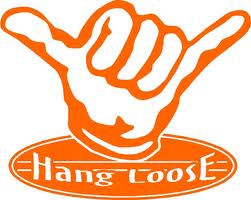
How would it be, we mused, to live as a permanent resident in this place, where one might reasonably believe that even people with jobs and families display the Hang Loose symbol and attitude? It’s almost certain that we will never know the answer, even if we sojourn there again.

Ages ago, at my 8th grade graduation, our school chorus sang an English version of the Hawaiian tune “Aloha Oe,” (“Farewell to Thee”) and it made a big impression on me, so that I can still remember some of the words in our translation, and find that they don’t exactly match anything to be found online.

At least I did find a nice guitar rendition of the tune (just below), with lovely pictures, to wrap up my Maui Diary. As you will guess, many of the pictures are of scenes I didn’t see, but they convey something of the Hawaiian heritage and natural beauty.

I won’t end with that video that someone else put together, because I do have one of my own making! It was recorded on a windy afternoon on the beach by our condo, so the only sound in the movie is that of the tradewinds. It’s a 360° view, starting on the beach, and taking in a row of condominiums. Ours was the flat-roofed one somewhat in the middle.

And at the very bottom of the page, the refrain of the song as I remember singing it. Good-bye, Maui! Until we meet again….

Aloha Oe, Aloha Oe,
The winds will carry back my sad refrain;
One fond embrace before we say good-bye,
Until we meet again.
Swan Lake stories


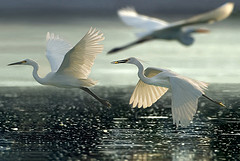
I really got into the Swan Lake story last Spring. It all started with an Amazon.com recommendation, from which I learned that Mark Helprin had written a book-length adaptation of the tale that was most famously told by Tchaikovsky’s ballet. There were surprisingly few reader reviews of his book given that they were nearly all gushingly positive, some saying it was the best book they had ever read.

I’ve long been curious about Helprin and the many books he’s written. Some of my family and friends have read his novels, stories, and non-fiction pieces. I had a feeling that I should appreciate him more than I did, and I planned to try again to read his fiction. I was sure his Swan Lake would be good, and I nearly ordered it without previewing it. But then I saw that it was first of a trilogy, and people were less thrilled with the sequels, so I got it from the library instead to see for myself before investing on behalf of a grandchild.

While I was at it, I borrowed three other juvenile versions of the story, so I would have something to compare with. On the first day of Lent I read all four of the books — I know, it was an odd thing to do that day — and scratched out some thoughts. After returning the books to the library in the interest of focusing on more appropriate matters, I forgot all about the subject, until today, when I decided I should gather everything up finally.

Helprin’s version (©1989) would have to be counted my least favorite of the four. It’s the length of a short novel, and his story is fleshed out with several characters who don’t appear in the more common tellings. It’s the most changed, interesting and complex story, but maybe too complicated. The story’s flow is interrupted with goofy details and sidetracks that detract from the moral weight. The narrator’s voice is not that of a believable old man, not that of the man who has enough wits about him to accomplish what he does. Yet he’s supposedly a sage.

I also did not like the loose morals of the characters, who literally “shack up” together and have a child, who figures in the politics of the realm in the sequels, as I understand. The prince never does behave in a very noble fashion that I can see. And what’s the good of a fairy tale if the prince is at best only a foolish boy?

I’m really not competent to even know what it is about Helprin’s fictional style that puts me off. Probably it’s only a personal preference or lack of foundation that makes it hard for me to enjoy him. But I think that I’m through trying.

My next-least favorite of the bunch of Swan Lake tales that I read was Swan Lake, retold by Anthea Bell, illustrated by Chihiro Iwasaki (©1984). I liked the watercolors, but there weren’t enough pictures of swans for my taste. And the story line was thin.

Swan Lake, adapted and illustrated by Donna Diamond (©1980) was second-best of my stack. It was thorough story-telling, including more motives and complications, with nice black and white, dreamy paintings.

My favorite was Swan Lake, retold and illustrated by Lisbeth Zwerger (©2002). The illustrations were pleasing to me, and after mentioning several versions of the ending, the author makes it into a happily-ever-after story.

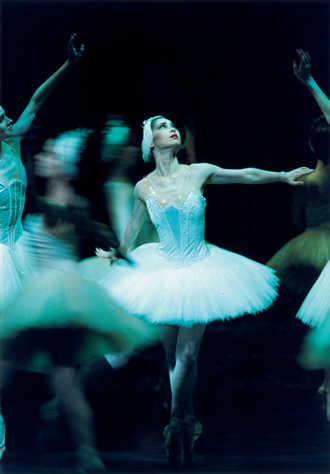
After all my literary wanderings, I’m left wondering if perhaps this tale is best told through a ballet performance. I know that even in that form there have been widely divergent versions of the story, but I can’t help thinking that the rich visual and musical elements would make the whole experience more satisfying than did any of these books.

Readers and Doers

Janet has a discussion going on about reading and what our reasons are for doing it. I’ve been thinking a lot about the decrease in the habit of reading among Americans, which was discussed recently on a Mars Hill Audio interview with Dana Gioia.

Gioia was Chairman of the National Endowment for the Arts when the agency did a large survey of the nation’s reading habits. We’ve known for decades that people are reading less…and less…and less. Isn’t this interesting, when a bachelor’s degree is becoming more common? Just this week I heard of a young woman who has a degree, who flat-out refuses to read anything, saying, “I don’t read,” at the same time she declares that she must need to get a job, she is so bored. This in spite of having a lively young child.

The phenomenon links right in to another observation by a college professor I also heard on Mars Hill, that the vast majority of students of “higher education” today do not connect their studies to their life outside the classroom. When they are with their friends, they would never think of discussing a novel or how the wisdom of the ancients applies today. Is reading a task they have only ever done to pass a test or please a teacher? One doesn’t want to call what these people have undergone “education.”

Still, there are those of us who read, and not out of duty! Not for escape, either. As it turns out–and this surprised Dana Gioia–people who have a rich internal life with books are more likely to be involved in their communities and do volunteer work than non-readers. Reading is not truly a solitary activity, because the reader and the writer are interacting, and as the reader’s interior world is enlarged, his engagement with his fellow humans broadens accordingly.

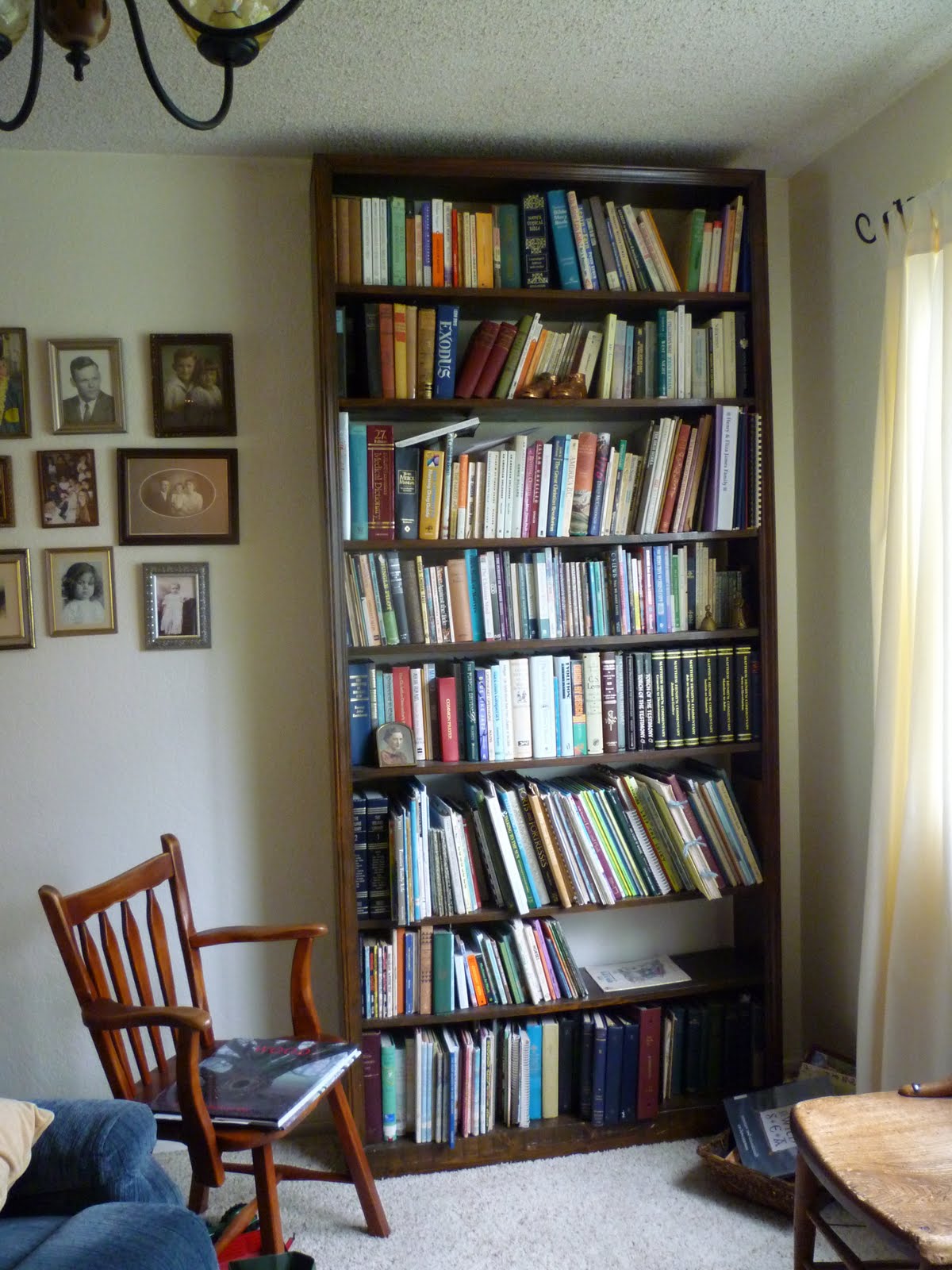
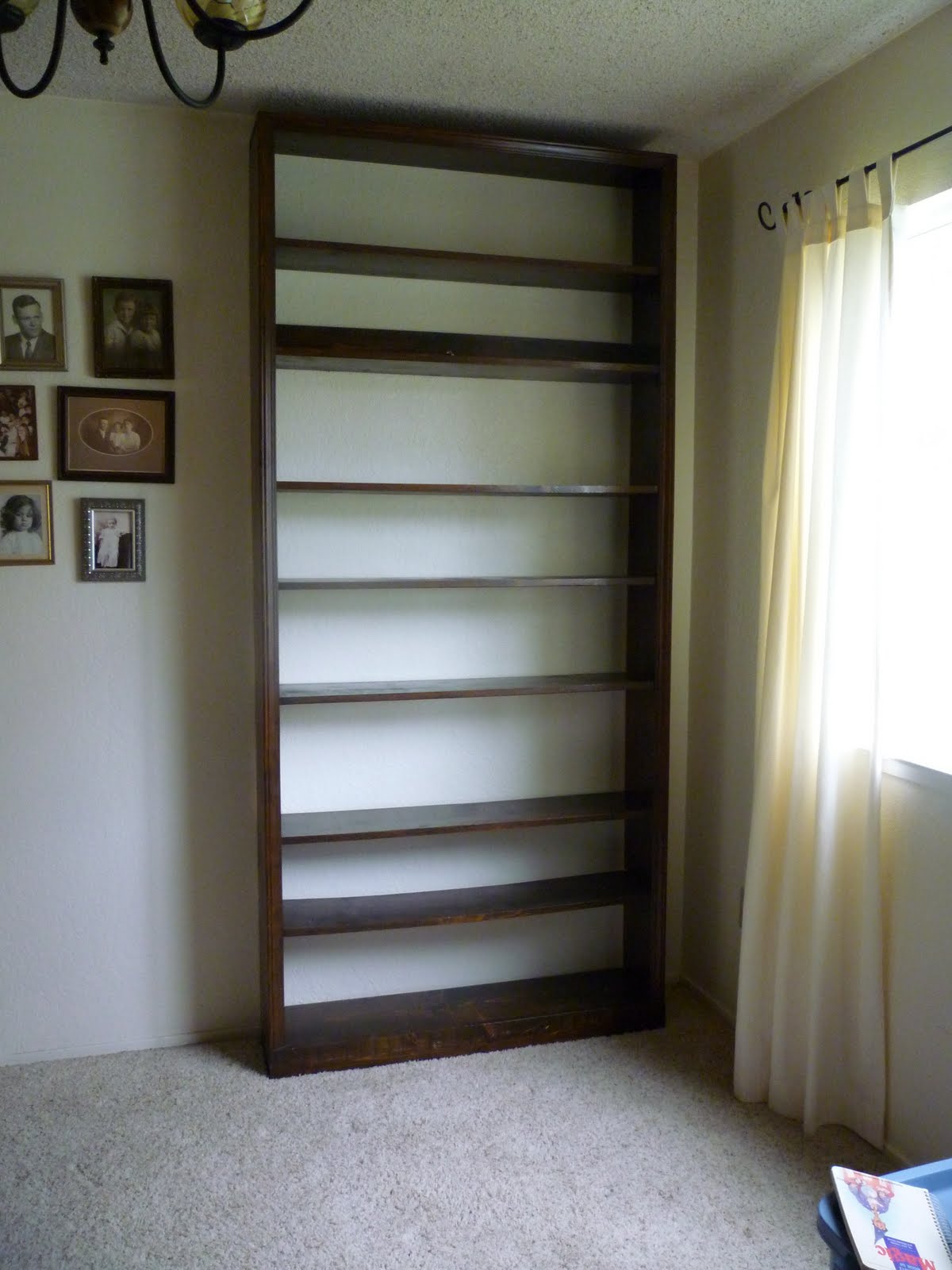
The research gives a lot to think about–and I would write down my thinking, too, if I weren’t embarking more intensely now on a very different sort of work, that of remodeling our kitchen and downstairs floors and ceilings. Just look at this bookcase that has been denuded! A pitiful sight.

It marks only the beginning of the destruction and deconstruction and disorder around here. My computer will be moved to another room, not as handy. I will be packing and packing, and scraping and painting, and cooking without a kitchen. Then I will be unpacking and setting up my home again. Though it’s certain I won’t give up reading altogether for this while, I must think of the next few months as more in the realm of doing good in “my community.”

Every Lent presents a new challenge, because even if our circumstances or station in life might be the same as last year, rare enough as that is, we as individuals have changed from last year’s season of the fast. As I heard the exhortation at Matins this morning that we would show compassion on the needy, it confirmed the idea that had been growing on me, that this house project is not this year’s distraction from Lent, but provides a perfect setting for me to learn compassion.

Having my house torn up and chaotic, wondering which task I should do next and where I stashed the item I didn’t think I would need but now I do–all this causes me anxiety. But my poor husband suffers more, I am certain, and he needs me to show compassion and patience and love.

It wouldn’t hurt me to pray the Lenten Prayer of St Ephrem throughout the days of my opportunity:

O Lord and Master of my life!
Take from me the spirit of sloth, faint-heartedness, lust of power, and idle talk.
But give rather the spirit of chastity, humility, patience, and love to Thy servant.
Yea, O Lord and King!
Grant me to see my own errors and not to judge my brother;
For Thou art blessed unto ages of ages. Amen. 

Science and Health and Death to the Infirm

Today I just want to pass on to you a blog that I much appreciate: Junkfood Science

The recent blog post by owner Sandy Szwarc concerns aspects of the current healthcare reform bill: “This legislation is the culmination of efforts since 1938 to change what the public would once have viewed as morally repulsive into something accepted.” And it’s about our parents and grandparents and other older people who need our care and protection. I commend this particular post to your reading in their interest, but you might want to check out other topics Sandy has covered. I know that every issue is tackled in a way that clears the fog drifting around and through my own mind.