Category Archives: family

Snow falls but I am warmed.

On the plane to Philadelphia I got halfway through Metropolitan Anthony Bloom’s God and Man. It helped to calm my jitters that had developed since the initial excitement and decision to go to my last remaining aunt’s memorial service. I was about to arrive at an event and to enter a house and family where every person was a stranger.

Eeek! What was I getting into? Metropolitan Anthony encouraged me with words about love and life, and before I knew it a first cousin once-removed was hugging me at the airport and driving me to a houseful of other huggers and gracious people. I stayed up with them later and later every night sharing stories of our grandparents and parents, digging up memories and laughing with happiness over all the many connections we have by way of genetics and family traditions.

The realities of The Kingdom I had been reading about are certainly pertinent to the activity in my heart last weekend, but I’m still debriefing myself about what happened. I may never figure it out enough to put it down in words, but it was exciting and glorious.

What I am able to do is share some photographic images of the little bit of Philadelphia I experienced. Cousin #1 put me in The Nursery at her house, which is decorated in the most comforting and cozy way, with pictures of the Teddy Bears having their picnic, and Babar, and more pictures and items that probably helped me feel that I was falling asleep with the Sandman’s help as when I was a child. Stuffed animals sat around on the stuffed chair and on the extra bed, and green leaves were painted on the creamy yellow wood floor.

In the kitchen Revere Ware pots had been hung on the wall – hey! just the way Grandfather used to do! – and science “experiments” I won’t describe sat on a shelf all ready for the grandchildren, my first cousins twice-removed. Flowers filled the air with sweetness – We would soon load them in the back of the car to drive to the memorial service and reception.

See that orange towel on the kitchen counter above? I brought it with its citrus-y design as a gift to remind my cousin of the boxes of oranges my father sent across the country to their family every Christmas in bygone days.
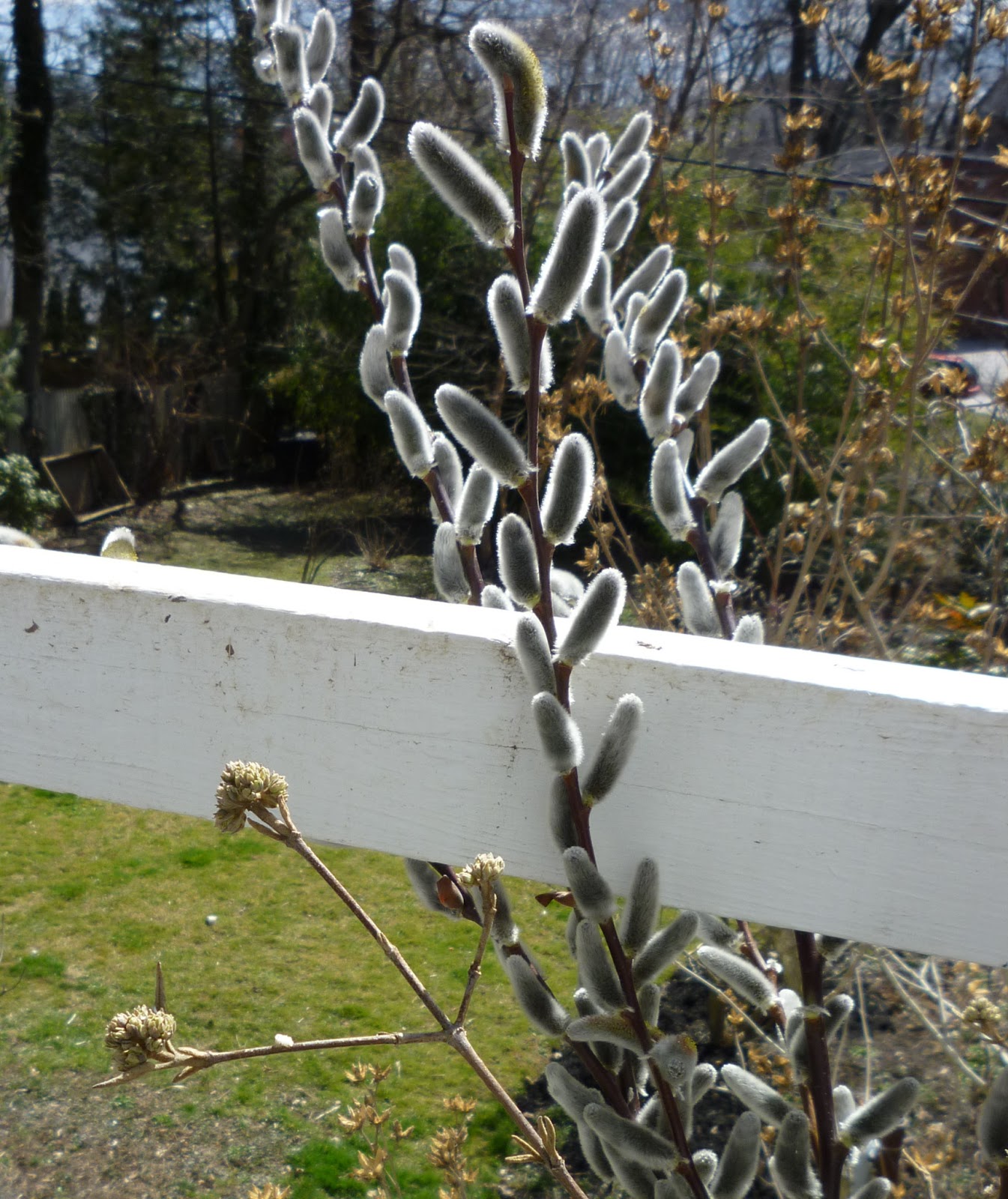
Out back, raised beds were awaiting spring planting, and pussy willows budded right off the kitchen porch. I sat on the steps going down to the garden to talk on the phone to Mr. Glad who was still back in California missing me.

The morning of the memorial service we walked a block to the train station to meet daughter Kate who had come from D.C. to be with me. She had never even met her great-aunt whose life we were honoring that day, but she was happy to get acquainted with the cousins, and she slept in The Nursery in the bed next to me.

One night Cousin #3 cooked dinner for the two of us at her place, a very “vertical” row house in South Philly, narrow and rising five levels. She honored the first owners with a photo on the wall showing a very sober and Italian wedding party featuring the bride-and-groom owners. It’s a pretty old house of the sort that has (newly refurbished) rosettes on the ceiling in some rooms.

All the long weekend, all the folk I met were amazed at how much I resemble my late aunt; the cousins in our branch of the family haven’t been together in a long time, and for most of their lives they had been daily surrounded by people related to my aunt’s former husband. I was happy to provide a facial link to her instead. We pored over all the old photos we had assembled, staring at the faces as though trying to penetrate the souls of our ancestors to understand who we are.

I woke up the morning of my departure to see the ground all white, and snow falling. The birds arrived at the feeders, and I even saw a female Cardinal for the first time. I’ve never lived where this classic red bird does.

After I was dropped at the airport, I wandered around waiting for a flight that was delayed for weather, and wondered at how fast I had made a fast friend of my cousin. Someone told me before I set off on my adventure that a cousin is sort of like a sister, but better in that you don’t have the tension that can happen between siblings.

So it seems at this point, and I’m grateful for the gifts of God. He is everywhere, of course, even in the middle of a bunch of strangers. We don’t have any love that doesn’t come from Him. But that provides plenty.

Flying and Flowers

At least, I was able to be home and in wonderful services at my home parish for the first few days of Lent. Now I am flying away to Pennsylvania for an aunt’s memorial service and to be reunited with some cousins after almost 50 years. Not the ideal time, but part of me is excited about the familiness. Daughter Kate is coming up on the train to be with us, too.

On the home front, recent rains brought out more flowers. These daffodils are always looking down at the ground where only the snails can enjoy their faces, so I cut a bunch and brought them indoors for us humans.

Only two ranunculus are coming up from a previous year’s huge planting.

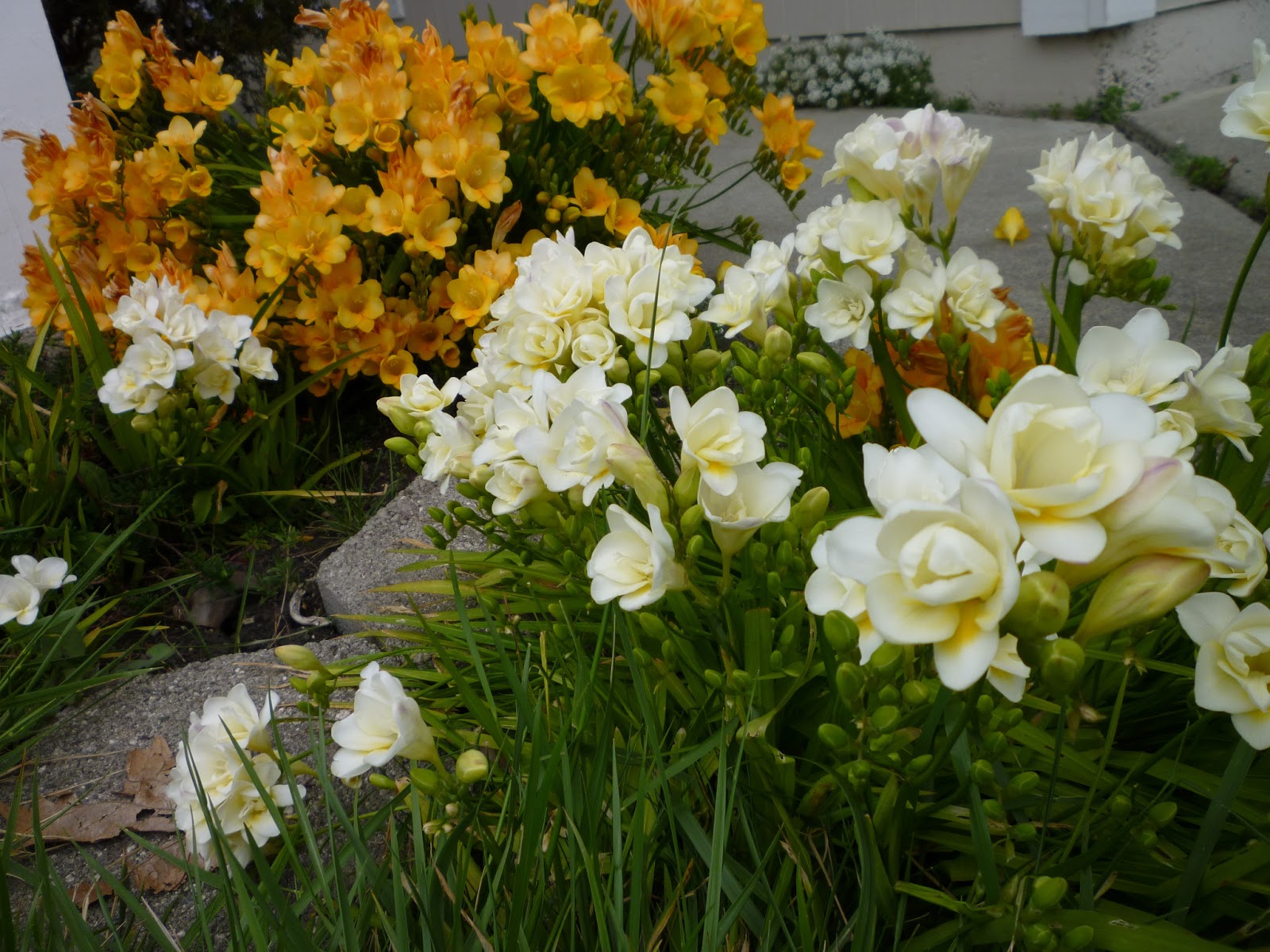
But the freesias multiply year after year.


I’ll be back in a few days, maybe with a tiny travelogue. Good Lent!

Bridges and Streams

Great-grandparents

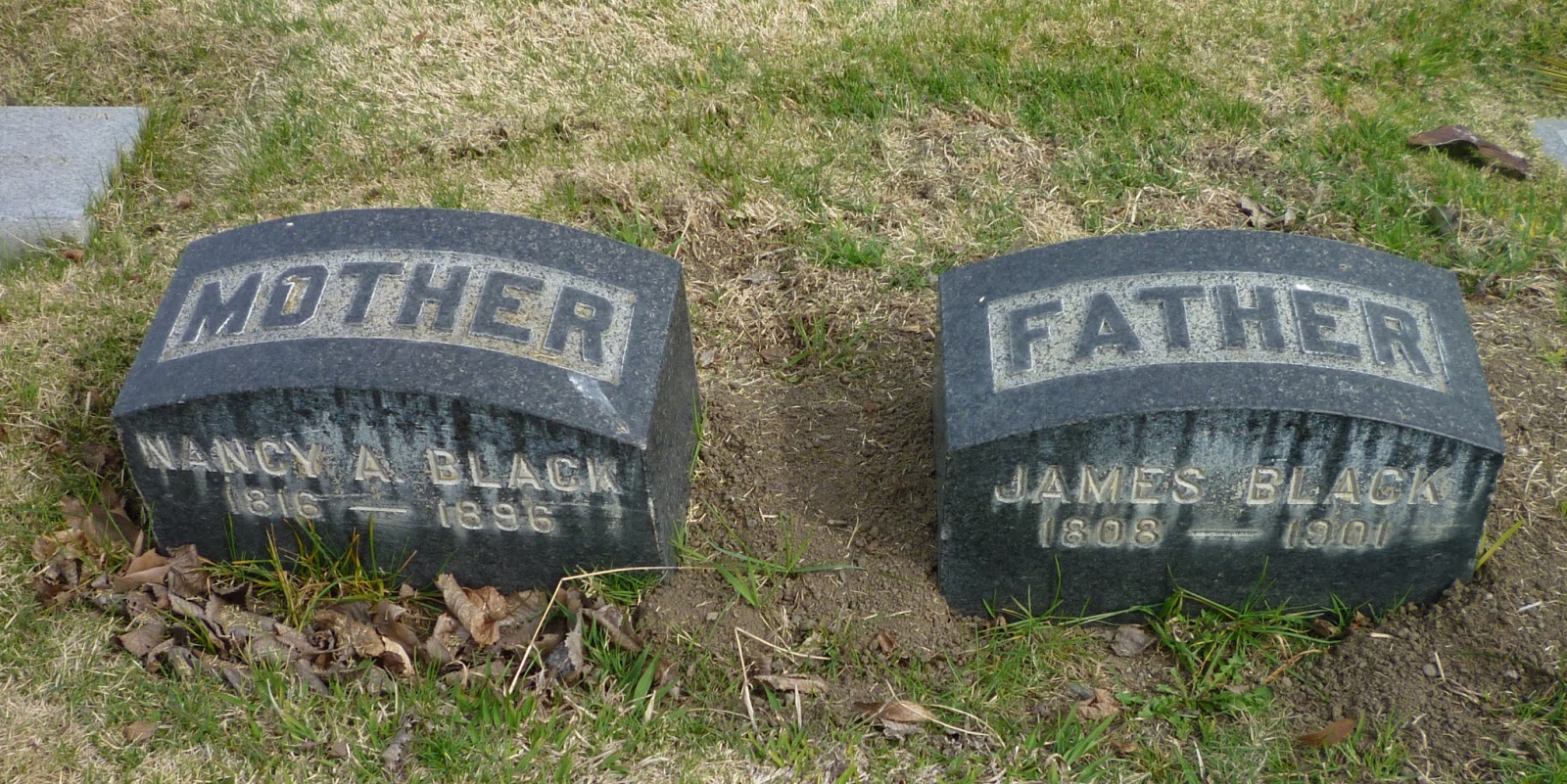
Last week was filled with historical talk and images – even theology. First there was the cemetery where we had buried my father-in-law in January. We checked to make sure that the gravestone had been cut and set properly, and then we visited the graves of Mr. Glad’s great-grandparents and grandparents on both sides of the family, and several aunts and uncles.

Above is a photo of one set of the great-grandparents whose graves we visited, people born in Cornwall in the mid-19th century. They came to California to work in the New Almaden quicksilver (mercury) mines near San Jose, where the wife Eliza gave birth to my husband’s grandmother and several other children.

When I look into the bright eyes of that face I just wish I could hug her. Why do you focus on her and not him, my husband asked? Because she’s a woman and I’m a woman, I answered. I feel strangely connected to her across the years and in spite of the fact that I never knew her nor are we even related by blood. I wonder if she is praying for her descendants, including my children and grandchildren? I can’t see and touch her right now, but (Matthew 22) “God is not the God of the dead, but of the living.” She is a real living person, not an idea.

New Almaden Englishtown

The novel Angle of Repose by Wallace Stegner tells the story of a miner and his wife who lived for a time there in Englishtown, with tales involving Mexican miners in the camp’s “Spanishtown.” The Cornish people attended the Methodist Episcopal Church on the hill and Eliza is remembered as loving to read her Bible.

When her children were grown and the parents had moved into San Jose, she still prepared a large spread every Sunday afternoon and expected all the children and their families to come for Sunday dinner. She was especially fond of her grandsons.

Many of the women those days kept chickens and cows but Eliza was the only one in her family who had the gumption to kill a chicken. When any of the others wanted chicken for dinner they would take their bird to Eliza to chop off its head.

A mother and father not ours

On the first night of our trip to these forbears’ old stomping grounds we had dinner with a dear cousin who also is linked and indebted to them. We came bearing gifts of photographs of some relations who have passed on, and we talked about our family — and of course, our own childhoods.

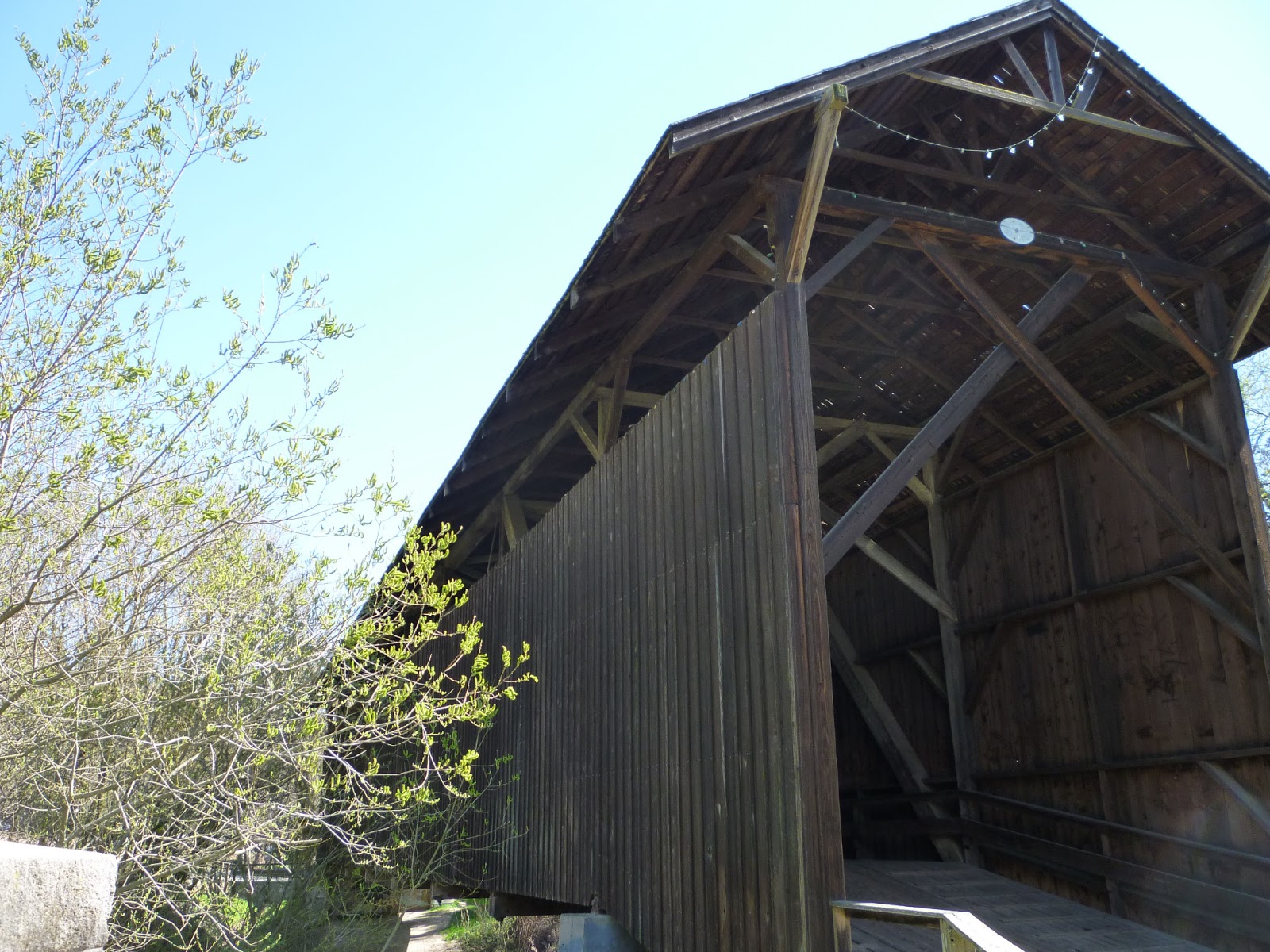
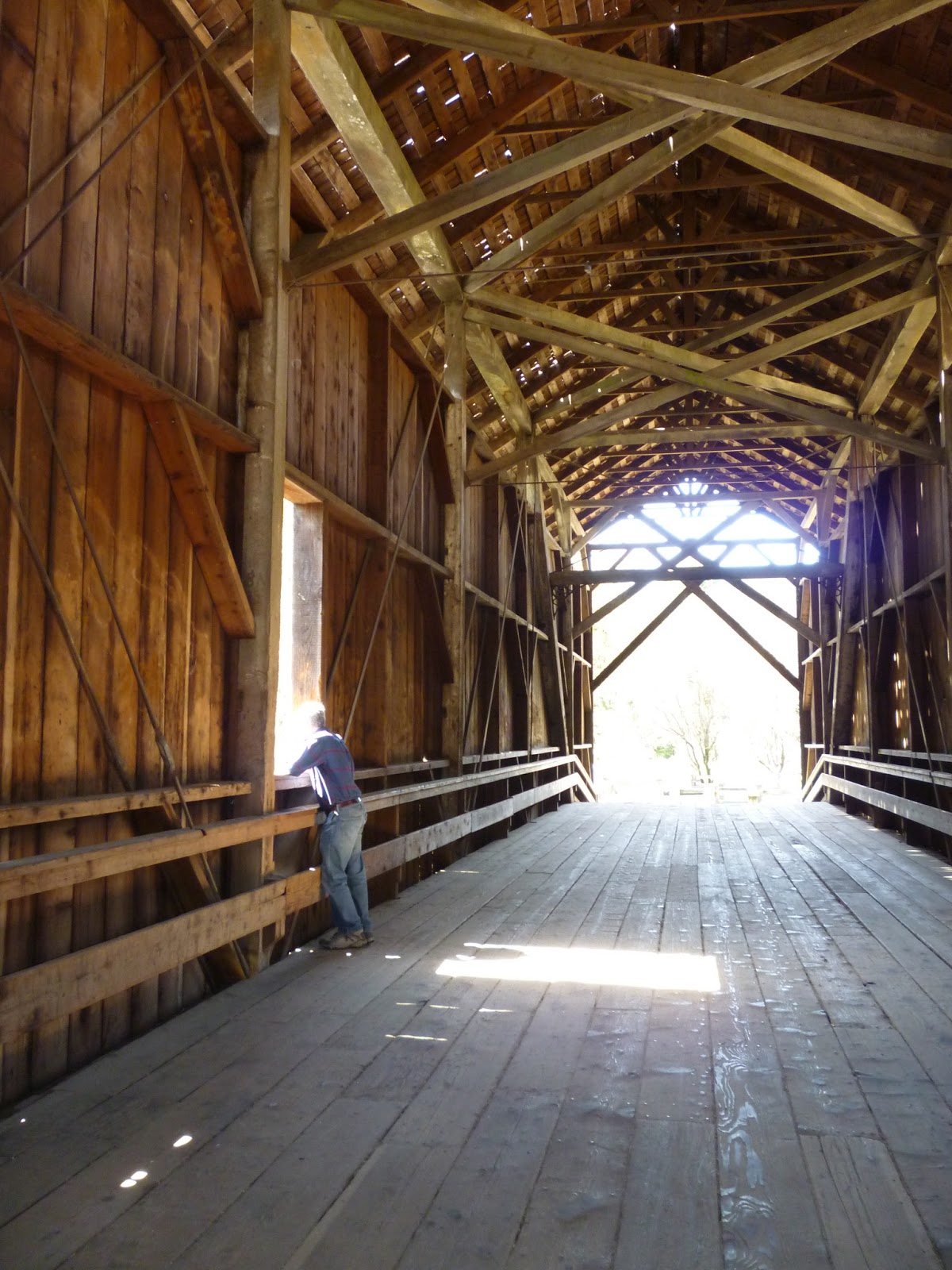
Next day the Mister and I ate a picnic next to the Felton Covered Bridge in the Santa Cruz mountains. It’s the tallest known covered bridge in the country, built of redwood in 1892 to span the San Lorenzo River. No one knows why the builders made it so high.

I started thinking about bridges as a metaphor, as in “Bridges to the Past”….What would be the thing to be bridged, the gulf over which we can meet on a bridge? If we are on this side of the bridge, what or who is on the other side?

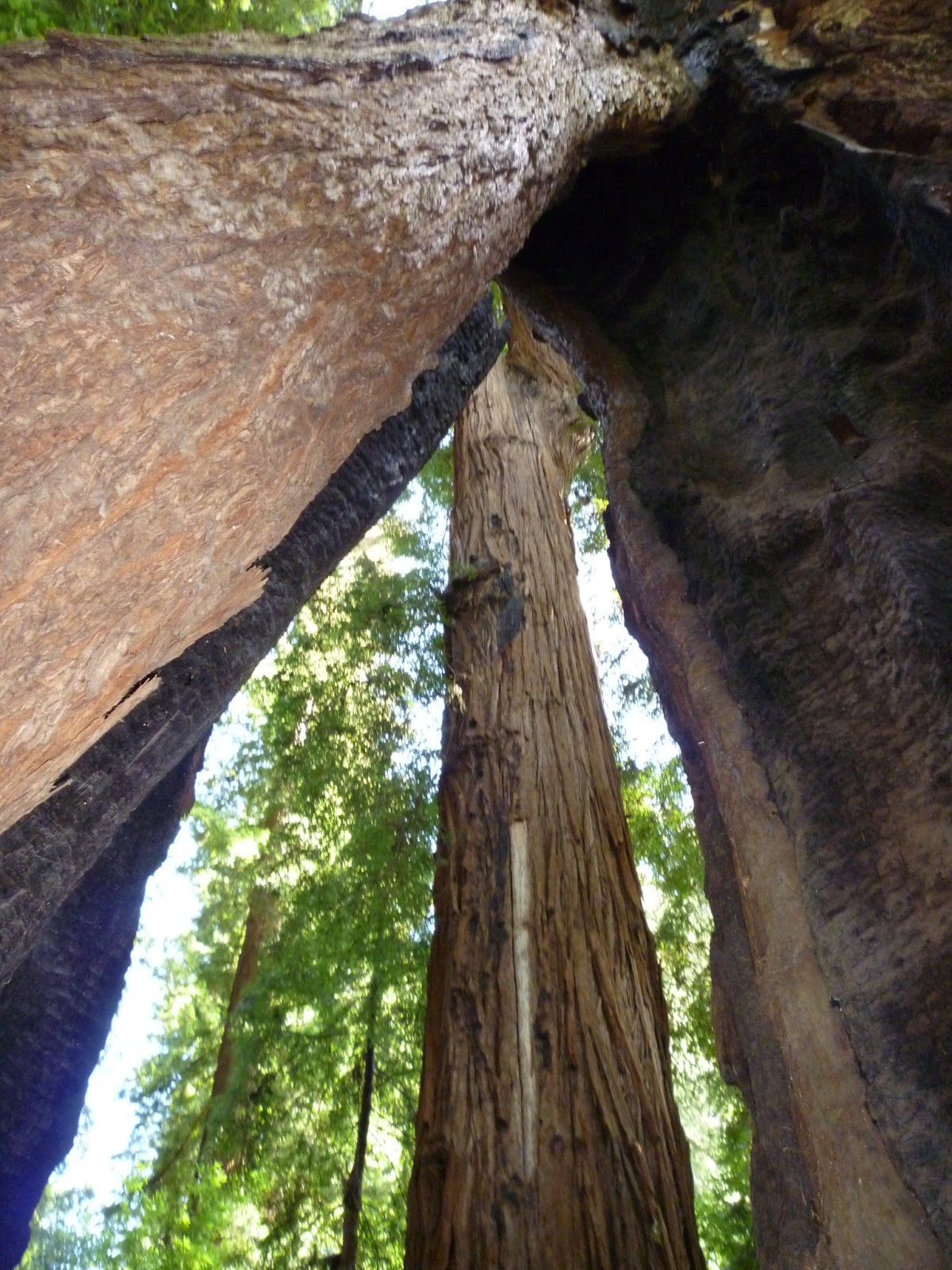
Burned redwoods at Henry Cowell.

The bridge lies near the Mt. Hermon Christian conference center, where my husband from his earliest days enjoyed the creeks and paths, and sleeping on the porch of his grandmother’s cabin.

He and I spent our brief honeymoon in that cabin, and strolled dreamily around the redwoods of Henry Cowell park nearby. It was drizzling that day in March 41 years ago and we had the park to ourselves, no doubt breathing the same woodsy, cold and moist air that we drank up on this trip.

Our marriage has endured to the present; it’s a continuing thing, so the bridge idea doesn’t exactly fit in that case, but it was pressed back into my mind a few more times anyway.

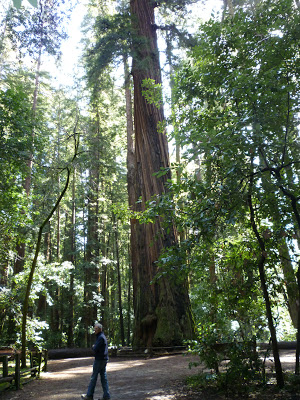
Mr. Glad and “The Giant” redwood tree.
2e20f-lacasitaamcrp
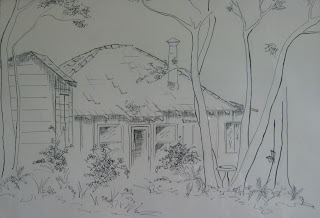
Our cabin in the old days.

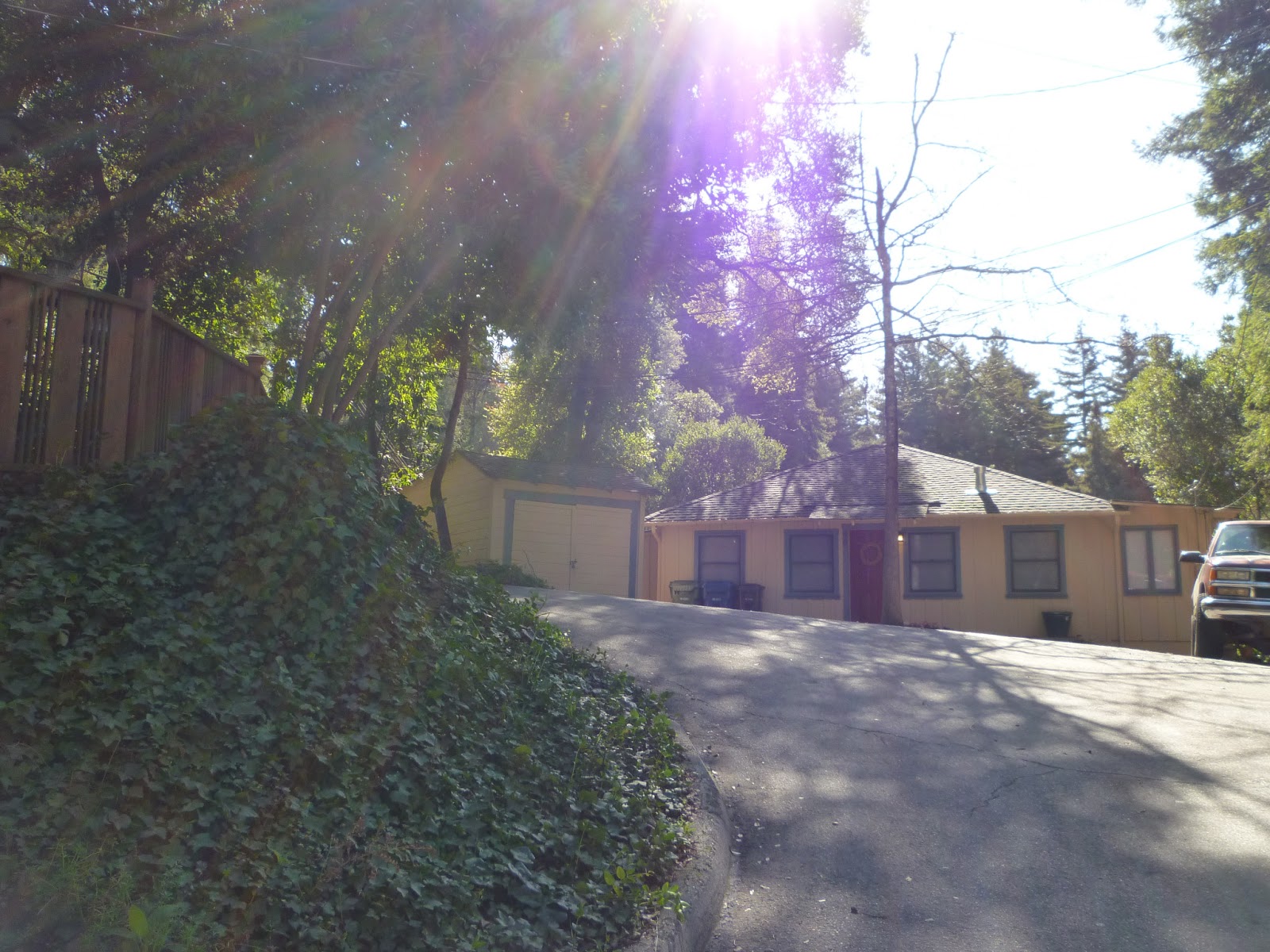
From the covered bridge and the park we drove up a hill to the neighborhood of the old cabin where we’d spent so many happy times with several generations sleeping in nooks and corners and beds tucked into closets. Another cousin and his wife live around the corner in a cabin that’s been in his family for many decades, too.


We two couples walked up and down all over the place remembering the fun and family going back 60 years. Mr. Glad and I hadn’t visited “his” cabin since 23 years ago it passed from our family. We saw that trees and ferns and birdbath have been taken away, to make space for parking trucks.


That’s too bad. Well, let’s keep going downhill toward the kind of landmarks that don’t change so easily.


Two Cousins on New Swinging Bridge

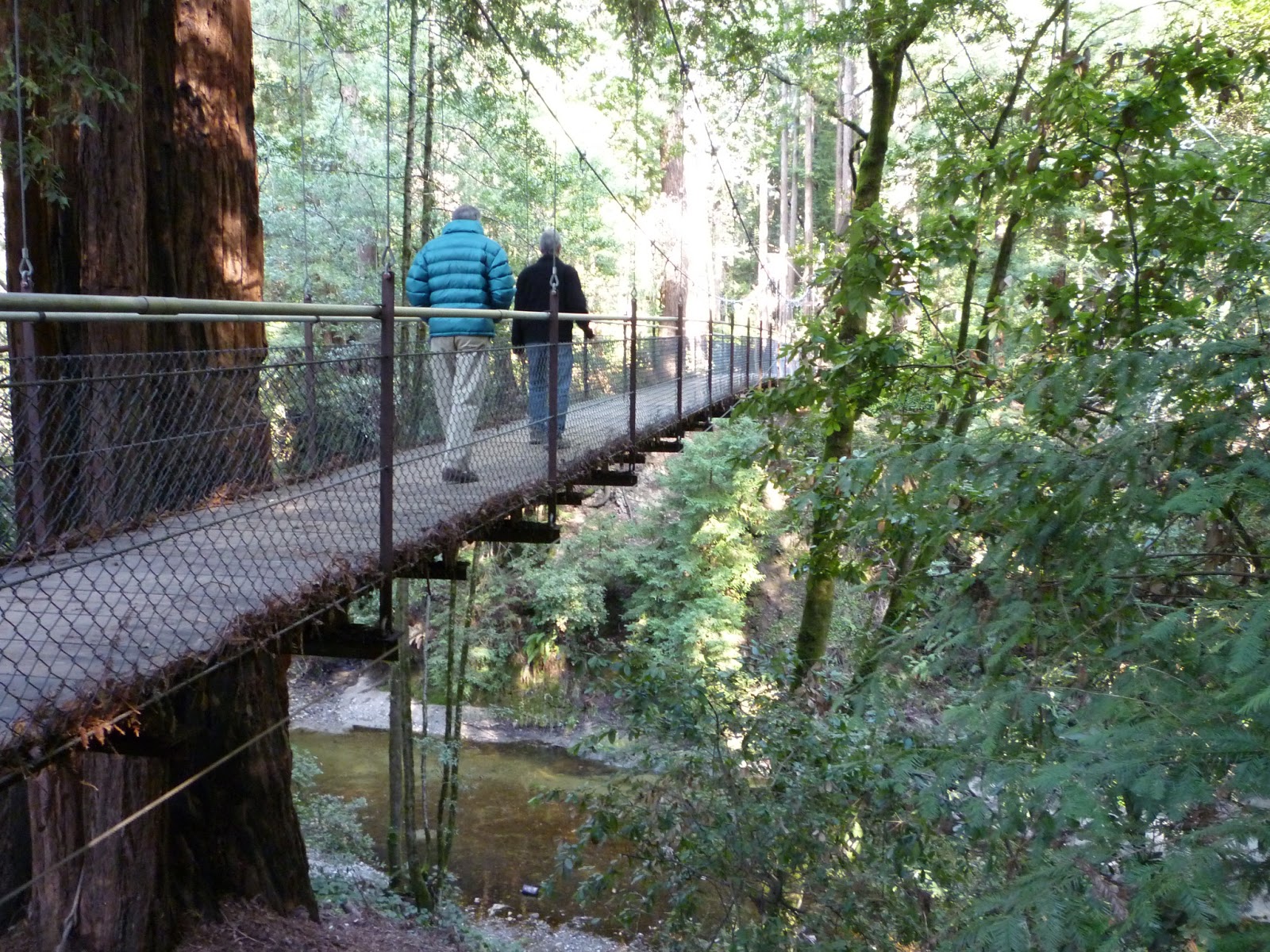
The natural beauty endures – some of these redwood trees have been around for hundreds or thousands of years. The unnamed tall tree above looked to us as large as The Giant we had seen a few hours before in the state park. We were gazing up at it from the Swinging Bridge, a suspension bridge that still sways when you walk on it, though it has been improved from what it was in Mr. Glad’s younger years.


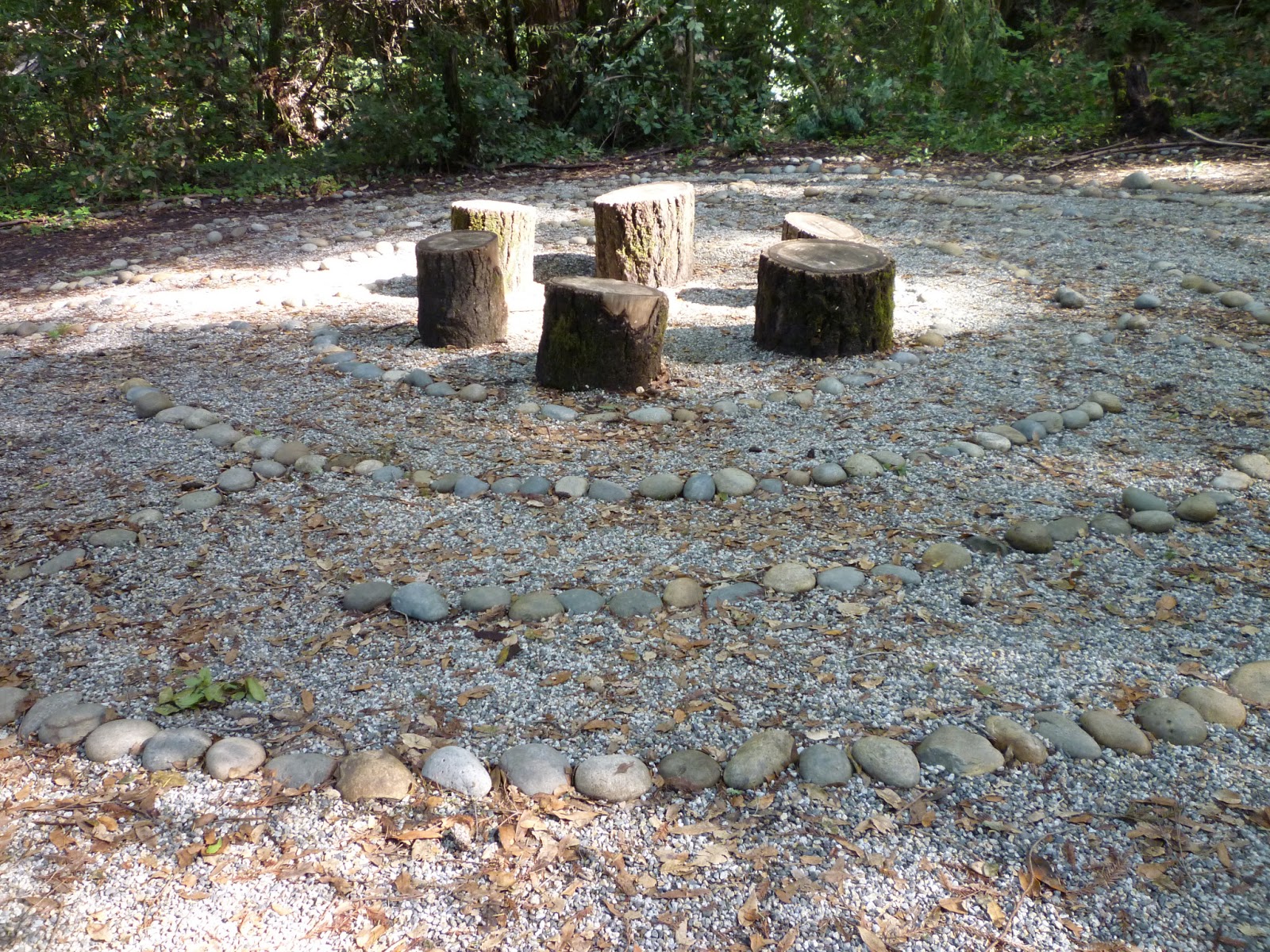
Cabin Cousin named this scene “Stumphenge.” People are always making structures and arrangements that are symbolic of the most meaningful things in their lives. Some of those structures, as I was to reminded the next morning, are intangible.


It’s obvious I love a good bridge — some of them are majestic works of art, and even the less dramatic show the human need and desire to go from here to there on the earth, to interact with the natural landscape in practical and artistic, and sometimes playful, ways.

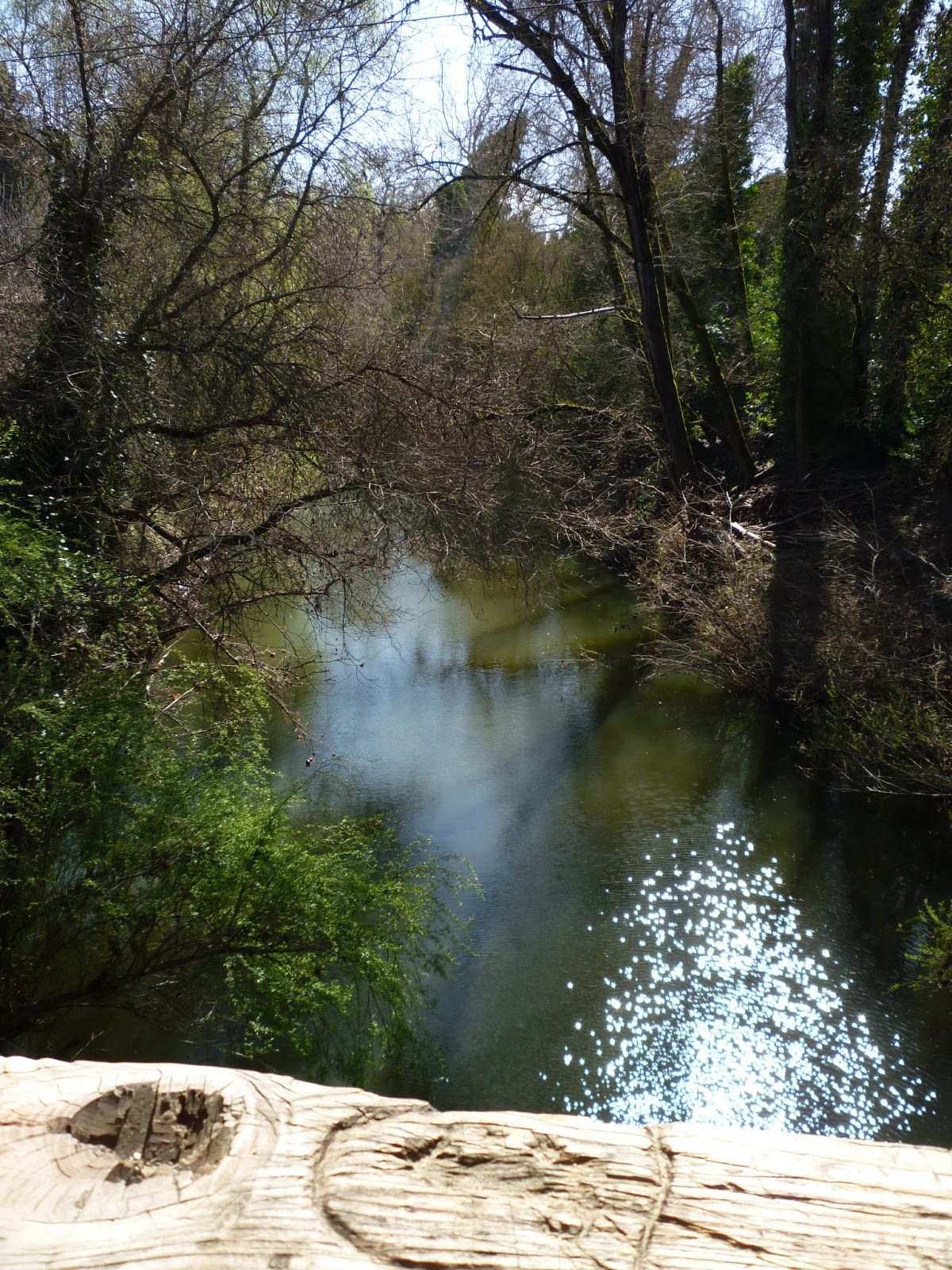
I am often more comfortable on a sturdy bridge than I am down in the canyon or river below. Two creeks come together on the Mt. Hermon property. This confluence of Bean and Zayante Creeks is just about The Most Favorite Spot from the Mr. Glad history files. I have waded in the creek here too, with our children, and have sat picnicking on lovely warm summer days. We looked down from the swinging bridge and sighed our contented memories.

At this time of year we didn’t want to be down there in the chilly water. From the bridge, wearing our cozy jackets, we could get a wide view. You feel that you know where you are, and there are no sand or pebbles scratching between your toes.

The next day as we drove home Mr. Glad and I listened to a discussion about a famous theologian who is now acknowledged to be a BRIDGE between East and West, Pentecostals and non-Pentecostals, and other disparate groupings. If I tell you his name many of you will feel an immediate urge to click away to another blog, because the Unitarians have done that to you.

When they controlled the educational system of this nation Unitarians worked hard to steer young people away from the Puritans, and one small tactic in this program was to inoculate them against a man who preached a lot on themes like humility, beauty, and the sweetness of the Love of God. They did this by making sure that schoolchildren had in their curriculum one of his worst and least representative sermons.

In our usual intellectually focused condition we search for these rational bridges to connect us to our roots and to each other. I’m afraid the Unitarians were trying to keep us on a platform without even a good view of the life-giving stream. If I stay in my mind and only think about God, it is like looking down from a bridge at the river, when what I am dying of thirst to do is splash and drink and be refreshed by the Living Water.

But in the presence of God, living our theology by prayer and love to one another, we can be part of a continuum, like the earthly water that over the millennia constantly comes back to us as rain into the streams and snow on the mountains, evaporates from the oceans to make clouds that float inland again….

If Jonathan Edwards and I both live in Christ, who said, “Except you eat the flesh of the Son of man, and drink his blood, you have no life in you,” then we are in the same vital current. And that’s the important thing.

One of my dearest and most influential friends, Anne, gave me a copy of Edwards’s Religious Affections more than twenty years ago, and I spent a while this morning becoming re-acquainted. But I don’t think it’s likely that I will read much more of the works of this brilliant thinker who is for some people a bridge. I already spend too much time standing on and studying bridges and platforms.

Instead I want to live in communion with God and with His people — including my distant-but-near relations from the 19th century, the 18th century — even the Holy Apostles, and all of that Cloud of Witnesses who (I Corinthians) “did all drink the same spiritual drink: for they drank of that spiritual Rock that followed them: and that Rock was Christ.”

San Lorenzo River

Homebodiness was the reason…

Pineapple Juice Starter Start

…Homebodiness was the reason I spent so much time stirring and sniffing my sourdough over the last weeks, instead of making dolls. I keep telling everyone that I want to make dolls, but I end up doing a little of this and a little of that.

In this case I was researching sourdough and baking. I could have made several dolls during the time it took me to do all this baking-related stuff, including a huge Pizza Project as it became known in my mind. We had invited friend Tim the Sailor for lunch, and I said brightly and optimistically to my husband, “I could make pizza!”

But that’s a side story. It’s the fact of me being a Homebody that got me into the baking, because I lack a dollmaker’s needle at the least, to begin on my dolls, which I have been reading up about, by the way. Reading about projects is also easy to do at home. But I can’t seem to kick myself out the door to drive five minutes to the craft store for the needle.

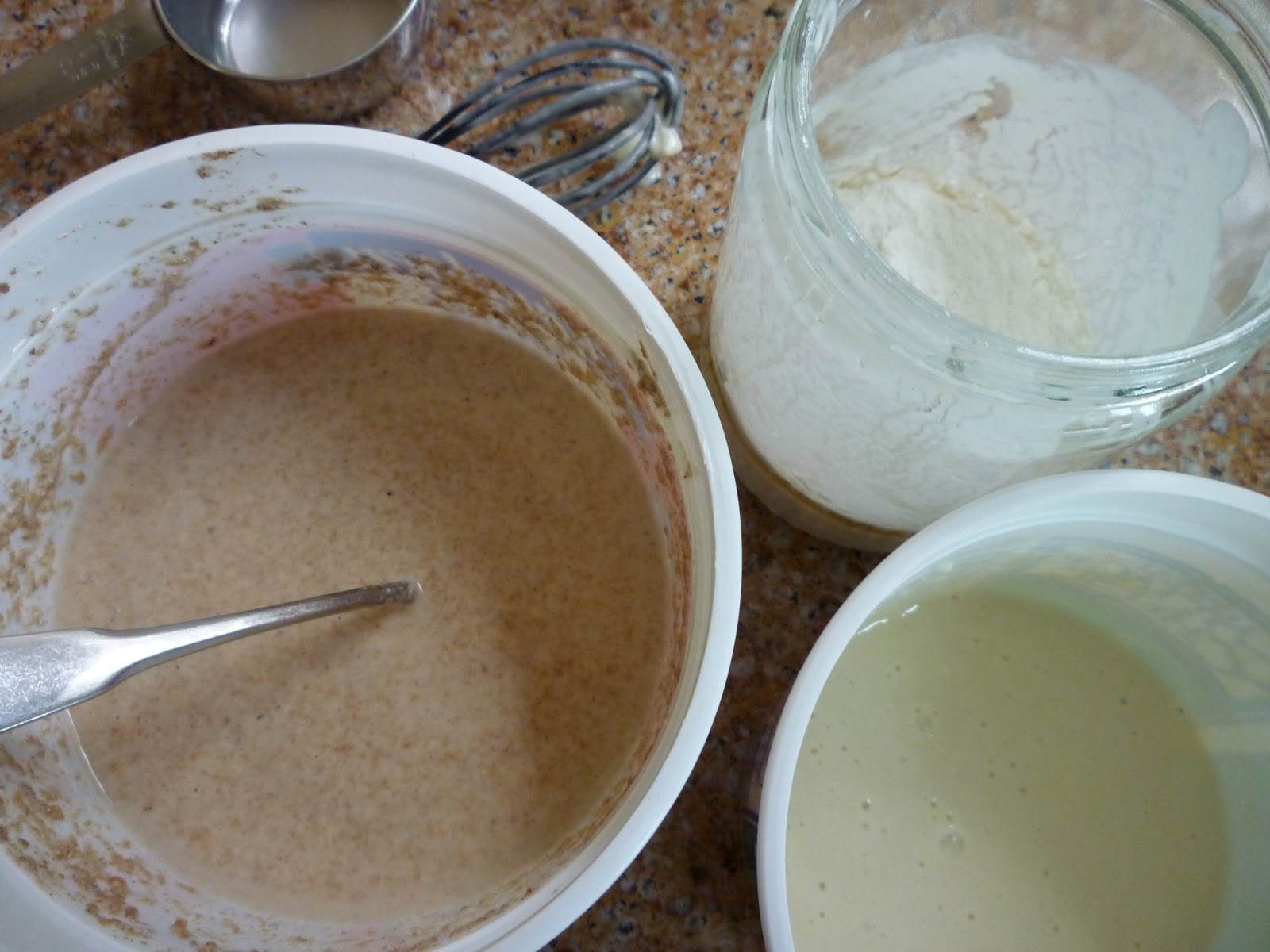
Two Starters in Three Containers

And for old time’s sake I did want to make some sourdough bread. For a few years at least — maybe even a dozen? — my kitchen would churn out several loaves a month of the most sour bread you can imagine. The children liked it that way, as dense as pumpernickel but light colored and tasting almost vinegary if you were not in the right mood. I was always trying to get the crumb of a sourdough French such as our San Francisco Bay Area is famous for, but then I would lose the intense flavor.

Later we lost all the biggest bread-eaters, and then I let the starter die. It had never been my own baby — the starter always had its beginning in someone else’s kitchen. In about 1975 I had been given my first batch by a church friend, and I used it for a few years until it was neglected (notice the passive and guilt-free voice) into oblivion. My neighbor Linda gave me my next sourdough, and I began using that in earnest.

We’d eat sourdough pancakes for breakfast, sourdough biscuits for dinner, and slices of the tangy bread in the car on extended trips into town. One time a couple of slices were forgotten in the glove compartment for several weeks and when discovered they were not even dried out or moldy.

Sourdough Sponge

I gave a jar of my starter to my neighbor Sarah, and when mine was forgotten for a time and died she gave me some back. But when I moved over the mountains to my present town my starter changed its personality and never was much fun again. I hadn’t really missed it until last month, when Jody’s fiddling with sourdough inspired me. I put together the recipes for two different versions on the same day, just to have a better chance of ending up with at least one active starter after a few days.

The Ancient and Convoluted Instructions

The one I was most confident in is called Manuel’s Rye Sour, a recipe I had seen decades ago in my Laurel’s Kitchen Bread Book. I happened to have more of that pumpernickel rye flour around so it was a natural to use it. The second recipe I found online uses some pineapple juice along with the flour and water. That one is only now after about 10 days starting to have a good sour smell, so I’m glad I didn’t have to twiddle my thumbs waiting for it.

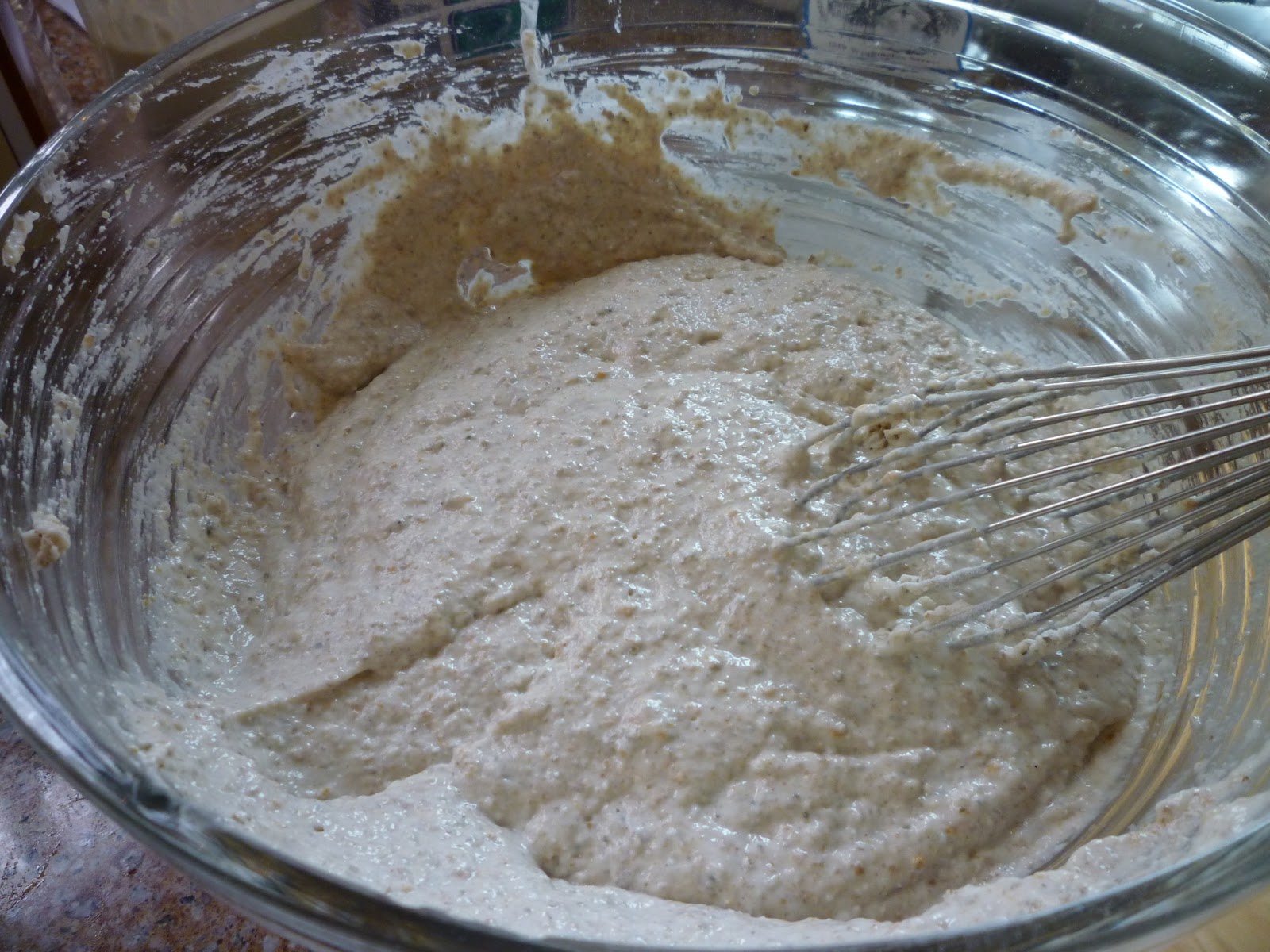
Sourdough Sponge after several hours

Manuel’s starter was usable after about five days. I used it as I had my old starters: to get the strong flavor I’d add six or eight cups of flour and some water to a cup or two of the starter and let that sponge sit on the kitchen counter for 24 -72 hours until the whole big bowl was busy growing the desired yeasts.

It didn’t take long for Manuel’s Sour to get to working. The sponge rose with the activity of the sour bugs, and then fell again, but it kept developing flavor for another day until I could get to it. This whole description is beyond anyone’s ability and probably desire to duplicate, so I won’t give you a recipe, but I will say that to this sponge I added a small amount of yeast, sugar, salt and oil, and enough flour to make a smooth dough.

Many years ago after a couple of friends asked me about my method of making sourdough bread, I wrote a long description of the process that is so complicated and variable, “sometimes this” and “sometimes that,” I can hardly plough through it today. But I referred to it when baking this time.

After kneading my dough I didn’t let it rise in the bowl again. I just formed the loaves, which weighed just over a pound each, and set them to rise. In the distant past the proofing would often take all day, whether or not I added commercial yeast to assist the wild. This time, Mr. Glad and I took a 40-minute walk around the neighborhood, and when we got back they were ready to put in the oven.

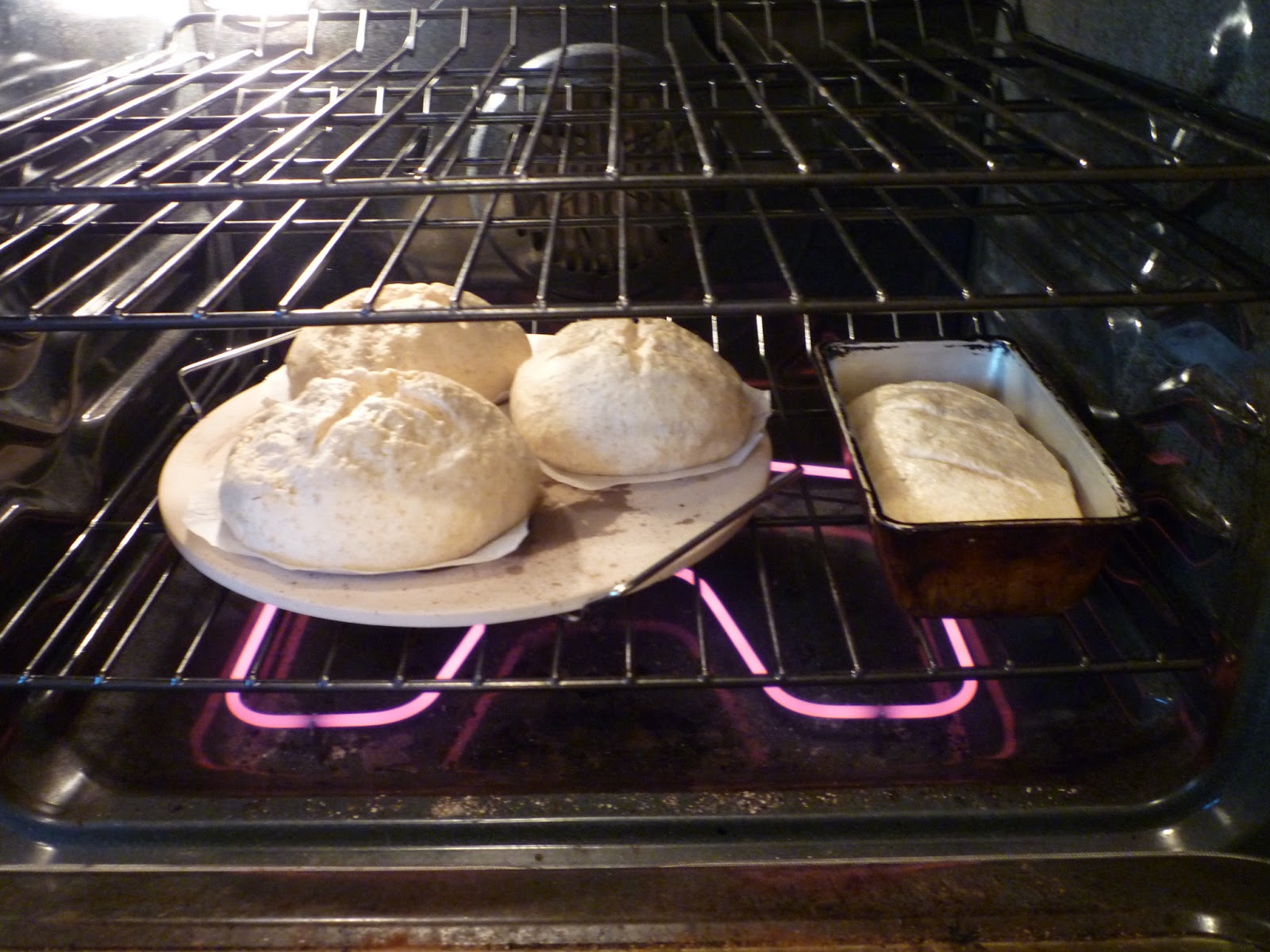
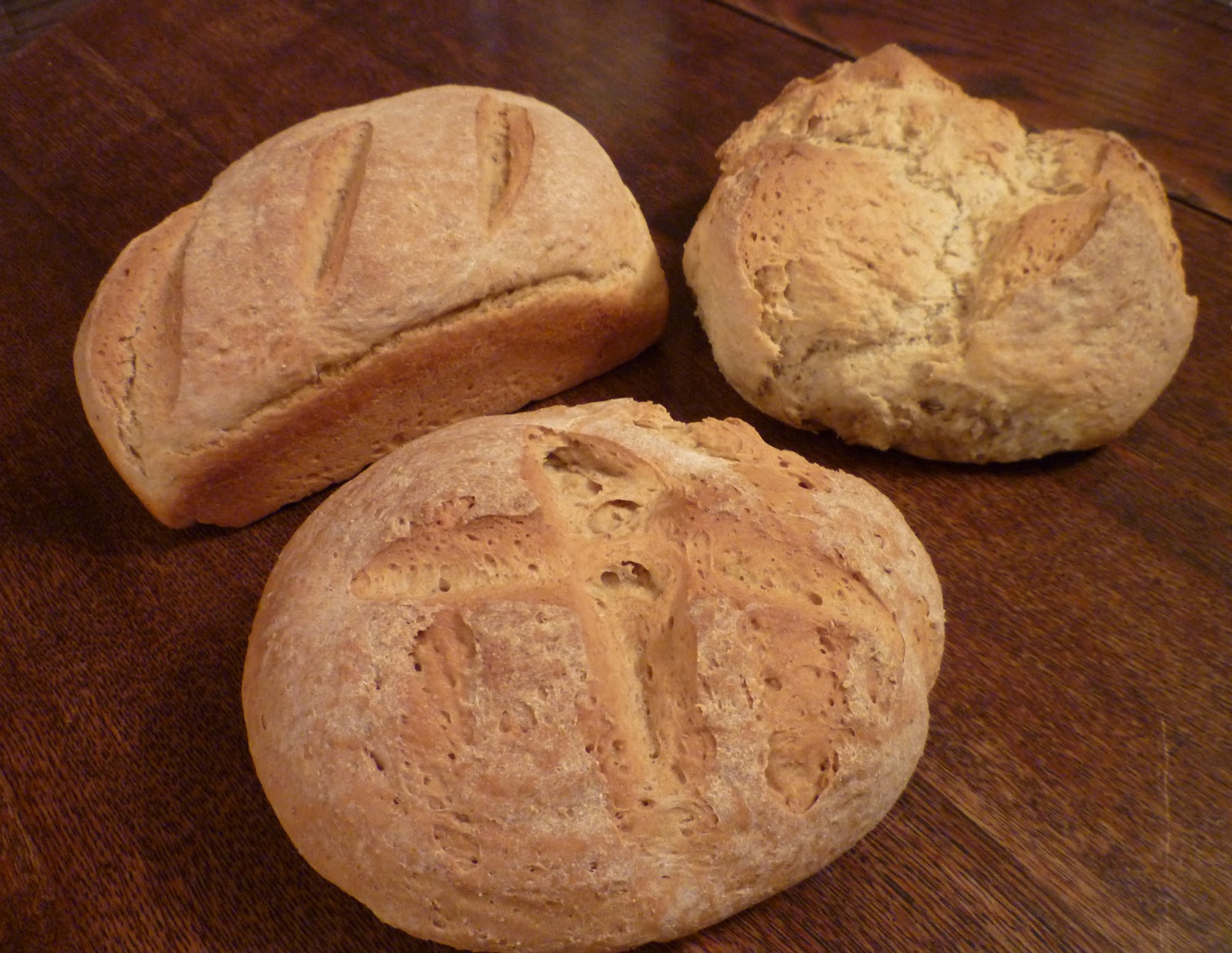
My pizza stone was still around from the pizza lunch, so I baked some rounds on it, and the remainder of dough in a loaf pan. I used parchment paper to slide them on to the stone. They took an hour at 375°F to bake. I was pleased enough with the bread….It wasn’t as sour as I might have liked, and the addition of rye flour made it less chewy than my ideal — I had intended to add some gluten flour for chewiness but forgot.

So now I’ve begun my series of experiments, as I’ll think of these cooking adventures. I managed to give away the prettiest round loaf today, and if I can find enough gluten-tolerant people around to give bread to I’ll be happy. Tomorrow, tomorrow — “I love you, Tomorrow!” — it’s off to the craft store for a needle. Then next time my Homebody Self can sit stitching at my doll while the bread bakes and the house fills with its good and toasty smells.