Category Archives: Lent

Eating food that is not dead.

“Prepare yourself, my soul! Be courageous like Abraham, Isaac and Jacob, that acquiring diligence and wisdom you too may meet your God. Through contemplation may you reach the awesome depths in which He dwells and in so doing become a good steward of the Lord.”

-Canon of St. Andrew

For the Orthodox, it is the first week of Great Lent, which is called Clean Week. We began the fast on Monday, after the Vespers of Forgiveness on Sunday. This year in my parish we were thankful for good weather that day, as our long line of people bowing to each other in their masks, and mostly not hugging, stretched in a long loop that went out the side door of the church and wrapped loosely around the front. We were saying, “Forgive me,” to each one, and replying “God forgives.” Many of us had not seen each other in person for months or even the whole year.
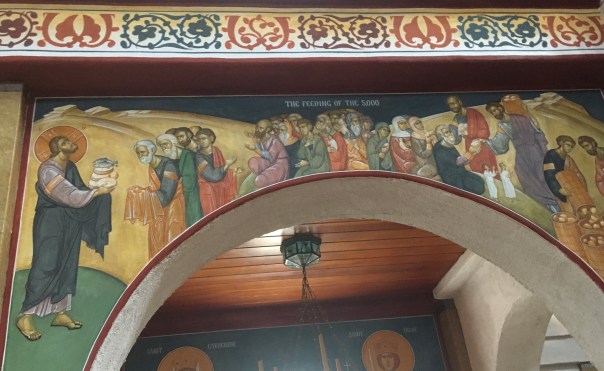
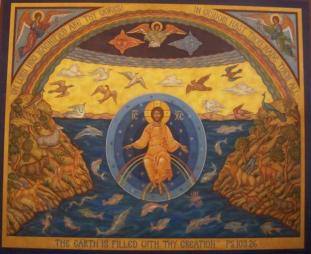
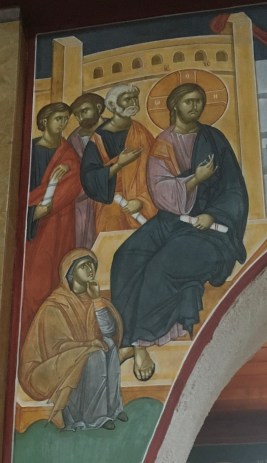
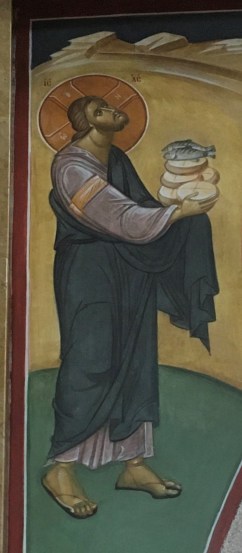
Two new frescoes had been completed just in time to take down the scaffolding and make room for Lenten services. As I took pictures of them on Sunday I realized how each of them draws me into an aspect of the season.

Christ in the House of Mary and Martha in Bethany (on the other side of the arch, not pictured, is Martha scowling) makes me want to imitate Mary and sit at Jesus’s feet. And The Feeding of the Five Thousand reminds me of various levels of meaning in the lines of the Lord’s Prayer, “Give us this day our daily bread.” As we are going without physical food in various ways during this season, that part of our prayer is extra meaningful. The most striking words I ever read on the relation of earthly and heavenly food were in For the Life of the World by Fr. Alexander Schmemann:
“The natural dependence of man upon the world was intended to be transformed constantly into communion with God in whom is all life. …He still loves, he is still hungry. He knows he is dependent on that which is beyond him. But his love and his dependence refer only to the world in itself. He does not know that breathing can be communion with God. He does not realize that to eat can be to receive life from God in more than its physical sense. He forgets that the world, its air or its food cannot by themselves bring life, but only as they are received and accepted for God’s sake, in God and as bearers of the divine gift of life. By themselves they can produce only the appearance of life.
“…Things treated merely as things in themselves destroy themselves because only in God have they any life. The world of nature, cut off from the source of life, is a dying world. For one who thinks food in itself is the source of life, eating is communion with the dying world, it is communion with death. Food itself is dead, it is a life that has died and it must be kept in refrigerators like a corpse.”

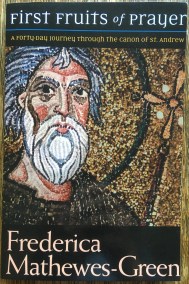
The most prominent reading during the first week of Lent is The Great Canon of St. Andrew of Crete, which is typically divided into four parts sung during services of that week. This year our women’s book group also chose a book on the Canon to read during this season.

I’ve noticed that during the Compline service when the Canon is being read, year by year, there are so many Scripture passages and characters referred to, that I can’t absorb half of it in my mind. Being at the service and participating with my whole body, soul and spirit is the way to do it — we humans are so much more than our thoughts! This week the Compline hymns have been the sweetest part for me, and as usual, a phrase or two from the Canon about a particular sin or person in the Bible will also grab my mind and stick. I seem to have the opportunity for more contemplation generally these days, which is why the lines at top made their impression.

Psalm 69/70 is part of Compline, also, and a few lines from it will help me end this ramble.

“Let all those that seek thee
rejoice and be glad in thee:
and let such as love thy salvation say continually,
Let God be magnified.

“But I am poor and needy:
make haste unto me, O God:
thou art my help and my deliverer;
O Lord, make no tarrying.”

You will be their terror.

Met. Anthony Bloom

“Beginning [this week], Orthodox Christians abstain from meat; has it any meaning apart from the ascetic, the disciplinary? Yes, it has, I think. There is a frightening passage in the ninth chapter of Genesis. After the flood, when mankind has become even weaker than before, less rooted in God, more tragically alone, more tragically dependent upon the created because it has lost communion with the uncreated, God says to Noah and his people:

‘From now on all living creatures are delivered unto you as food; they will be your meat, and you will be their terror….’ That is the relationship which human sin, the loss of God in our lives, has established between us and all the created world, but particularly, in a particularly painful, monstrous way with the animal world. And our abstention from meat in the time of Lent is our act of recognition; it is also — oh, to such a small extent! — an act of reparation. We are the terror of the created world, we are those who destroy it, we are those who mar and pollute it, yet we are called originally to be its guide into eternity, into God’s glory, into the perfect beauty which God has intended for it.

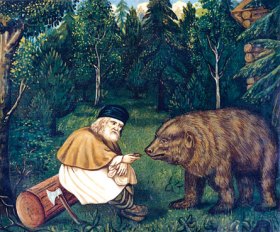
Saint Seraphim of Sarov

“We were called to make of this world of ours God’s own world, God’s own Kingdom — in the sense that it is His family, the place where He lives among His creatures, and where the creatures of God can rejoice in Him and in one another. Let us therefore, to the extent to which we are faithful to the call of the Church, remember that apart from being an act by which we try to free ourselves from slavery to the material world, our fasting is an act of recognition of our sin against the world and, however small, a real attempt to make reparation for it, bring a testimony that we understand, that we are heartbroken, and that even if we cannot live otherwise, we live with a pain and a shame, and turn to God and to the world, which we treat so atrociously, with a broken and contrite heart. Amen.”

-Metropolitan Anthony of London, reposed 2003

See more of the icon here.

A Week of Palms and wildflowers.

This is the week in which I finally got out walking. I guess I had before been doing too much of a more sedentary kind of work — God knows in what realm of my being — that made me too weary for walking, other than around the garden. Evidently I’m in a new stage of dealing with the pandemic and its ramifications.

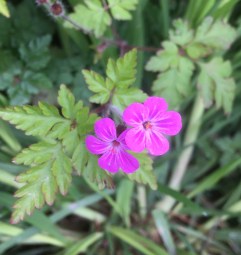
Herb-Robert

For the first walk, I went on the lower unpaved path next to the creek, and didn’t meet anyone. Pretty quickly I remembered the Seek app on my phone and started pointing it at weeds and other plants, many of which I was already pretty sure I knew… just checking. There was lots of Sow Thistle, Bull Thistle, Bristly Oxtongue and Burr Clover. Those are the less pleasing explosions of springtime, which I won’t show you. Tiny white willow puffs drifted down on to my head, and the sun was shining. I discovered a bay tree on the bank above.

For us Orthodox, it is the last week of Lent; Holy Week is not considered part of Lent proper and our Holy Week and Pascha are a week later than Western Easter this year.
So… one period is ending and the intensity of Holy Week hasn’t begun. It reminds me, this year, of the week before finals in college: a week of transition between the end of classes and the beginning of exams. It was called Dead Week. You were supposed to use the time to study hard, but some friends of mine always had a giant jigsaw puzzle going at their apartment, and anyone was welcome to come over and work on it when they needed a break from studying.

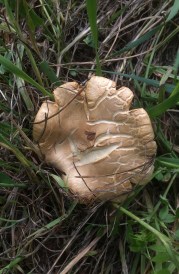
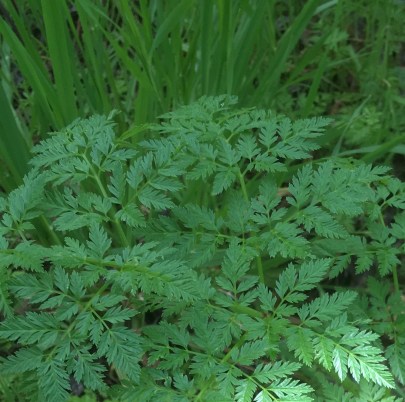
Poison hemlock

It’s not dead by any means in Lent, unless you are talking about Lazarus, who died this week and spent most of it in the tomb. For me, it has been more life-filled than ever. My feeling of renewal began with the Sunday of St. Mary of Egypt, whose story I’ve never paid enough attention to before. Technology failed me, the evening that we were going to have a parish reading of her life on Zoom, so I took an hour to read it aloud to myself (with my brothers and sisters not virtually, but in the Holy Spirit). She helped me to get my bearings.

Now our focus shifts, from our journey of repentance to Christ’s journey, having “set His face like a flint,” to Bethany and on to Golgotha. Soon it will be the resurrectional Lazarus Saturday, and Palm Sunday. This whole week is called the Week of Palms, or Week of Branches. I don’t think I knew that before.

aeonium

This year, because we aren’t able to celebrate Pascha in church, with our glorious middle-of-the night Liturgy and festal hymns and countless shouts of “Christ is risen!” in a dozen languages — it also seems that we are having to set our hearts determinedly to receive what God has given us with thanksgiving. The wife of our priest explains our sadness:

“Sundays, which are a dim picture of how we will spend eternity, are meant for us to be praising and worshiping God together for ages of ages.  Every Sunday is a mini Pascha, and we are being kept from celebrating together in completeness.

“The good news is that these feelings tell us that this isn’t right. This isn’t how things are supposed to be. We shouldn’t be content with just doing our own thing. I literally weep every time I think about missing Holy Week and Pascha with you in our spiritual home. But I cling to the hope of the Resurrection. I look forward to the day when we can come together again in person in the church, to partake of holy communion, and to be refreshed.”

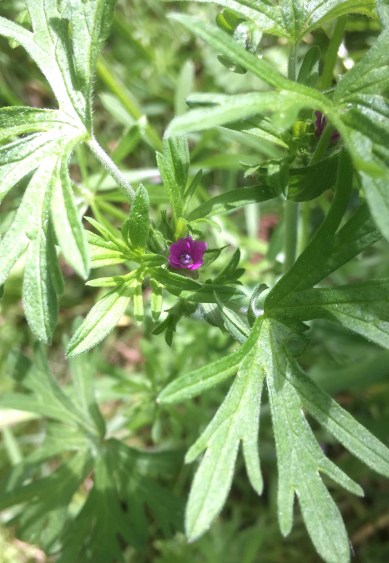
Cut-leaved Crane’s-bill

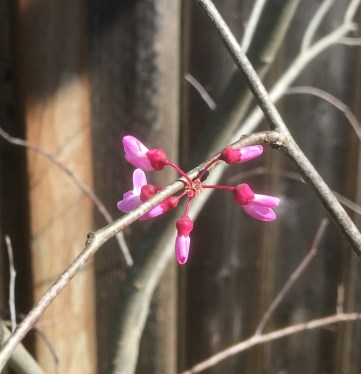
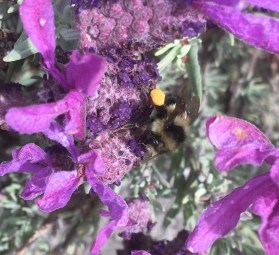
On another level, I especially appreciated the refreshment of some exercise and fresh air yesterday and today. I was happy to see a striped bumblebee in my neighborhood — until this morning I’d only seen black ones around here. My app told me that the buds on this bush below belong to the Eastern Redbud. I thought that strange; why would someone plant an Eastern when we are here in the West? So I looked at pictures of both species in bud, and I can’t see much difference. So I’m just calling this one “redbud.”

redbud

This week was “enlivened” also because Alejandro came to work in the garden, and we had two sunny days and got a lot done. That made it feel more normal.

But as to the abnormal — Father John Parsells, in “The Pascha Nobody Wants,” encourages us that in our present obedience and isolation we have the opportunity to participate in a way that we ourselves would never choose, in the sufferings of Christ.

“His ‘social distancing’ was so complete that He even experienced divine ‘abandonment,’ crying out from the Cross, ‘My God, my God, why has Thou forsaken Me?’ The sinless One became sin on our behalf (2 Corinthians 5:20) and the One who said, ‘I and My Father are One’ (John 10:30) experienced ‘separation’ from His Father.”
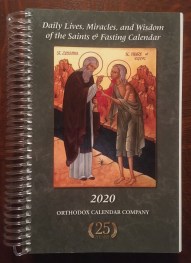
“What we go through now can feel very isolating for faithful Christians, yet we are resolutely encouraged, remembering that the Cross of Christ reveals isolation as the door to communion. In obedience even unto death, we find the life that can never be put to death. Amidst our distress and anguish, we find the ‘man of sorrows, acquainted with grief’ (Isaiah 53:3), Christ Himself who says to us what He promised His disciples in their own time of tribulation: ‘I will see you again and your hearts will rejoice, and no one will take away your joy!’ (John 16:22).”

The best fast is this.

The best fast is to patiently endure everything that God sends.

-St. Anatoly of Optina

St. Anatoly knew what it was to endure; he was arrested by the Bolsheviks and his monastery was closed in the 1920’s. I only today read about him after seeing the quote above in this calendar I’ve been using lately, at the top of the page for April 1. So many readings for Lent take on new significance this year.

If you want to learn more of his story it is here.