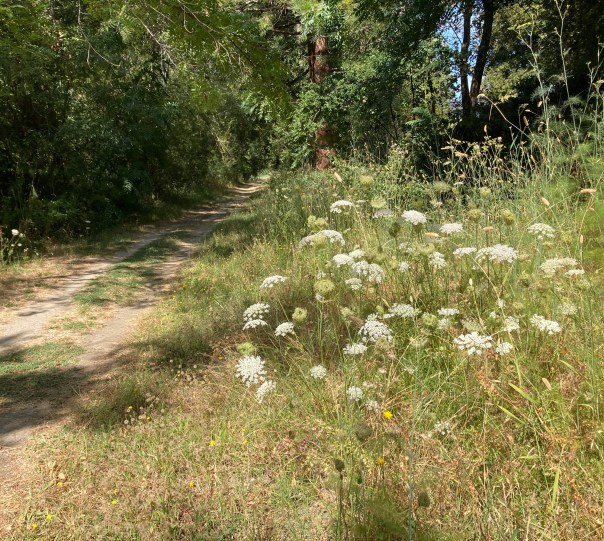
This morning I switched my walking route to the less-frequented, unpaved path by the creek, and I was alone down there. But for a minute I could hear above me on the paved path, behind the trees, a woman talking on her mobile phone. She had it set on speaker, and I could hear both sides of the conversation. The woman near me said, “How is your diet? Are you eating the right things?” and I caught the Woman-on-Speaker saying, “I just can’t eat salad,” after which Woman No. 1 said, “I know people think Special K tastes like cardboard, but I eat a bowl of it every night before bed. It helps me sleep good!” And then they were out of range….
Bristly Oxtongue
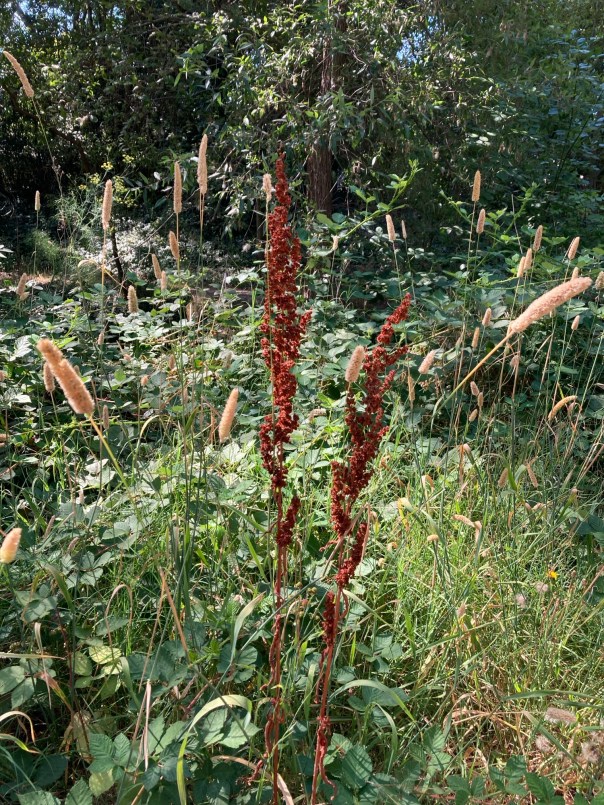
That conversation is slightly connected, by being about things we do or do not eat, to the title I almost gave to this post, something about “Bristly Oxtongue” — but it was a little too rough. Now that I think about it, I do see why the plant was given that name, though when I have cooked beef (ox) tongue, I never thought of the bumps as bristly. And the botanical one I saw on the path was in its glory, such as that is, with prolific flowers on a 4-ft high plant. I have identified it in the past, but lately don’t tend to pay attention to the various thistly and bristly plants out there.
Another plant that is not my favorite, and which I wish I could keep far away from my garden, is Bermuda Grass. When I was growing up, the birds brought its seeds to the lawn my father had planted around our new house, and from then on it was a Bermuda Grass lawn, which has a lot to say for it in the dry and hot Central Valley of California. It needed watering less than weekly. It was a scratchy and coarse kind of grass to play on, and in the winter it goes dormant and brown, but it’s very hardy in every way. This plant has been encroaching from my neighbor’s back yard to mine for as long as I’ve lived here, and I am forever fighting its advance.
Today I realized that one reason this stretch of path is surprisingly green, is that it has a healthy crop of Bermuda Grass growing on the sides.
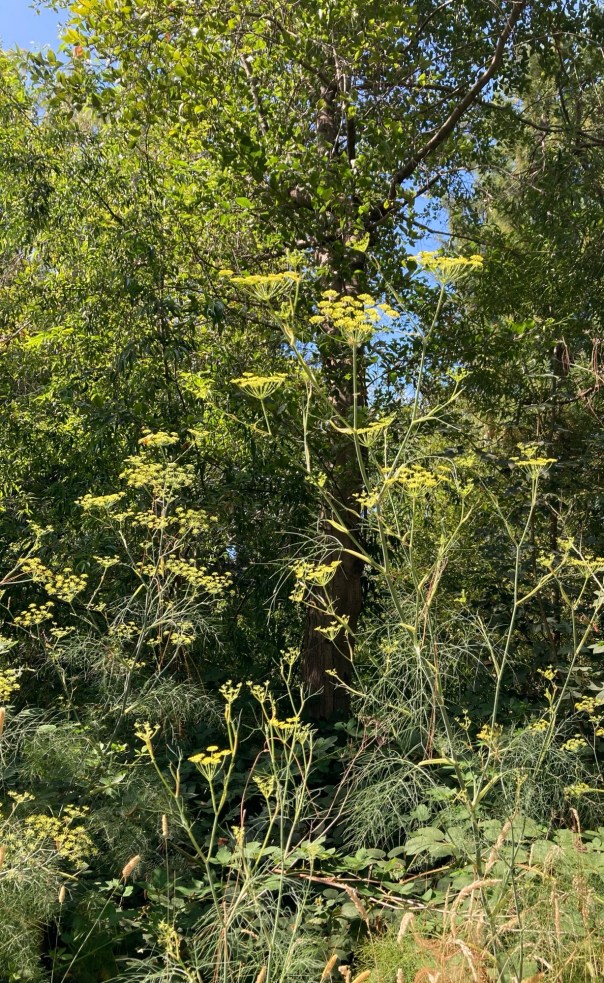
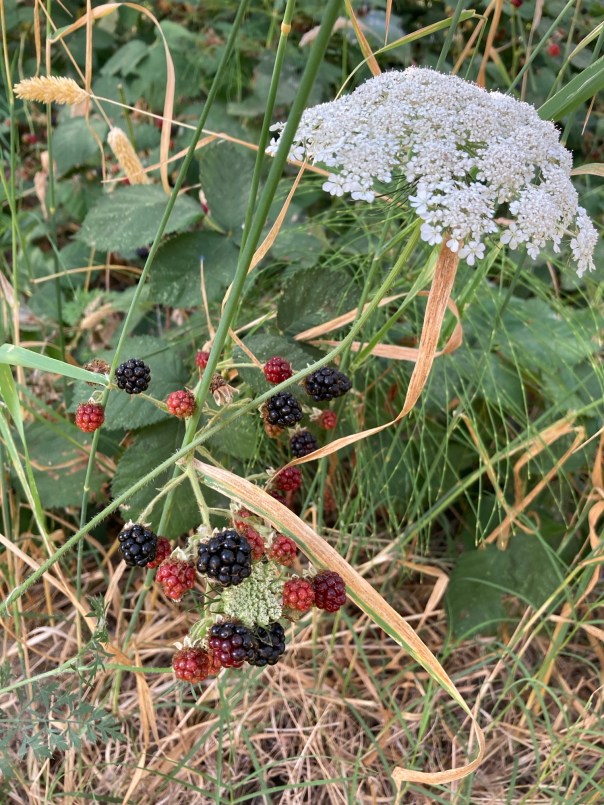
I saw quite a few other plants along the way. Curly dock reminds me of the rural bus stop of my childhood, where that plant was always growing.
Back in the home garden, my cultivated species are filling my cup of contentment. I have strawflowers for the first time, which the skippers love. If I didn’t have the ability to put a big digital photo here, I wouldn’t be able to see the long but miniature tongue the skipper is dipping down into that flower. Drink up, little skipper! Be my guest!
African Blue Basil
The plant you have been waiting for is the African Blue Basil — at least, that’s what the tag on the little pot said, that I brought home from the nursery. I just read about it online, and it says that the leaves are purple when they first sprout, and mine aren’t… It also is supposedly a perennial, which would be nice. It’s magnificent, and I saw two species of honeybees among the dozen or more were working it. It’s the latest dish that the pollinators are tasting on the smorgasbord in the Glad Garden.
I think today might be Midsummer, by my way of reckoning. It’s warm and sunny, and in the last few days, not only did I pick my first zucchini, but the first plum fell, perfectly ripe and delcious, a week or two ahead of its fellows. Back when it was officially Midsummer, my own garden was not feeling it, but now everything is lovely and relaxed, like sitting on a porch at the end of a long day — even when I am still working in the middle of the afternoon.
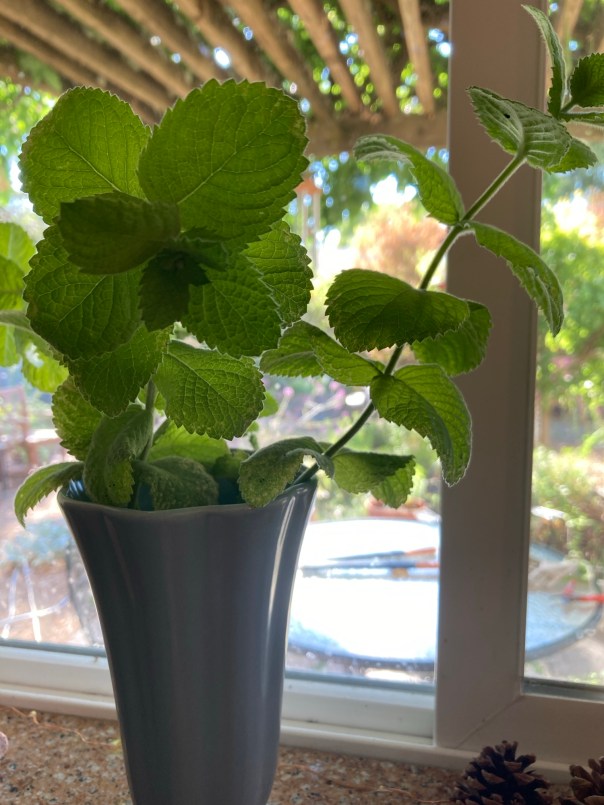
The lavender is pretty much spent, and needs trimming back. The acanthus likewise. Yesterday I yanked at the enthusiastic, yards-long wisteria runners that were crawling up the sides of the house, trying to get in at the window screens, and managed to pull most of them down and cut them off. Today I noticed that the apple mint has sent out new leaves low on its stems, so I trimmed the tops of those few. I don’t need to make tea or anything right now, so I put the bunch in a vase by the kitchen sink, where for a few days I can better enjoy their soft greenness.
Crape Myrtles are in full bloom in my neighborhood, including on my own property. Mine is not more than five years old, and in the last year it seems to have doubled in size.
I’ve been walking down to the creek bridge and beyond several times a week, and all the trees and plants growing in and on the banks of that stream also seem to have mushroomed, so that I can barely see the water below the bridge.
I love the summer, because it’s only in the occasional heat waves of the season that I can feel fully at home and in sync with the earth. In this climate with marine influence, where the evenings get cold and breezy even in the summer, it’s a treat to fully sink into the warmth and stay there all evening; even when I climb into bed I am relaxed, and don’t have to pull several layers up to my chin against the chill. Of course, this sounds crazy to those of you who live in high-humidity summer zones!
Even when it was over 100 degrees last week, I was able to spend a lot of time in the garden morning and evening, and then work on other projects in the middle of the day. I have plenty of paperwork and sorting yet to accomplish. If I ever finish that — Please God, help me! — I could sew, or read, or get back into writing book reviews …
When I read on my phone, I’ve started taking screen shots of quotes that I don’t want to lose. And I often look up words I don’t know — On Substack there are so many good writers with vast vocabularies — and take screenshots of the definitions.
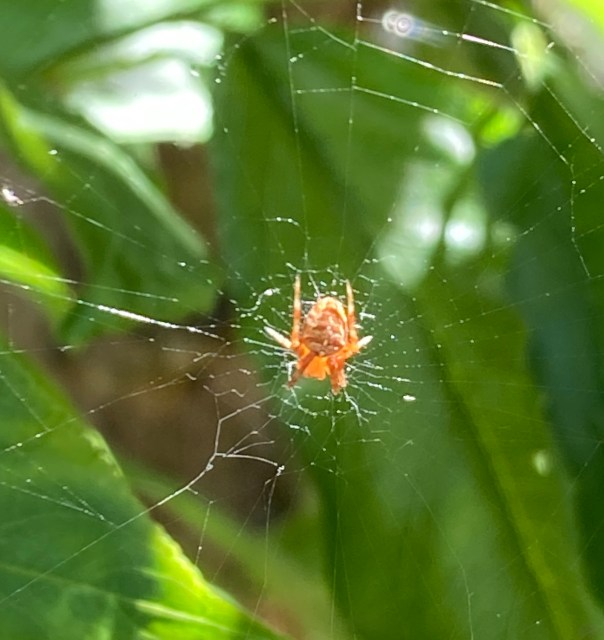
Spider in the plum tree.
One morning as I set out on my usual walking route, I passed by the house down on the corner, where a vegetable garden has been carved out of the lawn, next to the sidewalk. For months I have been admiring the health and size of the plants, and that morning I spied a dozen beautiful yellow summer squashes peeking out from under the leaves, several of which should have been picked days earlier; on my way back I debated about whether to inquire about them. If the owners didn’t want them for some reason, I would take them… and if the gardeners had suddenly been incapacitated and couldn’t pick their own squash, I could offer to do that for them….
It sounded reasonable… and one hates to see beautiful vegetables going to waste… but what if I got involved with people I found disagreeable? Or who were needy beyond my abilities to help? I stood on the sidewalk and thought a while, then walked up to the door and knocked. The result: I made a new gardening friend.
Dee gave me three overgrown squashes, though none of the size I’d have preferred, and she invited me to come back for more. She enjoyed talking about her garden, and told me about her family that she lives with, including her recently widowed mother, who she said is the cook of the household. I wondered if that cook prefers overgrown zucchinis…. On one of the less sweltering days I did cook the squashes into a spicy, satisfying stew, which I was glad to have..
That’s my own chard and collards in the picture above, the leaves that were not eaten by insects or mollusks; I picked almost all of my greens and now my own little squash plants are spreading out in the planter boxes. Recently I transplanted the tarragon out of a pot into one of those boxes where it will get more regular watering, and it is thriving.
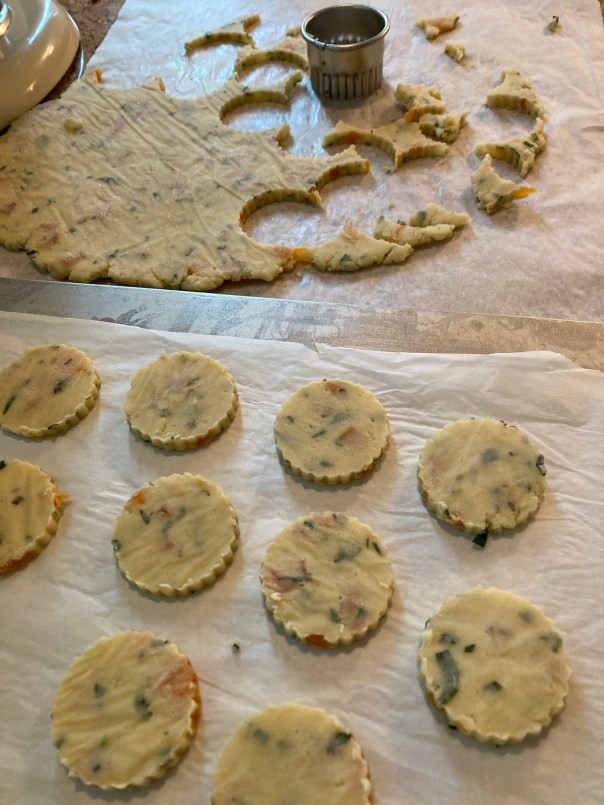
I used several sprigs of it to make Anytime Apricot and Tarragon Cookies from the Dorie’s Cookies book. They were in the chapter called “Cocktail Cookies,” and the recipe includes no sweetening beyond the dried apricots and tarragon.
I baked those savory shortbread cookies to take to friends who’d invited me for lunch, who I knew didn’t care for sweets very much. But they are winemakers, so I thought they might like the kind of savory cookies one could nibble on while sipping a glass of wine. We all thought they were really nice; it was amazing how much subtle sweetness we tasted in them; I think the level of saltiness helped bring it out.
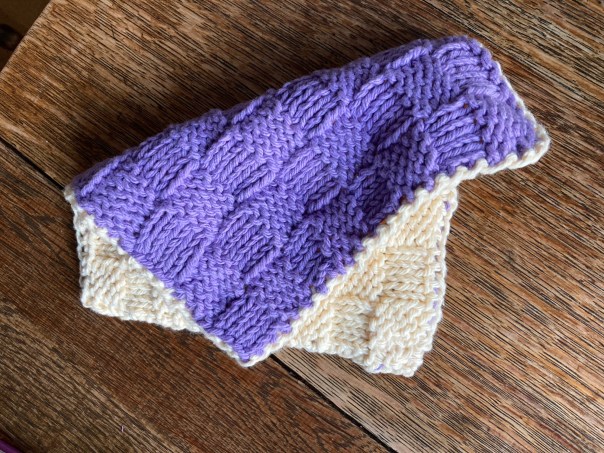
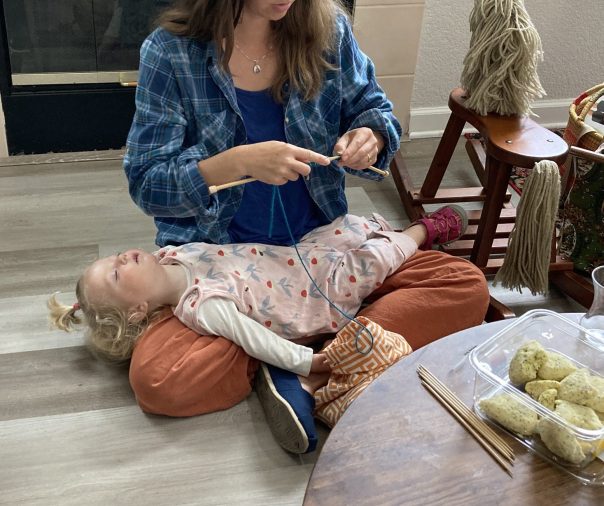
I got together with several women who are collaborating to share homemaking skills; for our first meeting we focused on knitting. I had two cotton dishcloths I’d knitted a while back, which I decided to join together. I tried crocheting them together but I couldn’t figure out how to do that while at the same time chatting with everyone, so I just sewed them together with a blanket stitch.
I don’t have hopes of becoming an expert knitter, but I like to be with these women. And their babies! (At church there is a new family with a little guy just turned one, and he is the friendliest love bug. He loves me! And I never tire of holding him.)
Our host had an awe-inspring jar of kombucha scoby on her kitchen counter, and two of our group were happy to take home a quart of it to get their own kombucha production up and running again. My own fermenting experiments stalled decades ago with yogurt-making, and a succession of three yogurt makers that never satisfied. I never tried making sauerkraut, because that was a food I have been prejudiced against ever since it made a regular appearance on our table when I was a child; I did somehow manage to enjoy kimchi when my son “Soldier” brought it into the family’s already international culinary repertoire.
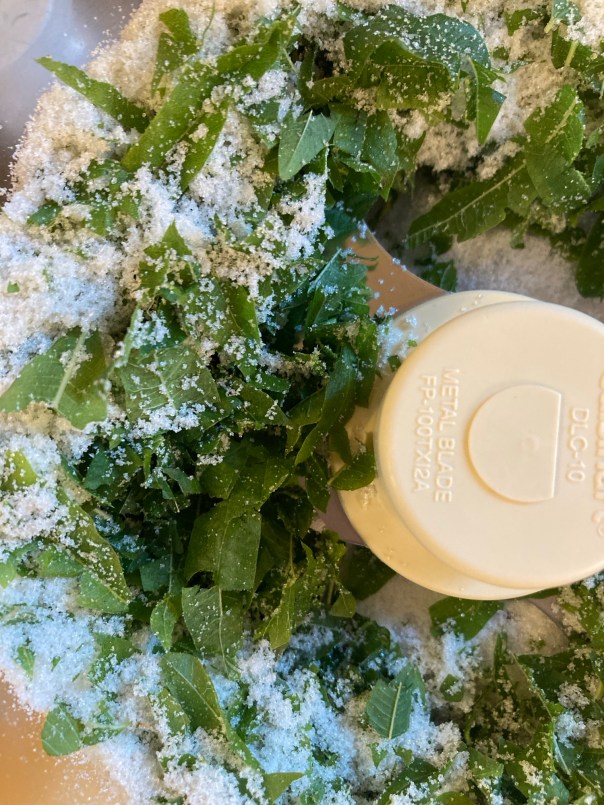
But I have made Lemon Verbena Sugar Paste! Lemon verbena is one of my garden treasures, but I haven’t pruned my plant often enough or used its leaves much, and it has gotten very leggy. So when I saw a young and well-shaped specimen in the grocery store, I brought it home and now have two such treasures. When I pruned the older plant, I took all the leaves to make Lemon Verbena Sugar Paste. There were more or less potent recipes online; I used the one with the highest ratio of herb to sugar, 2 cups to 1/2 cup.
I stuck the paste in the freezer and hope I will remember to bring it out to add to tea, sprinkle on desserts, use as a glaze, etc. Maybe I’ll also remember to tell you here if I do.
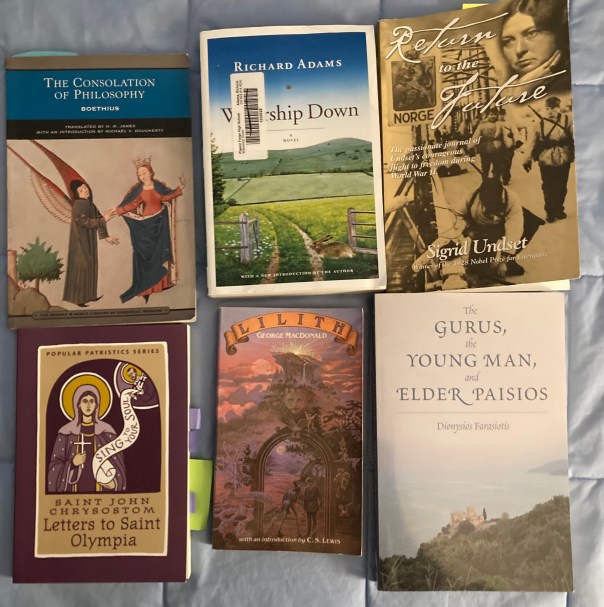
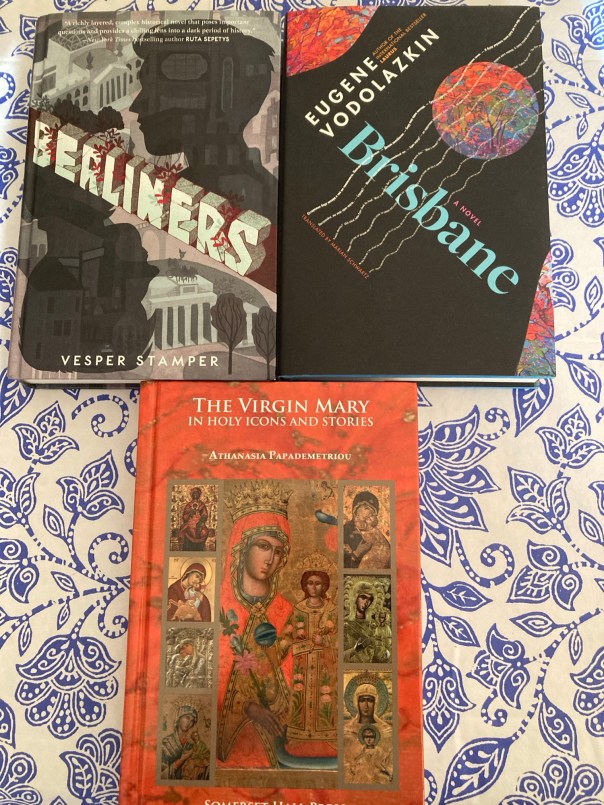
After I asked my friend Cori what were her summer reading plans, naturally she asked me back. I should have anticipated that and not asked her to begin with — because I have no real plans, and feel like an imposter. I have been reading less than usual. I see that of the nineteen books I pictured here five months ago, I have read just two. Only one of those I got to the end of was from the stack I was going to “try extra hard” to read this year. Well, the year is half over, so it doesn’t look promising for those selections. I took new pictures of the “summer books” to show Cori, because it was easier than typing out the titles.
Four of those I have at least started reading, and the Undset book is my current reading-while-falling-asleep choice. I have, typically, read several books that I didn’t anticpate back in February, and some of them were not worth talking about, or even reading to the end.
But let me just mention a young adult novel I did read to the end and liked a lot, What the Night Sings. Written by Vesper Stamper, who was one of the speakers at the Symbolic World Summit I attended earlier in the year in Florida, this is a coming-of-age-in-the-Holocaust story, illustrated by the author. First I listened to the novel, and then I borrowed the hard copy from the library, because I wanted to see the illustrations, which are many, and are very well done, as is the whole story. Stamper’s Berliners, is at hand, too, waiting for me.
If you have read — or even scrolled — this far in my ramble, I’m impressed! There is some reason you stayed so long, though there were doubtless some topics along the way that didn’t interest you. Whoever you are, I appreciate you very much.
I’m gushing every day over my lush garden; once again this year, but twice as much, the extra rain has prompted everything to grow BIG! A friend said it’s because the precipitation was spread out more evenly over the season.
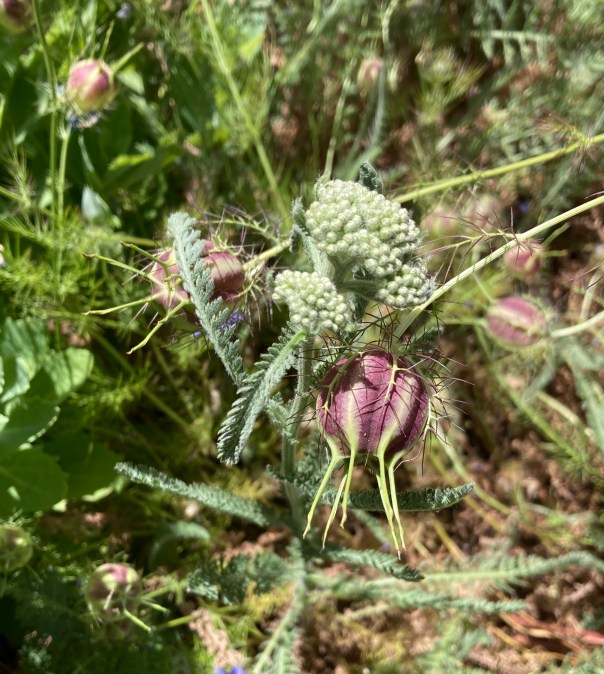
Nigella, or Love-in-a-Mist, has spread its soft, blue-blossomed self all over the place, so much so that I needed to rescue a lot of plants from the stems that had grown tall, taller, and so tall, with their seed pods getting heavy, that they lost their balance and fell down on the surrounding lavender, germander, yarrow — whatever was there, trying to come into bloom itself.
It’s a happy chaos, out there. But a gardener must garden, and manage things, if lightly.
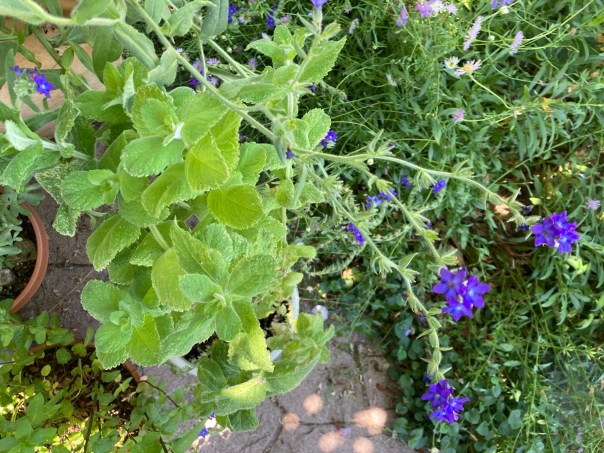
Verbena planted last fall.Apple mint and Bugloss.
The hopbushes (dononea) seem to be extra full and extra colorful this year:
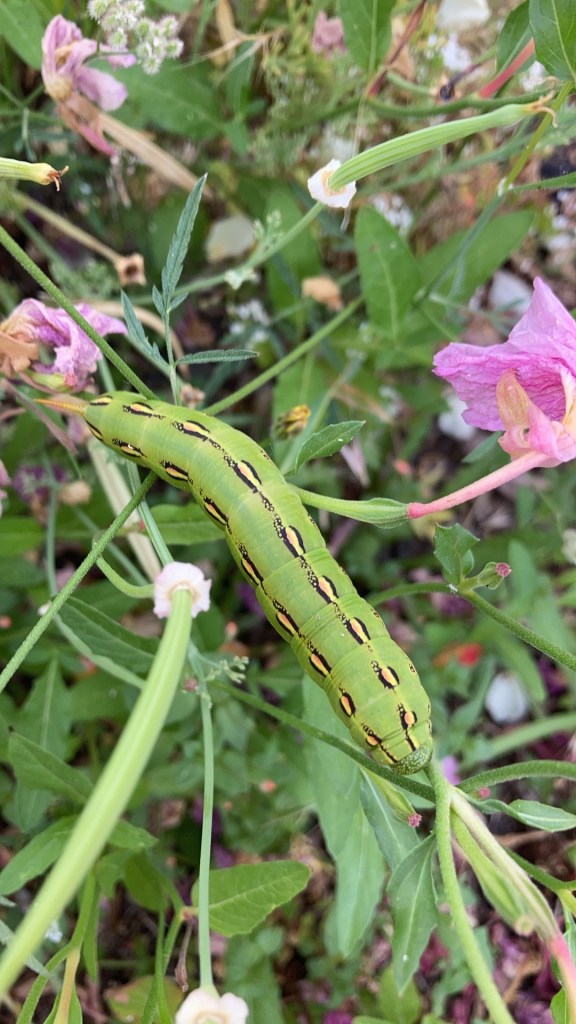
Yarrow buds and nigella pods clinging.White-lined Sphinx Moth amongst the Mexican Evening Primrose.Showy Milkweed
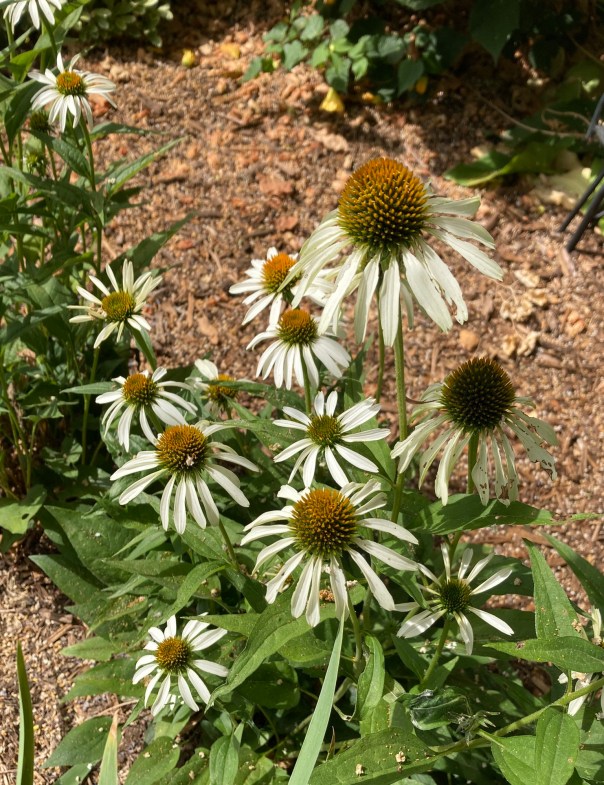
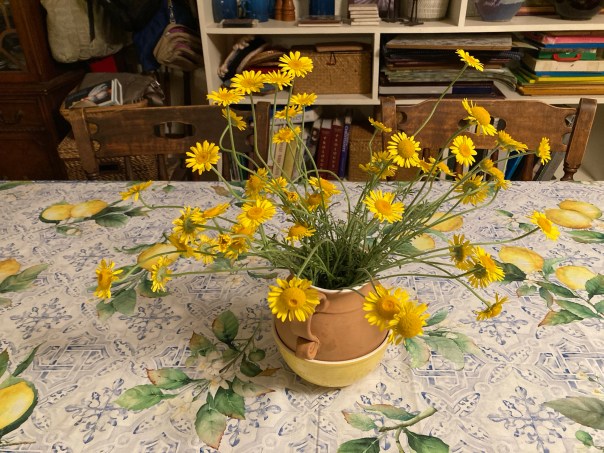
When I was lifting nigella off the echinacea out front, I noticed that the Golden Margeurite also was encroaching and reclining, on the germander nearby. I had to cut it back a lot, but you can hardly tell, there is so much of it. I brought it indoors and it has made a long-lasting bouquet of golden sunshine.




 I think today might be Midsummer, by my way of reckoning. It’s warm and sunny, and in the last few days, not only did I pick my first zucchini, but the first plum fell, perfectly ripe and delcious, a week or two ahead of its fellows. Back when it was officially Midsummer, my own garden was not feeling it, but now everything is lovely and relaxed, like sitting on a porch at the end of a long day — even when I am still working in the middle of the afternoon.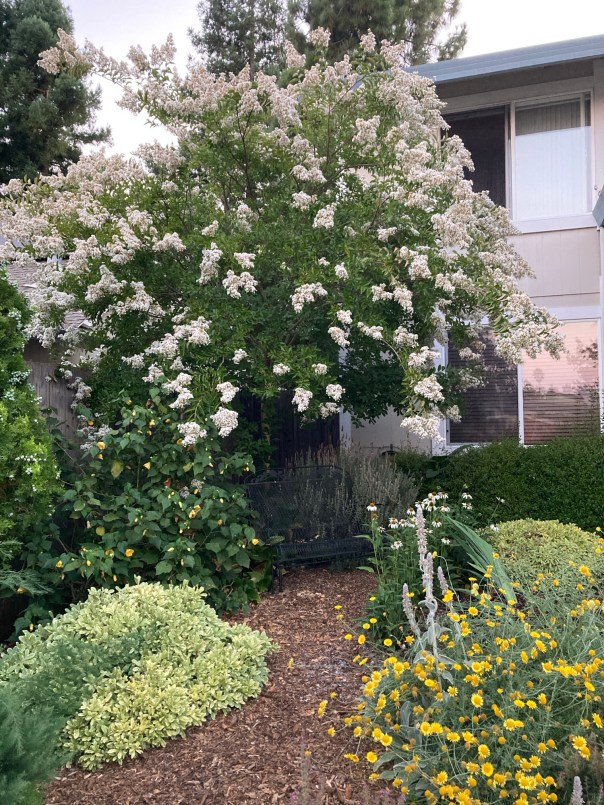
 I love the summer, because it’s only in the occasional heat waves of the season that I can feel fully at home and in sync with the earth. In this climate with marine influence, where the evenings get cold and breezy even in the summer, it’s a treat to fully sink into the warmth and stay there all evening; even when I climb into bed I am relaxed, and don’t have to pull several layers up to my chin against the chill. Of course, this sounds crazy to those of you who live in high-humidity summer zones!




 their babies! (At church there is a new family with a little guy just turned one, and he is the friendliest love bug. He loves me! And I never tire of holding him.)
 in February, and some of them were not worth talking about, or even reading to the end.

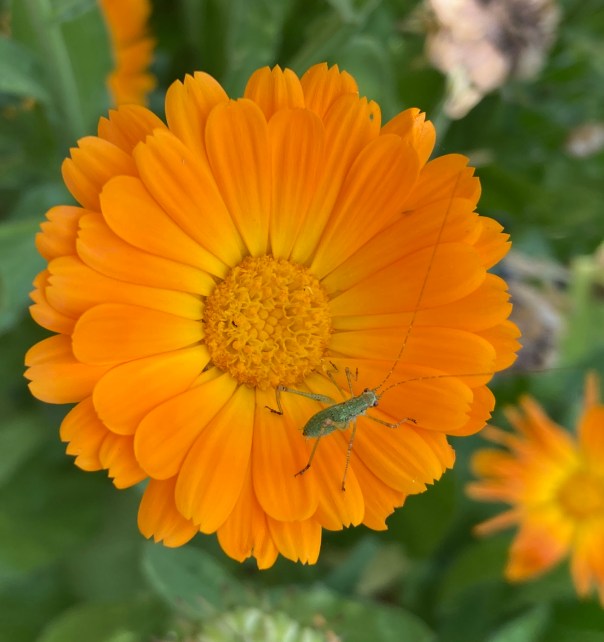 I’m gushing every day over my lush garden; once again this year, but twice as much, the extra rain has prompted everything to grow BIG! A friend said it’s because the precipitation was spread out more evenly over the season.



 Gladsome Lights