
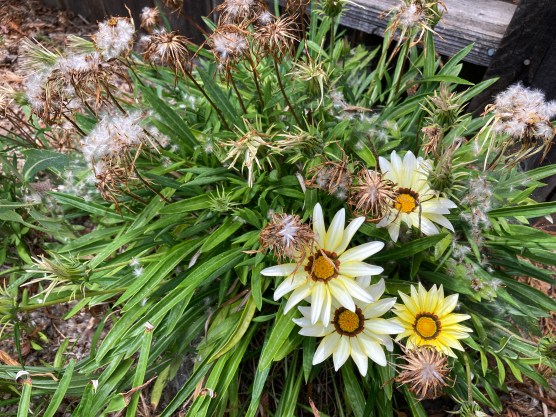
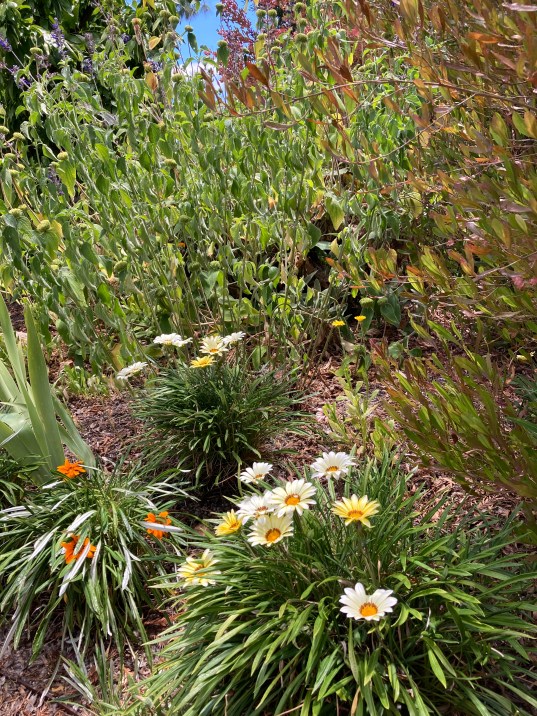
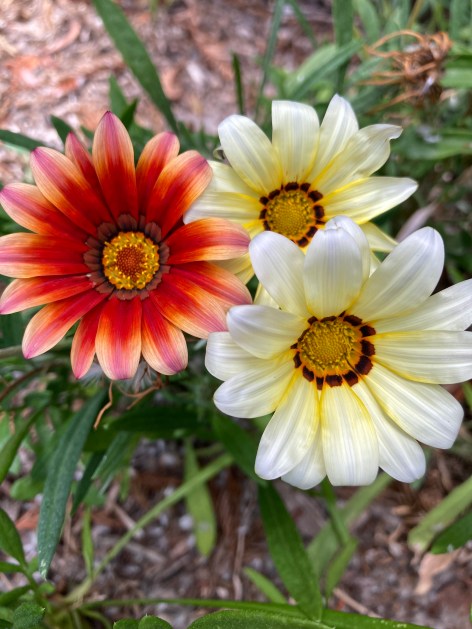
Windows above my kitchen sink and near my computer look out on the garden. When the evening sun’s slanting rays make flower stalks shimmer, it is my favorite sort of painting to gaze at, and I can hardly believe it is right here in my back yard — especially in spring when swaths of those blooms are popping up in turn and in overlapping layers, first the white ixia, then blue penstemon and the palest yellow-white California poppies, now the lavender and the rusty yarrow, and banks of little daisies I can never remember the name of.
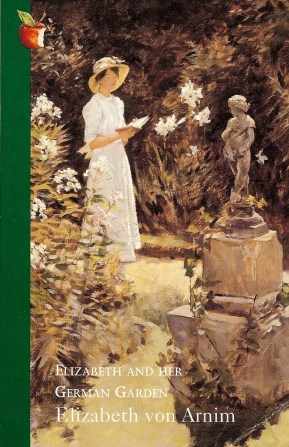
 Probably I should go back and read some of Elizabeth Von Arnim’s descriptions of gardens, to teach me how to convey the scene that makes me so happy. Not only in Elizabeth and Her German Garden but even more in The Enchanted April she expresses her love for this kind of overflowing, colorful and scented landscape, and gardens that are so prolific with blooms that bowls of them bless the rooms of the Italian castle in April (in April, too).
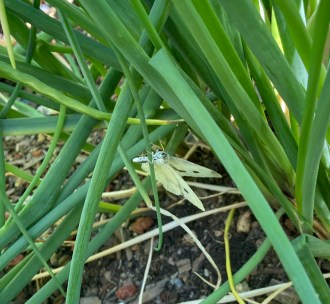
I don’t have a cutting garden most of the time, but right now I am still getting a few heavenly-sweet sweet peas with short stems. When I was snipping them to stick into a tiny vase today, I spied a Cabbage White in the patch of chives. As I understand, those caterpillars eat just about anything, and some years I have seen evidence of that behavior. I wonder how this year will be….
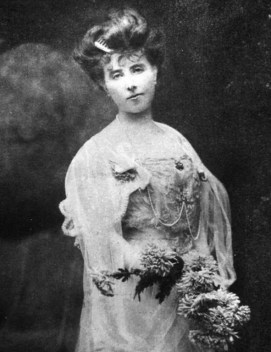 I just discovered that I have never once reviewed a book by Elizabeth von Arnim, or posted a quote by her, on my blog. I guess this is because my relationship with her as a person and writer is about much more than any one of her books; and isn’t it always somewhat of a mystery why we connect with particular authors? Mary Kathryn says it is the writer’s voice that she connects with, and it doesn’t matter what they write about, if one loves that particular voice.
The distance in time and culture between Elizabeth and me seems vast, though it is “only” 100 years. Our life experiences are worlds apart, but as I’ve listened to her voice and her stories, rich with humor that makes me laugh out loud, I’ve been comforted again and again. Today, I didn’t know her name would even come up. Since it has, and while it is yet springtime, here are some words from her that express the feelings of us both:
“Oh, I could dance and sing for joy that the spring is here!
What a resurrection of beauty there is in my garden,
and of brightest hope in my heart.”
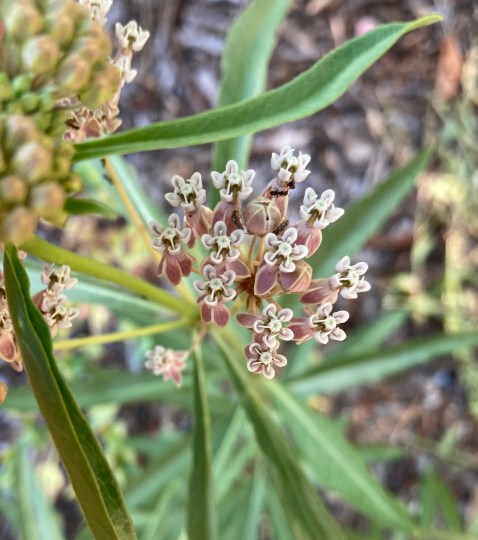
 Today when I went out to try for a picture of the Lambs Ears, I discovered that the Narrow-Leaf Milkweed flowers have started to open. These are the plants from which I collected Monarch butterfly eggs to incubate indoors, a few years ago. Aphids always decimate the plants, and after that first year’s destruction I realized that any hatched caterpillars would run out of food fast, because the leaves are literally slim pickings to begin with, and then the aphids suck all the life out of them. (By the way, you don’t want to bring in ladybugs to eat the aphids on your milkweed plants because ladybugs also eat Monarch eggs!!) Back then I had to feed my Monarch caterpillars from my Showy Milkweed plants which have large leaves and which the aphids don’t bother so much.
So far the aphids have not arrived — or at least, not noticeably. And the two plants of this species of milkweed come up bigger every spring. I see in the photo enlarged here that ants are among the insects hanging out there, so maybe the aphids will come soon. But for now, their delicate flower crowns are pristine. The bees will soon be “dancing” around them for joy.





 This morning I visited some church friends to see their vermiculture setup. Before I ever started my remodeling project almost four years ago, I knew that I wanted to raise worms, but I have put it off until such time as I could make mental and physical space for the project.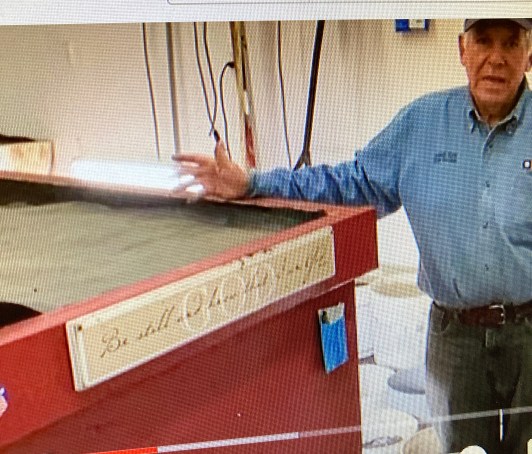
 Gladsome Lights